Category: Videos

  • The real thing behind the internet of things

    The real thing behind the internet of things

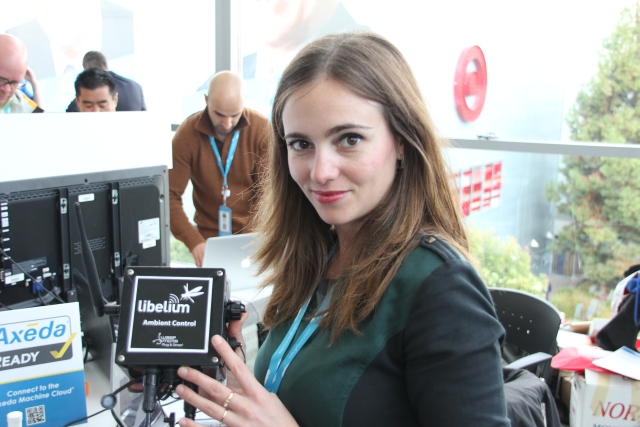
    We need to think beyond technology to get value the real value from the internet of things says Alicia Asin, the CEO and co-founder of Spanish sensor company Libelium.

    Libelium and its CEO Alicia Asin has been covered previously on this blog and we had the opportunity to record an interview with Alicia at the 2013 Dreamforce conference.

    Alicia told us about her vision for how she sees cities and governments evolving in an era of real time accessible information, in many ways it’s similar to where the Deputy Lord Mayor of Barcelona sees his city being at the end of this decade.

    “I would say the biggest legacy the internet of things can bring is transparency,” says Alicia. “In the smart cities movement the IoT gives an opportunity for have a dashboard for cities.”

    “You can see the investment made for reducing traffic investment downtown, the carbon footprint reduced and the return on investment,” says Alicia. “You can have very objective facts to supply to the citizens and they can make better decisions.”

    For this vision to become true, it means government data has to open to the community which is something that challenges many administrations, however Alicia also told the story of how her company supplied Geiger counters to volunteers monitoring the radiation fallout around the damaged Fukushima nuclear reactor in Japan.

    “We made a project in Fukushima when the nuclear accident happened where we sent some Geiger counters to the hacker space,” says Alicia. “Suddenly all the people with the Geiger counters started to publish the data onto the internet.”

    “They were keeping a totally independent radiation map made by the activist citizens.”

    Alicia raises an important point of how citizens can be using technology independently of governments. This was most notable in the Occupy movements across the United States that sprung up in late 2011 where hackers set up independent communications networks and recorded events outside the control of mainstream media and government agencies.

    While citizens can use these tools to get around official restrictions, governments play an important role in developing new industries around these technologies, Alicia sees the smart city investments made by Spanish cities as creating the start of a Spanish Silicon Valley.

    “Despite the economy, we are seeing a number of projects in Spain around smart cities,” Alicia observes. “In fact, I’m saying Spain is becoming the Silicon Valley for smart cities.”

    “In terms of attracting big companies to look at what’s going on in Spain and to build a bigger brand around the Internet of Things, I think that really helps.”

    With government and citizens working together, Alicia sees the Internet of Things delivering great changes to society as it enables citizens and makes governments more accountable.

    “It’s the real thing, it’s beyond technology.”
    Similar posts:

  • Airtasker and the future of work

    Airtasker and the future of work

    Tim Fung, the co-founder of Airtasker, has been previously been interviewed on this blog about micro tasking service’s mission to change the workplace.

    With the news that that Airtasker had gone into a partnership with employment site CareerOne it seemed Tim might be a good guest to kick off the first video for the Decoding the New Economy YouTube channel.

    During the interview Tim describes the motivations behind starting Airtasker, how he sees the relationship with CareerOne evolving and the benefits of operating out of a co-working space.

    The Tank Stream Labs working space is an interesting setup – based at the bottom of Pitt Street in the heart of Sydney’s financial centre, it’s not in the more edgy areas on the city fringes where the rest of the town’s workspace are located.

    Being away from the hipsters and grunge doesn’t seem to have hurt Tank Stream Labs as the space has now expanded to a second floor of the ten storey office block. The roll call of tenants is quite impressive too.

    For Tim being in the workspace has been a great benefit for Airtasker.

    There’s always the thing about sharing knowledge and more obviously there’s a lot of great contacts that everyone shares.

    Airtasker’s relationship with employment site CareerOne is an interesting development that sees the joint venture between News Limited and Monster move into the crowdsourcing field. It also gives job hunters an opportunity to find short term work while looking for a more permanent role.

    People are looking for more hours of work but equally businesses were coming to CareerOne and saying ‘hey, all you do is full time work’ and that’s only one piece of the employment puzzle.’

    For CareerOne it really allows them to build up the full spectrum – all the way from tasks to part time to full time and be a one stop shop for employment.

    How that works for CareerOne remains to be seen, but for Airtasker and Tim it validates their business model along with exposing their service to a wider audience.

    With the workforce evolving and the trend to informal, casualised employment; services like Airtasker and the US Task Rabbit will take a more prominent role in workers’ careers. While it’s debatable on how desirable or stable such employment is, it’s the reality of a process that started in the 1970s.

    Tim takes a more sanguine view of the challenges facing workers in an informal employment market.

    What I’m sharing on Airtasker is my free time. Currently we have this pool of literally tens of thousands of hours of people sitting around saying ‘I’d love to have a job’ and that’s an underutilised resource.

    Airtasker in many ways is one of the new breed of middlemen creating markets where one didn’t exist before. The service is an example of how new ways to communicate create opportunities to connect buyers and sellers.

    Services like Airtasker are part of the future that’s very different to the world we or our parents grew up. It’s going to be interesting to see how society and governments evolve around the realities of today’s workplace.

    Similar posts: