Tag: 3D printing

  • Prefabricating change in the construction industry

    Prefabricating change in the construction industry

    One of the industries being dramatically reinvented by China is the construction sector as the nation’s demand on labor and materials puts stresses on the economy.

    An answer local developers and builders have found to these constraints has been to turn to prefabricated construction.

    While prefab building isn’t new, Chinese builders are pushing the techniques of designing, manufacturing and assembling the structures.

    In Changsha, the capital of southern China’s Hunan Province, local construction company Broad Group built a 57-story building using 1200 in 19 days.

    Coupled with large scale 3D printing and computerised design tools, the Chinese builders are redefining the construction industry with methods that are far more efficient and less labor intensive.

    For companies, and countries, that depend upon the construction industry for employment and profit these techniques could be another disruption.

    Again we’re seeing there are few industries immune from major disruption as technology changes business.

    Similar posts:

    • No Related Posts
  • Apple Watch shows us the limits of 3D printing and crowdfunding

    Apple Watch shows us the limits of 3D printing and crowdfunding

    Ahead of its launch the Apple watch has been criticised for its price and upmarket focus but the product shows what it costs to manufacture high quality goods along with the limitations of both 3D printing and crowdfunding.

    In its Watch Craftsmanship videos Apple shows off some of the workmanship that goes into manufacturing the device and the Atomic Delights blog has a deep look at the processes and the design decisions behind the company’s choice of techniques.

    What Apple’s series shows is that making top end devices is capital intensive and very, very hard. It also puts lie to the idea that raising a few thousand, or even million, dollars on Kickstarter will get a luxury item to market.

    Greg Koenigin, the author of the Atomic Delights blog, gushes about Apple’s attention to detail and high quality manufacturing.

    I see these videos and I see a process that could only have been created by a team looking to execute on a level far beyond what was necessary or what will be noticed. This isn’t a supply chain, it is a ritual Apple is performing to bring themselves up to the standards necessary to compete against companies with centuries of experience.

    It’s clear Apple isn’t stepping back or making any compromises in making its mark on the watch industry, even though the entire global market for timepieces is less than one quarter’s income from the iPhone.

    At the other end of the market the 3D printing revolution continues with Feetz raising $3 million for its customised shoemaking operation.

    While Feetz is an impressive and quirky business with great promise it shows the rough-and-ready face of the makers’ movement and the businesses relying on 3D printing services, it’s a world away from the Apple Watch.

    While both crowdfunding and 3D printing are going to have a massive effect on business and manufacturing, the truth is that other manufacturing methods are still going to be used by deep pocketed companies. Nothing is ever as simple as we think.

    Similar posts:

    • No Related Posts
  • 3D Printing promises to change architecture and building

    3D Printing promises to change architecture and building

    One of the longest running large scale 3D printing projects is based at the UK’s Loughborough University where since 2007 researchers have been working on developing the technology’s applications to the construction industry.

    Loughborough’s technology, named Freeform, offers faster and more flexible ways of casting concrete and building structures using a computer controlled concrete pouring system. For property developers the attraction is cheaper buildings while for architects the technologies offer more innovative structures.

    In late November the team announced a venture with Swedish building company Skanska SA to develop the world’s first commercial concrete printing robot.

    The venture, which will include collaborations with companies including iconic UK architects Foster and Partners, Buchan Concrete, Scandinavian contracting giant ABB and Lafarge Tarmac, aims to have the first commercially available robot printer available by mid 2016.

    Competing with the European venture is Chinese company WinSun who earlier this year showcased its 3D printer capable of producing ten houses every 24 hours. An interesting aspect of WinSun’s project is that the printing rig was build out of existing parts and controlled by an off the shelf Computer Aided Design and Manufacturing software system.

    While the Chinese results are relatively crude, they show the potential for the technology. The economics of the WinSun project are enhanced by using waste building site material for the concrete which only increases the attraction of these machines to cost conscious property developers.

    The Chinese and British are not just the only countries working on these technologies, in the Netherlands the 3D Print Canal House shows how techniques and materials are being developed while in the United States the University of Southern California’s Contour Crafting project is looking at how to use large scale 3D printing in a range of construction scenarios including building space colonies.

    While using moon dust to build structures in space is some way off, both Freeform and WinSun show what will become commonplace on building sites in the near future.

    These technologies promise to radically change architecture and the building industry with ramifications for jobs and the economics of building structures.  3D printing buildings is another example of how industries and employment will be very different by the middle of this century.

    For businesses, it’s another example of how managers have to prepare for very different marketplaces.

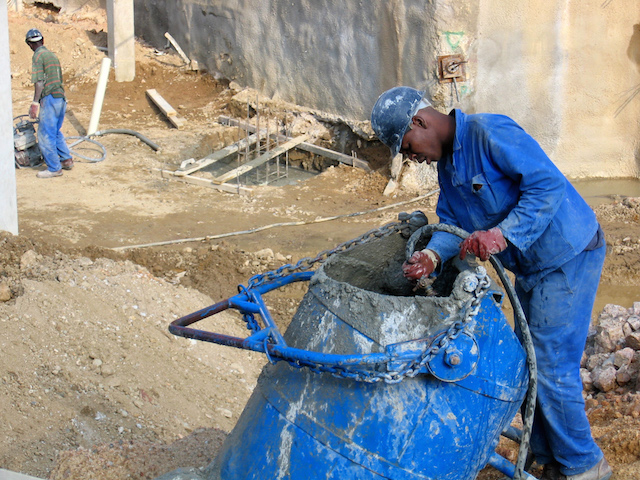
    Builder image courtesy of thesaint through Freemimages.com

    Similar posts:
  • ABC Nightlife – security, dropping off the grid and 4D printing

    ABC Nightlife – security, dropping off the grid and 4D printing

    Paul Wallbank joins Tony Delroy on ABC Nightlife across Australia from 10pm Australian Eastern time tonight to discuss how technology affects your business and life.

    For the May 2014 spot we looked at computer security, specifically Apple ransomware and The Heartbleed bug along with dropping off the grid, 4D printing and the future of design.

    To protect from the Oleg Pliss ransomware – or any similar problems – have a strong password, enable the screen passkey and enable two factor authentication.

    Join us

    We’d love to hear your views so join the conversation with your on-air questions, ideas or comments; phone in on the night on 1300 800 222 within Australia or +61 2 8333 1000 from outside Australia.

    Tune in on your local ABC radio station from 10pm Eastern Summer time or listen online at www.abc.net.au/nightlife.

    You can SMS Nightlife’s talkback on 19922702, or through twitter to @paulwallbank using the #abcnightlife hashtag or visit the Nightlife Facebook page.

    Similar posts:

    • No Related Posts
  • 4D printing and the next generation of design – ABC Sydney

    4D printing and the next generation of design – ABC Sydney

    I’ll be on ABC Sydney this morning discussing 4D printing and the future of design as the Sydney Vivid Festival swings into gear.

    Some of the areas we’ll be looking at in the spot that should start around 10.20am is what exactly is 4D printing, how can materials build themselves and how designers are creating more sustainable devices like Google’s Project Ara.

    One particularly interesting Vivid session is the Electric Dreams to Reality session that will feature local entrepreneurs and makers explaining how they are using the internet of things and new design.

    We’d love to hear your views so join the conversation with your on-air questions, ideas or comments; phone in on 1300 222 702 or post a question on ABC702 Sydney’s Facebook page.

    If you’re a social media users, you can also follow the show through twitter to @paulwallbank and @702Sydney.

    Similar posts:

    • No Related Posts