Tag: 3D printing

  • 4D printing and the quest for elegance

    4D printing and the quest for elegance

    Many of us are still getting comfortable with the idea of 3D printing, but MIT’s Skylar Tibbits is working on a fourth dimension that he hopes will move us into a more elegant era of design.

    Ahead of Skylar’s visit to Sydney for the Vivid Festival in June, Decoding the New Economy had the opportunity to interview him about what 4D printing is and his quest to create materials that can build themselves.

    What is 4D printing

    “We called it 4D printing because we wanted to add the ability for things to change and transform over time,” explains Skylar. “Time is the fourth dimension.”

    Skylar’s mission at MIT’s Self Assembly Lab is to create materials that assemble themselves. In a TED presentation he demonstrates how these materials may work and the philosophy behind them.

    Part of that search involves developing techniques for building large and complex structures from small components. “People know and utilise this in biology, chemistry and material science domains and we’re trying to translate that into larger scale applications.”

    Avoiding big machines

    “We don’t want to build bigger machines than the things we want to build, we want to build distributed systems,” Skylar continues. “If you want to build a skyscraper, you don’t want to build a skyscraper sized machine.”

    Not only does this philosphy offer benefits for manufacturing and building but it may also save energy, transport and labour costs as things can automatically build themselves once they’re delivered to a customer.

    “Materials should be able to assemble themselves or at least error correct or respond to active energy. There’s a whole application of packaging and minimising volume after manufacturing and transforming on site.”

    Over time they could also adapt to changed conditions Skylar believes: “There’s also how products themselves can transform and be smarter adapt to my demands or adapt to the environment as it’s fluctuating around.”

    Redefining the makers’ movement

    Worldwide we’ve seen the rise of the makers’ movement as affordable 3D printing and cheap electronics has made it possible to build new things; Skylar sees the Self Assembly Lab as being part of, but slightly apart from this group.

    “We make machines that make things, we’re integrated into that theme. We’re arguing that people can collaborate with materials and materials can be collaborative. It’s not just us making stuff and forcing materials into place, it’s materials making themselves.

    “A lot of methods are top down, big machines force materials into place and we’re trying to argue you can have bottom up applications in manufacturing.”

    So more than just simply printing components, Skylar sees the opportunity for embedding the intelligence into components so they can assemble themselves; the real task lies in programming the materials.

     The internet of elegant solutions

    Similarly, Skylar sees the internet of things as being a far more passive, perhaps even friendlier, field than that dominated by machines and plastics.

    “It’s not about the number of sensors and electronics and motor and things so that we can make these smart devices, we’re interested in how materials and fundamentally elegant solutions responding to external energy can have the same capabilities.”

    “We certainly believe in a connected internet of things, but it’s more a material based internet of things.”

    “I think that any solution in the beginning you throw a lot of money, technology and motors at it but over time you find more elegant solutions where materials can do more for you.”

    “The wearable space is a good example where people don’t want to wear electronics all over their bodies, they don’t want bulky things that are expensive and hard to assemble and clunky to wear.”

    “You want materials that you want your skin to touch, so we’re trying to find elegance in the solutions with smart devices.”

    Seeding the forest

    The challenge for Skylar, the Self Assembly Lab and those looking at changing the worlds of design and manufacturing is – like many other fields – funding.

    Material sciences, particularly those being explored at the MIT, have long lead times that aren’t suited to the current Silicon Valley led model of innovation and Skylar believes we need a different model.

    “We need to invest in super, long term radical innovation, to seed the economy and global technology development. We gained substantially in the Silicon Valley model with short term wins – with apps and simple technologies with incremental progress.”

    “It’s sort of like we need to seed the forest, we can’t just keep taking all these things from the top like low hanging fruit we need to create a forest effect so that we create many new technologies.”

    What comes out that forest of 4D printing and smart materials is anyone’s guess; but if Skylar Tibbits has his way, it will certainly be elegant.
    Similar posts:

    • No Related Posts
  • NASA and the five technologies that will change business

    NASA and the five technologies that will change business

    What will be the next five technologies that will change busines? CITE Magazine has an interview with Tom Soderstrom, the chief technology officer at NASA’s Jet Propulsion Laboratory on what he sees as the next big game changers for business.

    The list features many of the topics we’ve discussed on this blog; data visualization, the Internet of Things, robots, 3D printing and new user interfaces.

    NASA’s Jet Propulsion Laboratory is a good place to start when looking at what technologies will become commonplace in business as the organisation is testing the limits of modern engineering.

    Similar posts:

  • The Internet of Racing Machines

    The Internet of Racing Machines

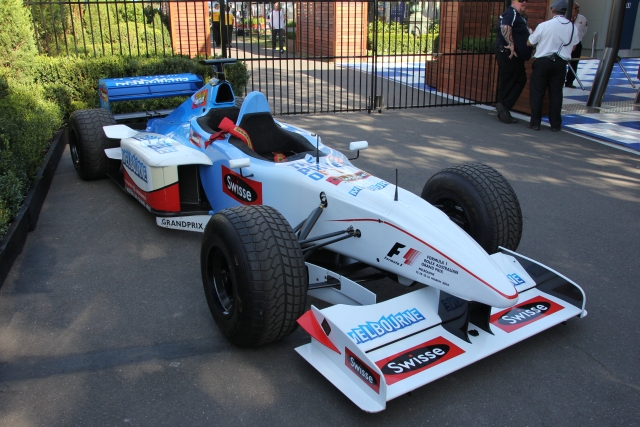
    For the Formula One racing circuit, the financial crisis of six years ago was an opportunity to reinvent the sport; today the teams use a combination of technologies to gain an advantage over their competitors.

    “A few years ago you wouldn’t have been here today,” Francois Puentes, Head Of Account Management at Team Lotus told a group of journalists ahead of this week’s Melbourne Grand Prix. “F1 was a completely different sport.”

    The 2009 financial crisis was the catalyst for the changes Puentes says; “we all sat down as teams at the same table to make the sport more sustainable, this obliged us to run the sport as a business.”

    “Before we didn’t know what the unit cost was for a part. We would very often produce two of the same parts without even knowing what was going on.”

    To tighten their management systems, Lotus bought in a range of cloud based business software such as Microsoft Dynamics and also accelerated its adoption of computerised manufacturing techniques.

    Speeding up development

    Lotus employs over 500 people to keep its two cars on the road and most of the vehicles parts are designed and manufactured at its headquarters in Oxford, England. During the season the team’s workshop may produce up to five hundred replacement or redesigned components each week.

    This brings together a number of technologies including Computer Aided Design, 3D Printing and cloud computing.

    The internet of racing machines

    Massive rule changes have also accelerated Formula One’s adoption of in car technology with information being gathered from sensors throughout the vehicles.

    During races data is transferred from the vehicles’ sensors by radio for the teams’ crews to analyse performance. This includes information like gear box temperature, tyre condition, and aerodynamic performance data.

    Following the race larger volumes of data are downloaded from the vehicle for engineers to tune the car for the next event.

    While Lotus has teamed with technology companies like Microsoft and EMC, rival team Caterham partnered with GE whose Global Research team worked to integrate the technologies demanded by the new F1 rules.

    Global technology

    Caterham’s cars use intercoolers developed in Germany, carbon fibre composites and fibre optic sensors from the United States, and big data analysis techniques developed in India.

    Key to gathering that data are sensors throughout the vehicle that capture a constant stream of data about forces acting on the car during the race, transmitting this information in a far more efficient way than traditional methods which relied on load sensors attached to the suspension.

    The result is massive volumes of raw data. On the track, Caterham cars generate 1,000 points of data a second from more than 2,000 data channels. Up to 500 different sensors constantly capture and relay data back to the team’s command centre for urgent analysis.

    Learning from Big Data

    By applying what the company has learned from its Industrial Internet projects, GE was able to help Caterham cut its data processing time in half, leaving the team in a stronger strategic and tactical position.

    Thanks to these analysis techniques, the Caterham team can look at slices of its data across an entire season, pinpoint setups that were particularly effective, and identify reliability issues earlier.

    Inside the vehicle, GE has also found a way to replace metal pipes with carbon fibre, reducing the overall weight of the vehicle.

    These technology developments will continue to find applications beyond the 2014 Grand Prix season.

    Carbon composites are being used extensively in the aviation industry and big data analysis is playing an important role in the renewable energy sector.

    Lewis Butler, Caterham’s chief designer, says working with GE is helping the team deepen its skills base.

    “GE are working with Caterham to help with the manufacturing process and knowledge transfer, and giving Caterham F1 Team the capability to manufacture its own parts,” he says.

    All the Formula One teams are using Internet of Things technologies to gather information on their vehicles, Big Data tools to manage that information along 3D printing to accelerate their research and manufacturing processes.

    The Formula One world is a glimpse into the future of business as various technologies come together to change the way industries operate.

    Paul travelled to the Melbourne Grand Prix as a guest of Microsoft and Team Lotus.

    Similar posts:

    • No Related Posts
  • The evolution of the Internet of Things

    The evolution of the Internet of Things

    One of the notable things about modern technology is that few of the developments are actually new, the Internet of Things is a good example of this.

    Most of the tech we talk about is a collection of existing technologies that have been cobbled together — cloud computing, 3D printing and the Internet of things are all good examples of this.

    Libelium’s Cooking Hacks community page has a good infographic on how the makers’ movement, crowd funding and miniaturization have driven the development of the Internet of Things, 3D printing and wearable technologies.

    The diagram, shown at the bottom of the post, is a good illustration of how technologies are evolving and the businesses that are being spawned from the developments.

    Cooking Hack’s infographic show why it’s an exciting time to be in business.

    maker_movement_cooking _hacks_infographic


    Similar posts:

    • No Related Posts
  • Building a house with 3D printing

    Building a house with 3D printing

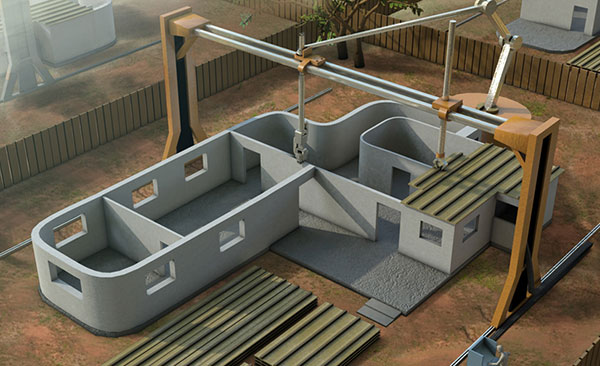
    Much of the discussion around 3D printing has focused on making your own coffee cups, toys and small mechanical parts, but what if we start thinking about using these devices to build houses?

    University of Southern California spin off Contour Crafting received attention at the CES over the bold claim by the program’s director, Professor Behrokh Khoshnevis, that it will be soon possible to build a house in 24 hours.

    That’s an audacious claim although it doesn’t include site works or fitting out, much less the design of the structure.

    Contour Crafting isn’t the only university spin off experimenting with 3D printing to build structures; Freeform Construction, part of the UK’s University of Loughborough, has also been working on developing the technology.

    The British team haven’t been as audacious as their US colleagues and, rather than see whole buildings being constructed, they see potential applications being in fabricating specialised parts including cladding panels and complex structural components.

    Like all robotic applications working in hazardous environments is another aspect touted for the technology.

    The British team is almost certainly right in their view, 3D printing is unlikely to fabricate entire buildings onsite but it will have applications in the building industry which will have ramifications for tradesmen, architects and project managers.

    For architects this technology could prove to liberating as it gives designers the opportunity to create structures that haven’t been feasible or possible with existing materials and techniques.

    Some trades though may not fare so well should this technology appear on building sites, it certainly doesn’t look like good news for bricklayers and form workers.

    It will probably take sometime for this technology and it’s still very much under development, Contour Crafting itself won awards in 2006 and the machines are still under development.

    Bill Gates famously pointed out that in the short term we over-estimate the effects of technology while in the long term we underestimate them and that’s almost certainly the case with using 3D printing to build structures.

    Similar posts:

    • No Related Posts