Tag: analytics

  • Connecting 400 points of voter data

    Connecting 400 points of voter data

    As the 2016 US Presidential race enters its final stages, it’s interesting to see how data is being used by American political candidates and what this means for business.

    During last week’s Oracle Open World in San Francisco a panel hosted by the company’s Political Action Committee featured Stephanie Cutter, who worked on Obama’s 2008 and 2012 campaigns, and Mike Murphy, a Republican operative whose most recently worked on Jeb Bush’s primary effort against Donald Trump.

    While the discussion mainly focused on the politics – “Crazy times seem to require crazy candidates” says Murphy – it was the technology aspect of modern elections that was notable.

    Setting the data standard

    The Obama campaign of 2008 set the standard for how modern political campaigns used social media and information, “we revolutionized how data analytics helps predict how people will vote and how they will persuade voters to turn out.” Cutter said.

    “We put a big investment into it and Republicans have caught up,” she continued. “The key though was we relied on our own data and nothing that was out in the public domain. We didn’t rely on one piece of data, we had multiple sources. We had an analytics program where we were making 9,000 calls a night where we were predicting the votes.”

    Murphy agreed with the political campaigns using data, “the kind of polling you see in the media has kind of vanished in campaigns where they have money to spend on research.” He said, “we don’t do telephone polling any more because we have so much data we can collect.”

    Capturing everything

    “We capture everything. We have about four hundred data points on the American voter and we’ll have five hundred in the next two years. We’ll be able to build massive data models without phone polling,” Murphy pointed out. “We’re waiting for the tech folk to get ahead on AI so we can predict what voters are going to do in two weeks.”

    Despite the amount data collected by US political parties, the real key to success is the candidate’s organisation and management. Cutter made a strong point about the strength of Obama’s campaign team in both the 2008 and 2012 campaigns.

    How the US political parties use data points to how businesses will be managing data in the future. Increasingly using information well is going to be the measure of successful organisations in both politics and industry.

    Similar posts:

    • No Related Posts
  • Thinking about networked thinking

    Thinking about networked thinking

    “We want to be the Wayze of enterprise software” is the line being repeated by executives at the Inforum2016 conference in New York today.

    This is an interesting strategy for Infor, who provides a range of enterprise software tools to help companies track what is going on in their business, as Wayze is built upon aggregating user data to identify traffic problems to improve commuting times. It’s no surprise that Google bought the company a few years ago.

    Infor position though is slightly different as it’s aggregating individual clients’ data for them. In a world where organisations are struggling not to be overwhelmed by information, Informa are in a good position, even if their executives do overdo it on the buzzwords.

    Which leads us to another buzzphrase – design thinking – which has been drifting in and out of fashion over recent years. During the opening keynotes one of the comments was about the rise of  “network thinking.”

    “Eighty percent of what most companies do deals with data from outside of their organisation,” says Kurt Cavano, Infor’s General Manager of their commerce cloud division. “We’ve seen in the power of networks with sites like Facebook, LinkedIn and Wayze.”

    “Nobody wants to be on a network but everyone’s on a network. It takes a long time to build but once you have one it’s magical. That’s what we’re thinking for business, they need to evolve.”

    In one respect this is another take on the ecosystem idea, that one vital corporate asset in the connected world is an ecosystem of partners, suppliers and users, however the Infor view articulated by Cavano is much more about the flow of data rather than the goodwill of a community.

    So we may well be entering a world of ‘networked thinking’ where thinking about the effects of data flows and being able to understand them – if not manage them – becomes a key executive skill.

    Paul travelled to New York as a guest of Infor

    Similar posts:

  • Evolving into a data centric company

    Evolving into a data centric company

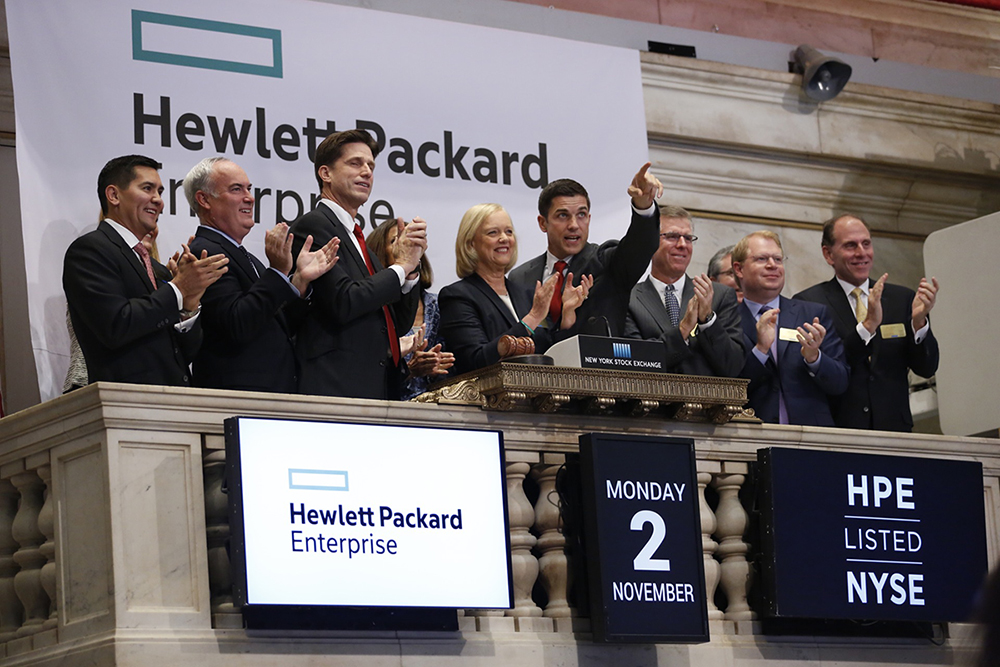
    I’m currently at the HP Enterprise Seize the Data roadshow in Singapore where the recently split company is showing off its range of data analytics tools.

    Like companies such as IBM and Google, HPE are looking to make money out of data feeds and analytics with a key part being a platform for developers to create applications.

    In launching their Haven OnDemand service, HPE are entering a crowded field with IBM, Salesforce, AWS and Splunk – among others – offering similar products. What compelling difference HPE will add to the field will be something I’ll be asking the company’s executive later.

    One of the other services, HP Vertica, looks running data analytics against structured and ‘semi-structured’ sources. Again this is a field where other companies are well established and have an advantage in being able to examine unstructured data.

    The overwhelming question though is how big, and lucrative, the market is for these data products. It’s not clear exactly how all of these companies are going to monetize these services and, should they be able to, their profitability.

    As a company finding its feet less than a year after being split in two with the added problem of seeing its core server hardware business being eroded, HP Enterprise is realigning its business around data analytics and cloud services.

    The challenge for the company is differentiating itself and providing competitive products in these markets, this will be a tough challenge.

    Similar posts:

    • No Related Posts
  • Actuaries and the future of Public Relations

    Actuaries and the future of Public Relations

    One of the truisms of modern industry is we’re going to need more workers with data skills. Could it be actuaries will be the profession of the information age.

    Much of the focus around how companies will deal with an information rich age come down to the need for ‘data scientists’, those with a combination of statistical, analytical and coding skills will be required to coax insights out of complex and rapidly changing data sets.

    At a Future of PR meetup in Sydney earlier this week, one of the panellists raised the possibility that tomorrow’s most valued agency employees will be actuaries as data analytics comes to dominate the industry.

    That boring old actuaries – one particularly cruel joke is atuaries are accountants who failed the personality test – could be the hottest profession in the sexy PR industry is quite a delicious scenario.

    Should that turn out to be the case though, it won’t just be the PR industry chasing actuaries, almost every industry is going to demanding the same set of skills.

    In a strange way it could be the staid professions of today that are the exciting jobs of tomorrow, we’ll reserve judgement on the actuaries though.

    Similar posts:

  • Building the world’s biggest small software company

    Building the world’s biggest small software company

    “The next day I quit my job. I remember walking home that night and thinking I felt incredibly privileged to be living right at this point and I was going to see how the internet would unfold.”

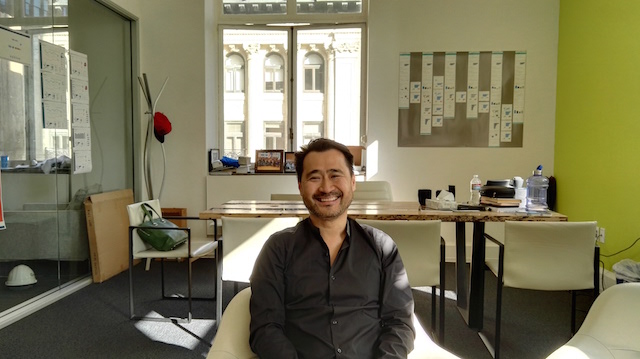
    Jørn Lyseggen, the founder and CEO of media monitoring service Meltwater, was describing his first encounter with Netscape 2.0 in 1995 while working on artificial intelligence at the Norwegian Computer Centre.

    Today, Meltwater has 1,100 employees in 41 cities across 21 counties and Jørn spoke to Decoding the New Economy in the company’s San Francisco head office last week.

    Having quit his job as a researcher, Jørn became what he describes as ‘an Internet evangelist’ in the early days of the Norwegian web and founded a series of online businesses including Norway’s first web mall.

    The fourth business Jørn set up was Meltwater which they originally operated out of a shed in a disused shipyard, Shack 15. “We got free office space from one of my former clients,” he recalls. The old customer also gave them 25 old computers which they patched together to become the company’s first server farm.

    Building the world’s smallest software company

    “Our aspiration originally was to create the world’s smallest software company,” recalls Jørn. “We wanted to be four engineers creating the most sophisticated technology in our industry then we would sign up resellers then sit back and watch our revenue go through the roof.”

    At the time media monitoring was largely made up of clipping services that would hire armies of contractor to physically cut and paste newspaper articles.

    “What we wanted to do was build software that could keep track of everything that was published online,” Jørn explains. “When news started to come onto the internet then you could start to analysie it automatically. We thought there would be a better way to do this with algorithms and software.”

    The best laid plans

    It turned out however the plans to have a small software company didn’t work out. “We poured our heart into our technology for the first year and then we got really excited when we signed up two really respected resellers in the Norwegian market.

    “They presented to 1500 companies, which is a really big number in Norway, and the results were devastating with 1499 ‘no’s and one maybe.”

    For Meltwater’s founders it was a time for re-evaluating the idea. “That was a pivotal point in the company as we had to ask ‘is this a business?’. What we realised was that we were too focused on the technology and what clients are really worried about at the end of the day are the pain points.”

    “Once we did that switch we started to get business and then we grew very quickly so instead of being the smallest software company in the world we set out to become the biggest in our industry.”

    Going global

    From there the spread across Northern Europe and the UK, “every time you start up in a new country it’s like starting a new company.” Jørn ruminates. Strangely it was Germany that proved to be the most difficult to break into. “It’s counterintuitive, you’d think the shared culture would make it easy for a Norwegian company. It wasn’t.”

    The big move though was the United States, on the basis that any company with global aspirations has to be in the world’s biggest market. “Norway is a small country, we used to joke there are bus stops in New York with a bigger population than Norway.”

    Jørn was surprised to find the US was an easy market to break into than the United Kingdom or Germany, “I love their open mindedness and the welcoming factor of the US culture,” he smiles.

    “They are very open minded in the US, it’s a strength in their culture. In the US if you present something interesting to them they’ll accept it. The flip side is if they are open minded to you then they’ll be open minded to your competitors.”

    Hiring as a key factor

    Choosing the right people is the key to business success Jørn believes, with local hires being essential when expanding into foreign markets, “You need some local credibility.”

    More importantly though is the importance of getting the right people early in the life of a startup business, “It’s all about culture.” He states, “make the first five to ten people the base for your platform.”

    Having the right people also made it easier for his management team to delegate as executives focused on the international expansion. “We’ve got really smart young people working here, they don’t miss me when I’m not around,” he smiles.

    Romanticising startups

    “Back in the day it was considered you started a company because you couldn’t get a job,” Jørn laughs. “I’m the first to encourage entrepreneurship but it worries me when it becomes trendy.”

    “It’s important that entrepreneurship doesn’t become too romanticised. Because it’s really hard work and most startups fail and most people have to work for years while barely getting by financially and it’s high stress”

    “I never saw myself as a business person,” Jørn remembers. “I had a healthy scepticism to the commercial world, that’s why I became a research scientist because I thought it was a better use of my time.”

    Becoming an entrepreneur

    However the revelation of Netscape 2.0 changed all that, “it really blew my mind,” he grins as he recalls how he decided “the best way to be part of this was to be in my own business.”

    Building your own business though is not an easy process and there’s tough decisions to be made. Jørn though believes that the hardest times running your own business are not when cash is tight but when the tough decisions have to be made, “sometimes you have to make calles that are challenging.”

    For Jørn, he only sees more exciting times ahead as the internet evolves, “social is still in its early stage. A lot of companies struggle and worry that they haven’t figured it out, but the truth is most people haven’t figured it out.”

    Paul travelled to San Francisco as a guest of Oracle


    Similar posts:

    • No Related Posts