Tag: analytics

  • Management in time of data transparency

    Management in time of data transparency

    Management is going to become flatter and organisations more transparent as the physical and the digital start to become start to merge  says Splunk’s CTO Snehal Antani.

    Antani, who was appointed the company’s CTO in May was previously CIO for multiple divisions of GE Capital and before that numerous IT strategy and technology roles at IBM. He spoke to Decoding the New Economy at last week’s Splunk.conf in Las Vegas.

    “It’s an opportunity to change organisational structure,” Antani says in regards to how data analytics is changing business. “Transparency across managers allows me to see quantitatively and qualitatively”

    An age of transparent data

    “Everyone has access to the data so the question becomes ‘what decision do we need to make?“ He claims, “transparency really transforms the management style and culture of an organisation. It gets rid of middle managers trying to massage the message and allows me to be the leader.”

    While at GE, Antani put this transparency into action with a serious of real time indicators to hold staff and contractors to account. “I was tired, as a CIO, of middle managers showing me status reports with every box was green.”

    “For my software development process I’d built a fully instrumented continuous delivery process. When a developer checks in code, I run a fully automated set off steps and a developer would get immediate feedback. In real time I could tell you who were the best developers.”

    “I could pit my vendors up against each other,” “the cute thing there was transparency. Everyone had access to that data so we got out of Powerpoint into real time dashboards.”

    Moving IT from the back office

    That access to technology changes the role of the IT department, Atani believes. “We’ve evolved IT from a being a back office function to being a core part of the value they deliver to their customers,” he says. “In the past, when IT walked into the room people assumed they were there to fix the projector.

    This changing role is where he sees opportunities for his current company, “one of the really cool things about Splunk is that it’s a very versatile technology platform. So we were never prescriptive about up front about we were never going to solve a healthcare problem or we were going to solve a financial services problem. Our customers discovered they could apply Splunk to solve these problems”

    “We’re equally amazed as we never envisioned how the product would be used. We’re seeing really amazing use cases across health care, financial services and it’s really interesting to see how partners’ uses have evolved over the last few years.”

    Data changing management

    For companies though this means a change in the way of doing business, which can challenge management, “In order for an organization to move at market speed you have to be able to respond fast and transparency is absolutely critical to management.”

    A flatter, more transparent workplace means a radical change to the way many companies manage their organisation. It’s one of the challenges facing the modern business as we enter an age of almost unlimited data.

    Paul travelled to Splunk.conf in San Francisco as a guest of Splunk
    Similar posts:

    • No Related Posts
  • Analysing the value of IoT data

    Analysing the value of IoT data

    How do companies analyse the data coming off wearable devices? At the Las Vegas Splunk.Conf, the developers of wearable communications device Onyx showed off how they use data to enhance their business.

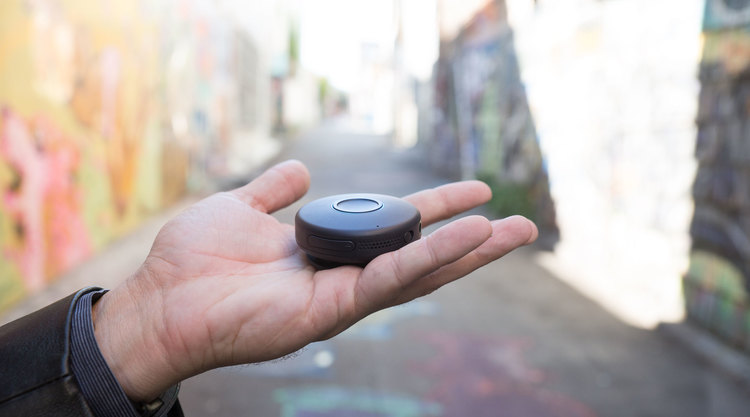
    A lightweight push to talk device that can be clipped to a shirt, jacket or bag strap the Onyx is designed for teams to easily communicate. The device has a microphone, speaker and GPS that tethers with a smartphone, which in turn connects to Orion’s cloud network and communicates with groups defined by the user.

    “Our goal and mission at Orion is to make this as easy and seamless at possible,” says Dan Phung, the company’s software engineer. “Technology is something you shouldn’t have to deal with.”

    Some of the data Orion collects are the battery levels in the devices, time spent on conversations and volume levels that gives the company insights into useage patterns. One of the big benefits they’ve found as a startup is in tracking what operating systems are being used, enabling them to carry out what Phung calls “data driven engineering decisions”

    As a startup with a team of 35, they managed to get the Onyx to market in a year, having that ‘operational intelligence’ has allowed the startup to focus its scarce resources in the areas where the device is being used and not waste time developing for systems that are less popular.

    The Orion Onyx is a good example of how a business can get valuable information from a limited data set from a relatively simple device, their use of Splunk also shows the value of being able to analyse that data quickly.

    Paul travelled to Splunk.conf in Las Vegas as a guest of Splunk

    Similar posts:

    • No Related Posts
  • Splunk and the marathon to make IT sexy again

    Splunk and the marathon to make IT sexy again

    “We’re early in the marathon but making good progress”, opened Godfrey Sullivan, the CEO of Splunk, as he opened the company’s annual conference in Las Vegas today.

    Helping businesses understand their data has proved lucrative for Splunk with the analytics company seeing a 46% increase in year on year revenue to $148 million for the last quarter with the organisation narrowing its losses over the same period.

    As with all tech conferences, the focus in the opening keynote is on new product announcements. For Splunk, the main release is its latest enterprise version of Splunk Enterprise 6.3 billed as delivering faster results, better analytics and tying into the masses of machine data being collected from the Internet of Things.

    Machine data as a cornerstone

    That IoT data is a key part of Sullivan’s strategy of “making machine data more accessible usable and valuable to everyone.” The company also highlights their alliances with IoT data consolidator services such as Xively and Octoblu.

    Security is another focus of Splunk with the launch of  Splunk User Behavior Analytics (UBA) that analyses usage patterns on networks to identify risky or suspicious activity and a version upgrade of their their Enterprise Security.

    The original business of Splunk was to monitor server log files and that IT focus remains with their new IT Service Intelligence (ITSI), an improved IT monitoring and analytics service.

    Sullivan’s key message was that IT departments can be offering ‘operational intelligence’ as they gather and analyse data from all aspects of a business. “IT departments have to earn a seat at the table”, as Splunk’s CTO Snehal Antani says and providing rich data analytics, in his view, enable this.

    Surprising a bank

    Antani cited one of his previous clients, a bank which would ordinarily would deal with ten million dollars of deposits a day so an alarm had been set for when less than half of that had been received by midday.

    One day that alarm sounded, and the IT department assumed there was a problem with the bank’s systems. After checking, they found everything was running normally so flagged deposits were unusually low to senior management.

    It turned out to be a competitor had launched a successful campaign to open new accounts which had caught the bank by surprise. “The CMO acted as if he’d been hacked,” Antani recalls.

    Antani’s anecdote illustrates how business data is no longer just the concern of the IT department and a small group of geeky business analysts, with real time information every part of an organisation can improve its performance.

    For Splunk, using data to improve all aspects of business its key message to the market and one it hopes to drive its business forward although it’s highly unlikely they’ll achieve Antani’s hopes of “making IT sexy again.” That would take much more than a marathon.

    Paul travelled to the Splunk.conf in Las Vegas as a guest of Splunk


    Similar posts:

    • No Related Posts
  • Managing the data stream

    Managing the data stream

    One of the world’s biggest tech events – if not the biggest of the vendor shows – is Dreamforce, Salesforce’s annual spectacular that this this year attracted a 150,000 attendees to San Francisco’s Moscone Center.

    Every year sees the company – which now holds the title of the world’s fourth biggest software company – and its CEO, Marc Benioff, defining the direction of the company in the face of a rapidly changing market. Despite being a pioneer in cloud computing, the company is as vulnerable to disruption as anyone else in a rapidly changing marketplace.

    This year, the focus is on analytics and automation along with a strong leaning towards the Internet of Things and app development on the Lightning platform they announced last year.

    With the Thunder platform, Salesforce is offering a service that allows businesses to connect devices onto their platform where users can build up rules based business automation. One notable part of this is the integration with Microsoft Office 365, another example of Microsoft’s reaching out to previously hostile companies.

    For Automation, Salesforce is building upon its RelateIQ acquisition from last year, now branded as SalesforceIQ. The company says “Relationship Intelligence technology that utilizes advanced data science to analyze company relationships and drive actions.”

    The Wave analytics service, which was also announced at last year’s Dreamforce, is a key part of the the business automation and IoT services in providing the insights into the data being collected. In many respect, Wave is going to be the glue that holds most of the products being announced this year.

    Complementing the Wave, Thunder and SalesforceIQ products is the Lightning platform, again announced last year, that allows users to use the company’s AppCloud to quickly build business applications.

    For Salesforce, the direction being laid out from this Dreamforce conference is in making helping customers deal with the masses of data coming into the enterprise. As Tod Neilsen, the company’s Executive Vice President of the App Cloud says, “we’re look at making the data usuable for spreadsheet users.”

    As businesses struggle to manage and understand the masses of data flowing into their organisations, this may well be a powerful selling point for Salesforce.

    Paul travelled to Dreamforce 2015 in San Francisco as a guest of Salesforce

    Similar posts:

    • No Related Posts
  • Putting machine learning into wine

    Putting machine learning into wine

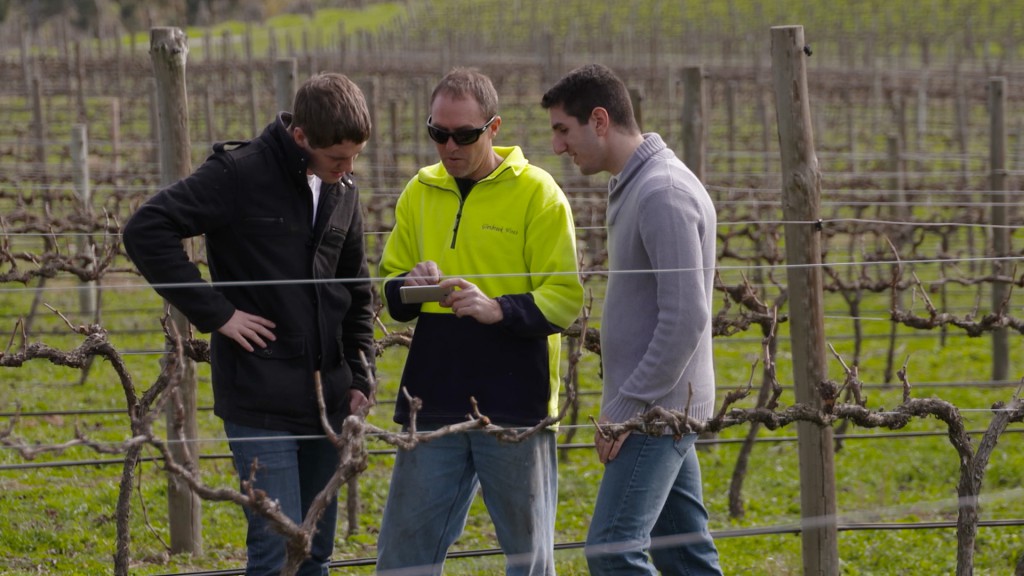
    As we gather more data, the opportunities to apply it become wider. A good example of this is Seer Insights, a South Australian company started by pair of university students that calculates the likely grape yields for vineyards.

    Seer Insights’ product Grapebrain is made up of two components, a mobile app that the farmer uses to count the grape clusters on the vines and then a cloud service that analyses the data and produces web based reports for the farmers.

    The current methods are notoriously unreliable with Seer Insights estimating mistakes cost the Australian viticulture industry $200 million a year as harvests are miscalculated resulting in either rotting fruit or wasted contractor fees.

    Born in an elevator

    Seer’s founders, Harry Lucas and Liam Ellul, started the business after a chance meeting on their university campus. “We started off doing this after being stuck in a lift together,” remembers Liam. “Originally we were looking at the hyper-spectrum imaging for broadacre farming but when we started looking at the problems we ended up talking to wine organisations about this.”

    “The technology predicts how many grapes will be coming off the vineyards at the end of the season to enable people to sort out their finances,” Harry says. “The growth process grapes go through is difficult to model so we use machine learning to do that.”

    For both the founders having an off the shelf product, in this case Microsoft’s machine learning tools, to run the data analysis made it relatively easy to launch the product.

    As a winner of Microsoft’s Tech eChallenge, the startup has won a trip to the United States as well as being profiled by the company as a machine learning case study.

    Over time as these tools become more accessible to small companies we’ll see more businesses accessing machine learning services to enhance their operations.

    As companies face the waves of data flowing into their businesses over the next decade, it will be those who manage it well and gather valuable insights from their information that will be the winners.

    Similar posts:

    • No Related Posts