Tag: apple

  • We come here to work

    We come here to work

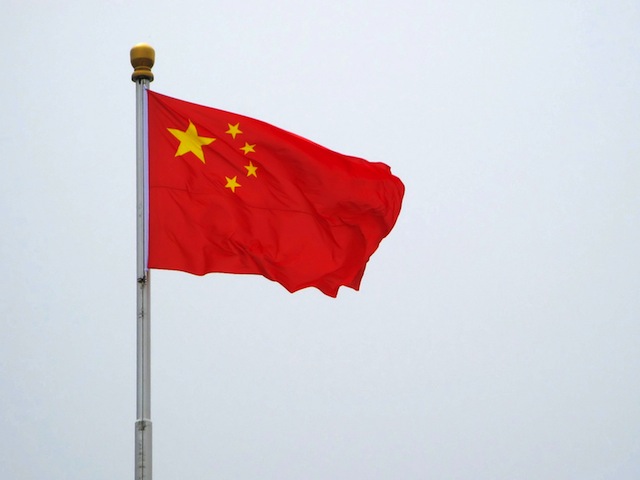
    “We come here to work and not to play” is the quote from a Chinese production line worker in Reuter’s article on Foxconn factory workers.

    That quote could have come from a hundred years ago in Western societies as young workers fled agricultural communities to make better money and find greater opportunities in the factories and cities of North America, Europe and Australia.

    In their report on Chinese labour conditions commissioned by Apple and its supplier Foxconn, the US Fair Labor Association confirmed the quotes from the Reuters article.

    48% thought that their working hours were reasonable, and another 33.8% stated that they would like to work more hours and make more money.

    These workers have an average 56 hour working week and over a third are putting in 70 hours each week.

    Like our great grandparents they are focused on bettering themselves and deeply conservative; they know their immediate livelihoods and future prospects depend upon the work they can get.

    They also understand the government owes them nothing and their expectations on what the authorities will do for them are low.

    It often said the Communist Party of China is the most effective capitalistic organisation on the planet today. In reality it’s the workers on the assembly lines who personify what we know as the free market.

    As the leaders of Western nations continue to indulge in corporate and middle class welfare while believing in magic pudding economics where massive mis allocations of resources have no cost and tax cuts pay for themselves, it might be worthwhile thinking of the businesses those 23 year old factory workers in Shenzhen or Chengdu might be running in thirty years.

    Just as our great-grandparents built modern economies and industrial empires out of their hard work, which most of us still reap the benefit from, those young Chinese workers are doing the same thing.


    Similar posts:

  • The tough world of smartphones

    The tough world of smartphones

    Dell’s announcement they are going to exit the Smartphone business – for the second or possibly even third time – comes on the same day Nielsen release a survey showing smartphones are now the bulk of US mobile phone purchases.

    For Dell this shows the problem they have in being locked into the commodity PC business, what was once a lucrative business is now suffering softening margins and slowing sales. In desperation they are looking to other product lines but struggle to differentiate themselves in other markets.

    The difficulties of doing this in the smartphone sector is shown in Nielsen’s analysis of what phones are selling.

    Of those sold in the last three months, a whopping 43% were Apple products while 48% were Google Android devices.

    Even more frightening in those Nielsen figures is Blackberry’s collapse where the Canadian product has 12% of the market but only 5% of sales in recent months. It’s little wonder Blackberry’s owner RIM is laying off senior managers.

    For Microsoft, that only 4% of phones were “other” than Android, Apple or RIM show just how tough the task of selling Windows Phone is going to be, something that won’t be helped with dumb marketing stunts.

    Google’s apparent success in mobile isn’t all that it seems either; while the Android platform has nearly half the smartphone market it doesn’t appear to be particularly profitable.

    The Guardian’s Charles Arthur looked at a number of legal cases involving Google’s mobile patents and extrapolated the claimed damages to get an estimate of how much Google earns from Android.

    Arthur estimates Android has earned Google $543 million dollars between 2008 and 2011 which, given Google’s mobile revenues last year were claimed to be $2.5 billion last year, indicates Google makes more money from Apple devices than it does from its own products.

    While Arthur’s estimates are debatable, they show how Apple’s profits dominate the smartphone market. Google, like Dell in computers, are locked into the commodity, low margin end of the market.

    Just as Dell have learned that entering new markets doesn’t guarantee success, Google may have to learn the same lesson.

    To be fair to Google, at least management are aware of being too dependent upon one major source of revenue.

    Whether mobile services built around the Android platform can provide an alternative cashflow of similar size to their web advertising services remains to be seen.

    Similar posts:

  • Insanely profitable

    Insanely profitable

    Apple’s announcement that they will start paying dividends to shareholders changes a number of things in Apple’s business model and those of many other businesses.

    The sheer size of Apple’s cash reserves also illustrate how profitable the outsourced manufacturing model is as well the contradictary nature of special pleading by affluent corporations.

    Moving a cash mountain

    Not only is Apple’s business insanely profitable, but sales are growing exponentially. In the company’s conference call, CEO Tim Cook reported that 37 million iPhones sold last quarter and 55 million iPads sold in the last two years.

    Apple’s CFO Peter Oppenheimer pointed out the company’s cash reserves increased $31 billion in 2011 and 2012 is on track for a similar result in 2012, leaving them plenty of money for investment along with a “warchest for strategic opportunities”.

    Paying a dividend

    The reluctance to pay dividends has been a feature of the US corporate for the last few decades and Apple are certainly not alone in not distributing their profits to shareholders.

    Companies like Microsoft, Google and Oracle -even Yahoo! once upon a time – have been just as profitable as Apple and their efforts to shrink their cash mountains has had some perverse effect.

    Many of these companies have squandered suprpluses on poorly thoughtout and badly executed buyouts of smaller businesses, this urge to avoid returning money to owner has been one of the drivers of the Silicon Valley VC Greater Fool model.

    Another result of fat profits is the rise of flabby, overstaffed management ranks at some of these companies. Although this certainly isn’t the case at Apple where Steve Jobs ran a very lean machine.

    The retail model

    Unlike their major tech competitors Apple is a manufacturing and retail business as well. In 2012, 40 new stores are planned around the world.

    This vertical control of their markets, from the beginings of the supply chain  to “owning” the end customer is anathema to modern MBA thinking and probably the area that gives them the greatest competitive advantage over their hardware competitors.

    Justifying Mike Daisy

    In some ways this announcement justfies Mike Dasy’s discredited criticisms about Apple’s Chinese suppliers.

    The reason for manufacturing these goods in places like China, India or Vietnam is the vastly cheaper cost of doing business, not just in labour rates but in reduced environmental and safety standards.

    Plenty of brand name clothing, footware and fashion accessory companies make similar massive profits to Apple with their ten, twenty and sometimes hundred fold markups on their products.

    Repatriating profits

    One of the big changes of Apple repatriating money is that is undercuts the special pleading by these extremely profitable companies that they should have a US tax holiday so they can repatriate their riches.

    It’s now clear these companies can easily afford to pay the taxes of their home countries and it’s time they started to, along with returning dividends to their shareholders.

    Once again Apple have changed the way others do business, how these changes affect the way we invest and governments treat companies is going to be one of the most interesting developments over the next decade.

    Similar posts:

  • So you call that journalism?

    So you call that journalism?

    On  the revelation his expose of Apple’s employment practice contains “significant fabrications”, Mike Daisy reached for the  “I am not a journalist and “my work is entertainment” excuses.

    This gutless and disingenuous defence is a common one used by those caught distorting facts or outright lying to advance their causes and enrich themselves.

    Perhaps the Mike Daisy expose, along with the sad events around the Stop Kony campaign, should make us consider who is a journalist and what journalism is.

    Is journalism reporting the facts as we seem them or describing the world around us? If so, does a “journalist” have to work for an established and recognised media outlet?

    The modern idea of warrior, professional journalism was born in the 1930s with celebrity journalists like Ernest Hemingway or Evelyn Waugh reporting from Spain or Ethiopia.

    In the 1960s we saw this idea become established through the Vietnam war and reached its peak in the early 1970s with the Watergate scandal.

    Today, someone who is an actor by trade can be appointed as the technology correspondent by a newspaper and automatically become a credible journalist in their field.

    At the same time someone with years of experience in their field — it could be food, travel, technology or anything else — is sneeringly derided as a “citizen journalist” by those who draw a cheque from the established, and dying, media should they decide to self publish.

    The sad thing is much of what is published as “journalism” by the established media outlets is entertainment and many of the “facts” reported are self interested propaganda promoting the latest music star or pushing a political agenda.

    All too often, those claiming to be credible journalists are being used to give the illusion of of credibility on things that simply aren’t true at all.

    We need to re-evaluate what journalism is and how misleading and self-interested reporting distorts debate, markets and the democratic process.

    A start would be in ditching the “journalism as entertainment” meme.

    Similar posts:

  • Who will be the future Betamaxes?

    Who will be the future Betamaxes?

    This morning Paypal announced its PayPal Here service, a gizmo that turns a smartphone into a credit card reader.

    On reading PayPal’s media release in the pre-dawn, pre-coffee light I found myself grumpily muttering “which platforms?” as the announcement kept mentioning “smartphones” without saying whether it was for iPhone, Android or other devices.

    It turns out to be both Google Android and Apple iOS. It adds an interesting twist to the Point Of Sale market we’ve looked at recently.

    The omission of platforms like Windows Phone raises the question of which platforms are going to go the way of Betamax?

    Sony’s Betamax and JVC’s VHS systems were the dominant competitors in the video tape market in the early 1980s. They were totally incompatible with each other and users had to make a choice if they wanted to join one camp or the other when they went to buy a video recorder.

    On many measures Betamax was the better product but ultimately failed because VHS offered longer program times and Panasonic’s licensing out of their technology meant there were more cheaper models on the market.

    A few days ago Bloomberg Businessweek listed the Betamax device as one of the “technology’s failed promises”

    With a superficial comparison, Apple would seem to the Betamax while Google and possibly Microsoft are the VHS’s given their diverse range of manufacturers their systems run on and Apple’s refusal to license out iOS, which was one of the reasons for Sony’s failure.

    But it isn’t that simple.

    In the smartphone wars, it’s difficult to compare them to VCRs as the video tape companies never controlled content and advertising the way smartphone systems do – although Sony did buy Columbia Studios at the peak of the Japanese economic miracle in 1987.

    This control of content is what makes the stakes so high in the smartphone and tablet operating systems war. A developer or business that dedicates their resources to one platform could find themselves stranded if that platform fails or changes their terms of services to the developer’s detriment.

    Another assumption is there is only room for one or two smartphone systems; it could turn out the market is quite happy with two, three or a dozen different systems and incompatibilities can be overcome with standards like HTML5.

    In a funny way, it could turn out to be Android becomes the Smartphone Betamax due to having too diverse a range of manufacturers.

    One of the first questions that jumps out when someone announces a new Android app is “which version?” The range of Android versions on the market is confusing customers and not every app will run on each version.

    More importantly for financial apps like PayPal Here and Google Wallet, smartphone updates include critical security patches so many of the older phones that miss out on updates pose a risk to the users.

    In the financial world confidence is everything and if customers aren’t confident their money is safe or will be promptly refunded in the event of fraud they won’t use the service.

    Whether this uncertainty will eventually deal Google out of the game or present an opportunity for Microsoft and other companies is going to be one of the big questions of the mobile payments market.

    Similar posts: