Tag: apple

  • A tale of two business models

    A tale of two business models

    The stunning quarterly results of Apple announced yesterday compared to Microsoft’s indifferent performance illustrate how the fortunes of two different business cultures have changed.

    Apple yesterday announced a spectacular result for its quarter finishing at the end of last year with  revenues up 30%, profits by 38% and Earnings Per Share just short of fifty percent.

    The announcement was an emphatic vindication for Tim Cook and his management team who made some big bets on the larger form factor iPhone 6 which paid off spectacularly with shipments growing 46% to 74.5 million and revenue reaching $51.2 billion, over two thirds of the company’s total sales.

    One notable aspect of Apple’s success is the difference with Microsoft’s and this shows how different business cultures come in and out of fashion.

    The Triumph of the MBA

    For two decades Microsoft’s licensing business model was dominant and this confirmed the MBA view that companies should do everything they can to move design, research, manufacturing and distribution out of their operations – the virtual corporation where there was no inventory, few costs and even fewer risks was the ultimate aim of the modern manager at the turn of the century.

    Microsoft encapsulated this philosophy with its licensing model, while the company made massive sales with huge margins – as it still does – all the business risks in the computer market were carried by resellers and equipment manufacturers. For many years the markets loved this.

    Apple tinkered with the licensing model under John Sculley in the mid 1990s during Steve Jobs’ exile but was never really serious about giving away its hardware capabilities and in 2001 moved into retail with the opening of the first Apple Store.

    Coupled with the App Store, Apple have come to control the entire customer journey from marketing, design, purchase and ongoing revenue after the product is bought.

    King of the new Millennium

    While the 1980s and 90s were the time of triumph for the Microsoft model, the 2000s have been good to Apple as shown by the revenue and profit figures.

    Apple and Microsoft Revenues 2000-2014
    Apple and Microsoft Revenues 2000-2014
    Apple and Microsoft Profits 2000-2014
    Apple and Microsoft Profits 2000-2014

    The key inflection point in these charts is, of course, the iPhone’s release in 2007. Apple caught the wave of change as computer use switched from personal computers to smartphones and is now the dominant vendor.

    For Microsoft the success of Apple is bittersweet; the company had a smartphone operating system in Windows CE but it was too early to the market and the devices vendors went to market with were, at best, substandard.

    Microsoft’s failure with the smartphone was also echoed with tablet computers and exposed the licensing model’s reliance on vendors to supply and support decent products, even today Microsoft’s hardware partners struggle to release decent tablet systems.

    Cloudy on the web

    Another problem that exposed Microsoft’s weaknesses was the rise of the web where hardware and operating systems really did matter so much any more. Along with pushing out personal computer lifecycles it also had the consequence of allowing other systems into the marketplace, notably Linux and Google Android.

    With OS X, Android and Linux systems no longer hampered with the compatibility issues that irritated non-Windows users in the 1990s the market was open to adopting those systems. While the PC market has remained quite loyal to Windows, although the Apple Macs are showing serious growth as well, Microsoft’s system has barely any marketshare in other device segments except servers which are also declining as business increasingly move to cloud services.

    Apple have shown in the computing and smartphone business that controlling the hardware products is as important as supplying the software, a lesson that Microsoft now acknowledges with its restructure into a ‘Devices and Services’ company under former CEO Steve Ballmer.

    The problem for Microsoft is its margins for hardware are a fraction of its own licensing operations and weak compared to Apple’s returns. Microsoft makes 14% profit on its phone operations while the iPhone is estimated to deliver over 60%.

    Under current CEO Satya Nadella Microsoft is focusing on cloud services which also aren’t as profitable as its legacy operations but see it competing with companies like Amazon and Google who don’t boast the profits from their online operations that Apple makes from its hardware.

    Microsoft aside, the lesson Apple gives the technology is pertinent for its competitors in the smartphone space as well; companies like Samsung, LG and the army of Chinese handset vendors are going to find their markets tough unless they can take control of their software development and distribution channels – relying on Google for Android and telcos to get their phones to customers leaves them exposed in similar ways to Microsoft’s partners in the last decade.

    In the battle between business models, Apple is the current winner and shows throwing all of your business operations over the fence to partners and licensees is a risky strategy. How those lessons are applied in other sectors will test the limits of both management philosophies.

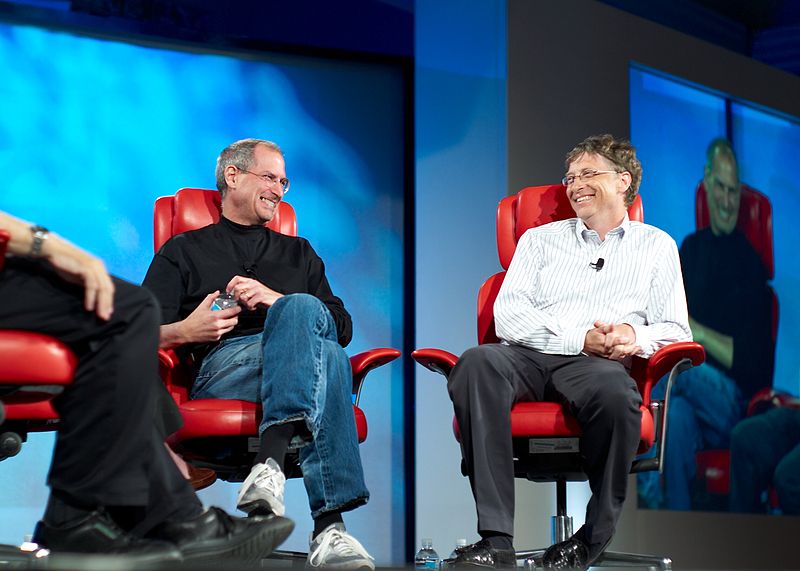
    Photo of Steve Jobs and Bill Gates by Joi Ito through Flickr
    Similar posts:

  • Daily links – Twitter founder on social media, teenagers online and tech employment

    Daily links – Twitter founder on social media, teenagers online and tech employment

    Links today have a bit of a social media theme with Twitter co-founder Ev Williams explaining his view that Instagram’s numbers don’t really matter to his business while researcher Danah Boyd explains the complexities of teenagers’ social media use.

    Apple’s patents and why the tech industry is firing, not hiring, round out today’s stories.

    Feel the width, not the quality

    Twitter co-founder Ev Williams attracted attention last month with his comment that he couldn’t care about Instagram’s user numbers, in A Mile Wide, An Inch Deep he explains exactly what he meant at the time and why online companies need to focus more on content and value.

    Apple gets patent, GoPro shares drop

    One of the frustrations with following the modern tech industry is how patents are used to stifle innovation. How an Apple patent for something that seems obvious caused camera vendor GoPro’s shares to fall is a good example.

    Why is the tech industry shedding jobs?

    Despite the tech industry’s growth, the industry’s giants are shedding jobs. This Bloomberg article describes some of the struggles facing the tech industry’s old dinosaurs.

    An old fogey’s view of teenagers’ social media use

    Researcher Danah Boyd provides a rebuttal of the story about young peoples’ use of social media. “Teens’ use of social media is significantly shaped by race and class, geography and cultural background,” she says. Sometimes it’s necessary to state the obvious.

    Similar posts:

    • No Related Posts
  • Daily links – the future of Google, Silicon Valley’s name and how startups die

    Daily links – the future of Google, Silicon Valley’s name and how startups die

    On many measures Google are in trouble, but one analyst thinks we’re panicking and his view is the lead of today’s links of the day. We also look at how the name ‘Silicon Valley’ came about, why solar power is getting cheaper and how some startups die.

    Does Google’s future lie in R&D?

    “Google is down but it’s not out” is the warning of this analyst’s report on the company’s earnings and strategy. Interestingly Google outspends Apple by $4bn a year on research and development, but both of them are dwarfed by Microsoft’s spending, which indicates R&D investment doesn’t guarantee success.

    The origins of the name ‘Silicon Valley’

    Last Sunday marked the 44th anniversary of the first time the label ‘Silicon Valley’ appeared in print. The US Computer History Museum looks at how the name came about and no-one will be surprised it was a marketing person who coined it.

    Why does solar power keep getting cheaper

    A few years ago putting solar cells on a building was expensive, now in many parts of the world the price of PV panels is becoming competitive with mains power. Vox Magazine looks at the factors driving the price drops and finds that economies of scale are now the main factor affecting the falling cost of installed solar power systems.

    RIP Urbanspoon

    One of the earliest food review platforms was Urbanspoon which was founded on the basis it would only grow as a bootstrapped company. In 2009 the founders sold out to a larger company who have now sold it onto an Indian business who is going to shut the name down.

    Startups who’ve fallen off the map

    Business Insider lists 17 formerly hot businesses who’ve fallen out of the public view this year, while some of them haven’t disappeared, it’s a list that reminds us that most new businesses, particularly tech startups, fail.

    Similar posts:

    • No Related Posts
  • Daily links

    Daily links

    Today’s links are somewhat more upbeat; starting with Apple extending its lead over Android in smartphone activations, a teenager’s view on social media and Google’s declining market share.

    Apple takes the lead in smartphone activations

    In their regular survey of mobile phone activations, research company Kantor found that Apple have taken the lead back from Android phones.  The Kantar Worldpanel ComTech global consumer panel monitors the brands of phones being connected through selected apps to give them an idea of what’s going on in the smartphone marketplace.

    While not an absolute numbers, and one that was inflated by the new range of Apple iPhones released late in the year, it’s clear Apple are by no means out for the count when it comes to the smartphone market.

    What teenagers think of social media

    I’m not sure how accurate or scientific this story is, but it illustrates how complex the social media industry is and how dangerous assumptions are with what age groups use new media channels for.

    How boring can driverless cars be?

    Another story points out driverless cars are actually quite boring to ride in. Maybe we’ll all catch the train insead.

    Google loses market share

    Since signing an agreement with Firefox to be the default search engine provider, Yahoo! sees its share of the marketplace spike upwards. Should Google be worried?

    So you thought a tech job was safe?

    Document service Evernote cuts jobs proving that even a job in the hottest parts of the tech sector isn’t safe. Notable in this story is the concentration of employment in two locations which shows Silicon Valley isn’t keen on remote working at all.

    Similar posts:

  • Apple looks dangerous in the payment wars

    Apple looks dangerous in the payment wars

    Apple are making great gains in the online payment space but the battle with Google Android, PayPal and the banks to control the market is far from over.

    One of the biggest business struggles this blog has been watching for the last five years is the battle over payment systems as banks, credit card companies, telcos and technologies vendors have jostled for control of what will probably the world’s most lucrative market by the end of the decade.

    Apple were late to that fight with their Pay service only being released a few months ago however according to a report by ITG Investment Apple’s service is already ahead of PayPal in terms of usage among new adopters.

    While PayPal have an impressive range of technologies, it’s clear they have found themselves wrong footed by Apple and have new companies like Stripe also challenging their market position.

    Apple Pay may be getting the headlines, but at present Google Android still dominates the mobile commerce industry according to another research company Criteo.

    In their State of Mobile Commerce report, Criteo claims that globally Android is well ahead in smartphone transactions. An interesting aspect of Criteo’s report is how far behind many nations such as Japan, South Korea and Germany the United States is in the take up of mobile commerce.

    Criteo’s report shows the battle to control the e-commerce space is far from over, however if Apple Pay can grab a large chunk of the payments market then the company will have a strong hold on key part of global industry. It remains a high stakes and uncertain battle.

    Similar posts:

    • No Related Posts