Tag: artificial intelligence

  • What happens when machines start to learn

    What happens when machines start to learn

    Computer programming is one of the jobs of the future. Right?

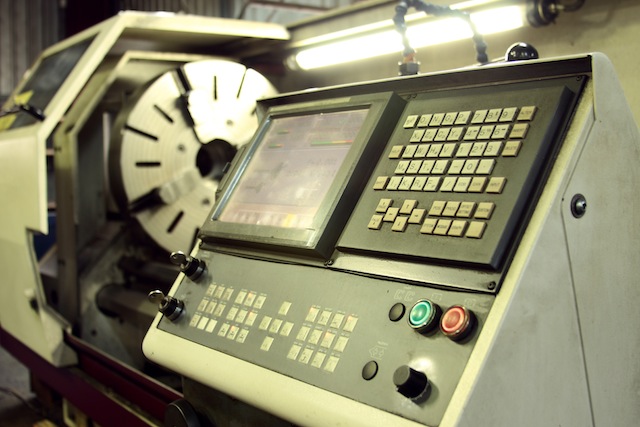
    Maybe not, as Japanese industrial robot maker Fanuc demonstrates with their latest robot that learns on the job.

    The MIT Technology Review describes how the robot analyses a task and fine tunes its own operations to do the task properly.

    Fanuc’s robot uses a technique known as deep reinforcement learning to train itself, over time, how to learn a new task. It tries picking up objects while capturing video footage of the process. Each time it succeeds or fails, it remembers how the object looked, knowledge that is used to refine a deep learning model, or a large neural network, that controls its action.

    While machines running on deep reinforcement learning won’t completely make programmers totally redundant, it shows basic operations even in those fields are going to be increasingly automated. Just knowing a programming language is not necessarily a passport to future prosperity.

    Another aspect flagged in the MIT article is how robots can learn in parallel, so groups can work together to understand and optimise tasks.

    While Fanuc and the MIT article are discussing small groups of similar computers working together it’s not hard to see this working on a global scale. What happens when your home vacuum cleaner starts talking to a US Air Force autonomous drone remains to be seen.

    Similar posts:

    • No Related Posts
  • How artificial intelligence can outguess people

    How artificial intelligence can outguess people

    It’s hard to spot locations from a photograph and it’s something people can’t do this very well. MIT’s Technology Review reports Google’s researchers have developed a tool that figures out the location of an image with twice the accuracy of humans.

    To illustrate their point Google have their Geoguesser game that allows people to pit their knowledge against the computer.

    While this could be seen as a gimmick, it again shows how computing power is being used in areas that were seen as being immune from technology not so long ago and how artificial intelligence will be applied in various fields.

    For the moment, applying artificial intelligence to seemingly trivial fields like games gives researchers to opportunity to test it before being applied to areas like cancer treatment.

    As artificial intelligence advances, a whole range of existing fields are going to be disrupted – particularly in ‘knowledge industry’ fields like law, consulting and management – while new industries and occupations will arise out of these technologies.

    Similar posts:

    • No Related Posts
  • Replacing Japan’s workers with robots

    Replacing Japan’s workers with robots

    Nearly half of Japan’s jobs could be done by computers, robots or artificial intelligence in the near future, says the Nomura Research Institute.

    In working with Oxford University’s Martin Program on Technology and Employment, the Nomura Research Institute examined 601 job classifications that currently employ 42.8 million Japanese.

    Using the Oxford University methodology, the Japanese researchers estimated more than two thirds of the roles could be automated with nearly half of all Japanese workers being potentially replaced by computers.

    Previously the Martin program has estimated  47 per cent of the United States’ workforce and just over a third of Britain’s are vulnerable to similar changes. Anyone who’s visited or lived in Japan wouldn’t be surprised at the relatively high level of vulnerability given the degree of manual jobs still being done in Japanese society that were long ago lost in the rest of the western world.

    For Japan, replacing workers with robots isn’t a bad option given the population is aging force and the nation is at best reluctant to import immigrants to address skills shortages. It’s not surprising the country is probably the most advanced at deploying robots in workplaces.

    How this will work for an aging Japan that has to support an increasingly older population will be fascinating to see. For other western countries – or even China – facing similar pressures, the Japanese will be providing important lessons.

    Similar posts:

    • No Related Posts
  • Open sourcing artificial intelligence

    Open sourcing artificial intelligence

    Silicon Valley leaders including Peter Thiel, Elon Musk and Reid Hoffman have pledged a billion dollars towards the OpenAI foundation to open source the development of Artificial Intelligence.

    With one of the greatest challenges facing business, political and community leaders in coming being how to deal with the massive amounts of data generated by the Internet of Things and pervasive computers, this is a major step in making the tools available to everyone.

    With both Google and Facebook opening their AI platforms in recent weeks, it seems the consensus in the tech industry is that open source is the way to develop these technologies. As a consequence we may see them become commonplace a lot faster than expected.

    Similar posts:

    • No Related Posts