Tag: big data

  • Understanding the social media whispers

    Understanding the social media whispers

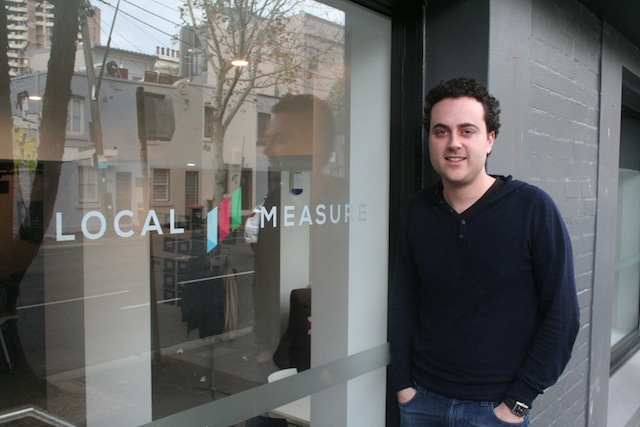
    What do you do when paying customers tell you they would rather your product be different to what you were offering? This is the predicament that faced Jonathan Barouch when he discovered the real market for his Roamz service was in social media business intelligence.

    How Jonathan dealt with this was the classic business pivot, where the original idea of Roamz evolved into Local Measure.

    Originally Roamz was set up to consolidate social services like Twitter, Foursquare and Facebook. If you wanted to find a restaurant, bar or hotel in your neighbourhood, Roamz would pick the most relevant reviews from the various services to show you what was in your neighbourhood.

    The idea for Roamz came from when Jonathan was looking for places to take his new baby, jugging several different location services to find local cafes, shops or playground is hard work when you have a little one to deal with.

    A notable feature of Roamz was the use of geotags to determine relevance. Even if the social media user doesn’t mention the business, Roamz would use the attached location information to determine what outlet was being discussed.

    Enter Local Measure

    While Roamz was doing well it wasn’t making money and, in Jonathan’s words, it was a “slower burn, longer term play”. On the other hand businesses were telling him and his sales team that they would pay immediately to use the service to monitor what people were saying about them on social media.

    “People said, ‘hey this is cool, we want to pay for this.” Jonathan said of the decision to pivot Roamz into Local Measure.

    “I want to say it was a really difficult decision but it wasn’t because we had people saying ‘we want to pay you if you continue with this product.’”

    Local Measure is built on the Roamz platform but instead of helping consumers find local venues, the service now gives businesses a tool to monitor what people are saying about them on social media services.

    The difference with the larger social media monitoring tools like Radian6 is Local Measure gives an intimate view of individual posts and users. The idea being a business can directly monitor what people are saying are saying about a store or a product.

    For dispersed companies, particularly franchise chains and service businesses, it gives local managers and franchisees the ability to know what’s happening with their outlet rather than having to rely on a social media team at head office.

    The most immediate benefit of Local Measure is in identifying loyal users and influencers. Managers can see who is tweeting, checking in or updating their status in their store.

    Armed with that intelligence, the local store owner, franchisee or manager can engage with the shop’s most enthusiastic customers.

    Customer service is one of the big undervalued areas of social media and Jonathan believes Local Measure can help businesses improve how they help customers.

    “It makes invisible customers visibile to management,” says Jonathan.

    An example Jonathan gives is of a cinema where the concession’s frozen drink machine wasn’t set currently. While the staff were oblivious to the issue, customers were complaining on various social media channels. Once the theatre manager saw the feedback he was able to quickly fix the problem.

    Employee behaviour online is also an important concern for modern managers, if employees are posting inappropriate material on social media then the risks to a business are substantial.

    “From an operational point perspective we’ve picked up really weird and wonderful things that the business doesn’t know,” says Jonathon. “Staff putting things in the public domain that is really damaging to brands.”

    “We’ve had two or three cases of behaviour that you shudder at. I’ve been presenting and it has popped up and the clients have said ‘delete that, we don’t want that up’ and I say ‘that’s the whole point – it’s out there.’”

    That’s a lesson that Domino’s Pizza learned in the US when staff posted YouTube videos of each other putting toppings up their noses. Once unruly employees post these things, it’s hard work undoing the brand damage and for smaller businesses or franchise outlets the bad publicity could be fatal.

    Local Measure is a good example of a business pivot, it’s also shows how concepts like Big Data, social media and geolocation come together to help businesses.

    Being able to listen to customers also shows how marketing and customer service are merging in an age where the punters are no longer happy to be seen and not heard.

    It’s the business who grab tools like Local Measure who are going to be the success stories of the next decade, the older businesses who ignore the changes in customer service, marketing and communications are going to be a memory.
    Similar posts:

  • Coming to your city – the internet of machines

    Coming to your city – the internet of machines

    An intriguing infographic from Spanish sensor manufacturer Libelium – which to Australian ears sounds like a new age defamation law firm – illustrates how the internet of things is being used in all walks of life from shipping containers to park benches.

    The notable thing about the diagram is pretty well all of the sensor applications have been available for years – in some cases decades – and its only with the arrival of cheap sensors and pervasive internet access that widespread monitoring has becoming possible.

    Libelium smart world infographic

    With affordable, even disposible, sensors coupled with internet projects like Google Loon and Australia’s National Broadband Network, these networks are now possible at a price that won’t sink a government’s budget.

    In fact these sensor networks will probably improve councils’ and governments’ budgets as they promise to improve the efficiency of services like rubbish collection and street repairs.

    The real challenge is managing all the data this equipment gathers, that’s going to be one of the big jobs of the next decade.

    Similar posts:

  • Smart cities and the sensors in your pocket

    Smart cities and the sensors in your pocket

    National Public Radio’s Parallels program has story on how the Spanish city of Santander is wiring itself as a ‘smart city’ with a network of sensors wiring everything from garbage bins to parking spots.

    The hope with the sensors is they’ll will improve local government’s services, allowing things like more efficient garbage collection and better pricing of parking meters.

    What’s notable about the story is that smartphones are included as ‘sensors’ with Santander residents being able to submit data from their handsets.

    The idea of smartphones as sensors isn’t new — pothole reporting apps were early to the iPhone — the increased sophistication of handsets and improved tracking technology is making them more powerful.

    So we have another Big Data problem with local councils being flooded with information.

    Processing all this information is going to require the community pitching in so the data is going to have to open.

    Once governments make the data open it also creates opportunities for smart entrepreneurs to create new services and technologies.

    Creating new opportunities is a hope of government sensor programs around the world, including Tasmania’s Sense-T project .

    With factors like water quality and weather being monitored, existing sectors become more efficient and new industries are being created.

    Hopefully the urge to hoard this rich, community data will be resisted by governments.

    Similar posts:

  • Big data’s big truths

    Big data’s big truths

    One thing former Obama 2012 campaign CTO Harper Reed cannot be accused of is subtlety so his statement at the Sydney CeBIT conference last week that Big Data is Bullshit wasn’t wholly surprising.

    Reed has a good point – like all IT industry buzzwords there is a fair degree of hype and BS around Big Data although his referring to it as a storage problem misses the point.

    Data storage is a problem largely solved; when we’re talking about Big Data today, we’re talking more about analysing the information and managing the life cycle of an organisation’s data.

    Not that these issues are new, the tech industry has been dealing with the challenges of storing, managing and analysing data since computers first appeared. In fact, that’s the reason computers were invented.

    An excellent NY Times Bits blog post expands on Harper’s views and rebuts many of the myths and hype around big data.

    Most important is the point that big data is not the truth, we can torture those bits and bytes to tell us anything we like.

    Claims that Big Data can tell us everything or that it will conquer discrimination and make cities smarter are fanciful. It all depends on how we choose to use the data.

    There are downsides with Big Data too — we live in an age where it’s easier to let the algorithm do the work and if the computer says ‘no’, then we can shrug and say “sorry it’s beyond our control.”

    Letting the algorithms run our lives is one of many risks, but it doesn’t change the opportunities for businesses, governments and communities Big Data presents. If we can understand our world better, we can do smarter things.

    That’s the real opportunity with Big Data and we don’t need the hype to tell us that.

    Similar posts:

  • ABC 702 mornings – Storage and your computer

    ABC 702 mornings – Storage and your computer

    This morning on 702 Sydney I’m talking to Linda Mottram on the decidedly unsexy topic of storage – hard drives, cloud computing and the struggle to keep up with ever expanding file sizes of documents, photos and downloads.

    It’s an opportunity to revisit the How Much Data Does The Internet Need topic which I covered for Radio National last year, although almost certainly that needs updating.

    Earlier this year networking vendor Cisco released its 2013 Virtual Networking Index which forecast global data traffic growing fourteen fold over the next five years.

    Those bytes slopping around the internet have to come to rest on someone’s hard drive and this is what’s driving the storage crisis.

    Yesterday US business site Venture Beat had an op-ed by an executive from Seagate, the world’s biggest hard drive manufacturer where he discussed the storage challenges with a claim from industry consultants IDC that worldwide computer storage is 2.7 zettabytes.

    A zettabyte is a trillion gigabytes, or ten followed by twenty zeros – it’s the equivalent of a billion one terabyte hard drives that are standard on most cheap desktop computers.

    Where those hard drives are located is the big challenge, is it on your laptop, smartphone or on a somewhere on a cloud service?

    The other big challenge is what do you do with all this information – which is where the Big Data discussion comes in.

    While data storage is a mundane topic, it’s a big one that matters. I hope you can tune in.

    We’d love to hear your views so join the conversation with your on-air questions, ideas or comments; phone in on 1300 222 702 or post a question on ABC702 Sydney’s Facebook page.

    If you’re a social media users, you can also follow the show through twitter to @paulwallbank and @702Sydney.

    Similar posts: