
Tag: big data

  • What happens when software is wrong

    What happens when software is wrong

    The Las Vegas Review Journal yesterday told the story of Wayne Dobson, a retiree living to the north of the city whose home is being fingered as harbouring lost cellphones thanks to a software bug at US telco Sprint which is giving out the wrong location of customer’s mobile devices.

    While it appears funny at first the situation is quite serious for Mr Dobson as angry phone owners are showing up at his home to claim their lost mobiles back.

    Making the situation even more serious is that 911 calls are being flagged at coming from his home and already he has had to deal with one police raid.

    While the local cops have flagged this problem, it’s likely other agencies won’t know about this bug which exposes the home owner to some serious nastiness.

    That a simple software bug can cause such risk to an innocent man illustrates why we need to be careful with what technology tells us – the computer is not always right.

    Another aspect is our rush to judgement,  we assume because a smartphone app indicates a lost mobile is in a house that everyone inside is a thief. That the app could be wrong, or we don’t understand the data to properly interpret it, doesn’t enter our minds. This is more a function of our tabloid way of thinking rather than any flaws in technology.

    The whole Find My Phone phenomenon is an interesting experiment in our lack of understanding risk; not only is there a possibility of going to the wrong place but there’s also a strong chance that an angry middle class boy is going to find himself quickly out of his depth when confronted by a genuine armed thief.

    For Wayne Dobson, we should pray that Sprint fixes this problem before he encounters a stupid, violent person. For the rest of us we should remember that the computer is not always right.

    Similar posts:

  • Customer lock in as a business asset

    Customer lock in as a business asset

    US booksellers Barnes and Noble has been struggling for years and things aren’t getting better reports the New York Times.

    An important part of the New York Times story is the quote from a Forrester industry analyst,

    “The problem is not whether or not the Nook is good,” said James L. McQuivey, a media analyst for Forrester Research. “What matters is whether you are locked into a Kindle library or an iTunes library or a Nook library. In the end, who holds the content that you value?”

    Locking in customers lies at the heart of the Kindle and iTunes business model. Once users have a substantial investment in their book or music collections on one platform it’s unlikely they will go elsewhere as the costs, and risks, of moving are too great.

    This doesn’t always end well for the customer and it gives online businesses great power which they often misuse.

    Every online business tries to lock their customers into their ecosystem – Google, Amazon, Facebook and Apple are the most successful but every single social media and cloud service tries to make it hard for users take their business elsewhere.

    In some respects this is no different to the phone company or bank which have historically tried to lock customers into their services, but the online social media, cloud computing and e-commerce platforms make a much more ambitious grab for their users’ data and assets like music and book collections.

    The New York Times article illustrates just how critical that user lock in is to the success of online businesses. The question for us as consumers is how much we want to be locked inside the web’s walled gardens.

    Similar posts:

  • Big data, mobile apps and smarter logistics – why Avis is buying Zipcar

    Big data, mobile apps and smarter logistics – why Avis is buying Zipcar

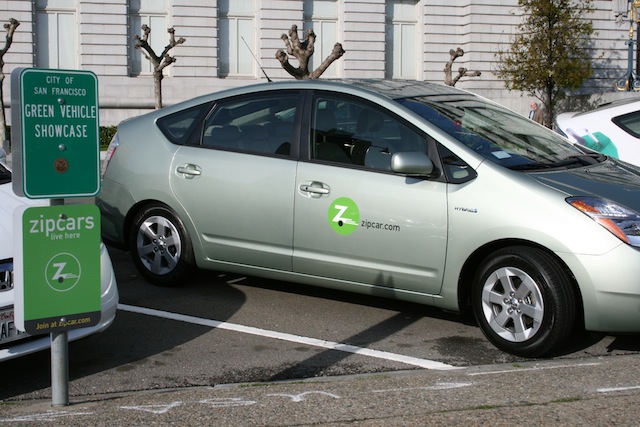
    With no bad press over New Year’s Eve it looks like hire car service Uber avoided the surge pricing traps of 2011 and the good news continues for the online booking industry with the news that Avis is buying car sharing service Zipcar.

    Assuming the acquisition isn’t another example of the greater fool investment model, Avis’ purchase of Zipcar makes good sense in expanding the hire car giant’s footprint into the share car business.

    Regrettably Avis use the 1980s term “synergies” four times in their media release but it does seem the businesses are a good fit both in fleet sharing and improving both company’s services.

    Zipcar’s technology is another asset which Avis can use,  with the car sharing service’s ability to track vehicle locations meaning better fleet management for the hire car business.

    Car sharing logistics

    The logistics angle of car share services is something that’s been highlighted by Uber’s CEO Travis Kalanick at various times, most recently at the service’s Sydney launch last November.

    Another aspect of the car sharing and hire car booking services is their Big Data advantages which the online startups bring.

    Historically, car hire companies have been reasonably good at gathering data on their customers with loyalty schemes, direct mailing and plugging into airline frequent flier programs. However they have been left behind by the Big Data boom in recent years.

    Companies like Zipcar, Uber and taxi hailing apps like GoCatch have big data in their DNA, having been founded in the era of cloud computing and social media they have access to more information and a better ability to use the knowledge they gather.

    Predicting the price surges

    At Uber’s Sydney launch Kalanick described how Uber’s traffic volumes increase in San Francisco when the Giants win a game, the interesting thing is that the surge happens three hours before the match starts.

    Insights like the traffic patterns around football games and holidays are gold to a high inventory business like hire car services. They are also important to the entire logistics industry.

    This latter point is probably the most overlooked part of all with the current rush into social and mobile based apps – the market intelligence that these services gather.

    While it’s tempting to dismiss that market intelligence as just monitoring who likes cats or cheeseburgers, the application of that data is transforming supermarkets, airlines and even concert venues.

    Avis seem to have understood that it will be fascinating to see how they will use Zipcar’s data and whether their competitors will figure out the importance of what these services offer.

    Similar posts:

  • Blind faith in the algorithm

    Blind faith in the algorithm

    It’s fairly safe to say Apple’s ditching of Google Maps for their own navigation system has proved not to be company’s smartest move.

    The humiliation of Apple was complete when the Victoria Police issued a warning against using the iPhone map application after people became lost in the desert when following faulty directions to the town of Mildura.

    Mapping is a complex task and it’s not surpising these mistakes happen, particular given the dynamic nature of road conditions and closures. It’s why GPS and mapping systems incorporate millions of hours of input into the databases underlying these services.

    Glitches with GPS navigations and mapping applications aren’t new. Some of the most notorious glitches have been in the UK where huge trucks have been directed down small country lanes only to find themselves stuck in medieval villages far from their intended location.

    While those mishaps make for good reading, there are real risks in these misdirections. One of the best publicised tragedies of mis-reading maps was the death of James Kim in 2007.

    Kim, a well known US tech journalist, was driving with his family from Portland, Oregan to a hotel on the Pacific Coast in November 2006 when they tried to take a short cut across the mountains.

    After several hours driving the family became lost and stuck in snowdrifts and James died while hiking out to find help. His wife and two children were rescued after a week in the wilderness.

    Remarkably, despite warnings of the risks, people still get stuck on that road. The local newspaper describes it the annual ritual as find a tourist in the snow season.

    Partly this irresponsibility is due to our modern inability to assess risk, but a more deeper problem is blind faith in technology and the algorithms that decide was is good and bad.

    A blind faith in algorithms is a risk to businesses as well – Facebook shuts down accounts that might be showing nipples, Google locks people out of their Places accounts while PayPal freeze tens of thousands of dollars of merchants’ funds. All of these because their computers say there is a problem.

    Far more sinister is the use of computer algorithms to determine who is a potential terrorist, as many people who’ve inadvertently found themselves on the US government’s No Fly List have discovered.

    As massive volumes of information is being gathered on individuals and businesses it’s tempting for all of us to rely on computer programs to tell us what is relevant and to join the dots between various data points.

    While the computers often right, it is sometimes wrong as well and that’s why proper supervision and understanding of what the system is telling people is essential.

    If we blindly accept what the computer tells us, we risk being stuck in our own deserts or a snowdrift as a result.

    Similar posts:

  • Rethinking customer support

    Rethinking customer support

    One of weaknesses in most organisations is getting customer service right, good support takes time which costs money and leads many big and small companies  to scrimp on support to save a few costs.

    In a conversation with BMC Software’s Suhas Kelkar about customer support – Remedy, one of the biggest helpdesk software packages is a BMC product – the discussion turned to how the process has changed in recent years.

    Not too long ago we reached for manuals, but those vanished as CDs and then downloads became common. Then we’d call the manufacturer’s helpline or our unfortunate store who sold us the item.

    Today we Google a problem to see if we can find a quick solution and if that fails we reach out to our social networks by posting the question on Twitter or Facebook. We may even post the problem to a support forum to see if anyone has an answer.

    Only if can’t find the solution anywhere else do we call the support line, for most of us it is the last resort.

    In some ways this is a success for corporate cost cutting as most of us call a “helpline” only in desperation as we’ve trained to expect long waits, confusing menus and poorly trained operators.

    That model developed in the 1980s – in order to pay rockstar salaries to executives it was necessary to cut staff wages and training costs with after sales support often being the first business area to suffer cuts.

    Eventually this started to backfire and the Dell Hell saga as one of the leading examples where the computer manufacturer’s lousy support became industry legend. It’s fair to argue that Dell has never quite recovered from the damage the period of poorly outsourced support did to their brand.

    To repair the damage to their brand, Dell adopted a crowdsourced support model where company forums were available for customers to ask about problems with the hope other customers could answer before expensive staff became involved. Eventually other companies adopted this system.

    Social media has created a doubled-edged sword for businesses, it’s easier for people to ask their friends for help but it also increases the risk of brand damage if online posts aren’t monitored and responded to.

    All of this is forcing a rethink of how customer support works. For businesses big and small, social media and crowdsourcing tools are changing the way we talk to customers and how they can talk about us.

    The big data push is also changing customer support as businesses now have the computing power available to mine knowledge bases, issue registers and call logs to identify market trends and weaknesses in their products or sales teams.

    For business owners and managers stuck in the 1980s ways of customer support, they are in for a wretched time over the next few years.

    Similar posts: