Tag: Blackberry

  • Maintaining the BlackBerry ecosystem: A review of the Passport smartphone

    Maintaining the BlackBerry ecosystem: A review of the Passport smartphone

    “Man, it’s a BlackBerry!” Exclaimed the assistant at the T-Mobile store on San Francisco’s Financial District, “I haven’t seen one of those in years.”

    Generally that was the reaction in taking a BlackBerry around; a lot of bemused comments along with the the odd wistful reminiscence, usually from a forty something lawyer or banker, about how they used to love their BlackBerry back in the day.

    So is the Passport is enough to rekindle Blackberry’s fortunes, or at least keep the company going until CEO John Chen can execute his Internet of Things strategy around QNX?

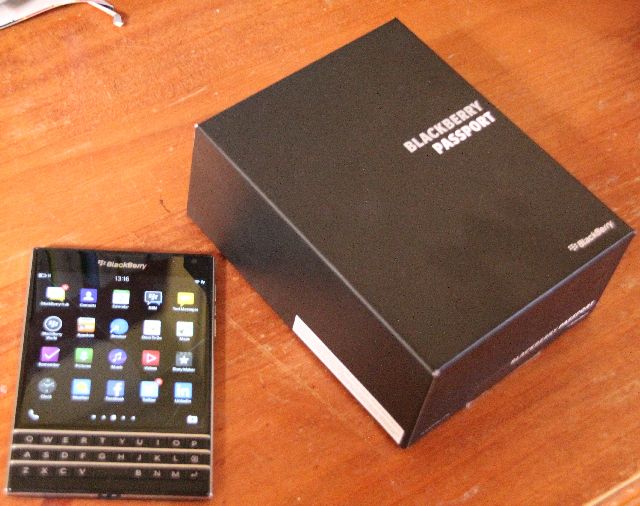
    The BlackBerry Passport is an unusual device; with a square screen it’s a very different mobile phone that takes a little getting used to.

    An irony for this reviewer is the tactile keyboard, with soft keyboards now the norm for smartphones, going back to a ‘real’ keyboard takes some getting used to and the Passport suffers from the real estate taken up by the keys.

    A return to two thumb typing

    The layout of the keyboard also takes some getting used to with the three row tactile QWERTY layout requiring two thumbs to use, compared to the one fingered swipe or typing options available on Android or Apple phones.

    Only having three rows also presents a problem for inexperienced users — where are all the punctuation keys? The answer is they appear on the screen above while typing. While a bit clunky, the predictive software which determines which punctuation you’ll need works well.

    Adding to the predictive typing features is a suggested word box that appears as you type, as one becomes more experienced in using the device this becomes a very efficient way to get messages out quickly. Overall BlackBerry has done a good job on designing the phone’s typing functions to get the most out of the form factor.

    Blackberry-passport-handset

    Another learning curve for users are the swipe functions, where an up gesture brings up the home screen and swipes to the the left and right let you navigate between screens and apps.

    The main app on the phone is the BlackBerry Hub, a centralised repository for all information. The aim of the hub is bring together email, social media and text messages into one fixed location.

    Bringing together information like this is always problematic as many of us are receiving dozens, if not hundreds, of emails, texts and social media messages a day. Overall though the Hub handles them well and integrates nicely with the major social media services including Twtitter, Facebook and LinkedIn.

    The Appstore weakness

    Where the software falls down is when venturing outside the pre-packaged apps — while things are better than they were, BlackBerry’s devices still suffer from a sparse app store.

    The lack of a suitable WordPress app prevented this reviewer from testing out the device’s blogging potential which is a shame as the 1:1 aspect screen may well have proved to be better than the Apple and Samsung equivalents.

    In the case of social media Instagram is a good example with the only free app, iGram, only offering Facebook and Twitter integration; a limitation that betrays the device’s excellent 13 Megapixel camera.

    On the other important hardware matters, the phone’s battery gives well over a days life on heavy use, the company claims 24 hours talk time, and recharges through a standard Micro USB connector.

    The decent battery life is reflected in the weight of the device with it tipping the scales at 196g, compared  to the Samsung Galaxy 5’s 145g and the Apple iPhone 6 plus’ 172g. It’s not heavy by any means which shows some of the engineering BlackBerry has applied to the phone.

    Inside the device is 32Mb of storage with the capacity to add up to 128Mb Micro SD memory, alongside the memory slot is the Nano SIM holder which worked well on both the US T-Mobile and Australian Optus 4G networks.

    Maintaining the ecosystem

    Unfortunately we were unable to review how well the device and its software integrated with the Black Enterprise Service as this is going to be the main selling point for the Passport.

    Overall the BlackBerry Passport is a good corporate phone that’s going to appeal to organisations that wants to give their staff secure communications with smartphone capabilities.

    However the handset itself is unlikely to appeal to the broader smartphone market. At best the BlackBerry Passport is an attempt to keep the company’s core market locked into the ecosystem while John Chen executes his pivot into new markets. It may not be enough.

    In San Francisco’s Financial District, the guys at the T-Mobile shop are probably not going to see many more BlackBerry phones.


    Similar posts:

    • No Related Posts
  • Standing up to the giants – why the big software companies don’t always win

    Standing up to the giants – why the big software companies don’t always win

    In the latest Networked Globe post I have an interview with QNX founder Dan Dodge on how BlackBerry wants to be at the heart of the Internet of Things.

    One of the things Dodge discusses is how twenty years ago Microsoft told QNX they would be driven out of business by the software giant’s Windows CE operating system.

    As it turned out Microsoft failed dismally.

    QNX’s survival in face of a big competitor is similar to Google’s failed attempts to enter various industries. Everyone assumes Google will succeed against the smaller players because they are rich and smart.

    Often however the rich player doesn’t win because the smaller incumbent is savvy, focused and knows their market well.

    Sometimes bigger is not always better in the software industry.

    Similar posts:

    • No Related Posts
  • Blackberry’s quest for its future

    Blackberry’s quest for its future

    This is the unedited, submitted version of ‘is BlackBerry ripe for a comeback‘ that appeared in Technology Spectator on 30 July, 2014.

    “What do we well?” is the question Blackberry CEO John Chen asked when he took the reigns of the Canadian communication company last November.

    Chen was speaking on Tuesday at Blackberry’s Security Summit in New York where he and his executive team laid out the company’s roadmap back to profitability.

    Since the arrival of the iPhone and Android smartphones, times have been tough for the once iconic business phone vendor as enterprise users deserted Blackberry’s handsets and the company struggled to find a new direction under former CEO Thorsten Heins.

    Back to BlackBerry’s secure roots

    In Chen’s view, the company’s future lies in its roots of providing secure communications for large organisations, “It became obvious to us that security, productivity and collaboration have to be it.”

    “This is not to say we are not interested in the consumer, but we have to anchor ourselves around the enterprise.” Chen said in a clear move distancing himself from his predecessor and products like the ill fated Blackberry Playbook

    An early step in this process of focusing on enterprise security concerns is the acquisition of German voice security company Secusmart which was the cornerstone of Chen’s New York keynote.

    Blackberry’s acquisition of the company is a logical move says the CEO of Secusmart, Dr Hans-Christoph Quelle, who points out the two organisations have been working closely together for several years.

    “It fits perfectly,” says Quelle. “We are not strangers having worked together since 2009,” in describing how Secusmart technology has been increasingly incorporated into Blackberry’s devices.

    Secusmart’s key selling point has been its adoption by NATO and European government agencies; the Snowden revelations on the US bugging of Angela Merkel coupled with the Russian FSB leaking intercepted US state department conversations along with the release of Ukrainian separatist conversations after the shooting down of MH17 has focused the European view on the security of voice communications.

    Launching new services

    Along with the acquisition of Secusmart, Blackberry will also be launching an new enterprise service in November, the new Passport handset in December along with a range of security applications including BlackBerry Guardian, a new service that will scan Android apps for malicious software.

    Blackberry’s executives were at pains to emphasise their products aren’t focused on any single smartphone operating system and not dependent on customers buying their smartphones although to get the maximum security benefits.

    “We will provide the best level of security possible to as many target devices out there as possible,” said Dan Dodge who heads Blackberry’s QNX embedded devices division.

    Longer term plans

    In the longer term, Blackberry sees QNX division as being one of the major drivers of future revenues as the Internet of Things is rolled out across industries.

    QNX was acquired by Blackberry in 2010 to broadband the communication company’s product range, now it is one of the pillars of the organisation’s future as Chen and his team see that connected devices will need secure and reliable software.

    Dodge says: “With the internet of things, you can have devices that can change your world.”

    While QNX is best known for its smartcar operating system – it underpins Apple’s CarPlay system being rolled out for BMW as well as its own system deployed in Audis – the company’s products are used for industrial applications ranging from wind turbines to manufacturing plants.

    Despite Blackberry’s announcements in New York, the company still facing challenges in the marketplace with the Ford Motor Company announcing earlier this week it will drop the Blackberry for its employees by the end of the year and replace them with iPhones.

    Chen’s though is dismissive about Apple’s and IBM’s moves into Blackberry’s enterprise markets, “what we do and what they do is completely different.”

    Focusing BlackBerry

    The focus for Chen is to differentiate Blackberry and play on its strengths, particularly the four markets it calls ‘regulated industries’ – government, health care, financial and energy that the company claims makes up half of enterprise IT spending.

    Whether this is enough to bring Blackberry back on track remains to be seen but Chen says this is where he sees the company’s future, “This is why we are so focused on enterprise and so focused on these pillars.”

    For Blackberry, the emphasis on enterprise communications is a step back to the profitable past. It may well be successful as businesses become more security conscious in a post-Snowden world.

    Paul travelled to the Blackberry Security Summit in New York as a guest of the company.

    Similar posts:

    • No Related Posts
  • The internet of insecure things becomes a problem

    The internet of insecure things becomes a problem

    Following yesterday’s posts on BlackBerry, security and the Internet of Things, HP Fortify released a report saying seventy percent of IoT devices are vulnerable to hackers.

    The list of weaknesses is chilling and illustrates why IoT security is an issue that has to be resolved now.

    It may well be that John Chen, BlackBerry’s CEO, has backed the right horse for his company.

    Similar posts:

    • No Related Posts
  • Buying into the Internet of Things

    Buying into the Internet of Things

    Following Google’s acquisition of smarthome startup Nest in January, it was clear that 2014 was going to be the year that the Internet of Things dominated corporate takeovers.

    This week has shown that with Blackberry announcing a stake in medical technology firm NantHealth, obstensibly as an Internet of Things play as CEO John Chen explains;

    The NantHealth platform is installed at approximately 250 hospitals and connects more than 16,000 medical devices collecting more than 3 billion vital signs annually. Think about the possibilities when an enormous amount of data and computing power is accessible to doctors in the palm of their hands.

    As Chen points out, the possibilities for this data are huge which raises questions about the privacy and security issues for patients along with the importance of having stable software and networks.

    The other big Internet of Things acquisition yesterday was Zebra Technologies buying Motorola’s enterprise division for over three billion dollars, again the buyer cited the opportunities in connecting machines.

    An interesting aspect is these acquisitions aren’t being made by the big players – Cisco, Google, Microsoft or Apple – but by smaller, but still substantial, players. It shows just how wide the Internet of Things’ applications are.

    Blackberry and Zebra won’t be the only big acquisitions this year.

    Similar posts:

    • No Related Posts