Tag: business

  • Keeping the cyber utopian dream alive

    Keeping the cyber utopian dream alive

    “I stand before you as a failure,” was how I opened my presentation at the Talking Justice conference last weekend. “If I were giving this talk ten or fifteen years ago, I’d have described how the web and social media were going to usher in a new era of democracy and accountability.”

    “Like most of the cyber utopians, I was very, very wrong.”

    Basically we were wrong because we didn’t see how the internet would concentrate rather than diffuse power or the extent of how new gatekeepers and monopolies would be replaced the old ones.

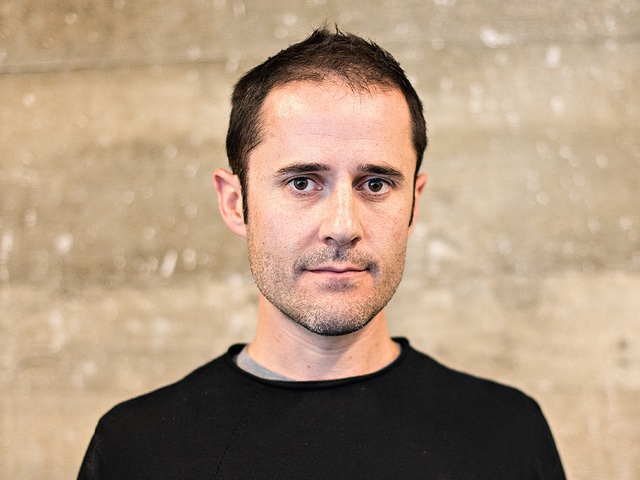
    My friends and I were not alone, in a somewhat rambling interview with the New York Times Twitter co-founder Evan Williams describes how “the internet is broken” and how he thought the messaging service could make the world better.

    “I thought once everybody could speak freely and exchange information and ideas, the world is automatically going to be a better place,” Mr. Williams says. “I was wrong about that.”

    Instead Twitter has become home to trolls, harassment and misinformation, something that saddens Williams and most of us who thought the web would bring about a more open and fair society.

    Hope isn’t completely gone though, we are still in the early days of social media and the internet so the current trends may only be a transition effect as audiences, markets, regulators and the community get to grips with the new medium.

    There’s also Amara’s law which states we overestimate the effect of a technology in the short run and underestimate the effect in the long run.

    So it’s best to be a pessimistic optimist where one accepts in the short run things are dire but over time things will turn out well.

    We can only hope.

    Similar posts:

  • Tinny vapid crap – last week’s links

    Tinny vapid crap – last week’s links

    Last week was an interesting time with an appearance before a Senate Committee and a trip to regional Victoria to talk about the media and social justice.

    While busy, there was time to read some fascinating articles ranging from Elton’s John’s views on modern pop music, software lawsuits and early losses in the war on ‘fake news’ through to how the shiny new Apple campus boast almost everything for employees except a childcare centre.

    Parents need not apply

    Apple’s new 5 billion dollar campus is the realisation of Steve Jobs’ final vision. It boasts a hundred thousand square foot gym and an attention to detail that extends to the sand used to make the windows.

    But it doesn’t have a day care centre, which gives a pretty clear message to aspiring employees – if you don’t have a stay at home spouse, something pretty rare in the hyper expensive Silicon Valley, then don’t bother applying.

    Thanks a latte

    Meanwhile in Australia, the government financed National Broadband Network is spending half a million dollars a year on maintaining its staff coffee machines.

    While the money is small change in a project recent estimates put at costing $56 billion, it is emblematic of how far from its original purpose the vision has drifted.

    Facebook Fails to Tackle ‘Fake News’

    The social media’s attempts to tackle ‘Fake News’ are failing dismally reports The Guardian as reactionary groups gleefully reshare and publicise anything flagged as such.

    While it’s early days, this isn’t a good start for Facebook although it also illustrates how powerful filter bubbles are and the lengths people will go to spread their ideologies.

    The lawyers always win

    Lasts week’s ransomware scares will trigger lawsuits says Reuters, quoting several legal experts.

    Unsurprisingly, it won’t be Microsoft who’ll be the target given their almost bulletproof terms and conditions but businesses who didn’t patch their systems could be liable.

    Fox News’ founder passes

    Roger Ailes, the founder of Fox News and one time Nixon adviser, passes a few months after being ousted from the network he created.

    Ailes personified the tabloidisation of the media as Rupert Murdoch applied the model which had worked so well for him at The Sun in the UK to newspapers and television in the United States.

    Many blame the internet for the click bait, sensational model of modern news reporting but the pattern was well established by the time the World Wide Web came along in the mid 1990s.

    Tinny, vapid crap

    Elton John weighs in on the state of pop music.


    Similar posts:

  • Journalism in the Twenty-First Century

    Journalism in the Twenty-First Century

    Today I’ve been invited to appear before the Australian Senate’s committee on the Future of Public Interest Journalism. Here’s my planned opening remarks looking at the challenges facing media organisations, particularly in an Australian context.

    I’d like to start off by pointing out I’m not a career journalist, I fell into the media industry through a series of happy accidents starting with appearing on ABC Radio to discuss the Y2K bug twenty years ago, this evolved to where I’m now a freelance contributor to all the major Australian media outlets.

    As a longstanding contributor to various ABC stations across Australia ranging from ABC Darwin through South Australia’s Riverland to the national Nightlife program where the hosts pretend to be floating somewhere above Middle Australia rather than admit they are in the Sydney studio, I have seen some profound changes within the organisation.

    Due to cost cutting and political interference, the organisation has steadily seen power and resources concentrated in the Sydney head office to the detriment of local coverage and regional stations.

    To be fair to the ABC, the same process has happened in commercial media – in print, radio and television – as flawed policy decisions over the last forty years have seen market power accumulating in Sydney and Melbourne at the expense of local content, diversity and regional coverage.

    Wasting the digital dividend

    One of the great missed opportunities of our time was the gifting of the digital TV spectrum to the established radio and TV operators.

    The digital broadcasting switch was an opportunity to bring diversity back into Australia’s media landscape and spur both journalism and the creative industries.

    A few minutes watching what the Free To Air networks have done with those new channels shows how that resource has been squandered.

    This concentration of market power has left Australian media organisations saddled with a protected and well paid breed of managers incapable of responding to the threats posed by US and Chinese social media networks – not to mention streaming services like Netflix or the continuing catastrophic declines in advertising revenues.

    Journalism as a team effort

    Producing quality media to compete globally is a team effort. Good journalism isn’t just the result of good reporters, it requires good sub-editors, producers, researchers, photographers and a small army of other skilled workers. Not to mention strong, principled editors and station managers.

    The media industry’s casualisation, something as freelancer I’ve encountered the brutal reality of, makes it difficult to develop those skills. The ABC is a good example of this where, outside of management and administration, there are few salaried staff aged under 40. This has great ramifications for the workforce, industry and the community.

    It’s difficult to see what governments can do in the face of the global industry’s changing economics, particularly in the advertising industry’s shift.

    We should keep in mind however if we were having this discussion a hundred years ago we would have been asking how people can make money from radio. Entrepreneur David Sarnoff who founded Radio Corporation of Australia figured out the commercial broadcasting model in the 1920s and that industry went on to become one of the most profitable of the last century.

    So it may well be that encouraging a new generation of media entrepreneurs and journalists who can figure out 21st Century business models can be the best thing Parliament can do to ensure a diverse media culture that tells modern Australian stories to today’s Australians.

    Similar posts:

  • Champagne tastes and short runways

    Champagne tastes and short runways

    One of the curious things about the Silicon Valley business model is how fundraising is seen as an end in itself.

    Most business proprietors would be philosophical or mildly irritated if they’d had to give up equity or go into debt to fund growth, but in startup land a whack of money is seen as success in itself.

    Sadly that money isn’t always well spent as the story of the free spending Guvera streaming service shows.

    Over the company’s eight years the founders raised $185 million which ran out last week leaving the 3,000 small investors out of pocket.

    That small investors were even involved in such a venture raises eyebrows and suspicions aren’t helped by a funds manager charging huge commissions for their services.


    Just the use of a middle man like AMMA Private Equity – which happened to be run by one of the co-founders – should have raised concerns however the high commissions should prompted questions from the investors about advisors’ interest in getting them into a high risk venture.

    In the current overheated startup space it’s necessary to be skeptical about many of businesses claims and the amounts of money being raised, as big pots of honey attract the flies.

    Similar posts:

  • Ransomware and innovation – links of the week

    Ransomware and innovation – links of the week

    Last week finished with a big bang as the Wannacry ransomware attack spread around the world with a curious twist which led one New York Times columnist to suggest software companies need to take more responsibility on security.

    In the meantime the world goes on companies still struggling with the definition of innovation and Facebook crushing anyone who dares to try out-innovating them.

    On a lighter note, Cary Grant spend much of his Hollywood years on LSD but it all turned out well and VentureBeat asks do humans have a role in a world run by Artificial Intelligence?

    The future of humans

    Is there a future for humans in a world run by artificial intelligence controlled robots? Venture Beat staged a panel in New Orleans that looks at where we fit into the automated world.

    Ultimately the panel concluded, it’s up to us to make some serious choices. Something we shouldn’t leave to engineers.

    The ethics of driverless cars

    Autonomous vehicles should give priority to occupant over passers by in the case of an emergency suggests a Mercedes Benz engineer.

    Christoph von Hugo, Mercedes’s manager of driver assistance systems, probably hasn’t helped the development of autonomous vehicles with his comments but the ethics of driverless vehicles is a discussion we should be having.

    Defining innovation

    Innovation is very simple, it’s about trying new ideas says Pete Williams, Deloitte Australia’s chief edge officer.

    “You need ideas, they need to be new, new for you. If everyone in the world is doing something and you haven’t done it and you do it for the first time, you’re innovating. You’ve got to try stuff. Not just have new ideas, you’ve got to try stuff. Innovation is something you do,” he said.

    Rethinking public transport

    British transport app Citymapper is to launch its own ‘popup’ bus service in London with the promise of a modern and user friendly operation. An interesting twist for a software service.

    “There will be a large screen that shows riders where they are in real time, and what’s coming up on the route — similar to how its smartphone app works. And they also have USB charging ports.”

    Snapchat feels the market chill

    One the darling unicorns of the tech industry, Snap, reported its first results as a listed company and the results were not good as Facebook’s shameless copying of the service’s features takes its toll.

    Sadly Facebook seems to be following the Amazon playbook of crushing upcoming competitors that refuse to be bought out. This is a part of a broader problem with modern American capitalism.

    What is Wannacry

    Security researcher par excellence, Troy Hunt, gives a full run down on the Wannacry ransomware and how to combat it.

    Towards the end of his article he has a list of eight actions computer users – from major organisations to households can do to protect their systems. Depressingly these are exactly what the computer tech support industry has been telling people to do for the past twenty years.

    Wannacry’s accidental hero

    An anonymous British IT security researcher realised the malware has a ‘kill switch’ – so he activated it. He does have an important message for computer users though.

    “This is not over. The attackers will realise how we stopped it, they’ll change the code and then they’ll start again. Enable windows update, update and then reboot.”

    An age of insecure machines

    One of things that might bring down an AI controlled world is insecure machines as Wannacry shows. In the New York Times technology commentator Zeynep Tufekci suggests we can’t stop the wave of attacks taking advantage of systems running out of date software and vendors need to take responsibility.

    “It is time to consider whether the current regulatory setup, which allows all software vendors to externalize the costs of all defects and problems to their customers with zero liability, needs re-examination.”

    100 trips in tinseltown

    Cary Grant got through his Hollywood years by microdosing on LSD claims a new documentary. When he retired from the movies he quit the speed and lived happily every after.

    Interestingly, microdosing is one of the strategies used by today’s Silicon Valley workers to get by in their stressful and demanding roles. Some things never change.

    Earworm of the week

    Similar posts: