Tag: cloud

  • Microsoft Office goes onto the iPad

    Microsoft Office goes onto the iPad

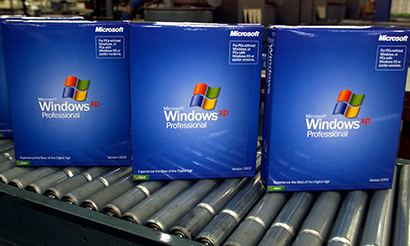
    After several years of stalling, MS Office makes it onto the iPad with an announcement this morning by Microsoft’s CEO Satya Nadella.

    The idea of tying the product into the company’s Office 365 and Microsoft’s cloud services make sense although it might be a matter of too little, too late.

    Perversely, if Office for the iPad is successful, it could remove one of the last barriers for business and power home users moving off PCs.

    Microsoft’s move also shows cloud services are now the main focus of the company; Satya and his team have given up any attempt to shore up the traditional – and immensely profitable – box software business.

    That is going to mean Microsoft’s financial statements are going to look very different in the near future.

    Regardless of the success of Office for the iPad, what were Microsoft’s core businesses are deeply affected as the company evolves to the post-PC computer marketplace. The challenge is for Satya and his management team to manage that change.

    Similar posts:

    • No Related Posts
  • Hitting the eighty percent of needs

    Hitting the eighty percent of needs

    “I don’t use ninety percent of what’s in Microsoft Word” has been the complaint of computer users for years as they struggled through the myriad features of box software products.

    In the days of floppy disks and CDs, software developers tried to deliver as many features as they could; despite the fact that the ordinary user only needed a core set of functions and that most items on the menus went untouched.

    The result was bloated, difficult to use software. The cloud computing model changes this, particularly in business fields like accounting software.

    Last week saw a blitz of releases from cloud accounting services with Xero, Intuit and MYOB all making big announcements.

    MYOB announced a wide ranging product refresh, Intuit their mobile service and Xero its new board directors that point the direction for its US expansion.

    A key part of all the announcement was how the services are all boasting of their partner ecosystems developing add ons that improve users’ functionality.

    Once consequence of having an army of developers plugging into the product means that companies don’t have to ship bloated packages that have dozens of features that are irrelevant to each users’ needs.

    Xero’s Australian CEO,  Chris Ridd, put this well during the week by observing that company aims to “address the basic eighty percent of needs”.

    This is the exact opposite of the box software model of the past where vendors would try to pack more features into their products which gave rise to the term bloatware.

    Microsoft’s Office package was probably the best example of this massive growth in the product size, with the installation files eventually taking up a full 4.3Gb DVD to deliver something that most people were happy with when WordPerfect 2.0 shipped on three floppy disks.

    That change to the software model is a good example of how business practices and methods change as technology evolves; it also illustrates just one of the fundamental changes older software companies are having to deal with as cloud services change their industry.

    We can still have all the features we want in a software package, but we’ll just have to connect – and probably pay for the add ons.

    Today, we’re more likely to be scrambling to find an add-on rather than complaining about features we don’t need.

    Similar posts:

    • No Related Posts
  • Microsoft’s business fightback

    Microsoft’s business fightback

    Yesterday a series of vendor briefings showed how Microsoft is fighting back in the enterprise computing market and taking on upstarts like Salesforce in the CRM and business analytics markets.

    Microsoft’s briefing presented a series of happy customers – including Colliers International, Servcorp and Metricon Homes – describing how they had deployed the Microsoft Dynamics product.

    All the businesses at the Microsoft event said how it fitted into their existing business IT infrastructure. All were Windows shops running Exchange and Sharepoint.

    This installed base illustrates Microsoft’s strength in the Enterprise marketplace along with its partner network of resellers and integrators.

    Microsoft’s partner network was illustrated at HP’s Next Generation of Information Workers briefing where the company’s workplace of the future vision is very much a Windows service, even the layout is a replica of the Window 8 tiled layout.

    The Next Generation of Information Workers product is largely built over Microsoft’s Sharepoint and HP’s own Trim product which again shows how legacy providers are leveraging their established technology.

    Whether this is enough to hold off the likes of Salesforce and other cloud based services remains to be seen. Being Windows-centric is particularly tough at a time when many employees bringing their own Apple iPads and Android smartphones to work.

    Microsoft’s awareness of its position was shown in the billing of the briefing where the invite billed the session as showing how Microsoft competes with Salesforce.

    That competition is manifesting itself with both Salesforce and Microsoft aggressively acquiring social, analytics and marketing platforms to compliment their CRM products.

    If the competition was just a matter of size there would be little contest as Microsoft’s $290 billion stock market capitalisation is more than ten times bigger that of Salesforce’s.

    But it isn’t just a matter of size. Microsoft are have a legacy business to protect while disruptors like Salesforce aren’t encumbered by older desktop and server products.

    What is clear though is that Microsoft is gearing to fight for these markets.

    Similar posts:

  • Playing in the big boys’ sandpits

    Playing in the big boys’ sandpits

    The Cool Hunter is a site whose mission is to “select and celebrate what is beautiful and enduring from all that is sought-after in architecture, design, gadgets, lifestyle, urban living, fashion, travel and pop culture.”

    In posting cool stuff they find on the web, Cool Hunter always runs the risk of copyright infringement complaints as people have the unfortunate habit of slapping images up onto the Internet without permission from the rights holders.

    Last August Cool Hunter’s founder Bill Tikos found the site’s Facebook account had been wiped for ‘repeat copyright infringements’ without warning or recourse.

    Anybody following this site won’t be surprised to read this – an exposed nipple can get you thrown off Facebook faster than you can say “New Yorker cartoon” or “it’s only a porcelain doll, for chrissake!” – so one can only imagine the paroxysms of rage that alleged copyright infringement sends Facebook’s puritan bureaucrats into.

    It’s not just nipples at Facebook though, thousands of small traders have seen their accounts arbitrarily suspended on sites like eBay and PayPal.

    Google too are quick to suspend businesses from their local and search services without warning or recourse. Usually business owners only notice they’ve been locked out when they log into their control panels only to find a terse message that their account has been suspended.

    What usually follows is a Kafkaesque tale of trying to understand exactly what they’ve done wrong and how to get their accounts reinstated. In some cases the businesses get cryptic messages saying their accounts are still in breach while others get no response at all. In a few examples, the offending page goes back online only to be shut down again a few days later.

    Rarely does someone in this situation find a calm, helpful voice to explain exactly what they have done wrong and how to fix it.

    This hostile attitude is a result of the “hands off customer service” model of web 2.0 companies and it’s their biggest achilles heel as, paradoxically, customers and users take to social media to complain about bizarre and arbitrary account suspensions.

    For some, like Cool Hunter, it’s a monumental pain and loss of a valuable platform while many of those small eBay and PayPal traders may have thousands of dollars tied up in suspended accounts they can’t access.

    Unfortunately this uncertainty is the cost of doing business on social media sites and it’s one of the reasons why owning your own business website is essential.

    When you choose to use one of these service, understand you’re playing in the big fat kid’s sandpit and you risk him throwing a tantrum and chucking your toys out of the playpen.

    Simply put, don’t base your business on Facebook, don’t keep all your money in PayPal and always have a plan B.

    Similar posts:

  • So you think services are easy?

    So you think services are easy?

    ZDNet columnist Ed Bott is possibly one of Microsoft’s closest followers and among the few to defend Windows Vista, Ed though can’t be faulted for doing the hard yards including reading Microsoft’s stock market10-K  filings.

    In their most recent filing, Ed finds Microsoft has used the word “service” 73 times as opposed to 44 appearances last year.

    A key phrase in the filing is “a growing part of our strategy involves cloud-based services used with smart client devices.”

    This is consistent with the hands on previews of Windows 8 which Microsoft have been giving journalists over the last few months. Something that leaps out is the integration with online services; something that both Google and Apple have also been pushing.

    What should worry investors is that moving into services isn’t easy. Service businesses are far more labour intensive and, as a consequence, far less profitable.

    Despite having relatively low labour costs, cloud computing services are problematic as many sectors have been commoditised, which is the genius of Salesforce in establishing a profitable niche.

    The fat margins Microsoft are used to in their core software business can’t be replicated in the cloud based markets, which is one of the reasons why customers are switching to the cloud.

    Microsoft’s problem is shared by telecommunications companies who are finding their cloud offering don’t generate the same ARPUs — Annual Revenue Per User — that they’ve become accustomed to in the mobile phone market. Which means pain for executives whose KPIs are tied to historical performance.

    For Microsoft, the problem is compounded by their simultaneous move into hardware with the Surface tablets. Meaning the company’s has to deal with two significantly different business models to the ones they are used to.

    Again Microsoft aren’t alone in this, Google is having similar problems adjusting to the hardware market though its acquisition of Motorola Mobility.

    Integrating hardware with services and manufacturing isn’t impossible, we only have to look at Apple for how a company can succeed in that space although most managements struggle with the very different demands of each sector.

    During the 1980s we saw the rise of the “all business is soap” philosophy where MBAs and management consultants preached that the challenges of running a business were the same regardless of whether you sold cleaning products, soft drinks, computers or automobiles.

    Those folk were wrong. Most famously the Australian media company Fairfax hired as CEO a business school professor who preached this philosophy and managed to ignore the rise of the Internet, the echoes of the failed McKinsey ideas haunt Fairfax over a decade later.

    While its possible for a software company to succeed at services or hardware, the magnitude and complexity of the management challenge shouldn’t be understated. Both Google and Microsoft will be defined by how well their leaders succeed.

    Similar posts: