
Tag: collaboration

  • How to reinvigorate a stale economy

    How to reinvigorate a stale economy

    What has gone wrong with Australian innovation? For a nation so wealthy, it’s remarkable how poorly the country performs globally in terms of bringing new products or technologies to market.

    At Ad:Tech Sydney yesterday, The Great Australian Innovation Fail panel discussed what has gone wrong and what can be done to get the nation back to a position more in line with its comparative affluence.

    Boasting a range of digital media veterans and startup founders, the panel was far from a group of muttering naysayers. Although all but Fleet Systems’ Flavia Tata Nardini were distressed at the failure of Australia’s innovation agenda and the country’s general disdain for new businesses and technologies.

    Michael Priddis, the CEO of research and development consultancy, Faethm,  pointed out that automation and artificial intelligence are not the future but the present and the job losses are happening now across industries.

    Caitlin Iles, founder of XChange, added that she believes the estimates of nearly fifty percent of Australian jobs being lost to automation are actually understating the effects and it’s more like 90% – “a doomsday statistic” – which is something that Priddis endorsed in observing how the mining industry has automated in the past decade.

    The employment shifts are being ignored by governments, says Beanstalk Factory’s Peter Bradd. “They have to get their heads out of the sand. We need to be supporting workers in threatened jobs to reskill. That’s just not happening at the moment.”

    Australia’s underperformance is stunning when you consider tech startup exits, says the Information Industry Association’s Tony Surtees. Unsurprisingly Silicon Valley dominates the global statistics with over 47% of the global value with London, Los Angeles and Tel Aviv following. Sydney was at the bottom of the table with only .01% of value.

    The value of exits is a problem, but that is more about the capitalisation of startups and may be changing. A bigger problem lies in how Australia’s corporate sector innovates and engages with new technologies.

    Corporate Australia’s failure to engage is shown in the OECD ranking the country at 81st globally in ‘innovation efficiency’, while the nation is tenth in inputs it fails dismally in applying those inputs into outputs.

    This is reflected in corporate Australia’s failure to compete globally outside the mining sector. Basically Australian executives have little desire in international markets and most have no interest in engaging with researchers, universities, innovators or entrepreneurs.

    “People don’t like to collaborate,” says Peter. “They want to keep everything to themselves.”

    “The CEOs of Australia’s top twenty companies need to get together with CSIRO and the universities and fix this problem. There’s money on the table.”

    Whether Australia’s business leaders are prepared to pick up that money, or they’re happy and comfortable with their lot is probably the question of whether Australia can start to pull its weight in the innovation stakes.

    “In ten or fifteen years we’ll be screwed if we don’t,” concludes Michael.
    Similar posts:

  • Facebook’s challenge in executing for the enterprise

    Facebook’s challenge in executing for the enterprise

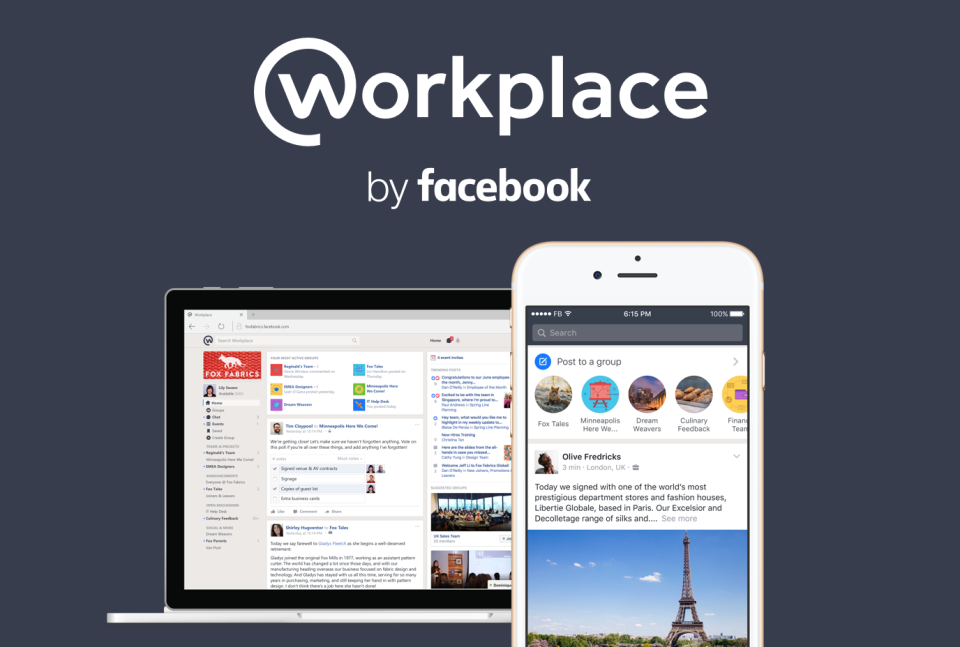
    Workplaces by Facebook was is the social media giant’s enterprise collaboration service it hopes will put the company into the enterprise space.

    Like many similar products, the service is aimed at improving collaboration in the workplace. As the media release gushes, “the new global and mobile workplace isn’t about closed-door meetings or keeping people separated by title, department or geography. Organizations are stronger and more productive when everyone comes together.”

    On first impressions, Facebook should score some successes with the service however it’s success is far from guaranteed. As we’ve seen with other major company’s attempts to open new products, being the deepest pocketed player doesn’t automatically ensure a successful product.

    The Google example

    A common assumption when a behemoth enters a martketplace is will simply smother smaller competitors by virtue of its size.

    History shows this not always the case, Facebook itself thrived despite the huge threat posed by Google+, indeed Google is probably the best example of a large corporation that struggles outside its core business.

    Part of the reason for the idea of big companies easily squashing the little folk being a fallacy is that the smaller companies are more focused on their problem – for a corporation the division is one part of a broader operation run by managers, not owners.

    In such a marketplace, execution and management focus matter so Facebook’s success will depend as much on executive buy-in as the resources thrown at the product.

    Cost and complexity

    A notable thing about Workplaces by Facebook is its partner network, led by Deloitte. This is not a good sign.

    The need to have consulting partners – particularly huge and expensive companies like Deloitte – is not an encouraging sign for the nascent service and may be a barrier towards adoption.

    A separate issue in Deloitte’s involvement is how cloud services, which we include Workplaces by Facebook, are buddying up with the major consulting firms with everyone from Huawei to Oracle entering arrangements. While this might help partners squeeze a few more pennies out of their hapless clients, it’s doesn’t seem to be in the vendors’ or customers’ interests.

    Trust

    What happens to users’ data is a perennial problem for Facebook and it’s notable this issue isn’t mentioned in the announcement.

    Facebook’s success shows consumers are relaxed about how the company uses data but that attitude may not be shared by managers and business owners.

    The proprietor of one reasonable sized startup said, “I have a slight concern about giving Facebook any access to my company information. Whilst it has been fine from a personal perspective I feel the trust level is not strong enough to warrant handing over access to, effectively, everything.”

    Overcoming that objection may be one of the biggest challenges for Facebook being accepted as an enterprise tool.

    Becoming an enterprise service

    Facebook’s push into the enterprise isn’t surprising and indicates that as the company matures, something more than the advertising funded consumer market is needed to drive its growth.

    That consumer background is a strength for Facebook as the consumerization of enterprise software is an established trend. Having an interface and tools that are familiar to most staff is very attractive to managers looking at introducing new platforms with the shallowest possible learning curves.

    However the ultimate question is what need does Workplaces by Facebook address? There’s no shortage of collaboration platforms that offer most of the futures offered by the platform.

    If Workplaces by Facebook does address a genuine need in enterprise workplaces and the company’s management can maintain its focus on the product then the service may be a success. That isn’t a given though.

    Similar posts:

    • No Related Posts
  • Lake Wobegon and the sharing economy

    Lake Wobegon and the sharing economy

    New York Times columnist Maureen Dowd can’t get an Uber because her feedback score isn’t high enough.

    Similarly, when the Philadelphia Citypaper’s Emily Guendelsberger went undercover as an Uber driver she too found feedback scores determined how much work a contractor won.

    Guendelsberger found a driver with feedback score of 4.6 risked being dropped by Uber while Dowd discovered her rating of 4.2 meant drivers didn’t want to take her.

    Both these numbers are out of five and translate to 84% for Dowd and 92% for drivers.

    If you’re the type that works from the baseline of giving three out of five for delivering a service as described then adding points for exceptional performance or deducting marks for a poor experience then you’re messing with the system.

    With the Uber scoring model – and one suspects this is the same with most of ‘sharing economy’ feedback mechanisms – the baseline mark is a perfect five with small increments deducted for poor performance.

    Basically the curve is squeezed up to the right. Business Insider reported last year that only one percent of trips receive a rating of one or less and five percent below three.

    In Garrison Keillor’s Lake Wobegon every child is above above average, it seems in the world of the sharing economy almost every participant is in the top ten percent.

    Similar posts:

  • Collaboration and buzzwords

    Collaboration and buzzwords

    Today in Technology Spectator, I have a piece on collaboration based around the Google and Deloitte paper released last week.

    At the moment Google are on a marketing campaign promoting Apps for Business, for a previous campaign I prepared The Future of Teamwork which examined the benefits of cloud computing for industry.

    It’s interesting how the message hasn’t changed a great deal in the last five year, despite it being valid.

    Similar posts:

    • No Related Posts
  • The rise of the business digital native

    The rise of the business digital native

    ‘Digital natives’ has been the term to describe people born after 1990 who’ve had computers throughout their entire lives.

    The theory is these folk have an innate understanding of digital technologies from being immersed in them from an early age.

    It’s doubful how true that theory is; the generation born after 1960 were born into the television generation yet the vast majority of GenXers would have little idea on how to produce a sitcom or fix a TV set and the same could be said for the war generation and motor cars.

    Digitally native businesses

    For businesses, it may be the digital native concept is far more valid. Ventures being founded today are far more likely to be using productivity enhancing tools like social media, collaboration platforms and cloud computing services than their older competitors.

    What’s striking about older businesses, particularly in the Small to Medium Enterprise (SME) sectors, is just how poorly they have adopted technology. The Australian Bureau of Statistics report into IT use by the nation’s businesses illustrates the sectors’ weak use of tech.

    The most telling statistic is the number of businesses with a web presence; the SME sector lags way behind the corporate sector that has almost 100% penetration.

    Australian_business_with_a_web_presence

    Many of the zero to four business can be disregarded as most of them are sole trader consultants who’ve had to register a businesses for professional reason, although there is an argument even they would benefit from a cheap or free web presence to advertise their skills.

    The ABS statistics show small business is lagging behind the corporates in social media and e-commerce adoption as well so the argument that local businesses are ignoring the web and using services like Facebook, LinkedIn or Google Places to advertise their services doesn’t hold water.

    Old man’s business

    Part of this reluctance to use digital tools is age; many SMEs were born either in the era when faxes were a novelty or when Windows computers were first appearing on small businesses desktops. They are creatures of another era.

    In the current era cloud, social media and collaborative services are running business. The idea of buying a workstation for a new employee and waiting for the IT guy to set them up on the network is an antiquated memory; today’s workers have their own laptops, tablets and smartphones to do the work – all they need is a password.

    Those services offer a different way of organising a business and this is the most worrying part of the statistics – large organisations are slowly, and not always successfully, adopting modern management practices while many small businesses are locked into a 1970s and 80s way of working.

    For businesses being founded today, this isn’t a worry – they are the true digital natives and are reaping the benefits of more efficient ways of working. Something emphasised by Google’s updates to its Drive productivity services announced overnight.

    That’s something that should focus the plans of established businesses of all sizes as they adapt to working in a connected society.

    Similar posts:

    • No Related Posts