Tag: communications

  • Social media’s dark side

    Social media’s dark side

    I was asked by ABC Radio Newcastle today to talk about the dark uses of social media – spreading propaganda.

    This is an topic that’s come to the fore with the troubles in the Gaza Strip and the downing of MH17; all sides are using traditional propaganda techniques with a thick overlay of new media.

    A key part of the social media aspects of the modern propaganda methods is those who want to spread their message only need to confirm the prejudices of their loyal followers.

    In turn the loyal foot soldiers will then spread the word through their Facebook, Twitter and Tumblr feeds; a modern Goebbels doesn’t have to control the media, they just need enough useful idiots.

    It’s also worth noting the new media tools complement the old broadcast and publishing methods with the most effective modern propaganda – and marketing – campaigns cleverly using the strengths of each medium to create an amplifying effect.

    Propaganda is nothing new, many of the Ancient Greeks’ stories were written to discredit their enemies, and every technological advance has seen new ways for people to spread misinformation.

    In that respect it shouldn’t be surprising that we should take with everything we read on, or off, line.

    Similar posts:

    • No Related Posts
  • Peak Wireless and the data paradox

    Peak Wireless and the data paradox

    Australia’s government research agency, the CSIRO, released a somewhat alarming media alert this morning warning that our cities are approaching Peak Data.

    Peak Data, which borrows from the ‘Peak Oil’ term coined in the 1970s to describe the point where oil production reaches a maximum, is where we run out available bandwidth on our wireless networks.

    The release is around the agency’s new report, A World Without Wires, where the agency lays out its view of the future of cellular and radio communications.

    “In the future, how spectrum is allocated may change and we can expect innovation to find new ways to make it more efficient but the underlying position is that spectrum is an increasingly rare resource,” says  the CSIRO’s Director of Digital Productivity and Services Flagship Dr Ian Oppermann.

    “With more and more essential services, including medical, education and government services, being delivered digitally and on mobile devices, finding a solution to “peak data” will become ever more important into the future.”

    The wireless data paradox

    It’s a paradox that just as we’re entering a world of unlimited data, we have limitations of what we can broadcast wirelessly as radio spectrum becomes scarce and contested.

    With fixed line communications, particularly fibre optics, available spectrum can be relatively simply increased by laying down more cables – wireless only has one environment to broadcast in –  so finding ways of pushing more data through the airways is what much of the CSIRO’s paper addresses.

    For telecommunications companies, this presents both a challenge and an opportunity; the challenge being squeezing more data into limited spectrum while the opportunity lies in charging more for guaranteed connectivity.

    The latter raises questions about network neutrality and the question of whether different types of traffic across wireless networks can be charged differently or given differing levels of priority.

    Distributing the load

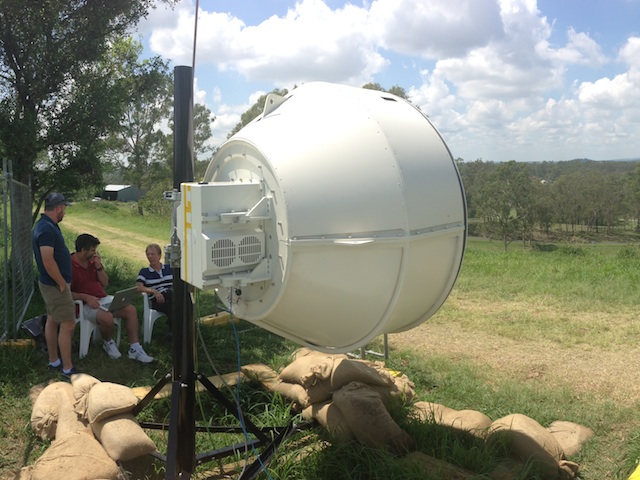
    This also gives credence to the distributed processing strategies like Cisco’s Fog Computing idea that takes the load off public networks and can potentially hand traffic over to fixed networks or point to point microwave services.

    While M2M data is tiny compared to voice and domestic user needs, it does mean business critical services will have to compete with other users, both in the private Wi-Fi frequencies or the public mobile networks spectrum.

    Overall though, the situation isn’t quite as dire as it seems; technological advances are going to figure out new ways of stuffing data into the available spectrum and aggressively priced data plans are going to discourage customers from using data intensive applications.

    A key lesson from this though is those designing, M2M, Internet of Things or smart city applications can’t assume that bandwidth will always be available to communicate to their devices.

    For the Internet of Things, robust design will require considering security, latency and quality of service.

    Similar posts:

    • No Related Posts
  • As seen on TV – where are today’s trusted sources

    As seen on TV – where are today’s trusted sources

    In a local shopping centre over the weekend this business was selling massage tables using the fact they’d been mentioned on TV to enhance their reputation.

    Citing an appearance on TV in the hope of improving your credibility is very much a mid-20th Century way of doing things. In the 1960s or 70s an enthusiastic mention from a TV host was the way to get the punters beating a path to your door.

    Today, things aren’t quite the same. TV was on a decline as a trusted medium – despite the successes of talk show hosts like Oprah Winfrey – long before the internet arrived. The web bought social media and now buyers can consult their friends and peers before deciding to buy.

    What was interesting about the sign was there was no indication of a social media presence or web page and that in itself showed how old school this business’ advertising was.

    For the business owner, it would have been hard work getting a mention on TV. Space isn’t cheap to buy and getting a mention on a current affairs show requires either the services of an expensive PR agency or many hours of bugging producers and not a small degree of luck.

    Then again, maybe a complete lack of online engagement didn’t matter. The shopping centre I was in would have an average customer age well over forty and, most of the market the business was aiming probably comes from the sizeable retirement village across the road.

    How this business ignores modern communication channels is instructive about the generational change in business and society, particularly on how different age groups find their trusted sources.

    Similar posts:

    • No Related Posts
  • Walking Spaghetti Junction’s canals

    Walking Spaghetti Junction’s canals

    One of the most maligned places in Britain is Spaghetti Junction, an interchange on the M6 Motorway just north of Birmingham’s city centre in the centre of the nation.

    Despite its poor reputation, Spaghetti Junction though has a story to tell — a tale of how physical trade routes change slowly with the motorway being the latest of five major junctions in the area.

    Courtesy of Wikipedia
    Courtesy of UK Highways Agency and Wikipedia

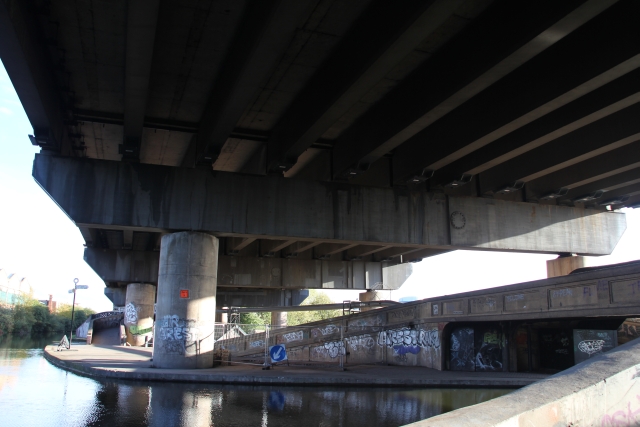
    Immediately below the motorway are the major roads, connecting these and Birmingham were the reason for building Spaghetti Junction in the late 1960s.

    Below those are the canals and it’s notable that just as Birmingham lies at the centre of Britain’s motorway network, it also formed the core of the industrial revolution’s canal network and much of the railway system.

    birmingham_spaghetti_junction_canal_intersection

    Wikipedia describes how critical Spaghetti junction is for the nation’s infrastructure.

    Underneath the motorway junction are the meeting points of local roads, the river Tame‘s confluences with the River Rea and Hockley Brook, electricity lines, gas pipelines, the Cross-City and Walsall railway lines and Salford Junction, where the Grand Union Canal, Birmingham and Fazeley Canal and Tame Valley Canal meet.

    Despite it’s importance the area is dingy and it’s not a good idea to hang around too long, particularly when you have an expensive camera, but it’s worthwhile to linger for a few minutes to appreciate how important these links were to the industrial revolution.

    birmingham-canal-route

    Following the canals away from Spaghetti Junction gives a feeling of the post-industrial nature of Birmingham’s economy something that the city, like most of Britain, is still struggling with.

    Birmingham-gas-basin-canal-junction

    Eventually the canal ends in the city’s convention centre district where a tourist can get a safer, and better, appreciation of Britain’s canal system at the Gas Street Canal Basin.

    While the basin is a bit twee and touristy it does also give a friendly overview of the canal network that replicates closely the railway system that replaced it and today’s roads.

    How these trade routes evolve in the digital economy will be interesting, the recent PayPal survey on the new electronic spice routes illustrates how economies are changing.

    Whether our descendents will wander the abandoned motorways and freeways in two hundred years and wonder at our industrial might is something we might want to ponder. Whether what replaces them is another layer of infrastructure is another question.

    Similar posts:

  • Ships flags and twitter – how communications evolve with technology

    Ships flags and twitter – how communications evolve with technology

    An innocuous, short 1917 message between Admiral Jackie Fisher and Windows Churchill, then British Minister of Munitions, tells us much about how language and communications evolve around the technology of the day.

    The focus on the page linked is the World War I use of OMG – Oh My God – which became common with SMS text messaging, and it illustrates how our language evolves around the limitations of the era’s technologies.

    Fisher’s message short, sharp and succinct message is good example of this – a legacy of spending a career communicating between ships by flag. By necessity, messages had to be brief, accurate and work within the limitations of the medium.

    At the time Fisher wrote that note, ships’ officers were adapting from flags to the radio telegraph where morse code created a whole new argot to take advantage of the medium and its limitations.

    Which brings us to today, where similar economies of communications have evolved around the SMS text message, Twitter post or social media update where OMG, LOL, BRB are part of the common dialect.

    Jackie Fisher’s message to Winston Churchill is a good reminder of how we’re all creatures of our time.

    Image of nautical flags courtesy of c_makow on sxc.hu

    Similar posts: