Tag: communities

  • Rebuilding America’s communities

    Rebuilding America’s communities

    One of the features of the Twenty-first Century will be how communities take over providing their own services as cash strapped governments find it difficult to provide the services citizens expect.

    In many respects the United States is ahead of the rest of the world in this as the decentralised nature of US government sees many functions being the responsibilities of local county and city agencies.

    Following the 2008 financial crisis many smaller cities and rural counties found their revenues crunched, for many of them this compounded thirty years of economic decline as local industries folded or fled overseas.

    James Fallows in the Atlantic recounts a trip with his wife across the United States where they visited communities rebuilding themselves in the face of economic adversity.

    In his long piece detailing how those different communities are rebuilding, Fallows comes to the conclusion a new political consciousness is evolving among the groups working to change their cities. While early, the common objectives of these groups will evolve into a movement.

    Fallows marks what will almost certainly be a defining feature of today’s first world nations as their politics evolve around these movements.

    Similar posts:

  • Smart poles and smart cities

    Smart poles and smart cities

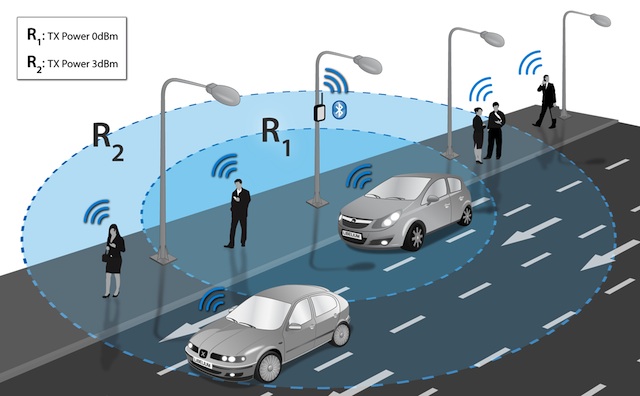
    Are street poles the key to rolling out a smart city? Lutz Heuser, CTO of Urban Software Institute believes these are the easiest way to connect a community and roll out mobile and Internet of Things technologies across a town.

    “For us it’s the perfect example of how infrastructure can change things very quickly,” Heuser told Decoding The New Economy at the AIIA Internet of Things summit in Canberra last week.

    Heuser sees the street poles as an easy success for cities looking to connect services and assets with most towns and utility companies replacing poles on a regular basis which provides an opportunity to roll out smart technologies.

    “If you put in some extras like communications, sensors and environmental monitors and all of a sudden you create a whole new ecosystem that helps the citizens and the environment.”

    Heuser sees funding as another advantage in using street poles to rollout smarcity technologies as the energy savings in modern LED lights as providing enough incentives for municipalities to replace older infrastructure.

    The key though is leadership, both in business and politics, this is essential in Heuser’s view in getting the best return for smartcity and IoT investments.

    As technologies like smart parking meters and connected rubbish bins roll out and municipal staff like garbage collectors and enforcement offices need real time connectivity, cities increasingly are going to rely upon wireless services. The humble street pole may well turn out to be the answer to what is otherwise an expensive problem.

    Similar posts:

    • No Related Posts
  • Where will the digital leaders come from?

    Where will the digital leaders come from?

    Last Thursday in Sydney a group of industry groups, telcos and local councils launched their 2030 Communications Visions initiative; a project “to shape a digital vision and set of goals for Australia to achieve global digital age leadership”.

    The project is a worthy one, particularly given the failure of Australia’s National Broadband Network, which I’m writing about early next week in Technology Spectator however one thing that bugs me is what exactly is ‘digital age leadership’.

    If we look at the rollout of technologies like the motor car, electricity or telephone through the Twentieth Century it was a mix of private companies, community groups and governments that championed the development of roads, mains power and phone systems. People either demanded their towns became connected or raised the capital to do it themselves.

    So on one level, the champions need to be us. We have to lead our communities and industries by using the technologies and showing what can be done, that also makes our businesses more likely to succeed in the future.

    On another level, we need to consider the genuine leaders of the ‘electrical age’ or ‘motor car age’; people like Thomas Edison and Henry Ford built businesses that led the world and still exist today.

    For countries, it’s no coincidence that the United States is the richest nation on the planet after having most of the leading business in their industries over the last hundred years.

    That latter point is really what the Digital Visions project is about; do Australians want to remain a wealthy nation in the Twenty First Century?

    Governments have a role in this, as the UK is showing, and political leaders need to be encouraged to take the digital economy however governments can only do so much and successes like Silicon Valley are more a fortunate by product of spending rather than the consequence of strategic policy.

    Ultimately, leadership starts with us — we can’t afford to wait for governments, big business or someone else to take the reigns.

    Similar posts:

  • Lessons from the G20 leaders meeting

    Lessons from the G20 leaders meeting

    This year’s G20 talkfest has come to an end with the usual communique of fine words.

    Apart from the discussion of climate change there’s little in the communique that wouldn’t have furrowed the brows of Margaret Thatcher or Ronald Regan thirty years ago with most of the pronouncement a being around opening markets, reducing unemployment and freeing capital.

    On the latter point, the call to reduce tax avoidance given this was an obvious consequence of the 1980s reforms would be met by with a rueful laugh from those responsible for the deregulation wave of the Reagan and Thatcher years given reducing taxes on corporations was one of the reasons for the ‘reforms’

    An aspect that would trouble Maggie’s and Ronnie’s ghosts would be the commitment to ‘address deflationary pressures’, something undreamt of in the 1980s, although a clear warning to today’s commentators and investors that Quantitative Easing is not going away any time soon.

    What today’s communique shows is the world’s leaders are still very wedded to the economic models of the Twentieth Century despite the massive demographic and technological developments changing our society.

    The real message from the G20 is don’t wait for your country’s leaders if you want progress; at best they probably won’t comprehend what you’re saying.

    Although if you can put your ideas in terms of creating growth or reducing youth unemployment then you might have a willing audience with your local minister, chancellor or President.

    Similar posts:

    • No Related Posts
  • Raising a citizens’ army

    Raising a citizens’ army

    In the English Midlands the leader of Birmingham City Council, the wonderfully named Sir Albert Bore, recently suggested a ‘citizens army’ be raised to provide services such as libraries that are being affected by budget cuts.

    Bore’s suggestion is a response to his council cutting library services in the face of community anger and legislative obligations, to assuage both pressures it’s hoped local volunteers can continue to run and maintain the threatened facilities.

    The bind Albert Bore and the Birmingham City Council find themselves in is a quandary all communities and governments are facing as an aging population causes tax revenues to decline at the very time the demand for government services increases.

    Faced with cuts, many groups are going to have to take matters into their own hands to keep services running. Some communities will do this well while others won’t.

    It’s also going to be interesting to see how this plays over generations with baby boomers being far more likely to volunteer than their GenX or GenY kids, something probably caused by more precarious job security in the modern job market and the need for younger couples to work harder and longer than their parents to pay their rent or mortgage.

    Angry baby boomers demanding the ‘government ought to do something’ may well find the onus is thrown back onto them to provide the services they believe they’re entitled to.

    What is the most fascinating part of this predictable situation is how governments around the developed world have blissfully pretended that this wasn’t going to happen as their populations aged.

    Perhaps the biggest citizens’ army of all will be the voters asking why the Western world’s governments and political parties ignored  obvious and inevitable demographic trends for the last fifty years. That would be a question worth answering.

    Similar posts: