Tag: computers

  • How social media drove the Internet of Things hype

    How social media drove the Internet of Things hype

    In our recent interview with Kevin Ashton, the man who coined the Internet of Things term, he raised an interesting thought about why the IoT had become such a popular concept.

    Ashton surmised there were two factors at work, the first being a younger generation of computer users who took networked devices for granted and the other being that the rise of social media – specifically Twitter – meant the #IoT hashtag was accessible and easy to use.

    And they’ve never lived in a paradigm where computers don’t gather their own information. So it’s very…the internet of things idea is incredibly natural to them. People who were using computers, let’s say, in the 80s and the early 90s, pre-internet, it can be a little less intuitive. So that’s one thing, but the other thing is, just a complete coincidence, I think, is Twitter. On the internet of things community on Twitter we use the hashtag IOT.

    Now, it just so happens, first of all, IoT is very Twitter-friendly because it’s very short. But by calling this thing the internet of things, I inadvertently happened upon a three letter acronym that was distinctive. There aren’t many of those in the world. But there isn’t anything IOT stands for.

    Now, we never used the term IoT in the early days because it wouldn’t mean anything to anybody, right? But I happened upon this distinctive three-letter acronym, and then Twitter came along. And it made it very easy for all these kids that were kind of internet of things natives to find one another and communicate with one another, and that really helped. That really helped. So there was some coincidence in that realm.

    There’s no doubt the two factors Ashton identifies were critical in the popularity of the term but we shouldn’t overlook the marketing efforts of established hardware and software companies to find ways to make money out of the Internet of Things, what Cisco President John Chambers calls “the greatest opportunity of my lifetime.”

    Coupled with the marketing efforts of big IT companies is that the IoT is now coming into its own as adding communications and computing power to almost any device becomes almost trivial. Indeed, Cisco’s often touted statistic of 50 billion connected devices by 2020 is almost certainly an understatement as everything from barbie dolls to bees to locomotives start communicating.

    While the IoT is a good label and a boon to desperate marketers trying to describe what would otherwise be a mundane subject of communication protocols and hardware, the bigger forces at work are that the technologies are accessible and affordable to most businesses and individuals.

    As those billions of connected Barbie Dolls and tractors roll out there’s a huge number of benefits and risks involved in networking all these devices and managing the data they generate, luckily we at least have a good term to describe the general concept.

    Similar posts:

    • No Related Posts
  • Can PCs claw back their sales volumes?

    Can PCs claw back their sales volumes?

    PCs can do what? Is the question being asked in a new campaign being run by Intel, Microsoft, Lenovo and Dell.

    Judging from the reaction to the companies’ effort whatever PCs can do, it’s unlikely to help their at best stagnant market share.


    Similar posts:

    • No Related Posts
  • Business and the workforce in an app driven world

    Business and the workforce in an app driven world

    One of the things we know about the future is the workplace will be very different. Just as the Personal Computer changed offices in the 1990s, the smartphone and tablet computer are changing today’s.

    Part of that change though is being driven by the change in generations. While this blog tries to avoid falling into the trap of generalising about different age cohorts – and contends the entire concept of baby boomers as an economic group is flawed – there are undoubtedly differences between the world of the PC generation of workers and that of the new mobile breed.

    The key difference is the idea that work devices are different to those at home. Those of us bought up with the idea that the office computers would be tightly locked workstations – in the 1990s we also had the quaint idea corporate desktops were generally more powerful than what we had at home – are now seeing that way of working being abandoned.

    For the next generation of office workers, accessing corporate resources through an app connected to a cloud service will be as normal as opening Windows NT to access the shared corporate drive was 15 years ago.

    Along with the technology and generational change driving businesses into the cloud-app computing world there’s also the needs of a much more fluid and mobile workforce. The shift to casualisation began well before PCs arrived on desktops but the process is accelerating as we see crowdsourcing and the ‘uberization’ of industries.

    Older workers will adapt as well, many came through the evolution of business computing from ‘green screen’ displays – if their businesses had any at all – through to the server based systems of recent years. For them the shift to smartphones might be troublesome for those with fading eyesight, but it won’t be the first change.

    For businesses this shift means they have to start planning for the mobile services that will change workforces and industries. The shift is already well underway – accounting software company Intuit estimates small businesses already use an average of 18 apps to run their business.

    We all have to start thinking about how these apps can be used to manage our staff and workforces.

    Similar posts:

  • Apple keeps ticking over

    Apple keeps ticking over

    Once again Apple keeps surprising the market with Apple second quarter results beating the analysts’ estimates roundly and putting the company on track to becoming the first US corporation to have a trillion dollar market valuation.

    Coupled to nearly fourteen billion dollars in profit for the last quarter is that the company is looking to return $200 billion of cash back to shareholders.

    A particular high point in Apple’s results are its China sales with the company showing seventy percent year on year growth, showing it’s possible for western companies to sell into the PRC.

    Those results are from iPhone sales and, given the Chinese smartphone market is ruthlessly competitive, it puts the managers of all US and European companies on notice that there are no longer any excuses about not performing in the Middle Kingdom.

    Another key takeaway from Apple’s results is the tablet market is limited with iPad sales down 23% compared to last year.

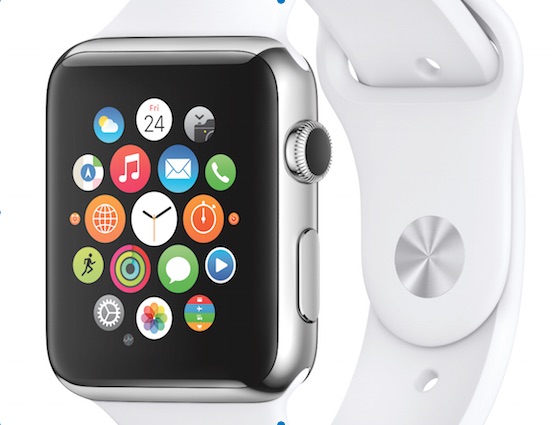
    The question now is how big are watch sales going to be? It may well turn out that the Apple Watch is similar to the iPad – a market defining product but one that isn’t the company’s mainstay.

    Regardless of how well the Apple Watch, the iPad or the iPhone’s Chinese sales perform next quarter, it’s safe to say Apple will probably break more records over the next year.

    Similar posts:

    • No Related Posts
  • Los Angeles finds the limits on school computers

    Los Angeles finds the limits on school computers

    Two years ago the Los Angeles school board proudly announced a $1.3 billion project to roll out iPads in some of its more disadvantaged schools.

    Now the contract has collapsed and the school board wants the money back from Apple and its partner, education publisher Pearson.

    It seems the program’s big problem was the software with Pearson supplying a poor product that was unusable for students.

    What we may well be seeing though is the end of the obsession politicians and education bureaucrats have with technology, something that ran ahead of teachers’ skills to use the tools and the capabilities of those tools – as we see with Pearson.

    Perversely though this may be the time that education technology starts to flourish as the sector falls into what Gartner describes as the ‘pit of disillusionment.’

    Similar posts:

    • No Related Posts