Tag: Connectivity

  • Smart poles and smart cities

    Smart poles and smart cities

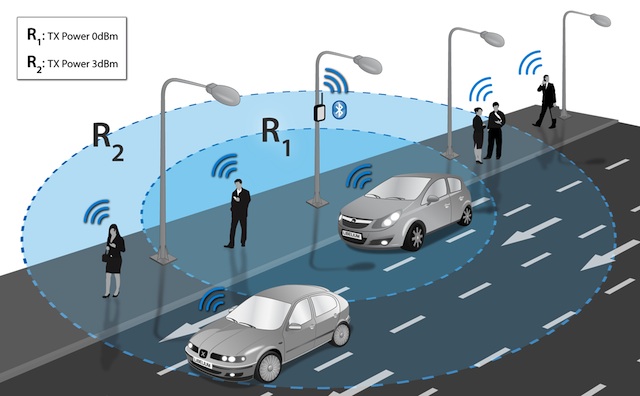
    Are street poles the key to rolling out a smart city? Lutz Heuser, CTO of Urban Software Institute believes these are the easiest way to connect a community and roll out mobile and Internet of Things technologies across a town.

    “For us it’s the perfect example of how infrastructure can change things very quickly,” Heuser told Decoding The New Economy at the AIIA Internet of Things summit in Canberra last week.

    Heuser sees the street poles as an easy success for cities looking to connect services and assets with most towns and utility companies replacing poles on a regular basis which provides an opportunity to roll out smart technologies.

    “If you put in some extras like communications, sensors and environmental monitors and all of a sudden you create a whole new ecosystem that helps the citizens and the environment.”

    Heuser sees funding as another advantage in using street poles to rollout smarcity technologies as the energy savings in modern LED lights as providing enough incentives for municipalities to replace older infrastructure.

    The key though is leadership, both in business and politics, this is essential in Heuser’s view in getting the best return for smartcity and IoT investments.

    As technologies like smart parking meters and connected rubbish bins roll out and municipal staff like garbage collectors and enforcement offices need real time connectivity, cities increasingly are going to rely upon wireless services. The humble street pole may well turn out to be the answer to what is otherwise an expensive problem.

    Similar posts:

    • No Related Posts
  • Do we really want fibre broadband?

    Do we really want fibre broadband?

    Despite the enthusiasm to be the first US city to have the high speed broadband offered by Google Fiber, it turns out interest in the Kansas City rollout is only running at half the rate expected.

    This is consistent with the Australian NBN experience, with the takeup rate so far a dismal with less than 20% of Tasmanian properties passed taking the opportunity to get connected – only 10% of accessible premises are projected to sign up in 2012 according to NBNCo’s corporate plan.

    Both the poor take up rates in the US and Australia raise the question “do we really want fibre broadband?”

    The main difficulty are the incumbent players. In Kansas City reports are that Time Warner, the incumbent cable operator, is offering deals to lock their customers into existing plans.

    A similar thing has happened in Australia with the major operators locking customers into existing ADSL and phone plans so subscribers face penalties if they churn across to an NBN service.

    Most of those subscribers don’t need to churn right now, for most users the data plans they are currently on are fine and the NBN prices aren’t substantially different to the existing ADSL charges. In Kansas City, Google’s prices are lower, but the service is some way off and Time Warner can offer a connection now.

    Another problem is demographics, neither Tasmania or Kansas City are major digital industry hubs and parts of both regions are economically distressed, which means they are less likely to take up the offer – or be able to make the investment – to get get connected.

    That latter problem is the most concerning, as regional disadvantaged areas have the most to gain from being connected to broadband.

    Just as towns lobbied in the 19th Century to get railways routed through their communities, in the 21st Century fast Internet connectivity is seen as essential to a region’s development.

    But if individuals won’t get connected then it makes the business case for setting these networks up difficult to justify for corporations like Google or Governments like Australia. In future, it will make it harder to get incumbent network operators to replace aging copper infrastructure with modern and faster fibre.

    As both projects mature, hopefully we’ll see a greater takeup, in the Australian case greater acceptance should be inevitable as the incumbent Telstra copper network is shut down and subscribers migrated across to NBN infrastructure.

    The question does remain though of just how useful homes and businesses see fibre Internet connections to their homes, if they remain unconvinced about the value of a high speed data link then it maybe our communities miss out on the vital communications tool of the 21st Century.

    Similar posts: