Tag: design

  • Small business and the importance of design

    Small business and the importance of design

    One thing the iPhone era has taught us is the importance of good design.

    In a piece for Fairfax Small Business this week, I had a look at some small businesses that had used compelling design to launch their products.

    As part of the research for this I interviewed Murray Hunter, founder of Sydney’s Design + Industry, about what businesses should be looking for when taking a product to market.

    One of the interesting points about the story was the two businesses featured, Elanation and Pod Tracker, didn’t use professional designers as the founders of both had expertise in that field themselves.

    But it is clear, good design matters to users and it will avoid problems down the track with manufacturers shippers and possibly regulators so for most small businesses and founders hiring a professional could be a very good investment indeed.

    Similar posts:

    • No Related Posts
  • When startups should think like designers

    When startups should think like designers

    Thinking about design and getting to market should be a priority for startup businesses says Murray Hunter, founder of Sydney’s Design + Industry.

    Having won over 160 design awards during 30 years of running Design + Industry and employing 50 specialist designers and engineers in his Sydney and Melbourne offices, Murray has many insights in what makes a successful product.

    “Some of those companies have gone on to become world leaders, it’s a hell of ride and it’s a fabulous relationship where 15 or 20 years later you have a client relationship that’s dominating the world.” he recalls.

    Thinking like designers

    The current startup scene in Australia provides an opportunity for the country, Murray believes.

    “We’re losing manufacturing industry but there’s a whole new wave of businesses and startups based around new technologies, particularly around IoT”

    Cyclone pruning shears

    “The world wants to think like designers and lead by innovation, which is a really interesting line. You have the American government that wants to design think and you have all these large accounting firms that want to be design thinkers as well.”

    “But everyone wants to be innovative and provide a better experience to the customer and we have all these new technologies that are giving us the ability to have a lot more information, be more informative.”

    “It started with Apple with the iPod and then the iPhone and it’s led right through so we now have high expectations of what we want for products and services.”

    Finding funding

    His advice to startups is blunt, “the first thing you need is funding, If you don’t, start the process of development sufficient to develop collateral which enables you to gain investors.”

    The development process itself starts with knowing the market.

    “Products should be designed to suit the market, not on a hunch,” he says. “So you start with what the market wants and you go backwards. You don’t get dressed and say ‘where are we going’, you find out where you’re going and then get dressed.”

    “The intelligent and qualified entrepreneur will have a lot of the problems solved, they’ll have done research, they’ll have knowledge of the market, they’ll know the segments it’s aimed at and quite often they’ll have route to market realised.”

    BlueAnt Pump HD earbuds

    “Crowdfunding makes a big difference as entrepreneurs can run a crowdfunding campaign, get initial sales and worldwide recognition for it. If it isn’t successful, that could be the end of it. Others know people who can fund it.”

    “They may not have funding or they may, we have quite a few suppliers around us who will help with the funding process. We also know private individuals with deep pockets who are interested in investing.”

    Changing the design industry

    Over the past few years, the design industry has changed dramatically with the rise of Computer Aided Design, 3D printing along with new materials and manufacturing methods. Medical devices are one area that’s seen a rapid change.

    “Thirty years ago medical products were low volume,” Murray recalls. “In Australia typically we’d make them out of sheet metal. Now the volumes have increased because the world is more easily accessed so we’re designing for higher volumes.”

    CliniCloud non contact thermometer

    “We’ve also got low cost manufacturing sources to provide solutions so we can develop a more sophisticated product that will be better received worldwide.

    “The biggest change I think has been CAD (Computer Aided Design), the Internet and 3D printing.”

    “CAD because we went from 2D drawing to 3D models, the internet because we no longer send DVDs or CAD files to our manufacturing partners and it means we can access manufacturers all over the world.”

    “We’re working on a 3D printer that can make biomatter, in other words skin, there’s talk of doing teeth with the rigid externals and soft nerves. So where we go I can only think of organs, prosthetics, replacing cartilage which is a big thing for the elderly.”

    Similar posts:

  • The age of the curious business

    The age of the curious business

    Last year the Committee for Economic Development, Australia (CEDA) warned over 40% of the nation’s jobs were at risk from automation over the next 15 years.

    While that focus was on the risks to workers, it’s equally threatening for small business. Many companies and sole traders are facing the same disruptions from technological change.

    This isn’t a new phenomenon, in the Twentieth century the motor car displaced thousands of small businesses that catered to the horse drawn economy and family run corner stores were displaced by the arrival of supermarkets in the 1950s.

    Beyond the personal computer era

    At the end of the last century the personal computer’s arrival revolutionised small businesses as suddenly tools that were previously only in the reach of big organisations were suddenly accessible to the most modest venture.

    One of the early beneficiaries of that shift to desktop computers in 1990s was the bookkeeping industry which took off as a legion of home based contractors catered for local small businesses.

    As the internet and smartphones came along, the bookkeeping market changed as features like bank feeds and receipt apps automated many previously manual tasks.

    Despite those challenges the bookkeeping industry has survived and continues to grow with IBIS World estimating the overall accounting industry, which includes bookkeepers, grew 2.6% per year over the past five years.

    Close to customers

    The success of bookkeepers and accountants in navigating change is probably due to industry being close to their clients along with being early adopters of new technology, two things that caught the taxi industry out when Uber arrived.

    Uber’s success in upturning the taxi industry illustrates just how important understanding emerging technologies is for smaller businesses. One industry currently facing massive disruption from robots is the construction sector.

    The trades were thought to be relatively immune from automation – after all, who’s going to build a robot plumber? But now robots are moving into trades like bricklaying, as Australian startup Fastbrick Robotics shows.

    Fastbrick are building a commercial bricklaying machine, Hadrian X, that automates the trade’s physical work and integrates with 3D printing technology.

    In one respect the robot bricklayers are bad for the trade’s employment prospects but for older brickies with bad backs having a machine to help you is a godsend while for employers it improves productivity and reduces workplace accidents. It won’t be the end of the trade but the contractors who survive will have adapted to a very different construction industry.

    Restructuring industries

    That Fastbrick integrates with design software shows how the dynamics of the construction are changing. In 2014 Chinese company Winsun demonstrated how they can build ten houses in a day with large scale 3D printers.

    While we may not see that particular technology in Australia, aspects of it will be used and they are going to change all the trades and professions related to the building industry.

    Architects are one building industry group that have long dealt with technological change. Like bookkeepers, the arrival of personal computers completely changed their profession and those who adapted thrived.

    Now with cloud computing services plugging into builders’ supply chains like Winsun and machines like Fastbrick’s, architects are closer than ever to the worksite and their customers. The ones who are adapting are the earlier adopters who are getting into these technologies further.

    Disrupting the professions

    Accountants and architects aren’t the only professions being affected, lawyers are facing a new wave of services using artificial intelligence to do many legal tasks ranging from a chatbot that appeals traffic fines to a program that predicts US Supreme Court decisions.

    Like other sectors, it’s the early adopters in the legal sector who are adapting to a very different industry with much of the manual, lower level work being automated out.

    The wave of technology we’re now seeing appear – including robots, autonomous vehicles, machine learning and artificial intelligence – are going to change our industries and workplaces dramatically in the next few years.

    What the accounting industry and the architecture profession teach us is the businesses closest to their customers and those adopting technology early will be the ones who thrive in a very different industries. Researching, experimenting and paying attention will be the keys to business survival.

    An open mindset

    Even for the trades, survival during this wave of technological change will be a matter of watching the marketplace closely while being open to new methods and technologies.

    Assuming it won’t happen to your industry is probably one of the riskiest things of all. Ten years ago the idea of smartphones revolutionising the taxi business or that robots could replace bricklayers was unthinkable. Now it’s almost expected.

    The forces that are changing the workplace are also changing industries and markets, so small businesses will also be affected. It’s going to pay to be smart and curious.

    Similar posts:
    • No Related Posts
  • Inside Samsung’s exploding batteries

    Inside Samsung’s exploding batteries

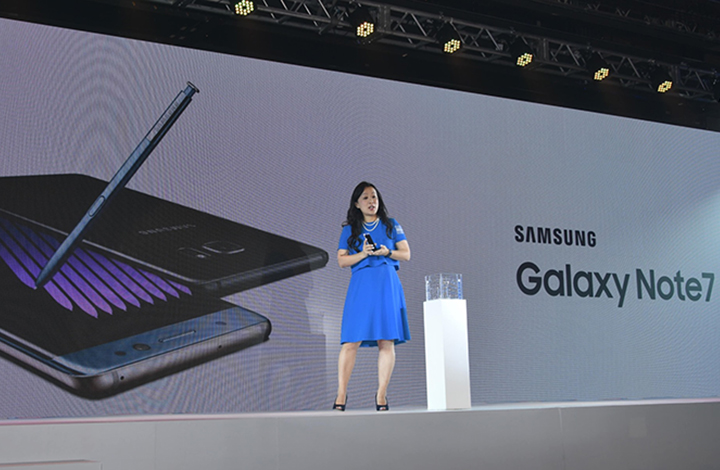
    One of the most humiliating corporate crises of recent history has to be last year’s recall of the Galaxy Note.

    Airlines around the world started telling passengers that the devices were banned during their pre flight briefings, causing untold damage for the Samsung brand.

    Now Samsung have completed a review into what happened including an infographic illustrating the exact problem with the batteries.

    That review shows the design and manufacturing errors that resulted in the batteries bursting into flames. How Samsung are fixing it or putting in systems to prevent that happening again isn’t discussed.

    What the infographic does show is how complex the design, engineering and manufacturing is in modern technology – something that is often overlooked by many technologists.

    Battery technologies are particularly fraught as a lot of energy is compressed into a small space and the chemistry of Lithium Ion batteries makes them particularly dangerous should they be damaged or incorrectly used, as Boeing found with the early models of the 787 Dreamliner.

    Modern life and the devices that we take for granted are complex and that complexity though can easily come back to bite us. As Samsungs’ exploding batteries show, sometimes that complexity is difficult to manage.


    Similar posts:

    • No Related Posts
  • Creating a Silicon Brain

    Creating a Silicon Brain

    Should we be rethinking how computers are designed? The co-founder and CEO of chip designer Nervana, Naveen Rao, believes so as artificial intelligence applications change the way systems work.

    “A brain only uses 20 watts of power to do far more than a laptop,” observes Naveen Rao at a breakfast following Intel’s Artificial Intelligence Day in San Francisco last week.

    “Presumably the brain is doing more computation than your laptop,” he continues. “What are we missing? Why is there such a big difference between what a computer can do and a brain can do. Let’s try to understand that and maybe what we learn can change how we design computers.”

    A lifetime passion

    Rao, whose company was acquired by Intel for over four hundred million dollars last August, was discussing the quest to make computers operate more like brains and less like adding machines.

    For Rao this has been a lifetime passion, having graduated as an electrical engineer and spending most of his career designing computer chips at Sun Microsystems and various startups he quit his job to do a PhD in neuroscience, “after ten years, I wanted to return to my passion of trying to use biology to better understand computers.”

    From that combination of study and experience Nervana was founded in 2014 and raised twenty million dollars from investors before being acquired by Intel.

    Replicating the bird, not the feathers

    The key part in creating a computer that acts more like a brain is to get the individual CPUs to be working together in a network similar to the mind’s neural paths, “look at a bird compared to a plane.” Rao says,” we don’t replicate the feathers, but we do the function.”

    Doing this meant rethinking how processors are designed, “there are tried are true methods of chip architecture that we basically questioned.”

    “We don’t need high levels of generality. We don’t need this to work on energy or weather simulations. We removed some of that baggage.”

    Paring back the processor

    So the Nervana team stripped down the individual processor and removed many functions, such as a cache, that are built into today’s advanced CPUs. Those lighter weight, and less power hungry, units can then be combined into neural networks more suited to artificial intelligence functions than today’s computers.

    “Nvidea, this sort of fell into their laps,” observes Rao of Intel’s key competitor in the AI, graphics and gaming space. “It just so happens the graphics functions on their chips are suited to Artificial Intelligence applications.”

    Without the more complex functions of modern CPUs, Rao and the Nervana team see the opportunity to build more flexible computers better suited to artificial intelligence applications.

    Intel focuses on AI

    That focus on AI has seen Intel branding its AI initiatives under the Nervana brand name as the iconic Silicon Valley company tries to move ahead with more nimble competitors like Qualcomm and NVidea.

    For the computer industry, artificial intelligence promises to be the next major advance, something necessary if we are ever going to make sense of the masses of data being collected by smart devices and the reason why Microsoft, Google, Amazon and Facebook are all making massive investments in the field.

    Regardless of whether Intel and Nervana are successful in the AI marketplace, Rao sees the entire field of neural computing as a great opportunity. “It’s exciting, there’s lots of chances to innovate.”

    Paul travelled to San Francisco as a guest of Intel


    Similar posts:

    • No Related Posts