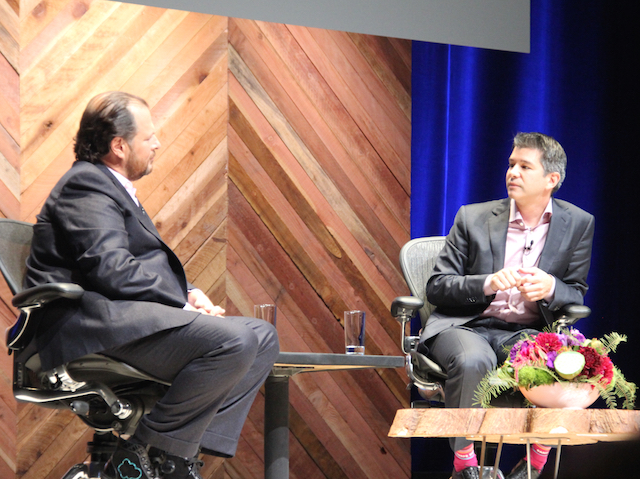
“Taxi drivers are good people, they are just treated badly”, Uber founder Travis Kalanick told Salesforce CEO Marc Benioff at Dreamforce last week.
Kalanick flagged how in most cities around the world the taxi industry is broken. Nowhere is that more true than in Australia and a piece I wrote for Business Spectator about the disruption to the nation’s taxi industry illustrates that well.
The success of Uber in disrupting those markets – although it should be noted the company is far from becoming profitable – shows the real opportunities lie where existing markets are broken or distorted.
If you’re benefiting from a broken market then this is a risk to your business. For outsiders, it’s an opportunity.
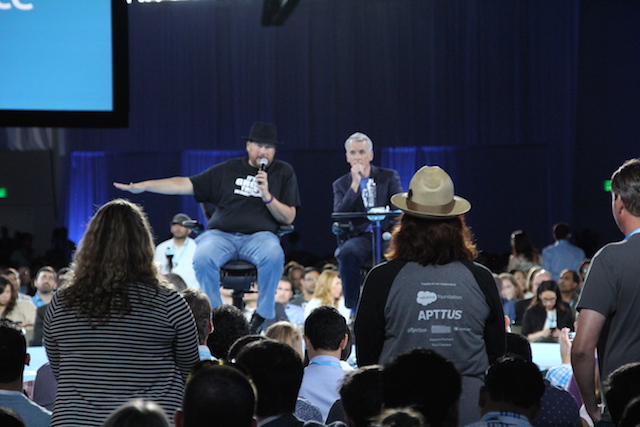
Probably the best regular session of the annual Dreamforce conference is the final session where Salesforce founders Marc Benioff and Parker Harris answer questions from the attendees.
As with any open microphone session, some of the questions are silly but many highlight frustrations Salesforce’s customers have and some give the opportunity for an insight into Parker and Benioff’s thoughts away from the scripted glitz of the main keynotes.
One questioner asked Benioff and Parker what their advice would be to someone in their position of 16 years ago with a new business.
Forget the tech
“Don’t think about the tools or the technology,” said Harris. “Thing about the problems you can solve. Stay focused and work hard and build a great company.”
While Parker also emphasised a great team is another important element, Benioff flagged an element of luck in building a successful business, “we got the timing right.”
Ultimately though it came down to making the jump from a comfortable, if frustrating, corporate job to a risky startup.
“I remember I was working in a big company for a long time, very unhappy.” Benioff recalled and noted the decision to strike out on your own is very much a personal decision, that can only be done when you are convinced it is time.
The five questions of business
Knowing when that time has arrived comes down to five questions, Benioff believes.
“It all starts with you, you have to get clear about what is it that you really want, what is really important to you, how are you going to get it, how will you know when you’ve got it and what is preventing you from having it.”
“When you can answer all those five questions you’ll have clarity in your direction. The problem with most small businesses – and big businesses – is they can’t answer those questions.”
“If you can answer those questions then you can break out.”
Ultimately Benioff and Parker flag focus as the key individual attribute and being able to focus on answering those five questions is a very good first step to having a successful business.
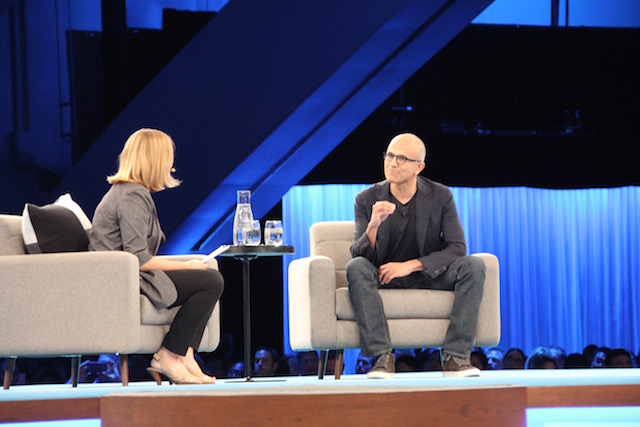
Nadella has asked this question before and his answer at the San Francisco event was that Microsoft exists to empower people through technology, something that Bill Gates and Paul Allen envisaged in the mid 1970s when they founded new startup.
To show how he sees Microsoft’s position in the modern workplace, Nadella gave a not completely flawless demonstration of Microsoft’s integration with Salesforce.
The products Nadella pushed were Windows Phone and Windows 10, which he claims to be part of a major change in businesses with data transforming the way we work.
Interestingly, he framed the Windows 10 IoT strategy around endpoint security. While there are millions of vulnerable devices, it’s not clear shipping them with Microsoft’s firmware will resolve the problem.
“What’s the big technology shift? It’s how we use the data.” Nadella proclaimed in laying out how he sees a data culture transforming the places we work.
A Grand Pivot
Microsoft itself is dealing with a cultural transformation with the company shifting across to cloud based subscription services. “The thing that it’s done for us is it’s not a one-for-one move. It’s not like we’re just moving Exchange on premise to Exchange as a Service, it changes the value proposition for the customers.”
Nadella sees those cloud services as an opportunity to sell more products – and add more value – to customers, particularly small businesses.
The CEO’s role
A business’ success relies upon its culture and Nadella sees the role of the CEO as being about curating that culture, “I always ask what it is that defines us.”
Part of that culture is about becoming customer focused which involves thinking outside of one company’s products or silos, “how is our industry going to succeed? It’s going to succeed if we can add value our customers. Our customers are going to make choices that aren’t homogenous.”
Those varied choices are what’s driving Microsoft’s current push into alliances. “If we are going to realise the power of technology, then these partnerships will amplify that,” says Nadella.
While there were nuggets of truth in Nadella’s presentation, there was also a lot of truisms and somewhat meaningless slogans. While Microsoft’s push onto the cloud and into alliances that were once considered unholy might be genuine, it’s hard not to think there’s still a lot of marketing speak wrapped around it.
Beacon technologies are one of the hottest items in the Internet of Things with retailers, sports stadiums and hotels looking at how they can use these devices to improve their operations and customer experiences.
At Dreamforce 2014 Proximity Insight’s Steve Orell spoke on the event’s wearable panel about how their service plugs into beacon technology and customer service.
Proximity Insight was born out of the 2013 Dreamforce Hackathon where Orell and his team were finalists. From that, the company set up operations in New York with a focus on customer relationship management in the retail industry.
Retail isn’t the only the field that Orell sees for Proximity Insight with the hotel and casino industries as being other targets.
“With the hotel, why check-in? Why not walk in and let your smartphone do it for you?” Orell asks.
“It’s all about making live so much more seamless and slick,” Orell adds. “There’s opportunities in every sector.”
For businesses looking at rolling out beacon technologies the key is to be adding value to enhance the customer experience, Orell believes.
“You have to be delivering something to the customer beyond tracking them, it’s about making the whole retail or hospitality experience better. It has to benefit the customer.”
With beacon technologies now becoming common and the supporting hardware being built into all smartphones, we can expect to see more applications coming onto the market. It’s worth considering how your business can use them to enhance the customer experience.
Paul travelled to Dreamforce 2014 as a guest of Salesforce
Coffee’s view is that the internet of things is an opportunity to delight the customer with proactive service that allows companies to fix customers’ problems before they happen.
Zero planned maintenance
Taking this idea further is GE’s Chief Economist, Marco Annunziata, who sees the internet of things as an opportunity to introduce the concept of Zero Planned Downtime where there is no need to stop machines for scheduled repairs and maintenance.
“A lot of the maintenance work is done on a fixed schedule,” Annunziata. “You end up wasting time and money servicing machines that are perfectly fine.”
“On the other hand you might miss that something is about to go wrong between two maintenance periods.”
“The idea of the industrial internet is that by gathering so much data from these machines themselves – plus having the software to analyse this data – you will have information that flags to you when intervention is needed.”
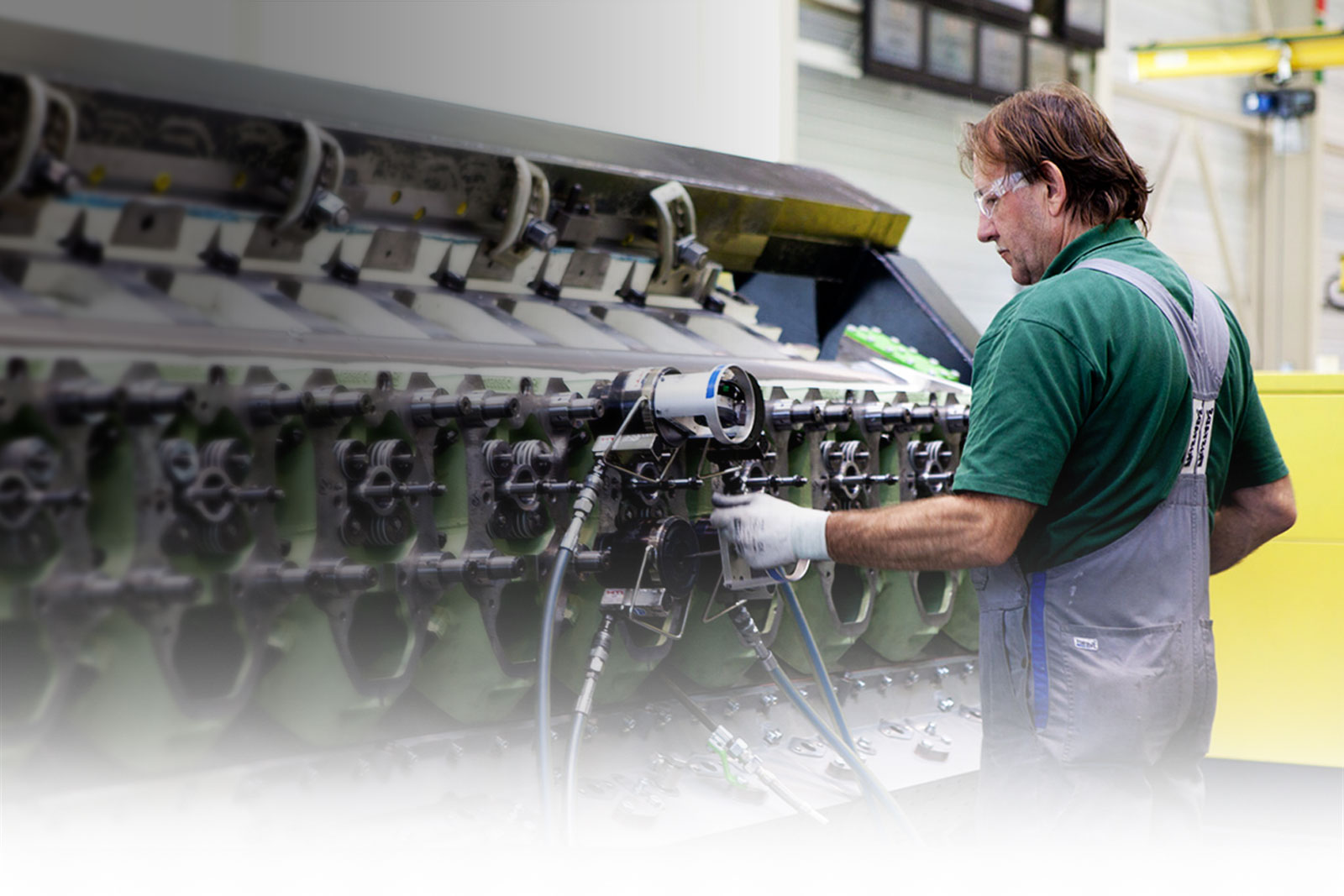
Annunziata’s view is that connected machines won’t need to have regular service intervals, instead of insisting a car has an inspection every ten thousand kilometers where the tyres are replaced and the oil changed, often unnecessarily, the vehicle need only be called in for maintenance when its sensors flag that a part or consumable needs attention.
Finding the benefits
While that can mean big savings for car owners, it’s in fields such as aviation, mining and logistics where the greatest benefits of Zero Planned Downtime would be found.
For businesses it’s another example of how they will fall behind if they don’t invest in modern technology as those who invest in newer, connected equipment will be able to reduce downtime and maintenance cost.
How achievable Zero Planned Downtime is in many fields remains to be seen, not least because of regulatory hurdles in sectors like aviation, however the idea does promise to change the business model of companies that depend upon service revenue.