Tag: driverless cars

  • Introducing Singapore’s driverless pod

    Introducing Singapore’s driverless pod

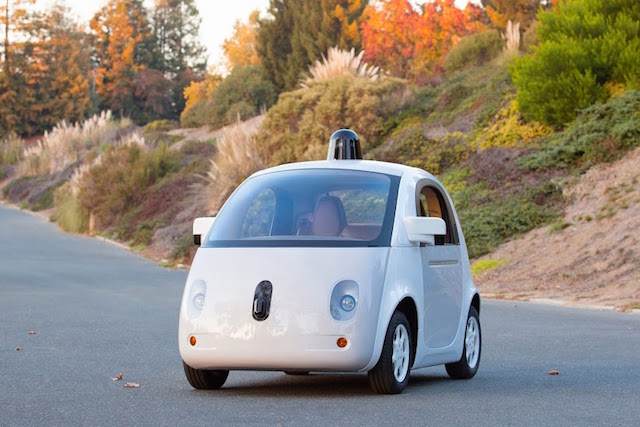
    A while back we speculated on what the autonomous vehicle would look like, given that having a dashboard, steering wheel and even forward facing seats were no longer necessary if a car no longer has a driver.

    It seems almost certain that the future driverless cars will take a very different form the vehicles we travel in today.

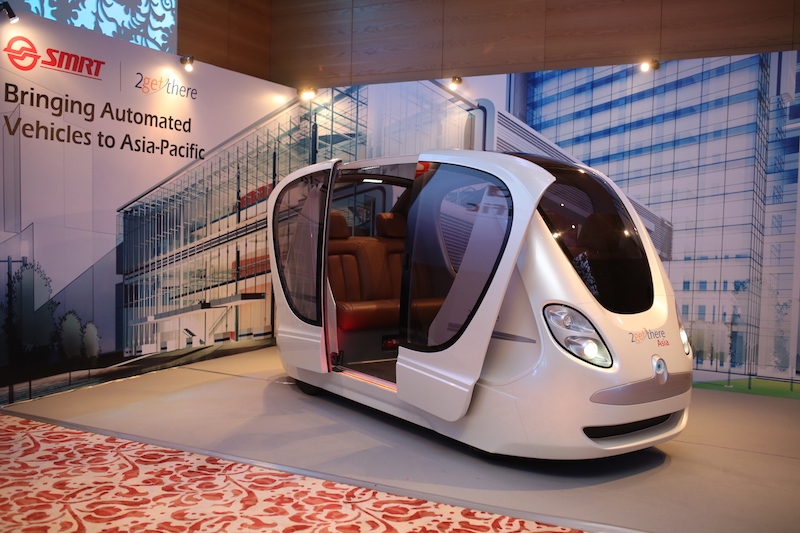
    Now the Singaporean mass transit agency has unveiled its trial autonomous ‘pod’ that’s designed to carry 32 passengers.

    How the pod integrates with other transport modes and interacts with general road users will be interesting to watch, but illustrates why thinking about the future of public transit has to look beyond apps.

    The big question is how will these technologies change the economics of public transit and the behaviour of users. It seems we’re about to find out.

    Similar posts:

    • No Related Posts
  • Making seniors mobile

    Making seniors mobile

    One of the understated benefits of automation and robotics is it allows the elderly and disabled more mobility.

    Facing an aging population, the Japanese are unsurpringly ahead of the rest of the world in understanding this and, as the Wall Street Journal reports, researchers are investigating how driverless cars can help the elderly get around.

    While autonomous vehicles of all sizes promise greater mobility to many people currently restricted in their access, robotics also promises to extend our working lives just as mechanisation has over the past two hundred years.

    Similar posts:

    • No Related Posts
  • Thinking through the effects of autonomous vehicles

    Thinking through the effects of autonomous vehicles

    The defining technology of the Twentieth Century was the automobile. While there were many advancements – antibiotics, mains electricity and mass communications to name just three – nothing changed society to the same extent as the motor car.

    A hundred years ago it was impossible for a pundit to appreciate how the motor car was about to change communities, the population’s increased mobility saw the suburbanisation of cities, the creation of the consumerist society and the rise of industries such as supermarkets and drive in theatres, none of which were foreseeable fifty years earlier.

    Change didn’t happen in isolation, those new industries were the result of a number of changes in technology alongside the motor car, for instance the supermarket couldn’t have happened without refrigerators becoming household items along with radio and television developing new markets through the advertising industry.

    Economic drivers

    The biggest driving force was economic, once motor cars became affordable for the typical worker – just before World War II in the US and in the mid 1950s in most of rest of the Western world – the cost of travelling fell dramatically.

    With the cost of moving around falling, workers had the opportunity to move out of the dirty, grimy inner city to new and clean suburbs where they could commute to their jobs in offices and factories. At the same time it also meant families could travel further to buy their groceries, forcing the end of the cornershop and the milkman.

    Autonomous vehicles change those economics again, as Uber founder Travis Kalanick pointed out last year, the most expensive item in a taxi or Uber fare is the driver.

    During his interview at the Code Conference Kalanick went on to describe how eliminating the driver changes the economics.

    “When there’s no other dude in the car, the cost of taking an Uber anywhere becomes cheaper than owning a vehicle. So the magic there is, you basically bring the cost below the cost of ownership for everybody, and then car ownership goes away.”

    Changing ownership

    The assumption in today’s discussions about autonomous vehicles is that car ownership will become and thing of the past, something that fits into Travis Kalanick’s view.

    Should that be the case then a whole range of new industries open up. Who owns the cars, who dispatches the cars, who plans for peak and normal usage are just a few questions and opportunities that open for savvy entrepreneurs.

    A changing concept of ownership doesn’t come without problems, not least who owns the code controlling the vehicles and the data being generated which in turn raises privacy issues.

    Loss of jobs

    The obvious other question with driverless vehicles is what happens to all the taxi drivers, couriers and long haul truckers as automobiles no longer require operators.

    With truck driving being the dominant occupation in most US states, employing 1.8 million workers according to the Bureau of Labor Studies, this is a serious question. Interestingly the BLS forecasts employment to grow five percent per annum over the rest of the decade.

    That scale of  job losses hasn’t been unusual over the last century. The agricultural industry itself has seen a massive fall in employment in that time period with the proportion of Americans working in agriculture falling from half the population to a tenth of that.

    Creating new industries

    Obviously half the US working population didn’t end up being unemployed, with the many of those displaced by the motor vehicle – either in the agricultural sector or in those fields catering for the pre-motor car market – finding work in other fields.

    That the economy adapted to the loss of jobs in what were traditional fields in 1915 gives us a clue to where the jobs and industries of the future are going to come from as the changing nature of the economy means new businesses are created.

    As the economics of these industries change, we see the need for workers move further up the value chain. We also see those reduced costs open opportunities for new ideas, just as the supermarket concept took hold in the 1950s as the economics of household shopping changed.

    This is where the greatest opportunity lies for today’s entrepreneurs lies, in figuring out how those reduced costs will change the way consumers and society use transportation. In turn that will drive the next wave of employment growth.

    Similar posts:
  • When autonomous vehicles and humans collide

    When autonomous vehicles and humans collide

    With the rapid advances in driverless cars, it was only a matter of time before the question of what happens when people encounter them would be answered.

    It turns out not too well for the autonomous vehicles reports Bloomberg citing a study by the University of Michigan’s Transportation Research Institute that found driverless cars have accident rates double those of normal vehicles.

    As it turns out, those accidents are usually minor and are caused by humans colliding with the autonomous vehicles as the law abiding computers catch drivers unawares.

    That people aren’t very good at driving cars isn’t a surprise but now we’re seeing what happens when distracted, mistake prone humans encounter cautious and usually correct computers.

    We now have to start thinking about what happens when artificial intelligence encounters human frailty.

    Similar posts:

  • Defining the jobs of the future

    Defining the jobs of the future

    Once again the question of what happens to the jobs of today in the face of technology is raised in a Quartz story by Zake Kanter looking at how driverless cars will lost the US economy millions of jobs over the next decade.

    Zake isn’t alone in this, just one study predicts half the US police workforce could be put out of work as autonomous vehicles take to the road.

    Worrying about today’s jobs is understandable as it’s clear the news won’t be good for many occupations. However the discussion should be about what roles are going to be needed in the future.

    Looking back

    Should we go back a hundred years there were a huge number of people, primarily young boys, employed in cleaning roads of horse dung. The equine industries provided work for tens of thousands of workers ranging from skilled blacksmiths and buggy makers through to those unskilled street sweepers.

    Most of those people lost their jobs and their careers became redundant as the age of the motor vehicle took over.

    Yet those displaced eventually founds jobs – as mechanics, panel beaters, traffic cops and gas station workers – although for many the dislocation was tough.

    Automotive transformation

    The motor car also stimulated a transformation in society as it made travel easier and wide scale logistics viable. Those changes allowed supermarkets, drive-in theatres and fast food chains to develop, all of which were unthinkable at the beginning of the Twentieth Century.

    Industries like fast food and the drive-in theatre were also driven by the demographic and social changes of the mid-Twentieth century as concepts like the teenager and the consumerist society were developed.

    Demographics and economy

    Those changes to demographics are important as well, the developed economies’ aging populations and shifting income patterns are going to determine the shape of society and the workforce even more so than technology.

    For businesses and governments assuming the mid Twentieth Century consumerist economy is the future the next wave of change could be a difficult time. Even more so given that model of growth and employment was allowed to continue far beyond its natural life by the 1980s credit boom.

    Credit, and banking, will be one of the challenging fields for the next decade as governments struggle with the consequences of guaranteeing institutions during the Global Financial Crisis along with the disruptions of higher frequency algorithmic trading, Big Data analytics and startups with new payments platforms.

    Disruption everywhere

    The disruptive effect on the banking industry by new technology will be repeated across sectors with startups and new business models challenging everyone from retailers to window cleaners, it’s not just the automotive industry that’s challenges.

    While it’s difficult to predict exactly what the world is going to look like in 2025, it is clear that many industries and occupations will be struggling with a very changed world. The task for managers and business owners is to be aware of unexpected threats and opportunities.

    Some of the opportunities are going to lie in studying statistics – essential in a world of big data – and learning the basics of software coding. Design is another area that is going to need many new workers.

    For today’s workers, it’s more important than ever to be grabbing the skills required to be employed in the industries of the mid Twenty-First Century.

    Similar posts: