Tag: economic development

  • How important is public transport to smart cities?

    How important is public transport to smart cities?

    One of things that stands out when discussing economic development with city governments is the importance of public transit for towns aspiring to be smart cities.

    This was particularly notable in interviewing Gordon Innes, CEO of London and Partners, about British capital’s building upon the legacy of the 2012 Olympics and its quest become the digital capital of Europe.

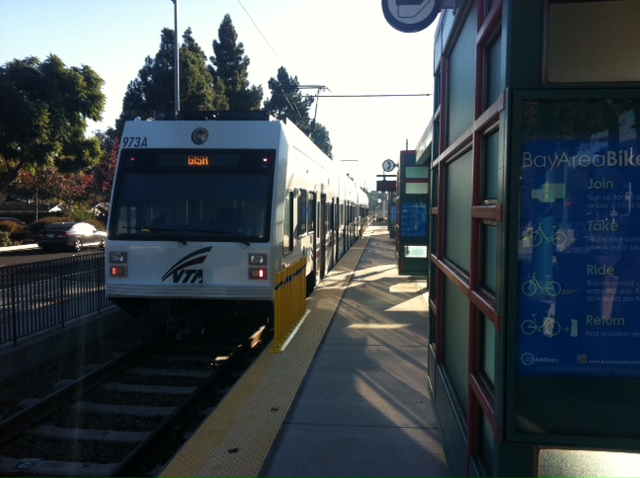
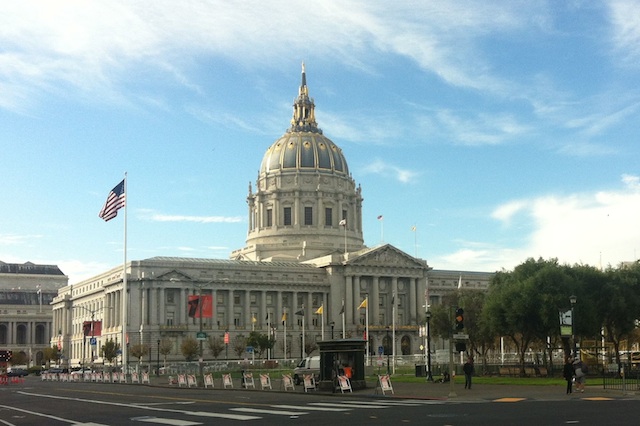
    At the centre of these developments is public transit, something mentioned by both Innes and Laurel Barsotti of the City of San Francisco.

    Innes sees public transport as essential to London’s growth, “it’s absolutely critical to the physical growth of the economy.”

    “In the run up to the Olympics nine billion was spend in upgrading the tube and Dockland Light Railway and that opened up all of East London’s economy in way because it wasn’t accessible or attractive for businesses.”

    “Stratford now is the best connected train station in Europe,” declares Innes. “That part of the city and around the Docklands is much more accessible and that’s bringing in investors. It wouldn’t have happened if the transport infrastructure wasn’t there.”

    In San Francisco, Laurel Barsotti sees a much more subtle advantage for the city in having, by US standards, a comprehensive public transit system in its bus, light rail and subway system.

    “A lot of the entrepreneurs creating those companies are concerned their employees see people using their products,” says Barsott. “They want them riding the bus to and from work and see people interacting with their products.”

    While in Barcelona, the public transport system is forming part of the local Smart City program where bus stops are Wi-Fi base stations and a fundamental part of the town’s communications network.

    For cities, it may well be that having decent public transit systems is going to be the competitive difference in being a key part of the 21st Century economy.

    Those parts of the world not investing in transport networks may find they are being left behind in the new economy.
    Similar posts:

  • How did San Francisco become the darling of the tech scene?

    How did San Francisco become the darling of the tech scene?

    Regular visitors to San Francisco would notice how the city has changed in the last few years.

    Companies that were setting up in Silicon Valley are now basing themselves downtown, the business community is energised and the seedier parts of the town are looking substantially spruced up.

    To understand the change I interviewed Laurel Barsotti from the City and County of San Francisco as part of the Decoding the New Economy series of video clips.

    Laurel is the council’s Director of Business Development and we discussed how the local government has worked with the community and business leaders to drive San Francisco’s economic growth.

    The shift from Silicon Valley

    A striking change in the tech industry is how the startup focus has shifted from Silicon Valley fifty miles away to downtown San Francisco. Laurel puts it down to a shift in the priorities of the sector.

    “I think we benefited from a shift in the tech industry, being much more focused on design and user experience,” says Laurel.

    “The people who are investing in that are people who want in San Francisco and people who want to live and work in the same city.”

    “A lot of the entrepreneurs creating those companies are concerned their employees see people using their products, they want them riding the bus to and from work and see people interacting with their products.”

    Changing the tax code

    Like Barcelona, the Global Financial Crisis shook the city up, “with the economic downturn our whole city made jobs a top priority.”

    Part of that review focused on the disadvantages of basing a business in San Francisco.

    “It was bought to our attention that we were the only city in California that taxed stock options.” Laura says, “companies that wanted to go public were having to leave San Francisco to afford it.”

    “We did an entire revision to our tax code which showed to investors they could count on San Francisco to be business friendly.”

    Regenerating communities

    Along with the problem of city taxes, the city was facing the problem of regenerating blighted neighbourhoods and the administration decided to address both problems together by offering incentives for businesses to setup in the mid-market district – I’d been warned not to call it ‘The Tenderloin.’

    “We had a neighbourhood that was facing a lot of blight and we had not been able to successfully increase business and we had companies like Twitter telling us that our payroll tax was causing them problems and making it hard for them to grow in San Francisco,” Laura tells.

    “So we combined those two problems and made it so a San Francisco company was able to move into a neighbourhood that needed more investment and business and it would be able to save some money while helping us improve the neighbourhood.”

    The future for San Francisco

    A common point when talking to city leaders and economic development agencies around the world is the focus on building a diverse economy and Laura sees that as part of the future for San Francisco.

    In that vision includes manufacturing, biotechnology and tourism along with the internet based industries that are today’s investment and media darlings.

    The focus though is on the city’s residents and how life can be improved for everyone, not just the business community and high tech investors.

    “We are really focused on creating an economy for all,” says Laura. “We want to remain as diverse as possible.”

    “Every San Franciscan, from no matter what socio-economic background, has a place that they can be.”

    Similar posts:

  • Cities of Industry

    Cities of Industry

    The latest Decoding The New Economy interview feature Laurel Barsotti, Director of Business Development at the City of San Francisco discussing how the city refound it’s entrepreneurial mojo.

    A notable point about Laurel’s interview is how she has similar views to Barcelona’s Deputy Mayor Antoni Vives about the importance of industry to San Francisco.

    For some time it was an article of faith in the Anglo-Saxon world that the west had become post-industrial economy where manufacturing was something dispatched to the third world and rich white folk could live well selling each other real estate and managing their neighbours’ investment funds.

    “Opening doors for each other” was how a US diplomat described this 1980s vision according to former BBC political correspondent John Cole.

    It’s clear now that vision was flawed and now leaders are having to think about where manufacturing, and other industries, sit in their economic plans.

    Barcelona’s and San Francisco’s governments have understood this, but others are struggling to realise this is even a problem as they hang on to dreams of running their economies on tourism, finance and flogging their decidedly ordinary college courses to foreign students.

    For some political and business leaders this is a challenge to their fundamental economic beliefs. It’s going to be interesting to see how they fare in the next twenty years.

    Similar posts:

  • Measuring an industrial hub’s success

    Measuring an industrial hub’s success

    A short article appeared on London’s City AM website yesterday discussing the successes of Google’s Campus and the government’s Tech City initiative.

    What jumped out of that story is the quote from Benjamin Southworth, the former deputy chief of the Tech City Investment Organistion, that London’s first tech IPO is “probably 18 to 24 months away”

    Southworth’s comments raise the question of how do you measure the success of initiatives like Tech City, does a stockmarket float indicate success of business or tech cluster?

    The debacle of Australia’s Freelancer float which saw the shares soar over 400% on the first day of trading certainly doesn’t indicate anything promising about the startup scene down under apart from the opportunities for those well connected with insiders on Australian Security Exchange traded stocks.

    In London’s case, Google’s Campus gives a far better indicator of what tech hubs and industrial clusters can add to an economy – £34m raised from investors in the 12 months to October 2013, 576 jobs created and 22,000 members of its coworking space.

    Google’s statistics raise an interesting point about the different objectives for the stakeholders in incubators and hubs; entrepreneurs want money or glory, investors want returns, corporate backers want intellectual property or marketing kudos, governments want jobs and politicians want photo opportunities with happy constituents.

    These different objectives means there are different measures for success and one group’s success might mean bitter disappointment for some of the others.

    What the various partners define as success is something anyone involved in an incubator or hub should consider before becoming involved, in that respect it’s like a business or a marriage.

    Similar posts:

  • Into the ruins of Bedlam – visiting the industrial revolution’s birthplace

    Into the ruins of Bedlam – visiting the industrial revolution’s birthplace

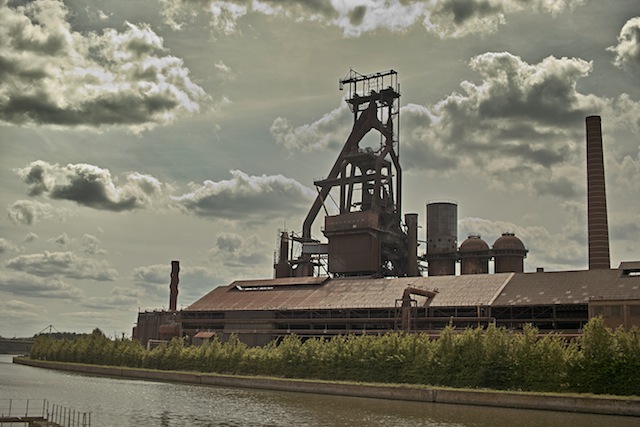
    Nestled in a quiet wooded valley near the modern town of Telford in the English Midlands is the birthplace of the industrial revolution.

    Today the three quiet villages — Coalbrookdale, Coalport and Ironbridge are quaint little communities but two hundred years ago they were the powerhouse of the Industrial revolution.

    ironbridge-wooded-valley
    The hills around Ironbridge

    Coal and ironstone mining in the district started in medieval times with the locals having a wide range of words to describe different types of coal — Lancashire Ladies, Randle and Clod being just a few terms.

    coalbrookedale-blast-furnace-hearth

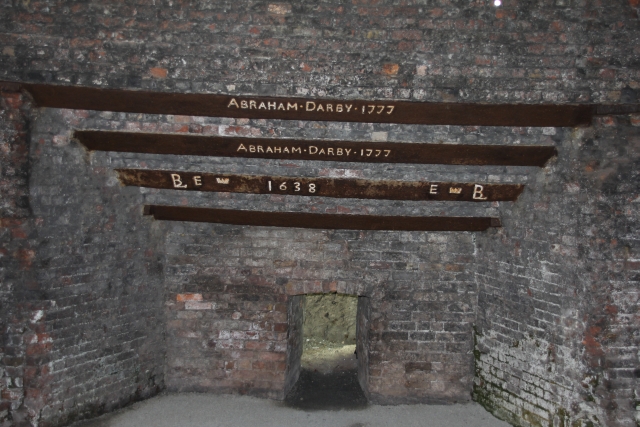
    Iron had been smelted at Coalbrookdale from the late 16th Century however the arrival of potmaker Abraham Darby in 1709 that catalysed the industry with his method to reliably use coke for the blast furnaces.

    coalbrookdale-by-night
    Coalbrookdale by night – the Bedlam furnaces at their peak

    Further downstream, the Madeley Wood smelter became infamous as the bedlam furnaces, named after the noise and confusion of London’s notorious asylum.

    With the new reliable way to smelt iron and a string of blast furnaces along the valley, production skyrocketed and the valley’s natural advantages of accessible coal, iron and water meant it became the centre of the industrial revolution.

    Increased production meant more workers and people flocked in from the surrounding agricultural communities — not in a dissimilar way to today’s experience in China.

    quiant-streets-old-slums

    That increased population meant more slums, what is today’s cute village was once sqaulid poverty, albeit an improvement on the life of an agricultural worker. Epidemics were common with 32,000 lives lost in cholera in 1831-2.

    ironbridge-iron-bridge-industrial-revolution

    Despite the squalor of the workers’ quarters, the ironmasters were proud men and Coalbrookdale’s new bridge could only be build of one material — iron.

    ironbridge-cast-iron-coalbrookdale
    “This Bridge was cast at Coalbrookdale”

    Ironmasters like John Wilkinson and Abraham Derby III were also ferocious promotors of their product and the bridge stands as a proud, strong advert for the strength of Coalbrookdale’s iron. Wilkinson himself built the first cast iron barge a few years later and was eventually buried in a cast iron coffin.

    boy-and-black-swan
    Boy and Black Swan cast iron statue

    Eventually though the smelters of Coalbrookdale began to lose their competitive edge as mining and blast furnace technology improved, the ironmasters responded with moving into decorative and intricate cast iron features like the Boy and Swan statue that now graces the gardens of the Coalbrookdale Iron Museum.

    ruins-of-bedlam-at-ironbridge
    The ruins of the bedlam blast furnaces at Coalbrookdale

    Despite their successes, Coalbrookdale’s slide continued, with coal production peaking in 1871 and a steady decline over the following century.

    modern-use-of-ironworks

    Today, there’s not a lot of industry in Coalbrookdale except for one plant that keeps the area’s engineering tradition running.

    For Britain, the question is how the nation’s economy continues it’s engineering traditions, 45 minutes drive away is a relic of Twentieth Century industry — the Austin motor works at Longbridge.

    Today an assembly plant fills a small corner of the formerly sprawling factory site and over it flies the flag of it’s new owners. The People’s Republic of China.

    Birmingham-MG-car-works-PRC-flag

    We live in interesting times.

    Similar posts: