Tag: economic development

  • London’s quest to be the next Silicon Valley

    London’s quest to be the next Silicon Valley

    In November 2010 British Prime Minister David Cameron set out his vision for London becoming the centre of Europe’s digital economy.

    “We’re not just going to back the big businesses of today, we’re going to back the businesses of tomorrow.” Cameron said. “We are firmly on the side of the high-growth, highly innovative companies of the future.

    Three years later London’s tech scene is booming with more than fifty incubators across the city and over three thousand digitally connected businesses in the Shoreditch district.

    Building London’s resurgence

    Gordon Innes, the CEO of the city’s economic development agency London and Partners, puts this down to a combination of factors including a young and diverse population coupled with being a global media and finance centre.

    At the time of Cameron’s speech the cluster of tech startups around Shoreditch’s Silicon Roundabout area was already firmly established and the British government was acknowledging the industry’s successes.

    “What we did, what the mayor did, what the government did,” Innes said, was to make sure that we removed as many barriers as possible to let the sector grow as rapidly as possible.”

    The value of teamwork

    Part of that effort involved business leaders, London & Partners, the mayor’s and Prime Minister’s advisers meeting on a regular basis to thrash out what the tech sector needed for the UK’s tech sector to thrive.

    “There were changes to the tax credits for R&D and an important one was the Enterprise Incentive Scheme,” says Innes.

    “Linked to that was a recognition of the need to link angels and high net worth individuals to be educated about the sector. It’s not just enough to balance the risk through the tax code.”

    Another success for the UK startup sector was the British government introducing an entrepreneur’s visa that makes the country more attractive to foreign founders of startups.

    Having built an community of tech startups, the city is now looking at how to grow the sector. “The big priority over the next few years is growing your business in London.” Innes says.

    “Making sure you’ve not only have access to angel finance but also to stage one and stage two venture fund capital, you’ve got access to capital markets through new groups on the stock exchange and the AIM market.”

    One of London’s big challenges is linking the city’s strong financial sector to the tech industry with a range of organisations like London Angels and City Meets Tech.

    Sharing the vision

    A notable point about the successes of London & Partners and Tech City UK is the co-operation between the levels of government along with having a shared vision of where the city should sit in the global economy.

    Having a unified, strong and consistent vision is probably the best thing governments can offer a growing entrepreneurial or industry hub.

    “Government can’t create that but government can certainly support it or, if it’s not careful, can destroy it,” says Innes.

    London is showing how to support a growing sector of their business community, other cities need to be taking note how they can compete in a tough global market.
    Similar posts:

  • Are industrial hubs a thing of the past?

    Are industrial hubs a thing of the past?

    Since the beginning of civilisation, industry hubs have formed the basis of cities and regions, but is the internet removing the need for like minded businesses to group together?

    Tomorrow I’m at a breakfast featuring Porter Erisman whose film Crocodile in the Yangtze tells of the rise of China’s Alibaba and the adventures of its founder, Jack Ma.

    Jack Ma’s Alibaba is the eBay of manufacturing, connecting factories and buyers around the world. A visitor to the site can buy anything from childrens’ clothing to tractor gaskets, all cheaper by the container load.

    The rise of Alibaba tracks the development of sites like oDesk which bring skilled workers together. It’s becoming easier for businesses of all sizes to tap global workforces and supply chains.

    In the past, industrial hubs and cities have developed due to the proximity of workers, suppliers and materials. Today, it may well that with all the resources being a mouse click and a credit card away from an entrepreneur it’s no longer necessary for these hubs to develop.

    Whether industrial hubs do develop in the future will depends on individual sector’s needs for natural resources, face to face contact and short supply chains, but it’s worthwhile thinking whether location remains important for modern economic development.

    Similar posts:

  • Ending the motor industry’s 1950s delusions

    Ending the motor industry’s 1950s delusions

    Today Ford announced the pending closure of its Australian manufacturing operations, bringing to an end ninety years of the company building automobiles down under.

    Ford’s announcement is small on a global scale – the Broadmeadows factory built 40,000 cars out of a worldwide supply of sixty-three million – it does illustrate some major structural issues facing both the global automobile industry and the Australian economy.

    An Automotive Depression

    Over capacity has been the curse of the automobile industry for decades as governments have propped out producers around the world.

    KPMG’s 2012 Global Automotive Survey forecast the global industry would be 20 to 30 percent over capacity in 2016.

    This doesn’t seem to worry industry executives or their government supporters, as KPMG reported;

    Alarmingly, most auto executives still seem to regard the risk of overcapacity and excess production as a necessary evil to remain competitive. As the rapid growth of recent years eventually slows down, manufacturers that fail to address overcapacity could face some tough decisions.

    Ford’s Australian executives could at least be credited with facing some of those tough decisions.

    Many governments though are still in denial as they continue to subsidise motor manufacturers in an effort to copy the industry model that worked for the US Midwest during the 1950s.

    Indeed, the Australian government in 2008 committed 5.2 billion dollars to support their domestic industry through to the end of this decade. Ford’s announcement today coupled with General Motor’s cutbacks last year show that policy is in ruins.

    At the Ford and government press conferences, journalists pressed the Prime Minister and the Ford Australia’s CEO about repaying some of the millions of corporate welfare doled out to the multinational over the last decade. Naturally little was to be said about that.

    In a stark comparison to Ford Australia’s announcement, US electric car manufacturer Tesla Motors repaid a $465 million US government loan.

    While no-one can say Tesla’s future is certain, at least US investors are putting their money on 21st Century technologies instead of propping up declining industries of the last century.

    Australia’s predicament

    The car industry is just one sector that faces global overcapacity – ship building, real estate and mining are just three with similar excess production.

    For Australia, the mining industry is winding down investment as worldwide production capacity expands. At the same time, the blue sky projections of China’s resources demand are being challenged.

    While the mining boom comes to an end, Australia now has to face the consequences of the nation’s economic decision to focus on resources and property speculation in the 1990s and early 2000s.

    As the Thais and Indonesians found in 1997, and the Irish and Icelanders a decade later, economies based on unsustainable foundations seem to work fine until suddenly they don’t.

    It may well be that Australia is about find out what happens when the economic tide suddenly changes.

    One bright side is that the government has the best part of five billion dollars to invest in new industry – assuming Australia’s politicians can wean themselves off their 1950s view of the world economy.

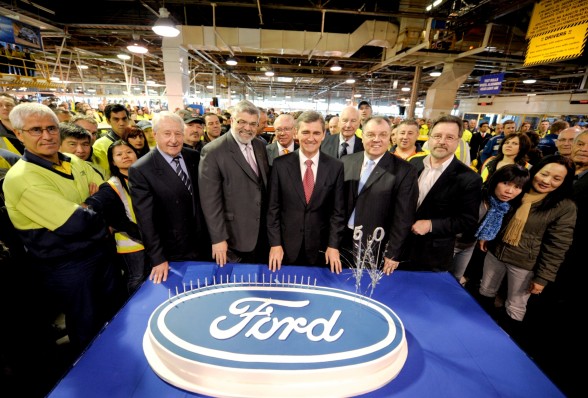
    Image of Ford Australia celebrating 50 years of Falcon Production courtesy of Ogilvy Communications.

    Similar posts:

  • Silicon Valley’s network effect

    Silicon Valley’s network effect

    Philip Rosedale, the founder of Second Life and various others startups has an interesting take on why San Francisco and Silicon Valley are the centres of the tech startup world.

    He puts the region’s success down to the network effect where like minded groups share knowledge and encourage each other.

    If you want to create a vibrant start-up ecosystem somewhere else that is competitive with San Francisco and Silicon Valley (and this is starting to happen right now in places such as Boulder and Austin), you want to do two things: You want to pack the people working together into as dense an area as possible, with public areas and co-working venues where they will see each other constantly, even when they aren’t working in the same company. And then you want to encourage them to let down their guard and be as open as possible about what they are doing.

    Of course the network effect doesn’t just apply to the Silicon Valley tech startup model, it’s just as true for China’s manufacturing hubs, South Korean shipbuilding or historical centres like Detroit’s motor industry and the English Midlands during the industrial revolution.

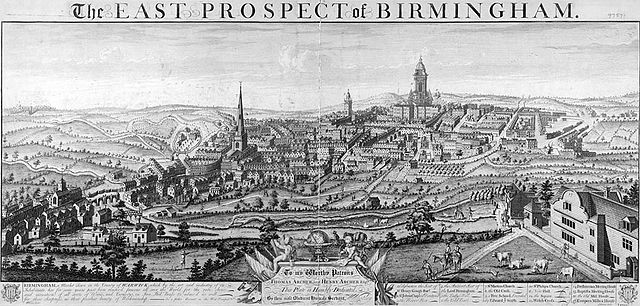
    We shouldn’t forget that fifty years ago governments sought to to emulate Detroit’s success and a century ago cities strived to be like Birmingham.

    That’s something we should keep in mind when looking at ways to emulate Silicon Valley – in trying to copy today’s successes, we may be mimicking a model that has already peaked while overlooking our own unique advantages and the opportunities in new industries.

    For cities striving to become world centres of industry, it might be best to first figure out what they do well and then find a way of attracting the smartest people in that field to move there.

    Then again, it may just be that most industrial hubs are accidents of history and the best we can do is try to attract smart people to our communities.

    Similar posts:

  • Tasmania and the travelling circus

    Tasmania and the travelling circus

    “We bring in almost everything,” says V8 Supercars director Mark Perry as he guided journalists around Launceston’s Symonds Plains racing track.

    Everything Mark showed us – a fleet of trucks, communications equipment, hospitality tents and the racing teams themselves would be packed up on Sunday night, shipped to Melbourne and flown to New Zealand for the next race.

    The V8 Supercar management are very proud of their work, and they should be given the massive task they have, but it exposes a weakness in the Tasmanian economy in that almost all the high value employment and equipment has to be flown in.

    Quiet times in downtown Launceston

    Arriving into Launceston on the Friday before the races, it’s interesting how little hype there is around the event. In Sydney, San Francisco or Cannes there would be banners and flags around the city welcoming visitors, in Launceston there’s almost nothing despite the race meeting being one of the state’s biggest events.

    It was also surprising how there were no downtown events to complement the main attraction.

    Almost every major sporting event from the Olympic Games and FIFA World Cup to the AFL Grand Final and Australian Open has some inner city satellite venues with big screens for the locals who can’t make it to the stadium.

    Having those satellite events adds to the buzz and hype in the host city. Something that downtown Launceston needs at 7pm on a Friday night.

    That lack of support by the community is notable, particularly in light of the $600,000 per year the cash strapped Tasmanian government pays in subsidies for the V8 Supercars.

    I’m against government support for events like these, but if that money is going to spent it may as well be spent properly to maximise the economic benefits.

    Subsidies like this would be even better if they were part of some grander economic plan, but like all the payments given to the film production, motor manufacturing and other industries, they are based more on populism than any strategy – the politicians may as well be giving free beer out in Launceston’s main street.

    Why the community support is so tepid for the Supercars event is so tepid is something I’m going to be exploring in the next few days as I meet various business leaders in Launceston and Hobart to hear how the state is positioning itself in the 21st Century.

    In the meantime, the V8 Supercars “travelling circus” has moved on, hopefully Tassie will have some more long term jobs to show for it.

    Paul travelled to Tasmania and the V8 Supercars courtesy of Microsoft Australia

    Similar posts: