Tag: economic development

  • Wandering around Wellington

    Wandering around Wellington

    It bills itself as ‘the coolest little capital in the world’ however something is going on in Wellington, New Zealand’s capital city, as its technology sector takes off.

    Last week I was in Wellington, partly to attend the Open Source, Open Society conference and also to have a look at how the city is doing so well as one of the leading startup cities.

    While I’ll have a number of posts about the city, startup scene and conference over the next couple of weeks, it’s worthwhile noting some basic impressions that came from the visit.

    The size of the city, Wellington is a small town with a population of 200,000, brings both advantages and negatives for the business and startup communities.

    Small is sweet

    One of the advantages of being so small is the business community is relatively accessible, a number of entrepreneurs told me how easy it is for them to find the specialists they need given there’s usually two degrees or less separation between everyone.

    Normally having a small business community means it gets insular, particularly in a capital city where the business of government can create a bubble effect. What’s notable about Wellington is most of the businesses are looking outward towards the US, Australia and East Asia.

    The city’s intimate business environment also improves trust within the community as one Aussie expat told me, “if you rip off anyone in this town pretty well everyone knows about it by the end of the weekend. It keeps everyone honest.”

    Being small, the city makes it easy to walk around which compounds the business networking opportunities. A businesswoman, who is also a lifelong Wellingtonian, observed how she allows an extra 15 minutes to walk anywhere as she finds herself stopping for conversations.

    Three dominant businesses

    Having three successful businesses in the city – TradeMe, Xero and Weta – has both its upsides and disadvantages with the bigger players tending to dominate the employment market and funding opportunities.

    Of the three businesses, TradeMe is the most domestically focused while Xero is growing in the tech sector and Weta is the most diverse with its range of special effects and movie production services.

    With Weta, the business is exposed to the vagaries of the global film industry as Statistic New Zealand survey of movie production shows.

    The film industry is one of Wellington’s important employers with the sector supporting around two thousand businesses in the city, although I didn’t get time to explore how much of an overlap there is between the tech and film industries.

    TradeMe is largely a domestic focused business that provides a steady work and skills base for the local workforce. While it’s the least internationally exposed business of the three, it’s probably also the most consistent.

    Xero, like Weta, is a globally expanding business and its success is attracting investors and expats from North America and Australia. While its the smallest of the three it’s probably the business that has done the most raise Wellington’s profile in the tech industry.

    Community spaces

    What’s particularly notable are the number of coworking spaces in Wellington ranging from the straightforward Bizdojo startup space and Creative HQ through to the quirky Enspiral coworking space.

    The availability of shared spaces makes the city attractive to startups and adds to the vibrancy of the local tech community which links into hipster pursuits such as craft beer.

    Communities like Enspiral also add another dimension to the local startup and creative industries environment by connecting entrepreneurs with their peers and service providers.

    Partnerships with government

    One aspect I didn’t get to explore while in Wellington was the relationship between the city’s business community and educational institutions, particularly Victoria University.

    Similarly I didn’t get the opportunity to discover how much of a role local and national governments have had in the development of Wellington’s tech scene. It seems to be relatively hands off although some government agencies have supported Weta with co-investment funds.

    What I did meet though were plenty of immigrants; from Croatia, Denmark, Holland, the US and, most of all, Australia.

    Talking to some of the US and Australian expats it was clear that lifestyle combined with opportunity with lifestyle, as one Aussie emigre told me “I couldn’t get the water views, access to the city and be able to walk to work back home like I can here.”

    While these are superficial thoughts that I’ll expand on over the next week as I decipher notes and listen to interviews, there’s no doubt that Wellington is carving a position as one of the global centres of the new economy. How big it becomes will depend on how many other businesses grow to the size of Xero or Weta.
    Similar posts:

  • Seizing the agricultural technology opportunity

    Seizing the agricultural technology opportunity

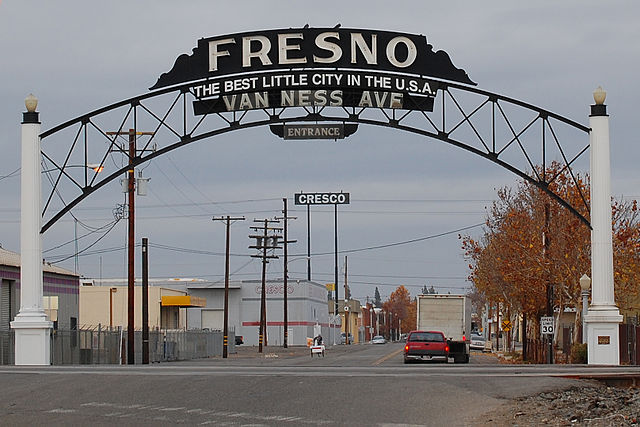
    Does the real opportunity for tech entrepreneurs lie in the agriculture sector? An article by James Fallows looking at Fresno’s startup community for the Atlantic Magazine suggests that might be the case.

    Fresno, in California’s agricultural Central Valley, doesn’t have the glamor of the global startup centres but offers a focus on neglected sectors as Fallows quotes Jake Soberal of Bitwise Industries.

    “My guess is that 5 to 10 percent of the tech need of the farming industry is now being met,” Fallows quotes Soberal as saying. “You could build a technology industry in Fresno based on that alone, not to mention the worldwide need in agriculture.”

    While there isn’t a great need for another coffee app, pizza delivery service or online store, there are far more opportunities in other sectors to address unmet needs.

    This is probably where the opportunity lies for cities like Fresno that are trying to create their own mini Silicon Valley – build a technology sector to address the needs of your existing industrial base.

    In agriculture there’s a plethora of Internet of Things, Big Data, analytics and other technological applications that addresses issues in the industry. Farming is not the only sector which presents these opportunities.

    Fresno’s ambitions aren’t unique but as Fallows points out this is not a zero sum game and there’s no reason why dozens of cities shouldn’t be able to build their own niches with new technologies.

    Picture of Fresno from David Jordan via WikiPedia

    Similar posts:

  • Why Singapore is building a connected city

    Why Singapore is building a connected city

    “What if we were to wire up every corner of Singapore?” Asked Steve Leonard, the Executive Deputy Chairman of Singapore’s Infocomm Development Authority, at the CommunicAsia 2013 Summit.

    Two years later that question has been answered as the island state has covered the entire island with a fibre network, putting the country on course to create what Leonard describes as a ‘sensor fabric network.’

    Speaking to Leonard ahead of his visit to Australia for the AIIA Internet of Things conference in Canberra later this month, it’s impressive what the IDA looks to do in building Singapore as a connected nation.

    “We think we have an opportunity to use some of the natural advantages Singapore has,” Leonard says. “In this case being relatively small and an island. The idea that constraints mean creativity.”

    One of the areas Leonard sees as an opportunity with the IoT is in the health care industry where chronic care care can be moved back into the community while hospitals and clinics can be used for acute patients.

    One of the challenges for every city rolling out an IoT infrastructure is the plethora of standards, “we’re trying to think about IEEE standards and we’re trying to think about interoperable as possible with technology as it evolves.”

    “Whether it’s East or West, Singapore wants to be a place where business can be done and people can be healthy,” says Leonard. “What we don’t want to do is develop a standard that might work for us but exclude us from something that originates in another part of the world. We want to be open to things that evolve.”

    Becoming a connected city is key to being a leader in a connected world, “we’re always making sure we seek to have more wireless access points.” Leonard says, “we also have one gig ninety-five percent fibre coverage across the island. We also want to enhance our capabilities through 4G and Wi-Fi.”

    “All of those things together in some sort of concert create that fabric that we’re working on.”

    Historically Singapore’s place in the world has revolved around being a trading hub which has led it to being one of the world’s biggest cargo shipping ports.

    With broadband internet access available pretty well throughout the island, it should open opportunities for entrepreneurs, businesses and government agencies to explore how ubiquitous internet creates opportunities.


    As the world becomes moves from physical goods to bytes, Singapore is looking to becoming as much a technological centre as a goods hub. For Steve Leonard and the IDA the task is to make sure the city takes its place in the connected economy.

    Similar posts:

  • Copying the Silicon Valley Bubble

    Copying the Silicon Valley Bubble

    Staying private sucks if you’re a tech company writes Felix Salmon in Fusion magazine.

    If you’re giving away stock in lieu of wages to employees or taking early stage funding for equity, then listing, or selling to a larger business, makes sense as staff and investors need to see a return. It’s the unspoken truth of the Silicon Valley funding model.

    The Silicon Valley model though doesn’t come without risks, investor Mark Cuban warns a valuation bubble greater than that of the Dot Com Boom has developed as angel investors and early stage venture capital firms have thrown money at startups after Facebook’s massive buyouts of Instagram and WhatsApp.

    While Silicon Valley and the US tech market might have plenty of opportunities for buyouts and IPOs, most other places around the world don’t have the deep financial markets and the cashed up software companies to make similar exits possible for local startup businesses.

    Again that difficulty in successfully funding exits shows that simply trying to copy the US tech industry model is probably not going to work for most places tying to building their own Silicon Valleys, although it seems China is about to try.

    The other message is that the IPO or buyout route is not necessarily the right path for every business, as Salmon says: “Maybe the best solution is not to take any outside funding at all, and not to try to grow too fast.”

    “Some family companies have been around for hundreds of years: if you own your own business, and you don’t get greedy, you can build a very pleasant life for yourself. You just won’t end up on any list of young billionaires.”

    Similar posts:

  • Connecting the village from outside the grid

    Connecting the village from outside the grid

    Villages and small towns in Mexico have a rough deal, the privatisations of government monopolies during the 1990s meant most of them were cut off from the telecommunications networks rolled out at the turn of the century.

    It’s taken a while for engineers to find a way to figure out an open source alternative to cellular base stations but now they have and it promises to change the model of economic development in poor regions.

    Wired describes how community groups are bringing mobile communications to the poorer and more remote parts of Mexico.

    The rollout of Open BSC is an example of how small scale operations can compliment the larger commercial networks – while major operators like Telemex can ignore smaller communities that offer little if any return, local groups can setup their own not for profit services which give villages connectivity.

    A similar thing is developing with solar power, with PV cells becoming affordable communities which had little chance of being connected to their country’s national grid are now able  electricity.

    That poor or remote areas can now be connected to power and communications without massive subsidies or infrastructure investment is a radical change from the Twentieth Century model of economic development, these advantages change the game on many levels.

    Similar posts: