Tag: economic development

  • Cargo cults and Chinese casinos

    Cargo cults and Chinese casinos

    A few days ago this site covered Patrick Chovanec’s views on the changes the world faces as China moves from an export focused economy to one that relies more on domestic consumption.

    Chovanec highlighted that some industries will be winners — retailers for instance — while others such as property developers and exporting manufacturers will be losers.

    It seems we can add casinos to that list of losers; the big gamblers aren’t spending money as their property collateral falls and the government tightens up on corruption.

    As Quartz reports, Macau’s casinos have encountered their second consecutive quarter of revenue falls and gambling stocks are falling.

    That’s bad news for Macau’s economy but it’s also not good for those who’ve hitched their fortunes to Chinese gamblers — Steve Wynn and James Packer are two people immediately spring to mind.

    In the case of James Packer this is also bad news for the Australian economy as Packer’s Aussie casinos are increasingly focused on attracting Chinese ‘whales’.

    For Sydney and the state of New South Wales, this is particularly bad news as the government gifted a prime site of land to build a new casino that was going to be the mainstay of the city’s tourism industry.

    Not that Sydney is alone in its cargo cult like hope that building a casino will attract Chinese. In Northern Queensland, the struggling city of Cairns is pinning the future of its tourism industry on a massive complex in a flood mangrove swamp.

    Should that project collapse it will be another example of the folly in believing Australia could ride on the back of a booming China for decades and staking everything on that belief.

    In the 21st Century, business is more than just building a shiny object and hoping rich Chinese will come.


    Similar posts:

  • Knocking at Silicon Valley’s door

    Knocking at Silicon Valley’s door

    In opening Salesforce’s new London office yesterday, former BT CEO Lord Livingston described the city as “knocking at the door of Silicon Valley.”

    Judging from the Computing UK article that description hasn’t impressed the rest of the British tech community as it confirms in their minds there is, as usual, too much focus on the capital and Livingston’s view also raises the question of whether London really wants to be another Silicon Valley.

    Like all global industrial hubs Silicon Valley the result of a series of happy coincidences; massive defense spending, determined educators, clever inventors and savvy entrepreneurs all finding themselves in the same place at the same time.

    Trying to replicate the factors that turned the region into the late Twentieth Century’s centre of technology is almost impossible – even the United States couldn’t afford the massive defense spending over the fifty years from 1941 that underpinned the Valley’s development.

    Apart from the spending; the culture, economy, geography, markets and workforce of Silicon Valley are very different to that of London’s.

    This not to say London doesn’t have advantages over Silicon Valley; access to Europe and relatively easy immigration policies make Britain a very attractive location for tech businesses. If the local startup community can tap The City’s banking resources then London could well be the next global hub.

    If London is the next global tech centre – history will tell – it will almost certainly be very different to Silicon Valley.

    Strangely, the event Lord Livingston was speaking at reflects how the Californian tech sector is evolving; Salesforce is a San Francisco company and represents a shift in the last five years from the suburbia of San Jose and Palo Alto to the quirky city life of SoMa and the Tenderloin.

    At the same time Silicon Valley itself is evolving into something different, just as it did in the 1990s with the switch from microprocessor manufacturing to software development.

    That shift illustrates the risks of trying to imitate one industrial hub; by the time you’ve build your replica, the original has moved on.

    If you spent your life trying to knock on the door of heroes you want to imitate, it would be shame to finally make it only to find they’ve moved.

    Similar posts:

  • If you need government money, do you really have a business?

    If you need government money, do you really have a business?

    Australia’s new Federal government handed down its first budget yesterday with savage cuts to scientific research, training and business support.

    I dissected the implications of the budget for businesses in a piece for Technology Spectator with the conclusion that modern Australia is turning its back on technology, the young and the entrepreneurial.

    None of which will come as a surprise to this site’s regular readers.

    Some of the critics of my Tech Spec piece made the point that if your business relies on government grants then you aren’t really an entrepreneur.

    I’d tend to agree with that, having spent a few months working for a state agency responsible for business development programs I realised that for most businesses the time cost of applying for and administering a government grant was often greater than the value they received from the programs.

    So government grants aren’t the entrepreneurial manna that many people believe.

    What’s worse, governments can axe these programs at short notice which leaves the businesses short handed. Which is exactly what happened last night.

    Indeed that’s the problem for Australian businesses, each time a government changes the new administration axes the previous one’s programs and this lack of certainty and continuity is one of my concerns about the viability of Australia’s startup scene.

    The truth is though, if your business does need government funds to survive then you’re at the mercy of bureaucrat’s whim rather than the rigours of the market.

    If you’re comfortable with owing your existence to a bureaucrat then you probably don’t really have a business and you certainly aren’t an entrepreneur.

    Similar posts:

  • It’s hard copying Silicon Valley

    It’s hard copying Silicon Valley

    This site has looked at cities wanting to become imitations of Silicon Valley in the past.

    New York, along with London, has been one of the places most likely to create its own Silicon Valley.

    The New York Times though describes how that journey isn’t proving easy, with the city boasting few major tech successes.

    The question though is does New York really want to be Silicon Valley – or San Francisco for that matter?

    Right now the Bay Area is sexy and the centre of the world’s growth industries; but so too were Detroit and Birmingham, England once upon a time.

    Perhaps it’s better to work on being the next big thing rather than trying to imitate today’s successes.

    Similar posts:

  • Building modern manufacturing

    Building modern manufacturing

    Around the world manufacturers are wondering how they adapt to the rise of 3D printing nod the continued challenge of China’s low costs of production.

    In Singapore, Reuters reports, the government is putting its hopes on new technology boosting the country’s manufacturing industry in one of the world’s highest cost centers.

    “The future of manufacturing for us is about disruptive technologies, areas like 3D printing, automation and robotics,” EDB Managing Director Yeoh Keat Chuan told Reuters.

    Britain too is experimenting with modern technologies as the BBC’s World of Business reports about how the country is reinventing its manufacturing industry.

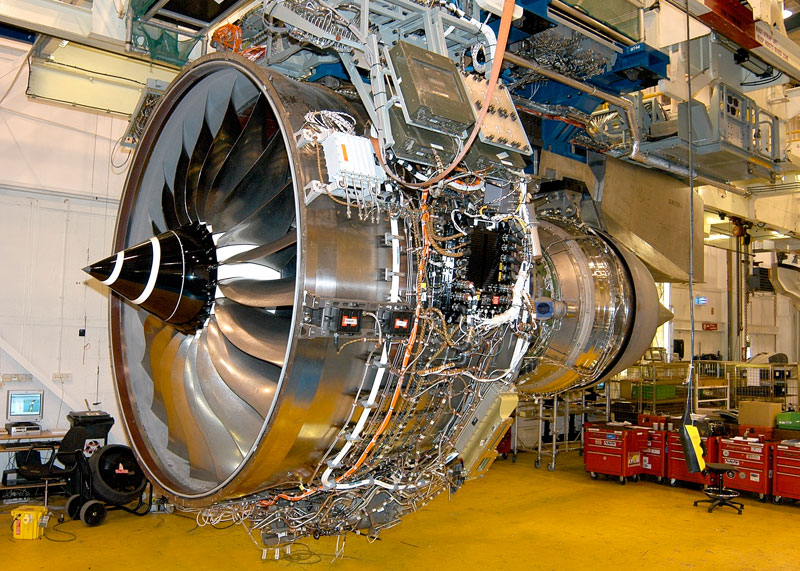
    Tim Chapman of the University of Sheffield’s Advanced Manufacturing Research Centre describes how the economics of manufacturing changes in a high cost economy with an simple advance in machining rotor disks for Rolls-Royce Trent jet engines.

    “These quite complex shaped grooves were taking 54 minutes of machining to make each of these slots. Rolls-Royce came to us and said can ‘can you improve the efficiency of this? Can you cut these slots faster.”

    “We reduced the cutting time from 54 minutes to 90 seconds.”

    “That’s the kind of process improvement that companies need to achieve to manufacture in the UK.”

    Interestingly many of those British engineers interviewed by Peter Day in the BBC report focus on China’s cheap labor as being the driver for moving up the value chain and automating

    Dismissing China as purely a low cost producer a risk as Chinese manufacturers are working hard to move up the value chain as their aging populating erodes their labor advantage.

    The last word though for Britain’s engineering sector has to go to Hugh Facey, founder of wire tool company, Gripple.

    “Are you a rich man?”
    “No”
    “Do you mind?”
    “I’m from Yorkshire.”

    Both Singapore and the UK are working on establishing their positions in the 21st Century economy; both business owners and individuals have to give some thought on where they want to be.

    For manufacturing, the rollout of new technologies means the industry is going to look very different in the next decade. It won’t be the only industry radically changed.

    Similar posts: