Tag: economics

  • Australia’s lost dreams of global champions

    Australia’s lost dreams of global champions

    One the notable things about the Australian economy is how most sectors are dominated by a handful of corporations.

    The concentration of Australia’s business power has its roots in the 1980s where the then Hawke Labor government decided the nation’s corporations couldn’t be globally competitive unless they had scale in the home markets, and so a wave of mergers and acquisitions started.

    An industry that was particularly problematic was telecommunications. At the time Hawke came to power in 1983 there were three government owned telcos; Telecom Australia that operated the domestic network and the Overseas Telecommunication Corporation which handled the nation’s global links along with a small satellite provider, Aussat, intended for remote access and some defense functions.

    David Havyatt at InnovationAus describes the late 1980s thinking that lead to Telecom and OTC being merged to become Telstra, the company that dominates the Australian telecommunications industry today.

    The then political troika of Prime Minister Bob Hawke, Treasurer Paul Keating and communications minister Kim Beazley decided allowing OTC and Telstra to merge would give the company global scale, as Havyatt quotes from a policy discussion around 1990.

    “A strong vertically integrated national carrier which is able to provide a one-stop-shop for Australia’s telecommunications services both domestically and internationally, providing economies of scale and scope and the prospect of a unified and enhanced international profile.”

    Despite the lofty ambitions and a few half hearted attempts to grow global business operations, a quarter century on sees Telstra’s international returns at an almost derisory level.

    Dodging global bullets

    One could argue that Telstra’s shareholders dodged a bullet – Canada’s Nortel followed the same path and, after early successes, failed spectacularly in the early 2000s.

    For Australians in general though, Telstra’s insular focus has been a disaster as maintenance and investments were deferred to make the company’s yields more attractive and the Howard government’s compounding the Labor party’s mistakes in fully privatising the business without breaking its monopoly power.

    Which lead Australia into the folly of the National Broadband Network – while the original intention of investing in the telecommunication sector and breaking Telstra’s lock on the industry was a good idea and supported by this writer –  it quickly morphed into a massive waste of money and remains so today. If anything, the NBN will only increase Telstra’s market power while delivering more expensive services to the nation.

    Missed opportunities

    The tale of regulatory mis-steps and dashed political hopes illustrates the failure of Australia’s ‘go big, go global’ policies of the 1980s. Today, Australia is more dependent on mining exports than it has been in more than 50 years while manufacturing and services have actually fallen since the 1980s as a proportion of outward trade.

    Australian exports by sector: Department of Foreign affairs and trade
    Australian exports by sector: Department of Foreign affairs and trade

    Notable in the above graph is how in the 1990s it appeared the ‘go big, go global’ was working but by the turn of the century, the combination of the mining boom and the nation’s business elites – particularly in banking, insurance, retail and media – had starting looking at exploiting their domestic markets rather than competing internationally.

    While there have been successes such as Westfield in shopping centres, Lend Lease in construction and Brambles in logistics management, the bulk of Australia’s corporate leaders are inwardly focused on extracting maximum revenue from their captive local companies.

    Global ownership

    Increasingly, those dominant companies aren’t even Australian. The brewing industry is a good example where locally owned beer producers make up less than ten percent of the market dominated by New Zealand’s Lion Nathan and British based global conglomerate SAB Miller. Australians, it seems, cannot even brew their own beer any more.

    Australia’s managers have been the greatest beneficiaries from the nation’s failed business policies as it’s insulated them from global competition, life is good when you’re the biggest fish in a tiny pond.

    While good for managers, the lack of business diversity competitiveness and insular focus leaves Australia’s economy deeply exposed. The failure of the 1980’s grand vision where Australia developed a cohort of globally leading businesses is one that will be regretted by future generations as they pay higher prices for poorer products.

    Similar posts:

  • Malls and the economic divide

    Malls and the economic divide

    Yesterday we posted on how a lack of education is contributing to the decline of America’s middle class. An article on Bloomberg’s Gadfly website illustrates the direct effects of this change in comparing the fortunes of two different shopping malls.

    It’s not news that America’s malls are dying in the face of changing demographics, consumer tastes and economics but some centres continue to thrive.

    Bloomberg’s Shelly Banjo and Rani Molla put the success of some malls down to the affluence of their customers. A centre that boasts Tesla, Apple and Louis Vuitton stores such as Atlanta’s Lenox Square thrives and charges high rents to its tenants.

    Just the presence of an Apple Store boosts a centre’s rents by 13% claim the authors.

    Eight miles away from Lenox Square is Northlake Mall which only attracts a quarter of the rents on a per square foot (psf) basis and doesn’t boast the high quality names but rather a range of fading chains and department stores.

    Northlake’s woes lie in demographics with its shoppers scoring poorly compared to Lenox Square’s on all measures.

    atlanta-mall-comparison

    The key points are per capita income and the education level with only just over half of Northlake’s customers having a college degree or better with the result earning only 2/3rds of that of Lenox Square’s shoppers.

    Northlake’s lagging educational and income levels isn’t unusual as this is exactly the problem facing most of the lower middle classes as their earnings fall as their skills are left behind by an increasingly technological society.

    The decline of Northlake, and most of America’s malls, illustrates the effects of an undereducated workforce on the local economy. Making sure the population has the skills to compete in the 21st Century is more than just a problem for the individuals affected.

    Similar posts:

    • No Related Posts
  • America’s fading middle class

    America’s fading middle class

    The US middle class is losing ground reports the Pew Research Center citing its latest report that finds less than half of all Americans identify as middle class.

    A fading middle class is bad news for companies basing their businesses on increasing consumer spending such as old school retailers, big box stores and fast food chains. The affluent youth culture of the 1960s consumerist model is particularly under threat as the falls in income have fallen disproportionately on the young, as this New York Times examination of American social trends shows.

    The end of the 20th Century miracle

    It’s hard to see this trend being reversed as the bulk of the Twentieth Century middle class miracle was the surge in well paid manufacturing jobs during and after World War II. After thirty years of seeing those roles going offshore, the next wave of technology threatens to do away with them altogether.

    That next wave of technology doesn’t promise to be good for middle class professionals and managerial workers either as automation and artificial intelligence promise to do away with many of their well paid jobs as well.

    A large middle class is historically an aberration, when the term was first formally used in Britain just on a hundred years ago only 20% of the population fitted the criteria – incredibly the US only started studying the nation’s middle classes in the 1950s – and prior to the industrial revolution only a tiny group of merchants and professionals could fit the description.

    A wartime boom

    It was the economic boom after the Second World War that saw the assumption of everybody except the most chronically disadvantaged becoming middle class.

    That idea really started to pass in the early 1970s but as a myth it’s continued to hold on, partly due to easy credit that’s allowed workers on declining real incomes to keep up the charade of an ever increasingly prosperous middle class lifestyle.

    However that charade is increasingly becoming harder as the Pell survey shows and that is bad news for those retailers, fast food companies and other businesses based on the 1960s consumer model.

    All is not lost though, the vast majority of those falling out of the middle classes in 21st Century America – or Australia, the UK, Canada and New Zealand – will still have lives far richer and healthier than those of the middle classes a hundred years ago.

    Similar posts:

  • High hopes for the innovation dreamtime

    High hopes for the innovation dreamtime

    The Turnbull government and its ministers face a big test in the upcoming innovation statement this week and will need to follow through with tangible results.

    In 1976 Clive James visited Sydney fifteen years absence from his hometown. In his book Flying Visits he described the changes that had happened during his time away including some observations on the nation’s thriving movie industry with the comment “premature canonization is the biggest threat facing the young Australian film director today.

    James’ words came back to me at an Australian Israel Chamber of Commerce in Sydney last week where the hosts were gushing over 25 year old Wyatt Roy, the Federal Assistant Minister for Innovation, last week.

    There’s a lot to like about Wyatt Roy, he’s an intelligent and articulate minister with a self depreciating sense of humour and a touch of humility – qualities generally not associated with Australian politicians – though the old guard gushing over his youth and the achievements of his two months in office can be embarrassing.

    In many ways the fawning over Wyatt Roy is emblematic of the general sense of relief in Australian business now the Turnbull government has left behind the nightmare of the vindictive and petty middle aged adolescents who made up the Abbot administration while also being a world away from the backward looking grey Liberal Party stalwarts of the Howard era and the self interested suburban Labor apparatchiks of the Rudd and Gillard years.

    The question though is whether the hopes pinned on Turnbull and Roy can be realised which is why there are so many hopes being pinned on this week’s expected release of the government’s Innovation Statement laying out a policy framework for the nation’s economic pivot.

    For Australia the stakes are high, the resource sector is collapsing and the property market – the real key to the nation’s suburban prosperity – is looking brittle. Policies that encourage new businesses and industries are now essential to maintain the country’s living standards.

    To date Canberra’s policy makers have not managed the economic changes well; the Intergenerational Report earlier this year blithely ignored the effects of technology on the future workforce and its implications to incomes, jobs and government budgets, while three years after the Gillard government’s Australia in the Asian Century report it’s remarkable how dated the document with its underlying assumption of never ending resources demand now looks.

    So the Innovation Statement matters in laying out a strong view for the future of Australia however even if it does prove to be a strong, forward looking document, the Turnbull government will need to follow up with substantial actions.

    The real risk with all the talk of innovation is that it will be siloed, along with IT, as “something the geeks and young kids” do. For the this week’s announcement to be anything more than more fine words from the Innovation Bureaucracy then it has to be backed by strong reform to taxation, social security, immigration and corporate governance regulations.

    While the canonisation of Wyatt Roy and Malcolm Turnbull may well be premature many Australians, including this one, are hoping those hopes are well founded. This week’s Innovation Statement will be the first test.

    Similar posts:

  • The risk of misunderstanding China

    The risk of misunderstanding China

    In the early 1990s I was working for a British company in Hong Kong and regularly commuting to Taipei. On a Cathay Pacific flight back from Taiwan one Friday afternoon, I found myself on the same flight as the organisation’s Asia-Pacific director who graciously got me into the lounge for a beer.

    Over that beer he told me how earlier in the year he’d been asked by one of the pukka English directors why he was bothering spending so much money in business development for ‘third world countries’ like Taiwan and South Korea.

    Jeff, as we’ll call the director, laid down a challenge to his board. “Come out and have a look for yourself,” he told them.

    Some of the UK based directors took Jeff up and flew out to Hong Kong, first class on BA of course, and then continued on to Taipei where they suitably amazed to be greeted by a first world city.

    “They genuinely believed they were going to fly in a DC-3 and be met by a bunch of rickshaw wallas,” laughed Jeff, a long standing English expat. “The Brits don’t get East Asia.”

    It seems things haven’t changed much as veteran venture capital investor Mike Moritz made a similar point at a speech in London yesterday that the West doesn’t understand China, particularly Europe.

    “People underestimate China, especially in Europe,” Business Insider quotes Moritz as saying. “They have very little sense of the size, strength, and scale of ambition of the leading Chinese technology companies.

    Moritz pointed out the fund he leads, Sequoia Ventures, is now placing over half its money in non-US companies with Chinese businesses being high on the list.

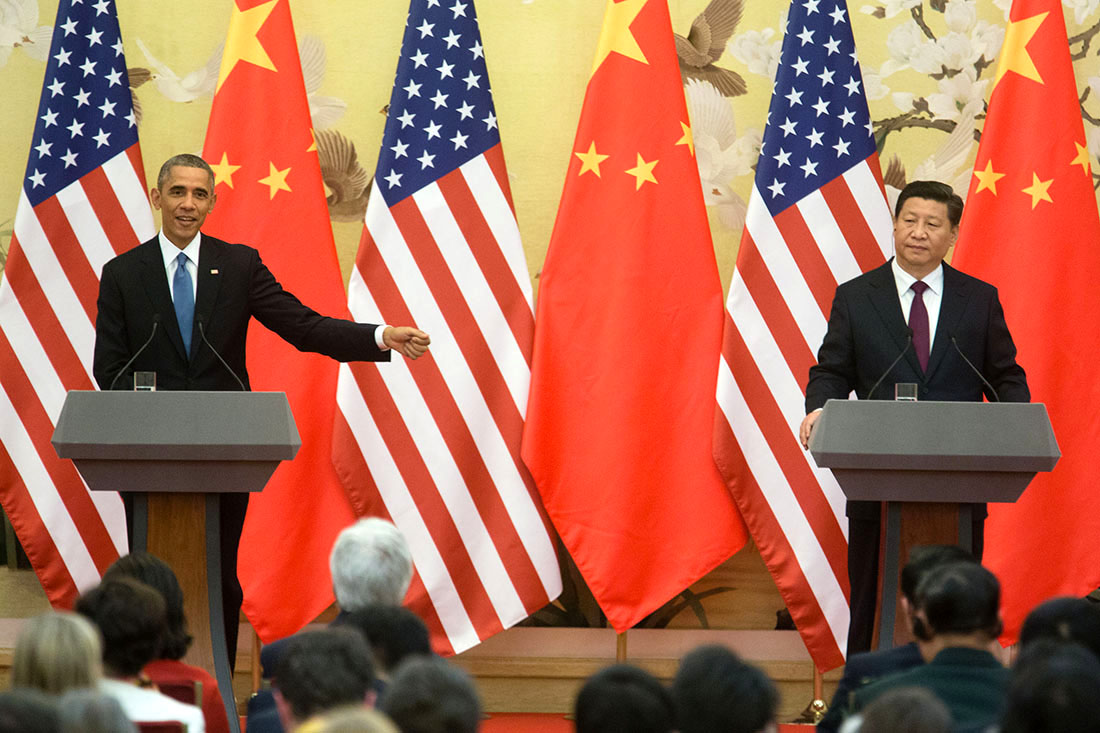
    The West’s misunderstanding of China goes beyond business, with The Economist warning that many nations are soon going to have to choose between the PRC and the United States as Beijing sets up its own network of global alliances and trade accords.

    So far the United States has responded to this with clumsy efforts like the Trans Pacific Partnership, an attempt to quarantine China’s influence in the Western Pacific that actually gives PRC  based businesses a competitive advantage over nations that enter the deal which does little more than strengthen US corporate interests.

    Already in Africa, the results of China’s economic efforts are being seen. A good example is the new Ethopian Railway where the Chinese were quick to fund a project that EU and World Bank lenders had dragged their feet on.

    Just as English businessmen in the 1990s misunderstood what was going on in East Asia, it seems ignorance of Chinese growth and intentions are even more widespread today. There may be some shocks coming for countries like Australia who assume today’s realities are tomorrow’s.

    Similar posts:

    • No Related Posts