Tag: economy

  • Travel review – Air New Zealand Economy Skycouch

    Travel review – Air New Zealand Economy Skycouch

    One unique option offered by Air New Zealand is the SkyCouch, an option where economy passengers can buy adjacent seats for extra space on long haul flights aimed at giving families and couples to stretch out.

    By luck, I got the opportunity of doing an impromptu review of the Skycouch on the 12 hour NZ7 route between San Francisco and Auckland where I had an entire economy row to myself.

    The service is the standard Air New Zealand economy service and, while it’s friendly, the cabin crew can be a bit slow with drinks, I suspect this because of the number of attendants in Premium Economy and it’s a problem when you like to keep hydrated on a long flight.

    Given Air New Zealand don’t use the middle galley on there 777-300 services, it may be easier for crew and passengers if some soft drinks, water and snacks were left out during the flight.

    Made-up-skycouch-air-new-zealand-nz7

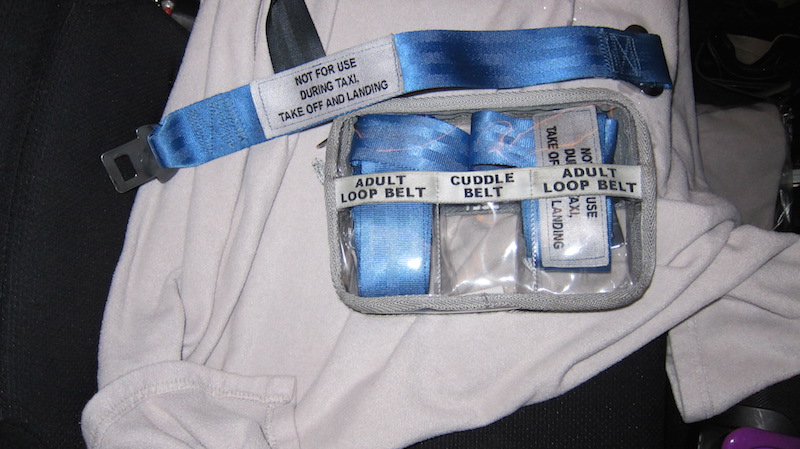
    The notable difference with the Skycouch services is the set of three extension belts, one cutely named the ‘cuddle belt’ given out before takeoff. The cuddle belt itself connects to a loop under the seat in front, this lets passengers lie flat across the three or four seats.

    Once set up, families or couples can buckle up across a row and don’t need to return to the seated position if there’s turbulence. If you’re using a blanket a it’s best to have the straps over the top as the crew will wake you if they can’t see you’re stapped in.

    While it’s great to be able to lie down and stretch out in economy, there are some downsides to be aware of before paying the extra for a Skycouch.

    Unlike business class, the seats aren’t designed for lying on. As consequence the contours mean the lie flat is a bumpy experience while climbing in and out of the row is awkward. I managed to tangle myself up twice in my headset cord.

    Another complication are the seat buckles, again these aren’t designed for people lying over them so they can get uncomfortable, organising them so they don’t dig int requires looping them over the armrest so they are out of the way.

    Spare-seatbelt-buckle-on-skycouch-air-new-zealand-skycouch

    Probably the biggest drawback is for someone of six foot, the three seats mean sleeping with legs folded. Having them hanging out into the aisle is a safety risk and will almost certainly result in a painful accident with a fellow passenger, cabin attendant or catering trolley. I found over time by back started to hurt.

    Working-in-the-air-on-air-new-zealand-skycouch

    Lying flat though did work, I got six hours solid sleep however I suspect that given the legroom on Air New Zealand economy is adequate I may have slept almost as well sitting.

    For families, couples and even pairs of budget conscious business travellers the Skycouch is a good buy offering extra space to spread out and use. For those with the dubious blessing of travelling with small children the added utility could be a sanity saver.

    For those wanting a lie flat bed at a price considerably less than a business class ticket, this probably won’t work. If that’s your intention it’s probably better to save the money and use the savings to travel a day early and book a nice hotel on arrival.

    Similar posts:

  • Diversifying South East Queensland

    Diversifying South East Queensland

    Australia is one of the world’s most urbanised countries with the bulk of the nation’s population clustering in half a dozen centres mainly strung along the east coast of the continent.

    The northernmost of Australia’s population centres is South East Queensland, a sprawling collection of suburbs extending from the upper class enclave of Noosa Heads down to the Gold Coast and the New South Wales state border.

    Cisco believe this sprawling region of three million people can become a ‘Smart Region’ with the use of technologies such as intelligent lighting and parking, citizen applications, and smart power metering could add up to 30,000 jobs and $10 billion of value to the community over coming years.

    “The residents of South East Queensland told us they want to experience greater convenience and integration of public transport, greater digital engagement and intimacy in their cities, more reliable local government services, and new digital ways to further reduce the cost of red tape,” said Cisco Australia & New Zealand Vice President Ken Boal in releasing the South East Queensland: A Smart Region report.

    Local civic leaders in the cities making up the South East Queensland conurbation see this as an opportunity to grow their economies.  “The future of cities and regions and their ability to create enduring employment opportunities are entirely linked to their digital capabilities,” says Sunshine Coast Mayor Cr Mark Jamieson while Ipswich Mayor Paul Pisasale said Ipswich was already preparing for a strong future as a digital city.

    “We have recognized that building and taking advantage of digital highways now will set Ipswich on a secure and successful path to capitalise on the ballooning digital economy,” said Cr Pisasale.

    For South East Queensland, the challenge in creating new industries and jobs is becoming acute. The Australian miracle economy has left the region – like most of the nation – hopelessly uncompetitive and the bulk of employment is in domestically facing service industries underpinned by property prices.

    In fact, the residential construction industry has been the mainstay of the SE Queensland economy and the region remains probably the most economically volatile of the Australian conurbations given its high dependence upon the building sector.

    The digital economy does hold out hope for diversifying South East Queensland’s economy from building and domestic tourism, but the work is just beginning. Cisco’s smart region initiative is a first step, but there’s much more work to be done by business and civic leaders.

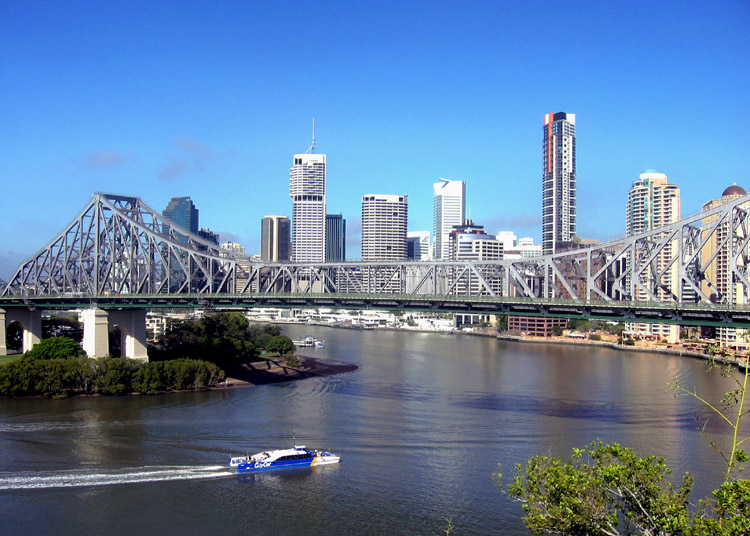
    Brisbane image, “Brisbane CBDandSB” by Stuart Edwards. – Own work. Licensed under CC BY-SA 3.0 via Wikimedia Commons – https://commons.wikimedia.org/wiki/File:Brisbane_CBDandSB.jpg#/media/File:Brisbane_CBDandSB.jpg

    Similar posts:

  • Engineering for change – the ethics of the new economy

    Engineering for change – the ethics of the new economy

    Technologies like the internet of things, cloud computing, 3D printing and big data are changing our industries and society. At the ACI Connect event today, I gave a presentation on some of the opportunities, risks and ethical issues facing technologists and engineers in the connected economy.

    While many of the engineering principles underlying these technologies aren’t new, their scale and the power they give businesses and governments means there are serious ethical, security and societal issues we have to consider.

    This presentation explores some of those issues and the technologies and trends driving them.

    Entering the Data era

    A conceit among technologists is that we’re in an unprecedented era of change. This is not true.

    The Twentieth Century saw massive restructuring of our society as the telephone, mains electricity, the motor car and television changed our society. Many of today’s settled industries came out of the huge technological steps forward over the last hundred years.

    Just as cheap energy – delivered to us through the motor car and mains electricity – defined the Twentieth Century, this century will be defined by easily accessible and abundant information.

    Those changes over the last hundred years give us some hint as to where we are going; the shifts that saw coal carters, newspaper sellers and night soil men eventually become extinct, along with a shift from a largely agricultural workforce to industrialised employment, is going to be repeated this century as information becomes abundant.

    Harnessing the Internet of bees

    Cheap and small sensors mean it’s easier to put a chip on something. In this case we have a CSIRO project tracking bee activity where Tasmanian scientists have put tracking devices on bees.

    Those tracking devices would have weighed several hundred grams and cost hundreds of dollars ten years ago but today they are small and cheap enough to fit onto the backs of bees.

    Being able to deploy these sensors means we can fit them to things we couldn’t have imagined a few years ago and the data they generate is going to give us insights into patterns and behaviours we couldn’t have contemplated.

    However not all of this data is useful or necessary and some may even be damaging to individuals and groups. One ethical question we have to ask ourselves is whether it is in the community’s interests to collect this information.

    Another aspect of connecting devices, or even animals and people, to the Internet or a network is it opens the possibility of hacking, as we’ve seen in the recent Jeep case where engineers showed they could control a vehicle remotely. The security and privacy aspects of the IoT are critical and something designers and product engineers can’t overlook.

    Decoding the data

    It’s often said that Data is the New Oil. In truth it isn’t, data is increasingly cheap and easy to access. Being able to analyse that information is where the power lies.

    Data analytics is probably going to be one of the most important fields in an information rich economy and already we’re seeing companies springing up to help farmers estimate crop yields, truck drivers plan their routes and even organisations like the Royal Flying Doctor Service using cloud services to better plan their operations.

    Again these services plan a lot but there’s also downsides as inappropriate data matching risks breaching consumers’ privacy and even drawing false conclusions from confusing correlation with causation. A good example of this is Facebook being used to judge credit worthiness.

    Removing the human element

    Automation – whether it’s through robotics, machine learning or algorithms – will change many industries and the workforces employed by them.

    One understated field is management where many white collar supervisor jobs are at risk from business automation. It may be that the executive suites are the next sector to be decimated by computers and robots.

    Similarly, many services industry jobs such as taxi drivers and baristas are at risk from robotics while large scale 3D printing of buildings threatens to put many building trades under pressure.

    No more truck drivers

    Driverless vehicles have a whole range of applications, in logistics were seeing them put forklift drivers out of work while mining companies are rolling out massive dump trucks in their new mines that don’t require $200,000 a year drivers.

    One study estimates that half the police workforce in the United States would become redundant as law abiding driverless cars become common.

    Similarly electric cars will have a massive impact on government revenues. Currently Australian governments raise $17bn a year from fuel excise and has ramifications for businesses involved in the supply chain for service stations.

    Once driverless vehicles become commonplace we may well see them changing industries like daycare, public transport and couriers as it becomes possible to summon an autonomous vehicle, put the kids or the luggage into it and then send it off to its destination. If you’re worried, you can track the progress on an app.

    The effects of the driverless car show how we have to think laterally about the effects of new technologies on our businesses, sometimes the effects of a new way of doing things could indirectly hurt our business or create new opportunities.

    Squeezing out inefficiencies

    One of the great promises for the IoT, Big Data and business automation is to remove inefficiencies from industry. Cisco believe that up to 14% of the Oil and Gas industry’s costs could be stripped away with today’s technologies. That in itself is worth over a 100 billion dollars a year in cost savings.

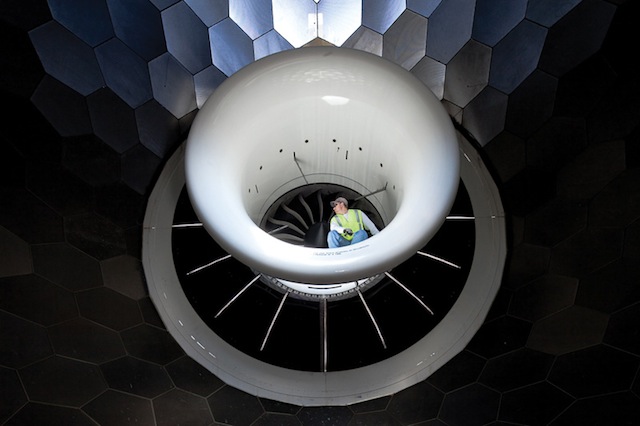
    GE are deploying their technologies into a diverse range of industrial equipment ranging from jet engines to railway locomotives and wind turbines with spectacular results in reducing costs and improving productivity.

    The effect of these improvements means less downtime and maintenance costs which are good news for customers and shareholder of these companies, but bad news if you’re a maintenance business. It also means the speed of change in business is accelerating.

    Skilling the future workforce

    In summary the skills needed today are very different to those of 1915 and 1965 and those of the next fifty years will be even different.

    As a society we have to decide what skills we are going to give not our children but those currently still in the workforce who are going to be working longer and later into their lives as the workforce ages.

    We also have to consider what sort of ethical compass we have. While the technology we have today is powerful and capable of great things, it’s also capable of great harm. We need to have an understanding of what the effects and limits are of our actions with the Internet of Things, Big Data and analytics.

    Ultimately we need to ask what value we as individuals can add to our communities and society.

    Similar posts:
  • What should we call the sharing economy

    What should we call the sharing economy

    Stop calling it the sharing economy, cries marketer Olivier Blanchard in a blog post describing how the label is inappropriate and doesn’t accurately describe the imbalances in the relationships between providers, users and the online platforms that facilitate them.

    The question is what do we call the business model of companies like Uber, AirBnB and the myriad other services that take providers’ time and resources – cars in the case of Uber, homes or spare rooms for AirBnB – then make them available to people who can use them, taking a commission in the process of course.

    Blanchard wonders if much of the success of these companies is because America’s cash strapped middle classes are desperately trying to find additional source of income and there is very much a strong argument for that.

    More importantly, is what do we actually call these businesses? While they are potentially are as exploitative as the free labour models that have evolved in the media with businesses like Huffington Post, at least they provide some type of income even if for Uber drivers the net returns may be marginal at best.

    Blanchard himself suggests the Microtransaction Economy however that’s not a satisfactory label as the transactions – which may be many thousands of dollars for some AirBnB rentals – are not always small.

    Maybe we should call it the downtime economy, where we’re using the time we’re not busy or when we’re not using our homes, cars or others assets to earn income. That too though doesn’t strike me as satisfactory although it does seem to address the underlying idea these services are really only intended to supplement somebody’s earnings, not be their primary livelihood.

    None of these labels though are satisfactory and maybe we have to ditch the economy moniker. It’s time to start thinking about what we really should call these businesses.

    Your thoughts.

    Similar posts:

  • Taiwan as a destination for inspired team bonding

    Taiwan as a destination for inspired team bonding

    This is a paid post as part of the Nuffnang blogger program

    Last year the Taiwanese trade promotion agency MEET TAIWAN launched Asia Super Team, an Asian business contest to promote the island as a desirable destination for meetings, incentives, conferences and exhibitions.

    In its second year, the contest has been expanded to Australian businesses, with the Aussie finalist winning an all-expenses-paid tour of Taiwan to experience the beauty of the country’s incentive offering. The global winner will receive an incentive travel package to Taiwan worth USD 50,000 plus MEET TAIWAN will donate USD 5,000 to a charity of the winner’s choice.

    The Asia Super Team contest starts with an online proposal submission, followed by public voting to determine the finalist from each country – this year being Australia, Japan, South Korea, Singapore, Malaysia and Thailand – who will win a trip to Taiwan to attend the final stage of the competition.

    Often overlooked by MICE (Meeting, Incentives, Conferences and Exhibition) travellers, Taiwan is a unique destination. While the West Coast strip is one of the world’s largest electronics manufacturing centres, most of the island is rugged and picturesque, overlaid with a complex Twentieth Century history. The capital of Taipei and the second city of Kaohsiung are vibrant, global cities.

    To enter the competition the online stage invites organisations to submit an itinerary proposal illustrating their passion and understanding of Taiwan’s incentive travel attractions. The contestants then share their proposals on social media to help attract the highest number of public votes, determining the finalists who will go through to the tour in Taiwan.

    For the successful finalists the tour of Taiwan includes participating in a five-day-four-night competition that will test them with a series of team-bonding challenges. These may include hunter training in an indigenous tribe in Leshui; performing a drum session with Grammy nominated Ten Drum Art Percussion Group at the Ten Drum Ciaotou Creative Park in Kaohsiung; and singing popular Taiwanese songs on board Taiwan’s parade floats.

    The public can vote for their favourite proposal on social media to be entered into a draw to win round-trip China Airlines air tickets to Taiwan.

    The overall winner will receive an incentive travel package to Taiwan valued at USD 50,000 and a donation from MEET Taiwan of USB 5,000 to the not-for-profit of their choice.

    Registration and proposal submissions to Asia Super Team: Team Up for Good are open and run until 30 August with the public voting running from August 3 until 30 August 2015. You can enter through the MEET TAIWAN website.

    As one of East Asia’s economic powerhouses with a fascinating history and spectacular scenery, Taiwan is well worth a visit.

    This is a sponsored post brought to you by Nuffnang and the Taiwan External Trade Development Council (TAITRA)

    Similar posts: