Tag: economy

  • The engineer’s return – GE heads back to its roots

    The engineer’s return – GE heads back to its roots

    In his mission to refocus GE on its engineering roots, CEO Jeff Immelt last week announced a restructuring plan that will see the company divest most of its real estate portfolio and shrink its finance arm faster than expected.

    Bloomberg News reports the stock market took the announcement very well with the shares jumping 8.7% on the news.

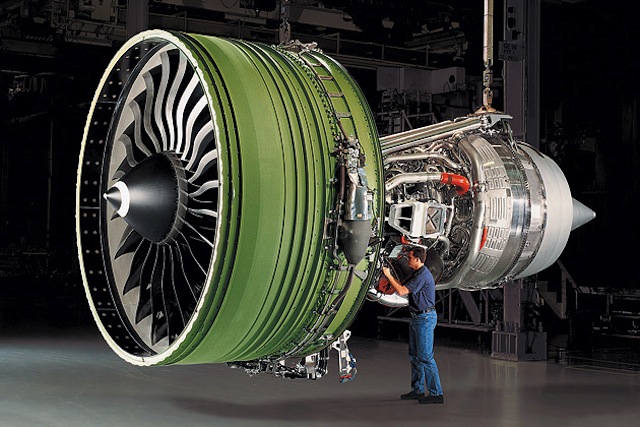
    GE now expects “high-value industrials” such as jet engines, oilfield equipment and diesel locomotives to generate more than 90 percent of earnings by 2018, up from just over half in 2014.

    That the company’s announcement has been taken so well by the market shows how the US economy is slowly shifting from financial engineering and debt driven spending to building real products.

    For the rest of the world there’s a clear message – the 1980s era of Gordon Gekko is coming to a close. It’s time to start figuring out where the real growth is going to come from rather than just goosing household spending with easy credit.

    Where companies like GE are going today is where governments will be looking in five to ten years time. Some will find they are further behind than others when the shift becomes apparent.

    Similar posts:

  • Driverless cars outrun the law

    Driverless cars outrun the law

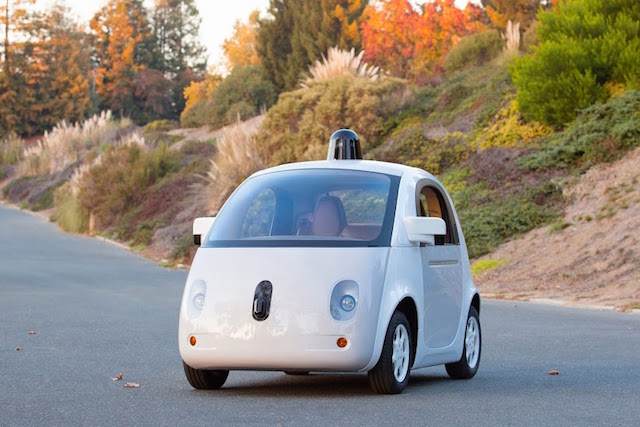
    Tesla founder Elon Musk believes there will be driverless cars on US roads by the summer, the New York Times reports.

    One of the key factors in whether Musk’s prediction comes to and driverless cars are on the road by the middle of the year is the law with most people assuming autonomous vehicles are currently illegal.

    Some experts however believe current laws don’t prevent driverless cars, with the New York Times quoting one industry leader who suggests there’s no legal barrier to autonomous vehicles taking to the road.

    Tesla is not alone in pushing the envelope. Chris Urmson, director of self-driving cars at Google, raised eyebrows at a January event in Detroit when he said Google did not believe there was currently a “regulatory block” that would prohibit self-driving cars, provided the vehicles themselves met crash-test and other safety standards.

    This view raises an interesting legal argument, who is the recognised driver of an autonomous vehicle? In the event of an accident or dispute does liability rest with the owner, the manufacturer or the passengers?

    What this debate over driverless vehicles illustrates is how laws specific to today’s society aren’t always applicable to tomorrow’s technologies; certainly many of the laws designed for the horse and buggy era became redundant as the motor car took over a hundred years ago.

    Another consequence of autonomous vehicles are the changes to occupations supporting the motor industry; it’s obvious that panel beaters and insurance lawyers may have their jobs at risk but Jay Zagorsky in The Conversation suggests nearly half of US police numbers would be redundant if there are no more car drivers.

    Given how the funds local and state governments raise from traffic offences, a shift to driverless technologies could even have an effect on city budgets.

    The motor car was the most far reaching technology of the Twentieth Century in the way it changed the economy and society over those years, it’s hardly surprising that we are only just beginning to comprehend how a shift to driverless vehicles may change our lives this century.

    Similar posts:

  • The high cost of distrust

    The high cost of distrust

    A lack of trust in technology’s security could be costing the global economy over a trillion dollars a panel at the Australian Cisco Live in Melbourne heard yesterday.

    The panel “how do we create trust?” featured some of Cisco’s executives including John Stewart, the company’s Security and Trust lead, along with Mike Burgess, Telstra’s Chief Information Security Officer and Gary Blair, the CEO of the Australian Cyber Security Research Institute.

    Blair sees trust in technology being split into two aspects; “do I as an individual trust an organisation to keep my data secure; safe from harm, safe from breaches and so forth?” He asks, “the second is will they be transparent in using my data and will I have control of my data.”

    In turn Stewart sees security as being a big data problem rather than rules, patches and security software; “data driven security is the way forward.” He states, “we are constantly studying data to find out what our current risk profile is, what situations are we facing and what hacks we are facing.”

    This was the thrust of last year’s Splunk conference where the CISO of NASDAQ, Mark Graff, described how data analytics were now the front line of information security as threats are so diverse and systems so complex that it’s necessary to watch for abnormal activity rather than try to build fortresses.

    The stakes are high for both individual businesses and the economy as technology is now embedded in almost every activity.

    “If you suddenly lack confidence in going to online sites, what would happen?” Asks Stewart. “You start using the phone, you go into the bank branch to check your account.”

    “We have to get many of these things correct, because going backwards takes us to a place where we don’t know how to get back to.”

    Gary Blair described how the Boston Consulting Group forecast digital economy would be worth between 1.5 and 2.5 trillion dollars across the G20 economies by 2016.

    “The difference between the two numbers was trust. That’s how large a problem is in economic terms.”

    As we move into the internet of things, that trust is going to extend to the integrity of the sensors telling us the state of our crops, transport and energy systems.

    The stakes are only going to get higher and the issues more complex which in turn is going to demand well designed robust systems to retain the trust of businesses and users.

    Similar posts:
  • Seizing the agricultural technology opportunity

    Seizing the agricultural technology opportunity

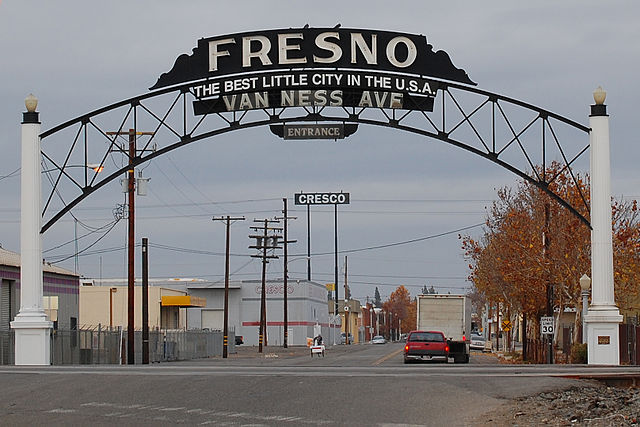
    Does the real opportunity for tech entrepreneurs lie in the agriculture sector? An article by James Fallows looking at Fresno’s startup community for the Atlantic Magazine suggests that might be the case.

    Fresno, in California’s agricultural Central Valley, doesn’t have the glamor of the global startup centres but offers a focus on neglected sectors as Fallows quotes Jake Soberal of Bitwise Industries.

    “My guess is that 5 to 10 percent of the tech need of the farming industry is now being met,” Fallows quotes Soberal as saying. “You could build a technology industry in Fresno based on that alone, not to mention the worldwide need in agriculture.”

    While there isn’t a great need for another coffee app, pizza delivery service or online store, there are far more opportunities in other sectors to address unmet needs.

    This is probably where the opportunity lies for cities like Fresno that are trying to create their own mini Silicon Valley – build a technology sector to address the needs of your existing industrial base.

    In agriculture there’s a plethora of Internet of Things, Big Data, analytics and other technological applications that addresses issues in the industry. Farming is not the only sector which presents these opportunities.

    Fresno’s ambitions aren’t unique but as Fallows points out this is not a zero sum game and there’s no reason why dozens of cities shouldn’t be able to build their own niches with new technologies.

    Picture of Fresno from David Jordan via WikiPedia

    Similar posts:

  • We’re crazy, not stupid

    We’re crazy, not stupid

    “We’re crazy, not stupid” is how Jack Ma describes his Alibaba team in an interview at the World Economic Forum in Davos, Switzerland, yesterday.

    Much has been written about Jack Ma and the spectacular success of Alibaba and the WEF session with Charlie Rose is an opportunity for Ma to flesh out the story and destroy some of the myths.

    One of the fascinating anecdotes Ma tells is how US cherry growers are preselling their harvests to Chinese customers through Alibaba and cites various other primary producers doing similar campaigns as how American small businesses can sell into the PRC market.

    Ma’s interview is a fascinating snapshot of how global trade is going through a radical period of change, the shifting of China’s economy and where the future lies for many industries.

    Similar posts: