Tag: economy

  • How Australia’s nanny state hurts business and society

    How Australia’s nanny state hurts business and society

    It’s becoming popular to describe Australia as a ‘Nanny State’ as governments respond to moral panics and the need to do something about anything from bicycle helmets to unpasteurized cheese.

    Unquestionably Australia has changed in the last quarter century as governments of all persuasions have found it easier to legislate rather than lead. This has had effects on business and society in general.

    A good example of how the regulations have built up over the last twenty years in Australia is a sign at my local beach.

    the Australian nanny state is shown in signs at balmoral beachThat’s a fine welcome and it compliments the $7 an hour parking fees the local council levies. In itself, those parking fees are a good example of the price pressures driving Australia’s high cost quandary.

    Drinking on Sydney ferries is banned in Australia's nanny state

    Possibly the saddest regulation is the alcohol ban on ferries. Twenty years ago it was normal to see a group of friends unwinding on the way home from work with a cold beer or wine. Today you can’t do that because some bureaucrat decided drunks were a problem and rather than enforce existing laws it was easier to ban drinking entirely.

    The press and moral panic

    Much of this nannyism is being driven by the media who drum up hysterical reports demanding ministers do something. In turn the government’s panicky PR obsessed apparatchiks respond with pointless and unnecessary laws and rules. Often duplicating those that already exist.

    A good example of cynical media hysteria was the story of Malea, a Sydney mum minding her own business while legally cycling with her child in a trailer.

    While out riding a discredited journalist filmed Malea and passed the footage onto a current affairs TV show which portrayed her as a reckless mum and demanded such behaviour be banned.

    Fortunately in that case the politicians ignored the confected outrage, but that’s the exception rather than the rule.

    Doing something

    The media though doesn’t have to force Australian politicians into adopting the nanny reflex. Often governments will create their own outrage in order for attention deprived politicians to get press coverage.

    A good example of this was the incompetent Carr government which decided its contribution to the War On Terror after the 9/11 attacks would be to turn the Sydney Harbour Bridge into something similar to what welcomes Guantanamo Bay detainees.

    The Australian nanny state is shown by the Sydney Harbour BridgeIt’s worthwhile comparing the same view on San Francisco’s Golden Gate Bridge and ask which is the greater terrorist target?

    San Francisco's Golden Gate BridgeWhen Sydney genuinely was a larrikin city, climbing the Harbour Bridge in the dead of night was a rite of passage. Today, if you can get around the security guards, barbed wire, CCTV and motion detectors you risk a $3,300 fine and being branded a terrorist.

    If you try to climb the bridge and get caught, the fine is only half that of stepping on the hallowed turf of the Sydney Cricket Ground.

    At the cricket, if you’re foolish enough to bounce a beach ball, start a Mexican Wave or sing out of tune and you’ll be out before you can say “Shane Warne is a safe driving ambassador.”

    The Age newspaper gave a good example of Australian sports administrators’ Stalinist mindset in this fawning article which gloats over the efforts MCG staff go to in harassing their customers.

    On level three of the Members’ wing is a secure room with the best seats in the house, although the occupants only manage an occasional glance at the game on hand. It is the MCG command post, where ground security, police and Securecorp officers constantly watch a bank of computer monitors and camera screens.

    Dohnt says the camera operators will check the froth on a punter’s cup of Coke to see if it has been topped up with smuggled grog.

    Forcing cricket fans to buy overpriced drinks or visitors to spend over $200 to climb the Harbour Bridge brings us to the core motivation behind many of Australia’s nanny state regulations – protectionism.

    Hidden protectionism

    Many Australian Nanny state rules are to protect businessThis sign, which is attached to the back of the one at the beginning of this story, bans vendors who sell from boats. It’s questionable whether the council actually has the power or resources to enforce this ban but if it helps the local shopkeepers then so be it.

    One of the hubristic traits of Australian exceptionalism is that the nation is a ‘free trade’ economy hard put upon by sneaky Japanese, American and European protectionism. The reality is Australia is just as good as Japan or the EU in introducing sneaky regulations to protect the well-connected locals.

    A very good example of this is bananas where the Australian domestically produced product is substantially dearer than imported bananas sold in the US, UK or Europe.

    In early 2011, Cyclone Yasi devastated Australia’s banana crop and prices soared. Not one imported banana was allowed in to ease the shortage. Remember that the next time you hear a politician or journalist boasting about Australia’s free trade credentials.

    business is hurt by nanny state rules

    Banana prices are another example of the costs passed onto Australian households and industry through nanny state regulations. Compliance costs are real and add to the cost of production and employment. They are another reason why Australia has become a high cost economy.

    More importantly, those regulations tend to favour incumbents making it harder for entrepreneurs and new entrants into markets making the economy even less flexible.

    The burden of regulation is also unfairly dropped upon the smaller business who don’t have the resources to comply with or challenge unfair rules. The Howard government was very good at this with slapping small business with the responsibilities of raising the GST and complying with draconian laws like Workchoices.

    At this stage it’s worth noting that the Australian nanny state isn’t a Labor party creation, it’s come from both sides of politics and often because poorly drafted laws require mountains of regulations to overcome the legislative flaws.

    Workchoices was probably the best example of badly thought out laws where the Howard government panicked into slapping a whole level of punitive rules for businesses who failed to keep log books of staff hours worked – the legislation was so bad that had it not been repealed by Rudd, the sight of bundy clocks would have become common in Australian offices.

    Nanny and risk

    One of the unfortunate effects of the nanny state is that it saps the entrepreneurial spirit – why take risks when nanny is there to support you?

    There is an unintended effect of this though – because we think nanny will always protect us we lose the ability to evaluate risk.

    Where this is most obvious is in financial matters. Too often people are fooled into investing in dodgy schemes because they think that regulators will protect them. They find out this isn’t the case when the money is long gone.

    That failure to understand risk though becomes pervasive through the community as the nanny state mentality becomes established. We could argue that inability to identify risk was the core reason for the global financial crisis.

    The future nanny state

    While the nanny state has been rampant around the world for the last fifty years, its days are numbered as cash strapped governments find they can no longer bear the cost of maintaining armies of bureaucrats to enforce silly rules.

    As society deleverages from the excesses of the credit boom, governments are going to find revenues falling short and while it won’t be the first casualty of the new austerity, the nanny state will almost certainly be a victim.
    Similar posts:

  • Santa says buy more stuff

    Santa says buy more stuff

    Around the world, today marks the annual peak of consumerism. It’s interesting how one of the most important dates in the Christian calendar has been adopted by commercial interests.

    In non-Christian countries, particularly in East Asia, the lack of a religious tradition shows the modern ritual for what it is – an orgy of consumerism driven by a century of advertising and opportunistic businesspeople.

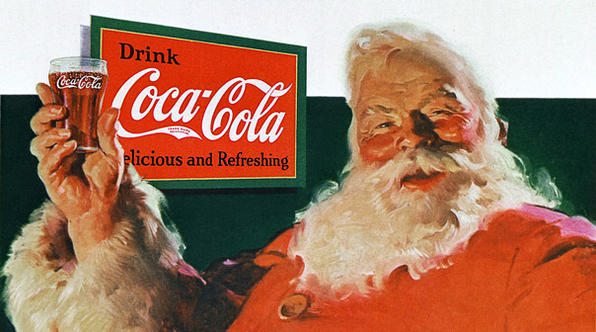
    For the western cultures, the biggest symbol of the occasion is Santa Clause, a figure largely invented by the Coca-Cola Corporation.

    It’s often said that successful religions co-opt the festivals and practices of earlier beliefs, many European Christian celebrations are said to be modern interpretations of older rites which marked key harvest and calendar dates.

    Today the religion of consumerism has co-opted the older Christian festivals which makes Christmas the grand celebration of consumption that it is.

    Religions though are a product of their times, the successful ones adapt to change and thrive for centuries while many wither away as their relevance to society and the economy fades.

    The Western religion of consumerism is at one of these points now after a century of unchecked growth.

    Will Consumerism continue to thrive as living standards rise in Asia and Africa or will it fade as overfed Americans and Europeans wear out their credit cards and look to defining themselves by something more than the expensive toys they can buy?

    Should Consumerism fade, will it be replaced with older traditions or will something else rise to meet the needs of 21st Century society?

    Is hard not to hope for the consumerist orgy that is the modern Christmas celebration to fade, if not for our communities then at least for our waistlines and bank balances.

    Similar posts:

  • Australia’s high cost quandary

    Australia’s high cost quandary

    “Around the world our towncars are usually 30% more expensive than taxis, in Sydney it’s 20% as the cabs are pretty expensive,” said Travis Kalanick on launching the Sydney version of Uber’s hire care booking service.

    It’s not just hire cars which are expensive in Sydney – the soaring cost of living in Australia is bourne out by Expatistan, a web site that crowdsources the cost of living in various cities.

    Expatisan’s comparisons find Sydney up with Tokyo and London as the most expensive towns on earth.

    That conclusion means Australian businesses, governments and policy makers have some important decisions ahead of them.

    Cholesterol in the veins

    High property prices have been the norm for two decades in Australia, the middle class welfare state that both political parties support gives tax and social security concessions to property owners while the banking system requires most business lending to be secured by property.

    As a consequence, generations of Australians see property as the only path to financial success. If Bill Gates, or any of today’s entrepreneurial wizz-kids, had been born in Australia, they’d be encouraged to get a safe job and buy property than to take the risk of starting a new business.

    The property obsession has another perverse effect in that it creates a short term outlook for Aussie business owners who have to consider getting,  and paying off, a mortgage quickly to secure their financial foundations.

    A few weeks ago a business owner was profiled in the Sydney Morning Herald, which some call the Sydney Morning Property Spruiker, who paid 1.1 million Aussie dollars (a million US) for a property in Redfern – which is Sydney’s Bronx.

    That poor guy not only has a fat mortgage to pay off, but he has to pass those costs onto his customers. Just to pay the bank is a fat chunk out of his business before he pays his staff, landlord and the various other expenses before he can take his profits.

    Having to pay the bank for living costs is the main reason why Aussie businesses don’t invest in capital equipment, which in turn makes  them less competitive than overseas competitors.

    One of the myths in Australian business is that competitiveness is solely due to labor costs, what the ideologues preaching this miss is that even if Aussie workers were paid a bowl of rice a day, Chinese and Mexican factories would still be more productive due to the investment in modern equipment.

    For the sake the argument, we won’t even discuss German, Japanese or Swiss manufacturers who are still competitive despite Australian level cost structures.

    This last point is what’s missed in much of the discussion about Australia’s economic future – apologists for Reserve Bank governor Glenn Stevens and the self congratulatory Canberra monoculture say that the high Aussie dollar is here to stay and mining will be driving the economy.

    Should the mining sector stall, which currently seems to be the case, then housing development will pick up the slack according to the policy-makers’ groupthink.

    That housing development is going to come at a high price, with Australian land and homes already among the world’s highest. Given Australia’s private sector debt is among the highest in the world already, it’s hard to see where the money will come from to fuel further property speculation.

    Right now Australia has a serious problem in determining what the future will be for the country.

    If the future is a high cost economy underpinned by massive property property prices, then the future has to lie in high value added sectors.

    The question is ‘what sectors’? Australian business, governments and society in general seem to think that property speculation is the future.

    Property speculation turned out not to be the future for Spain and it looks like China’s speculative boom is meeting its obvious end.

    Australians are going to have to hope that it really is different down under and that young people and immigrants are prepared to spend huge amounts of money to keep the economy afloat.

    If the policy makers are wrong, then the worry is that there is no Plan B.

    Similar posts:

  • Stumbing into recession

    Stumbing into recession

    The Committee for Economic Development Australia (CEDA) today released its 2012 Big Issues survey looking at the responses of 7000 business people on the issues confronting Australian industry in 2012.

    One of the notable results is that business people don’t care about government surpluses. A third are neutral on the question “do you believe maintaining a government surplus is important” while 35% disagree that it is a high priority.

    Q10

    Yet despite the electorate and business saying the deficit is not a priority, the politicians still obsess about maintaining their surplus.

    Now Australia’s mining boom has come to an end – along with the blue sky economic assumptions that underlie both sides of politics’ spending plans – governments are desperately trying to fudge the books and continue the pretense that their budgets are in the black.

    Driving this obsession with avoiding deficits is the religious belief among Australia’s political classes that Triple – A credit ratings from the discredited Wall Street ratings agencies is more important than educating the nation’s children, caring for the country’s sick or building the infrastructure to compete in the 21st Century.

    The real danger with this deficit obsession is that there is a very high possibility that state and Federal governments are going to tip Australia into a recession driven by European style austerity. Already we see this developing as various states start slipping backwards according to the ABS’ latest accounts.

    graph courtesy of Macrobusiness

    Another interesting result from the CEDA report is how business’ view the Australia in the Asian Century report with nearly 80% of respondents saying the issue is important or critical.

    It is questionable whether Australian business is prepared to face the realities of an Asian Century as David Llewellyn-Smith writes at the Macro Business Blog, Australia’s businesses are looking more at getting help from the government to cut domestic costs rather than sell into Asia. That inward focus of Australian business since the mid-1990s is the topic for another blog post.

    The sad thing is that the government aspects of Asian Century report is stillborn as surplus obsessed politicians carve into skills training and innovation programs in a vain attempt to balance the books while failing to reform the tax system or address the middle class welfare that’s squandered most of the returns from the last decade of prosperity.

    Australia’s politicians are very soon going to have to decide who they govern on behalf of, the corrupt and incomptent ratings agencies or the people who vote for them and pay the taxes which support them and their political parties. For some, this might be a tough choice.

    Similar posts:

  • Is Australia missing the Indonesian opportunity?

    Is Australia missing the Indonesian opportunity?

    Mary Meeker’s annual State of the Internet Report looks at the trends driving the online economy. One area that should be of concern is that Australian entrepreneurs are overlooking one of the world’s biggest growth markets that is sitting right on the nation’s doorstep.

    Early in Mary’s overview, on slides 5 and 7, she shows the growth of various markets. Indonesia is the second biggest growth market for internet users – 58% year on year to 55 million – and eighth in the world for smartphone growth with a 36% increase last year taking total users to 27 million.

    Given the penetration of both smartphones and the internet are low with only one quarter of Indonesians connected to the internet and less than one mobile phone in ten currently being a smartphone, there is massive potential for the savvy entrepreneur.

    While there’s a steady stream of stream of Australian app developers and entrepreneurs heading to Silicon Valley, London and a few to Singapore there’s very few looking to their biggest neighbour.

    This ignoring of Indonesia is one of the many omissions in the Australia in the Asian Century report; despite being one of Australia’s closest neighbours with the world’s fourth largest population and an economy growing at over 6% per year, both businesses and governments tend to overlook the nation.

    For Australia, the tragedy is that Indonesia has a lot offer businesses that do more than just dig up coal and iron ore.

    Perhaps now the mining boom is over, entrepreneurs and governments might start to take markets like Indonesia, and other South East Asian countries more seriously. It’s an omission that’s currently costing the country dearly.

    Similar posts: