Europe risks heading into a ‘digital recession’ warn Bhaskar Chakravorti and Ravi Shankar Chaturvedi in the Harvard Business Review.
Chaturvedi and Chakravorti base their concerns on the Digital Innovation Index they created that looks at the sophistication and speed of digital change across fifty developed countries.
Most Northern European countries, along with Japan and Australia, were advanced but their rate of adoption was falling risking their economies dropping behind the researchers found.
The solution offered by the authors was for the countries to encourage investment, immigration and exports.
The only way they can jump-start their recovery is to follow what Stand Out countries do best: redouble on innovation and continue to seek markets beyond domestic borders. Stall Out countries are also aging. Attracting talented, young immigrants can help revive innovation quickly.
A striking problem in Europe is the state of e-commerce across the continent where consumers prefer to buy from US based sites than from those of fellow EU countries.
In many of the nations government Austerity policies have also hurt investment while risk averse cultures have discouraged innovation and new business formation.
For Europe, the risks of being left behind are real and with an aging population a fall in living standards is a likely possibility. It would be a shame if the European Union experiment ends up failing due to a digital recession.
A lack of public investment is hurting the US in McWilliams view and that’s exacerbated by a reluctance of the private sector to commit to new productive assets and projects. Weak investment affects household wealth and savings, it also means the low interest rates are encouraging speculation rather than economic growth.
Meanwhile in China, the nation’s massive expansion has created a global glut in manufacturing capacity. That makes business even more reluctant to invest in plant and equipment while creating risks for the commodities based economies like Russia, Brazil and Australia that feed that machine.
One aspect that McWilliams overlooks is another shift in the global economy – the shift to smaller scale manufacturing and automation, “real investment tends to be in big machines that make big stuff,” he says.
That investment in big machines may not be the economic driver they were half a century ago as building and maintaining the machines themselves are no longer labour intensive. Furthermore, the manufacturing of tomorrow may well be much more distributed and on a local, smaller scale.
McWilliams’ points though are well made. We need to be looking at how to stimulate private investment in productive assets while looking at the public investments that will enhance our economies and improve our living standards.
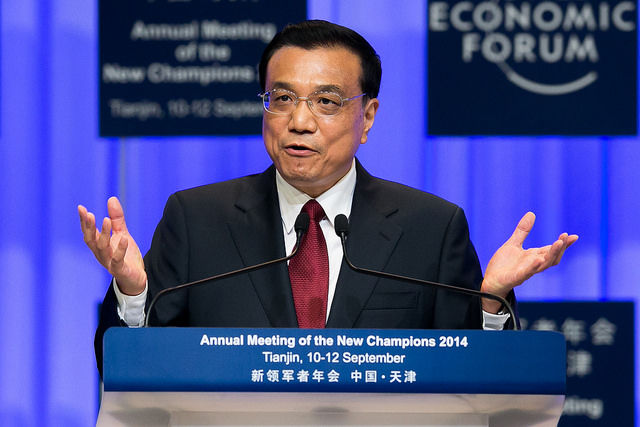
An English translation of Li’s speech is online and what’s particularly notable about it is the continual mention of “mass entrepreneurship and innovation” with the Premier pointing out over 10,000 new businesses are being registered every day in China.
In parts of the speech, Li sounds like one of the small business evangelists proselytizing on why everyone should start their own venture and coupling entrepreneurship with social justice.
“Mass entrepreneurship and innovation is effective in promoting social justice. As long as they are willing and capable, all people could establish themselves and lead a promising life through innovation and entrepreneurship. They could all have an equal chance for development and for moving up the social ladder, and could all enjoy a life of purpose and dignity.”
Probably the biggest barrier for small businesses and startups in all countries is the access to capital, something that Li flags in his speech as being part of China’s opening up to foreign investment.
Should Li and the Chinese leadership unleash the nation’s entrepreneurial spirits, it will see the country’s economy changed radically and that rebalancing towards domestic consumption accelerate.
For the rest of the world worrying about China’s influence and economic might, they could be worrying about last year’s problems.
The most important economic relationship in today’s economy is that between China and the United States, despite bellicose chest thumping by both sides their wealth and well being of their industries is inextricably linked.
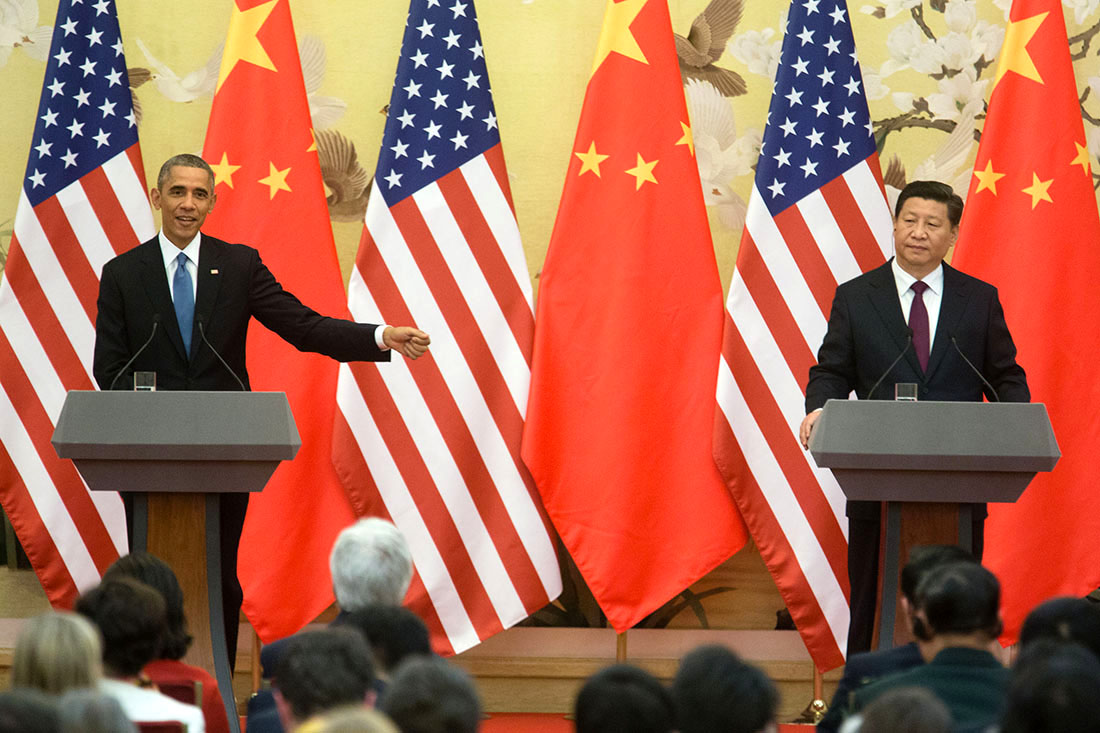
Against the backdrop of that chest thumping and a slowing Chinese economy, the Chinese and US Presidents are due to meet in two weeks time where trade and security relations between the two countries are at the top of the agenda.
China’s leaders though plan to emphasise their nation’s tech prowess and its importance to the US’s sector, something the New York Times reports has irritated the Obama administration.
What would almost further irritate the US leadership is that US tech giants including Apple, Facebook, IBM, Google and Uber have been invited to attend a Chinese tech summit hosted by Microsoft and the PRC President will be dining with Bill Gates before flying to Washington to meet Obama.
Redmond gets on board
Microsoft’s role in the China Forum is interesting, the company is extending the hand of friendship not just to nations but also to companies that were fierce rivals in the past, just last week the company announced a partnership with VMWare despite deep rivalry in recent years and CEO Satya Nadella is due to appear at next week’s Salesforce conference.
The choice of Seattle is interesting as well, while the city is a major tech centre with companies like Amazon and Microsoft based there, it’s far more integrated with the Pacific Rim economies than San Francisco and Silicon Valley. Again this is a loud message to the US tech community.
For China, the success of showing off their technological strengths is an important in sending a message to its East Asian neighbours and the US that the nation is diversifying and shouldn’t be underestimated, a process that Chinese Premier Li described as “a painful and treacherous process” at a World Economic Forum event in Dalian today.
The meeting between Xi Jinping and Barack Obama in two weeks time, and the associated events in Seattle, could well prove to be the marker of where China moved into the next phase of its economic development and its relationship with the United States.
We live in a time where lessons of the past have been unlearned and being right about events does not necessarily mean you will be vindicated, said Nobel Laureate and New York Times writer Paul Krugman in a Festival of Dangerous Ideas event at the Sydney Opera House last night.
Krugman’s talk was on how bad ideas in economics have taken hold and are difficult to shake, the reason being in his view because, as the economist John Stuart Mill said to Parliament in 1866, “although it is not true that all conservatives are stupid people, it is true that most stupid people are conservative.”
A refusal to admit errors
One of the notable aspects of today’s age of bad ideas is how those who proven wrong refuse to admit their errors with Krugman citing the 2010 public letter signed by 23 prominent academics, economists and money managers to Federal Reserve chairman Ben Bernanke warning Quantitative Easing would unleash inflation.
For Krugman, it seemed hard to hide his exasperation with these people as he explained, “If you took at all seriously what is taught in economic textbooks then where we are is not surprising” and pointed out anyone who had studied the Great Depression and Japan’s lost decades could see how events were going going to transpire.
Defeating half baked ideologies
What Krugman didn’t discuss during the session was how did we get to a state where many of our political, business and community leaders outright reject the lessons of history and established knowledge, preferring instead often half baked ideologies.
A half century ago, things were different. Ayn Rand’s first television interview with Mike Wallace in 1959 illustrates the prevailing mindset among America’s elites. Wallace is taken aback at Ayn Rand’s philosophy of the individual’s desires and needs above all.
For Wallace’s generation that had been through the Great Depression and World War II, the importance of collective effort in an industrial society were well understood. In just over a decade, the US would successfully put a man on the moon and the rise of Silicon Valley and today’s tech industry were results of that effort.
Today it’s hard to see that sort of communal effort in the face of self interest and wilful, if often profitable, ignorance. For Krugman, his advice for those wanting to push back against this prevailing attitude is not to be too polite and keep in mind that satire and sarcasm are necessities in today’s world.
Being an informed citizen
For those pushing back, facts and research are critical, and Krugman advised one of the audience questioners who was despairing about the quality of information available in the media that the ability to be an informed citizen is greater than ever before.
Krugman’s talk covered many of the Bad Ideas that have got our economy and institutions to where they are today, the challenge for today’s generations is to overcome the narrow, half baked ideologies that dominate today’s policymaking.
In a festival that, despite its name, is notable for a lack of truly dangerous ideas, perhaps suggesting those Good Ideas for the next generation would truly be the antidote for the last thirty year’s lazy and shallow thinking.
Paul attended the Festival of Dangerous Ideas as a guest of Intel Australia.