Tag: employment

  • So you thought you quit working for a boss

    So you thought you quit working for a boss

    One of the weirdest things about the Internet’s free culture is how services that make money out of reselling people’s donated labour tie their contributors up with rules.

    Many of the people contributing for free have given up their day jobs to do so. If you asked them why, I’m sure many would say they were sick of restrictive rules, anal retentive bosses and generally feeling suffocated by a big organisation.

    Yet now they are subject to a bunch of rules arbitrarily enforced by anonymous and unaccountable bureaucrats running social media or cloud computing services.

    So why on Earth are you doing the same thing for free? At least when you’re in a cubicle you’re getting paid for dealing with idiots.

    Similar posts:

  • The social maze

    The social maze

    Towards the end of 2011 we saw a surge of stories about companies and employees fighting over the ownership of corporate social media accounts like LinkedIn contacts and Twitter feeds.

    For the social media community this is encouraging as it shows that businesses are beginning understand there the value in online networks. It also illustrates the risks for both businesses and employees when these tools aren’t properly understood in the workplace.

    The employer’s risks

    As social media sites are one of ways businesses communicate with the public, managers have to understand these services are an asset too important to be left to the intern or youngest staff member in the office.

    Should that intern move on – possibly at the next college semester – the business may find they are locked out of the account or it is even deleted.

    Business pages and accounts should be set up in the name of senior people in the organisation and, where possible, administration should be shared by the relevant unit in the organisation (customer support, marketing or whatever).

    The nominal owner and administrators should understand that the account is the property of the business and all posts on it will be work related and not personal.

    When one of the administrators or owners leave the organisation, login details should be handed over and passwords need to be changed. Where possible, the ownership should be changed to another employee – this is one of the current problems with Google+ accounts at the moment.

    Employers need to understand that the professional contacts individuals make during the course of their work isn’t their property, so trying to claim the personal LinkedIn contacts and Twitter followers of an employee’s private account probably will not be successful.

    Similarly social media services like LinkedIn are not Customer Relationship Management programs (CRMs) and using them that way, as a company called Edcomm did, will almost certainly end up with problems and a possible dispute.

    Traps for employees

    When given a work social media account to maintain, it’s best to consider it as being like your work email – it’s best to use it for business related purposes only and you’ll have to give it up when you leave the organisation.

    If you’re being held out as a representative of the business, as we see in the Phonedog_Noah dispute over a business Twitter account, then it’s best to set up a private account for your own use and not use the business account after leaving the organisation, even if they don’t ask for it when you leave.

    On sites like LinkedIn and Facebook you should change your employment status as soon as you leave an organisation to make it clear you’re no longer working there. If you’ve left on bad terms, resist the temptation to insult your former employer when you change your details.

    Staff using social media have to be aware that can be held accountable in the workplace for things they do on their personal online accounts; sexual harassment, abusing customers and workplace bullying through a Facebook or Twitter account can all result in disciplinary action.

    In many ways the disputes we’re seeing on social media services reflect what we’ve seen in many other fields over the years – the ownership of intellectual property, professional contacts and even access to websites have all been thoroughly covered by the courts over the years and there’s little in these disagreements that would surprise a good lawyer.

    With all business disputes though, it’s best to resolve them before lawyers and writs start being involved. Clearly defining and understanding what is expected of both employers and staff can save a lot of cost and stress.

    Similar posts:

  • It’s you, not them

    It’s you, not them

    An article in Bloomberg on The Three Types of People To Fire Immediately is a classic example of mistaking symptoms for the cause of an organisation’s problems.

    G. Michael Maddock and Raphael Louis Vitón write that the biggest blockers to innovation in a business are the employees who can be roughly divided into four groups; the ones who welcome innovation and the three groups who block it – “the victims”, “the non-believers” and “the know it alls.”

    Vitón’s and Maddock’s advice is to sack those in the three groups of blockers.

    If anything sacking the “know it alls” means you will lose valuable corporate memory, the “non-believers” maybe the dissenters who are critical in keeping visions in contact with reality and the “victims” may actually be the most passionate people in your organisation.

    Those “victims” are often the people who’ve tried to make a difference early in their careers, their attempts failed and they found themselves sidelined and embittered within the organisation.

    I came across many of these when I was working with the state government, they’d had good ideas and continuously found themselves belittled when they’d tried to implement them.

    To add insult to injury, many of those ideas would be adopted some years later to great fanfare with credit given to the same managers who’d stifled the earlier suggestio

    Rather than giving those “victims” a pink slip, it might be worthwhile talking to those staff and finding why they are negative and where the system can be improved.

    If you have a workplace full of negativity then the blame for a dysfunctional culture usually lies in the management suite.

    Perhaps it’s the managers who need to be fired for creating a nay-sayer business culture of victims and non-believers.

    My concern with Vitón’s and Maddock’s advice is that it seems to play to the conceit of executives who think they, and their organisations, are something they are not. That’s nice for management consultants stoking corporate egos but a lousy deal for shareholders, staff and customers.

    Sometimes it’s better to understand what your business is and where the organisation’s strengths lie  – both in management in and staff – before jumping on the innovation bandwagon.

    Similar posts:

  • Transition effects and changing employment

    Transition effects and changing employment

    On Australia Day, it’s worthwhile considering one group of convicts in the early fleets who stood against an earlier time of economic change.

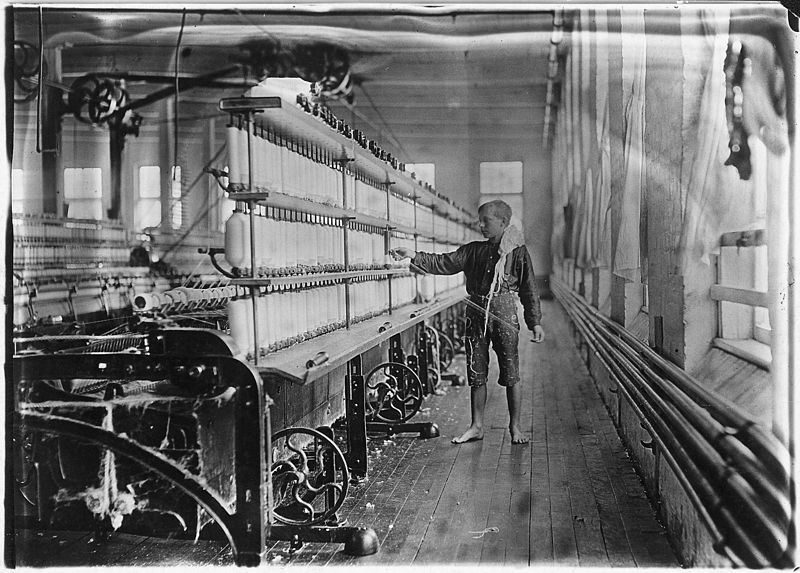
    As the automation of the cloth weaving process accelerated through the 18th Century,  many trades in the English fabric industry, such as Croppers, found their skills in great demand.

    Yet by the early 19th Century, their trades were near extinct as automation reduced the cost of weaving fabric dramatically and labourers replaced skilled workers.

    This massive wave of change and loss of once well paid skilled jobs helped accelerate the Luddite movement, many of whom were transported to Australia for their role in attacking factories using the new technologies.

    We should keep the plight of the croppers and Luddites in mind in today’s period of massive economic and technological change.

    One notable aspect of the workforce when industries are going through major changes is how many high paid skills and business niches pop up for a short time before being overwhelmed by change.

    We shouldn’t consider that many of the services and opportunities in today’s economy are permanent, quite a few businesses and skills that have appeared in the last two decades might not survive this one.

    A good example is the web designer. In 1996, a punk with a little basic HTML knowledge could call them selves a web developer and three years later many of those punks were driving Porsches and Lamborghinis. By the mid-2000s most of those expensive cars were just memories for those who assumed those basic skills set them up for life.

    Today we see the same thing with social media, group buying and cloud computing. Many of the services we see – some of them being valued for billions – are transition effects as markets adjust to changed conditions.

    As we begin to understand the effects of trading our privacy for connections, trusting valuable data to anonymous corporations and mass selling for discounts, we’ll see consumers, governments and business adapt.

    Some of today’s superstars will adjust to those changes and become the next Microsoft or General Motors while many others will fond memories after their reason for existing vanishes.

    We should grab opportunities when we see them – many of the thousands of Groupon clones are doing exactly that ­– but we shouldn’t assume they are permanent and forever.

    A time of change means none of us can assume our livelihoods, skills or assets are safe, just as those 19th Century industrial workers found when they were transported to Australia.

    Mule-spinning room in Chace Cotton Mill in 1909 by Lewis Hine courtesy of Wikimedia

    Similar posts: