Tag: engineering

  • The engineer’s return – GE heads back to its roots

    The engineer’s return – GE heads back to its roots

    In his mission to refocus GE on its engineering roots, CEO Jeff Immelt last week announced a restructuring plan that will see the company divest most of its real estate portfolio and shrink its finance arm faster than expected.

    Bloomberg News reports the stock market took the announcement very well with the shares jumping 8.7% on the news.

    GE now expects “high-value industrials” such as jet engines, oilfield equipment and diesel locomotives to generate more than 90 percent of earnings by 2018, up from just over half in 2014.

    That the company’s announcement has been taken so well by the market shows how the US economy is slowly shifting from financial engineering and debt driven spending to building real products.

    For the rest of the world there’s a clear message – the 1980s era of Gordon Gekko is coming to a close. It’s time to start figuring out where the real growth is going to come from rather than just goosing household spending with easy credit.

    Where companies like GE are going today is where governments will be looking in five to ten years time. Some will find they are further behind than others when the shift becomes apparent.

    Similar posts:

  • Making the case for engineers

    Making the case for engineers

    “It’s important to keep the engineers under control as they don’t understand costs,” a tech industry commentator said to me last week.

    That was an interesting view and one that’s at odds with the core role of engineers – engineering is applied science where the job description is to create something within the sponsor’s scope, time and cost requirements.

    It’s rare that a project doesn’t have cost constraints and it’s a very junior engineer who won’t be aware of those and how expenses are tracking against forecasts during the assignment. It’s a core role of the job.

    Engineers as financial naifs

    How this view of engineers being financial naïfs has developed is interesting in itself; there’s three factors that drove that commentator’s view.

    The first factor is the financiers and accountants have hijacked project planning and management – sort of like how marketers have overrun the social media sector – so it is in their interest to portray their professions as being the only people who can be trusted to watch the books.

    Giving the power of managing projects to the financiers has tragic results for many projects; invariably the money men misunderstand the costs required to meet a project’s scope resulting in a substandard result or, paradoxically, the project running massively over budget.

    IT industry failures

    The IT industry’s behaviour is a second factor which in itself can be split into two; the startup community’s model and the ‘rob the client’ mentality of the major outsourcing companies.

    One of the greatest business failures of the last thirty years has been IT outsourcing where enterprises have essentially written blank cheques to the global outsourcing firms to save computing costs.

    Because most of those projects have been run by moneymen with little understanding – despite their hubris – of either the business’ needs or the role of information technology in the organisation the results have often been catastrophic for shareholder or taxpayers, although very good for the salespeople and managers of the global outsourcing companies.

    Usually a good indicator of project doomed to failure is when a CEO or minister announces the scheme with the justification it will save an improbably large amount of money for the organisation; tears usually follow.

    The startup community’s attitude to project management has also twisted the engineer’s role. While there are some ventures that keep a very canny eye upon costs and deliverables – these are often the successful ones – many of the high profile, big funded companies take the attitude that engineers should focus on code while costs are a concern for founders and financiers.

    In that view, the software engineers don’t have to worry about costs – it is none of their business.

    Finally there’s a cultural element and it’s notable that the commentator speaking to me was Australian.

    Australian mediocrity

    One of the traits of modern Australian management is the culture of mediocrity and unaccountability that has crept into the nation’s business leadership from the early 1990s onwards. Tolerance of over budget or failed projects has become the cultural norm.

    Probably the best example of this was the deeply troubled National Broadband Network currently struggling to stay alive in the face of a restructured management, government hostility and community indifference. Both the previous and current management have shown themselves to be particularly unsuited to meeting the engineering and contractual challenges of the project.

    Interestingly, the engineers get blamed for the management’s hapless inability to deliver the project on time, budget or within the project scope.

    The perverse, and tragic, thing about the NBN is had managers listened to wise voices from the engineering and construction communities in the early days the scheme would have had a chance of succeeding despite the political incompetence and bastardry that surrounded it.

    Squandered resources

    As the western world and developed economies move into more constrained times squandering resources on poorly thought out or badly managed projects is becoming an unaffordable luxury.

    Engineers need to make the case they are not just a bunch of technology obsessed geeks implementing unrealistic and uneconomic solutions. Getting projects built properly is too important to be left to the accountants.

    Image from Seattle municipal archives image of Engineers planning a freeway through Flickr


    Similar posts:

    • No Related Posts
  • Mixing brains, bravery and magic

    Mixing brains, bravery and magic

    A few weeks ago I interviewed Gadi Amit, principle of New Deal Design ahead of his visit to Sydney for the Vivid festival.

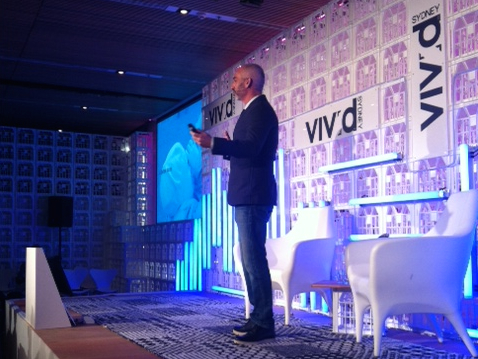
    Tonight his public talk for Vivid – Designing the Things We Love – didn’t disappoint, particularly his disdain for designing luxury goods.

    “I believe we should design things that help people live their lives; a $50,ooo watch doesn’t do that,” he told the audience.

    Through his presentation he showed his best known projects including the FitBit and Project Ara along with discussing some of his failures and why sometimes it’s best to part with a client should their philosophy differ with the designer.

    Gadi’s view is a refreshing take from the design and tech industries that are often fixated with celebrity and bling. The view also ties into the manifesto of New Deal Design – “We mix brains, bravery and magic.”

    Similar posts:

    • No Related Posts
  • Towards the social media enabled jet engine

    Towards the social media enabled jet engine

    “What if my jet engine could talk to me and what would it say?” Asked Beth Comstock, General Electric’s Chief Marketing Officer, at the Dreamforce 2012 conference.

    The idea of social media connected jet engine is strange, but the idea that a key piece of technology can talk to engineers, pilots, salespeople and management makes sense.

    At the Dreamforce conference, Salesforce.com were showing how their Chatter social communications tool can be applied to more than just salesteams, in GE’s case by giving their new GEnx engine the opportunity to talk to its support teams.

    In flight telemetry is nothing new to the aviation industry, ACARS – Aircraft Communications Addressing and Reporting Systems – have allowed airlines to monitor the performance of their aircraft over high frequency radio or satellite links during flight since 1978.

    The difference today is the sheer amount of data that can be collected and who it can be shared with. If relevant data is being shared with the right people it makes managing these complex systems far easier.

    More importantly, it helps teams collaborate. The GEnx engine is a new design that’s fitted to Boeing’s latest airlines including the troubled and late Dreamliner 787 so streamlining the design process of a new, high performance piece of technology pays dividends quickly.

    Although things can still go wrong – one wonders what the final tweet from this engine would have been.

    We’ve been talking for a long time about how social media and cloud computing services improve collaboration in a work place, the GEnx jet engine illustrates just how fundamental the changes these technologies are bringing to organisations.

    If an industrial jet engine can be using social media it begs the question why service based companies and workforces aren’t. It’s where the customers and staff are.

    These tools are radically changing the way we work right now – the question is are we, and the organisations we work for, prepared for these changes?

    Paul travelled to Dreamforce 2012 courtesy of Salesforce.com

    Similar posts: