Tag: Facebook

  • Facebook’s challenge in executing for the enterprise

    Facebook’s challenge in executing for the enterprise

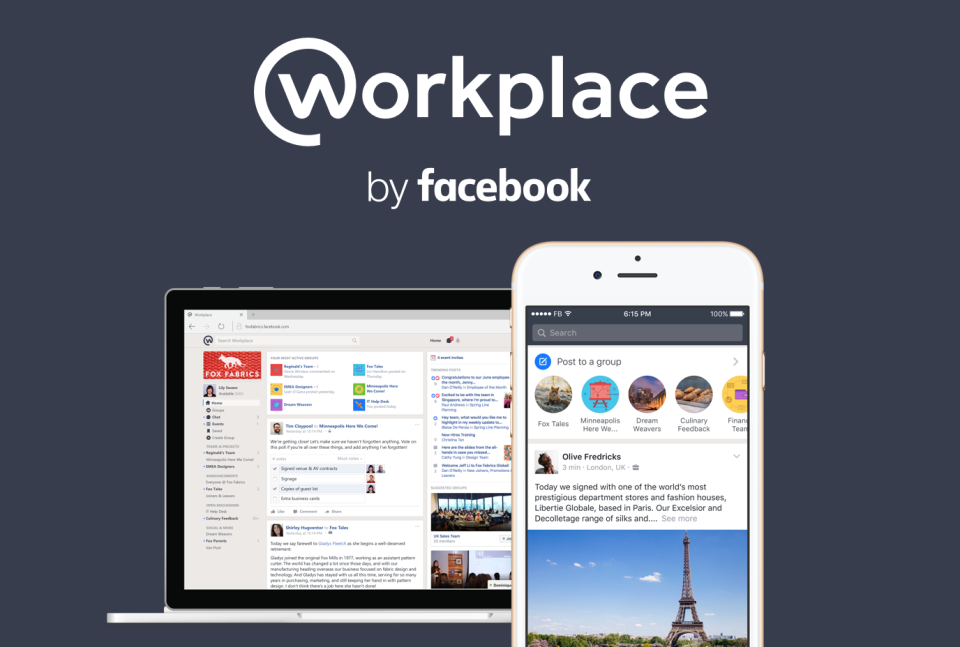
    Workplaces by Facebook was is the social media giant’s enterprise collaboration service it hopes will put the company into the enterprise space.

    Like many similar products, the service is aimed at improving collaboration in the workplace. As the media release gushes, “the new global and mobile workplace isn’t about closed-door meetings or keeping people separated by title, department or geography. Organizations are stronger and more productive when everyone comes together.”

    On first impressions, Facebook should score some successes with the service however it’s success is far from guaranteed. As we’ve seen with other major company’s attempts to open new products, being the deepest pocketed player doesn’t automatically ensure a successful product.

    The Google example

    A common assumption when a behemoth enters a martketplace is will simply smother smaller competitors by virtue of its size.

    History shows this not always the case, Facebook itself thrived despite the huge threat posed by Google+, indeed Google is probably the best example of a large corporation that struggles outside its core business.

    Part of the reason for the idea of big companies easily squashing the little folk being a fallacy is that the smaller companies are more focused on their problem – for a corporation the division is one part of a broader operation run by managers, not owners.

    In such a marketplace, execution and management focus matter so Facebook’s success will depend as much on executive buy-in as the resources thrown at the product.

    Cost and complexity

    A notable thing about Workplaces by Facebook is its partner network, led by Deloitte. This is not a good sign.

    The need to have consulting partners – particularly huge and expensive companies like Deloitte – is not an encouraging sign for the nascent service and may be a barrier towards adoption.

    A separate issue in Deloitte’s involvement is how cloud services, which we include Workplaces by Facebook, are buddying up with the major consulting firms with everyone from Huawei to Oracle entering arrangements. While this might help partners squeeze a few more pennies out of their hapless clients, it’s doesn’t seem to be in the vendors’ or customers’ interests.

    Trust

    What happens to users’ data is a perennial problem for Facebook and it’s notable this issue isn’t mentioned in the announcement.

    Facebook’s success shows consumers are relaxed about how the company uses data but that attitude may not be shared by managers and business owners.

    The proprietor of one reasonable sized startup said, “I have a slight concern about giving Facebook any access to my company information. Whilst it has been fine from a personal perspective I feel the trust level is not strong enough to warrant handing over access to, effectively, everything.”

    Overcoming that objection may be one of the biggest challenges for Facebook being accepted as an enterprise tool.

    Becoming an enterprise service

    Facebook’s push into the enterprise isn’t surprising and indicates that as the company matures, something more than the advertising funded consumer market is needed to drive its growth.

    That consumer background is a strength for Facebook as the consumerization of enterprise software is an established trend. Having an interface and tools that are familiar to most staff is very attractive to managers looking at introducing new platforms with the shallowest possible learning curves.

    However the ultimate question is what need does Workplaces by Facebook address? There’s no shortage of collaboration platforms that offer most of the futures offered by the platform.

    If Workplaces by Facebook does address a genuine need in enterprise workplaces and the company’s management can maintain its focus on the product then the service may be a success. That isn’t a given though.


    Similar posts:

    • No Related Posts
  • Facebook proves a false saviour for advertisers and publishers

    Facebook proves a false saviour for advertisers and publishers

    The advertising industry is in trouble, as consumers’ eyeballs move from broadcast mediums to online services, the wildly successful Twentieth Century business model that drove the radio and television industries is dying.

    One of the biggest hopes for advertisers, and publishers, was social media would be the salvation of their mass market model. Facebook continues to prove it isn’t the messiah with the Wall Street Journal reporting video viewing figures have been inflated for the past two years.

    Coupled with the recently announced shift away from publishers Facebook is increasingly showing any hopes of replicating the broadcast media model on social platforms is doomed.

    So it isn’t surprising advertisers are angry at Facebook for mis-stating its figures although a cynic would suggest those inflated statistics helped drive its video service over competitors like YouTube at a critical time.

    Whether Facebook’s actions were deliberate or otherwise, the service’s misleading behaviour only underscores how publishers and advertisers are struggling to find ways to translate their business model to an online world.

    Similar posts:

    • No Related Posts
  • P&G focusing on Facebook is bad news for media

    P&G focusing on Facebook is bad news for media

    Consumer goods giant Proctor and Gamble has announced they will be dialling back their targeted advertising on Facebook, as they discovered being too precise turns out to stifle sales.

    It turns out that big companies need scale, not precision, so to grow sales they need to be engaging with more people and not restricting their message to niche groups.

    Given the different natures of businesses it’s not surprising to see strategies that work for one group fail dismally for others, but it’s interesting how targeting turns out not to work so well for mass market products.

    The losers though in the P&G story are smaller websites as Wall Street Journal quotes the company’s Chief Marketing Officer as saying they will focus more on the big sites and move away from niche players.

    Mr. Pritchard said P&G won’t cut back on Facebook spending and will employ targeted ads where it makes sense, such as pitching diapers to expectant mothers. He said P&G has ramped up spending both on digital sites and traditional platforms. One category the company is scaling back: smaller websites that lack the reach of sites such as Facebook, Google and YouTube.


    Again we’re seeing the early promise of the web failing as economic power continues to be concentrated with a few major platforms. This is also terrible news for media organisations as big advertisers – P&G are the world’s biggest spender – focus on a few sites and increasingly ignore local or niche news publications.

    There’s also the quandary of where the content that Facebook’s users share will come from, with the advertising shifting away from media companies – new players such as Buzzfeed and Huffington Post as well as the old established mastheads – to Google and Facebook, there’s less funds to create interesting and shareable stories.

    P&G’s move is very good for Facebook’s and Google’s shareholder but the future media models still seem a long way off.

    Similar posts:

  • When the Facebook tiger bites

    When the Facebook tiger bites

    Two years ago Buzzfeed’s head of global operations visited Sydney and laid out the company’s vision of being the New York Times.

    As Scott Lamb explained, an important part of the Buzzfeed model was generating traffic through social media shares — at that time a tactic which Iwas working well.

    Since then the gloss has gone off Buzzfeed as the company misses financial targets and traffic plateaus.

    Now Facebook has announced further changes to its newsfeed which sees more emphasis on users’ family and friends’ posts than news and brands.

    Sites like Buzzfeed are left in a bind as one of their key sources for traffic dries up and, once again, Facebook’s cahnges show how risky it is for publishers and marketers to rely on individual online platforms.

    In truth all of the major online services are predators with Facebook, along with Google and Amazon, being at the top of the food chain, just like tigers.

    For those riding the internet tigers, the risk of being mauled is real. As Buzzfeed and others are finding.

    Similar posts:

    • No Related Posts
  • The revenge of the open web

    The revenge of the open web

    Ben Terrett, the former head of design at the UK Government’s Digital Service, tells GovInsider why the agency banned mobile phone apps with the British taxpayers saving £4.1bn over the following four years.

    Instead the GDS insisted agencies built responsive web sites so pages would adapt to the devices they were being read upon, saving time and money being devoted to developing and maintaining individual apps for different platforms.

    Apps are “very expensive to produce, and they’re very very expensive to maintain because you have to keep updating them when there are software changes,” GovInsider quotes Terrett.

    For those of us who worry about the increasingly siloed and proprietary nature of the internet, Terret’s story is very good news. Apps are particularly problematic as they stunt innovation, lock users into platforms and give those who control the App stores – mainly Apple and Google – massive market power.

    It’s no co-incidence Facebook are currently in the process of restricting web access to their messenger service. Locking users into their app gives them far more power over users and much more control over their data.

    On the other hand, the open web means sites are more accessible and not subject to the corporate whims of whoever controls a given silo. It also means that any data collected is far more likely to be commoditised, something Facebook hates.

    That government agencies and large corporations are realising the costs, risks and value they are handing over the gatekeepers by developing apps is encouraging. It would be good if they considered the other downsides of giving the web over to a small clique of companies.


    Similar posts: