Tag: future

  • Meeting the future head on

    Meeting the future head on

    What can businesses do to prepare for an exciting but challenging future?

    As part of the New South Wales Government’s Back to Business Week, I’ll be on the Meet the Future Head-On panel looking at the future of business and work.

    Facilitated by Jo Kelly, Director of People, Place and Partnership, the seminar will look at local and global business changes and what they mean for small to medium companies.

    The keynote speakers are Terry Rawnsley – Principal & Partner of SGS Economics and Planning – who’ll discuss his company’s analysis of the economy in the year 2026, and Karen Borg – the Chief Executive Officer of Jobs for NSW – with an overview of the state’s Jobs for the Future report.

    Joining me on the panel will be Paul Fairhead, the Managing Director of Huddle; Jost Stollmann, the Executive Director of Tyro Payments and Marianne McGee, the owner of Allis Technology.

    Tickets for the 6pm event on March 1 at the Sydney International Convention Centre are free and can be booked through Eventbrite.

    Come along and have your say. Look forward to seeing you there.

    Similar posts:

  • Avoiding a neo-feudal future

    Avoiding a neo-feudal future

    “Neo liberalism is dead” was Paul Mason’s opening for his talk ‘Will Robots Kill Capitalism?’ At Sydney university on Monday night.

    Mason, who was promoting his book ‘Postcapitalism: A Guide to Our Future’ was exploring how we create an alternative to the failing neo-liberal world while avoiding the failings of the past.

    Describing the current ennui towards establishment politics as being “the biggest change since the fall of the wall in 1989,” Mason believes that the neo-Liberal, pro-markets, view of the world is now failing because the general population increasingly can’t afford the credit which powers the current system.

    Increasing voter hostility

    With increased insecurity the general population’s hostility towards the global elites is only going to increase, Mason says, as a low work future is traps people into low income ‘bullshit jobs’.

    Mason describes a bullshit job as being something like the hand car washes that have popped up around UK (and Australia) where workers are paid the absolute minimum to provide a service cheaper than any machine.

    With bullshit jobs, it’s hard not to consider the white collar equivalent – just yesterday The Guardian, which Mason writes for – described a report by UK think tank Reform which suggested 90% of British public service jobs could be replaced by chatbots and artificial intelligence.

    It’s easy to see those same technologies being employed in the private sector as well with middle management and occupations like Human Resources and internal communications being easily automated out by much flatter organisations.

    A low work future

    The result of that, which we’re already seeing, is increasingly profitable corporations that barely employ anyone.

    However for companies like Google, Facebook and Apple those business models also present risks as they are valued by the market far beyond any reasonable expectation of return – even if they do manage to eat each other.

    Another risk to today’s tech behemoths is the commoditization of many of their industries. “Not all of the high tech economy will be a high value economy.” Mason point out, going on to observe that Google may have recognised this in carrying out their Alphabet restructure.

    The neoliberal Anglos

    Not all countries though have followed the Anglo Saxon neo-liberal model over the past forty years though. In what Mason describes as “The yin and yang of globalIzation,” he point out China, Germany, Japan and South Korea Have focused on production and raising living standards while the English speaking nations enforced austerity on their populations with large groups being left behind both socially and economically.

    Which leads to Mason’s key question, “will the low work future see neoliberalism replaced by ‘neo-feudalism’ or something more enlightened?”

    To support the latter, Mason suggests a transition path into the ‘low work future with the following features;

    • automation
    • basic income
    • state provided cheap, basic goods
    • externalising the public good
    • attacking rent seeking
    • promoting the circular economy
    • investing in renewable energy

    That list seems problematic, and at best hopelessly idealistic, in today’s economies – particularly in the neoliberal Anglosphere.

    A need for new mechanisms

    Mason’s points though are important to consider if we are facing a ‘low work’ society as there has to be some mechanisms to allow citizens a decent standard of living even if the bulk of the population is unemployed.

    Even if we aren’t facing a low work future, the transition effects we’re currently experiencing where many of today’s jobs are going to be automated away threaten serious political and economic dislocation in the short to medium term.

    What Mason reminds us is that the political and economic status quos can’t be maintained in the face of dramatic technological change. We have to consider how we’re going to manage today’s transformations so we don’t end up in a neo-feudal society with the discontent that will entail.


    Similar posts:
  • Human bullies and autonomous vehicles

    Human bullies and autonomous vehicles

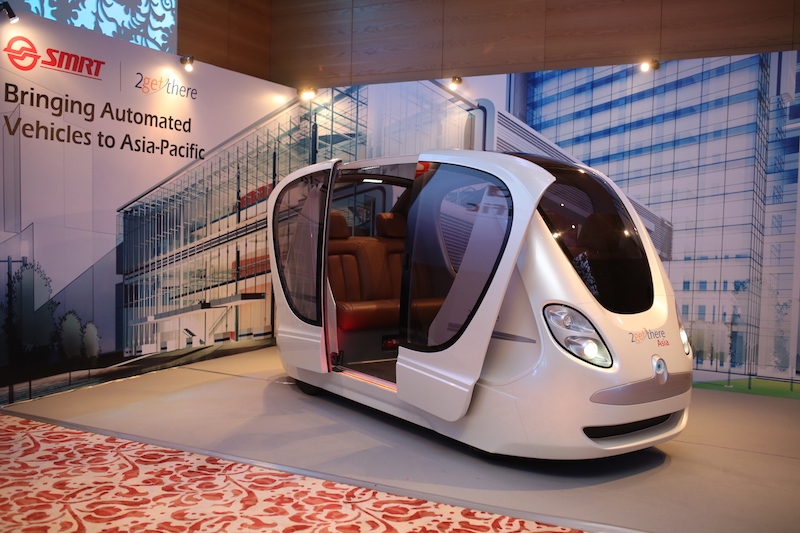
    What happens when drivers encounter autonomous vehicles on the highways?

    Conventional wisdom is the roads will be carnage as logically thinking robots literally collide with irresponsible humans.

    The Chief Executive of Mercedes-Benz America has a different take, it may be that humans quickly learn to bully safety conscious and law abiding autonomous vehicles on the road.

    Speaking at a motoring conference in Las VegasDietmar Exler suggested the immediate future will see aggressive drivers taking advantage of driverless vehicles programmed to avoid collisions and risky situations.

    This raises an interesting question – will autonomous vehicles actually make the roads less safe in the earlier days despite being safer themselves?

    How humans interact with new technologies is never a certain thing, and the idea that people will bully robots is a delicious, and plausible idea. It does raise though some interesting possibilities as robots become common in our lives.

    Similar posts:

    • No Related Posts
  • What’s next for small business – trends in the modern workplace

    What’s next for small business – trends in the modern workplace

    This week’s The Future is now – Trends in the Modern Workplace webinar was an opportunity to look at the trends affecting small and micro businesses.

    What’s notable is almost all the topics affecting small business are being felt by their corporate cousins. It shouldn’t be surprising the technology and social trends affecting society are equally being felt

    Now the webinar is over, I’ve posted the presentation to Slideshare with the commentary below, we cover established trends like the shift to mobile then ponder the future of business with artificial intelligence and virtual reality.

    The presentation ties up with the post I published a few days ago that provides the commentary to the slides.

    Similar posts:

  • Autodesk and the China manufacturing challenge

    Autodesk and the China manufacturing challenge

    At the recend Autodesk University event in Sydney I had the opportunity to talk with Pat Williams, the company’s senior vice president for Asia Pacific.

    Williams’ beat covers all of Asia and he’s based out of Shanghai where he’s been based for the last eight years and prior to that he spent a decade in Japan.

    Having spent so much time in North East Asia, and heading to the PRC the following week myself, it was interesting to hear Williams’ views on how industry is changing in China and ther country’s attitude to American software companies.

    “There’s a lot of noise that gets made in China about their local IP and the local vendors and what I say is ‘the Chinese companies are competing in a global market and they are under the same competitive pressures as everybody else in the world so when they find a better tool they use it. Despite all the noise, business is quite good there.”

    For the Chinese economy, the aging and increasingly expensive workforce presents a problem, something addressed by the China Manufacturing 2025 plan which sees the country increasingly competing in high tech sectors such as aerospace, telecommunications and biotech fields.

    “China’s kind of an anomaly,” says Williams of the country’s immense growth rates. “From a government perspective there’s a lot of horsepower behind the things that they do – China 2025, their manufacturing initiative, you’ve got what they’ve been doing with Building Information Modelling (BIM) and our architectural tools.”

    They’ve really kind of spearheaded what we’ve been talking about on things like 3D printing of houses. China on its own is just this mushroom that’s happening.”

    While the industrial shift in China and the rest of Asia is promising opportunities to companies like Autodesk, that change is affecting their workforce as well with the company announcing plans to lay off ten percent of their workforce earlier this year.

    Those cutbacks are part of the adjustment to a new market reality says Williams, “it was part of right sizing the business.” He observed “we realised our margins were going to be compressed as we move to a subscription model.”

    Autodesk’s shifts illustrate how the opportunities in the new economy don’t come without costs even for the companies that seem to be winners in a shifting marketplace.

    In China, American companies are finding they have to a unique proposition – companies like Apple and Autodesk are good examples – and as the country moves its economy further up the value chain all foreign businesses are going to have to show how they add value.

    Succeeding in a changing economy isn’t without uncertainty. And it certainly isn’t without risks.

    Similar posts:

    • No Related Posts