Tag: greater fools

  • Venture capital’s false jackpot

    Venture capital’s false jackpot

    When a business run by a 22 year old raises 25 million dollars it certainly gets attention and Crinkle’s successful seed funding has provoked plenty of commentary.

    Particularly notable are stories like the gush piece from the New Yorker magazine calling the fund raising “a $25 million jackpot.” Reading those, those, you’d think Crinkle’s Lucas Duplan had won the lottery.

    The truth is, getting a fat cheque from investors is only the beginning of the business journey; the real work starts when you have a board and shareholders to answer to.

    Where the real jackpot lies is in selling the business to a greater fool and the story of Bebo founder Michael Birch is a good example.

    Bebo was bought by AOL, probably the greatest greater idiot buyer of all, in 2008 for $850 million. Five yearrs later Birch has bought it back for one million and promises to ‘reinvent” the social media service.

    While Birch didn’t get all the $850 million AOL spent on Bebo, he and his investors did hit the jackpot. Whether Lucas Duplan and the backers of Crinkle do is for history to tell us.

    Image courtesy of sgman through sxc.hu

    Similar posts:

  • Staging a sales blitzkreig to win the market battle

    Staging a sales blitzkreig to win the market battle

    Part of the Silicon Valley greater fool model requires ramping whatever metrics are necessary — page views, unique visitors, revenue or profit to attract prospective buyers to acquire the business.

    Elizabeth Knight in the Sydney Morning Herald looks at the cracks appearing in online retailer The Iconic where revenues of thirty million dollars were subsidised by forty-four million in losses in the e-commerce operator’s first year of trading.

    The Iconic has all the hallmarks of a classic ‘buy me’ Silicon Valley operation — big marketing spend, high customer acquisition costs and fat operating losses in an effort to build market share.

    Getting market share is one of the key aspects of the greater fool model, being the leader in a segment almost guarantees a buyer, usually the one of the shellshocked incumbents.

    Knight quotes emails from one of The Iconic’s founders, Oliver Samwar, on the importance of being number one in their sector.

    ‘‘The only thing is that the time of the Blitzkrieg must be chosen wisely so that each country tells me with blood when it is time. I am ready – anytime!’’ one said.

    ‘‘We must be number one latest in the last month of next season. Full month, not a discount sales month

    ‘‘Why? Because only number one can raise unbelievable money at unbelievable valuations. I cannot raise money for number 2 etc and I have seen it how easy (sic) it is for me in Brazil and how difficult in Russia because our team f….d up.’’

    As we’ve seen with companies like Groupon, being number one can impress gullible corporations but when that market position has been bought by investor’s money subsidising operations, the business is rarely sustainable.

    Whether investors are prepared to continue subsidising The Iconic’s losses or if the business can attract a buyer will depend upon the business maintaining momentum on its key metrics.

    Probably the most important thing for companies like The Iconic though is the availability of easy credit and accessible funds.

    As we saw in the original dot com boom, when that easy money evaporates so to do most of the businesses.

    For the incumbent businesses threatened by well funded upstarts, some might find the best hope for survival is to hope challengers run out of money.

    In the meantime though, they may have to survive a market blitzkrieg.

    Similar posts:

  • You can’t buy cool

    You can’t buy cool

    In many ways it was Yahoo! who pioneered Silicon Valley’s Greater Fool Business Model during the dot com boom of the late 1990s.

    The Greater Fool model involves hyping a website, online service or new technology in the hope a hapless corporation dazzled by the spin will buy the business for an improbably large amount.

    Fifteen years later many of those services are closed down or languishing and the founders who were gifted millions of dollars by gullible boards and shareholders have moved on to other pursuits.

    The news that Yahoo! has sealed a deal to buy blogging site Tumblr for $1.1 billion dollars shows the company’s urge to buy in success remains under new CEO Marissa Mayer.

    It’s difficult to see exactly what Tumblr adds to Yahoo!’s wide range of online properties except a young audience – exactly the reasoning that saw News Corporation’s disastrous investment in MySpace.

    What’s particularly concerning is a comment made by Yahoo!’s CFO Ken Goldman at JP Morgan’s Global Technology Conference last week.

    “So we’re working hard to get some of the younger folks,” Goldman said on a webcast from the J.P. Morgan Global Technology conference in Boston.

    It’s all about trying to “make us cool again,” he said, adding that Yahoo will focus on content that’s “more relevant to that age bracket.”

    So they are spending a billion dollars to “make us cool again” – it’s disappointing Marissa Mayer has allowed middle aged male executives to run free with the shareholders’ chequebook in a quest to rediscover their youth.

    Like most middle aged life crises, it’s unlikely to end well.

    For Tumblr’s founders and investors things have ended well. It’s time to buy those yachts and fast cars those middle aged execs covet.

    In the meantime the quest for internet ‘cool’ – whatever that is – will move onto whatever online service teenagers and twenty somethings are using.

    Similar posts:

  • Big data, mobile apps and smarter logistics – why Avis is buying Zipcar

    Big data, mobile apps and smarter logistics – why Avis is buying Zipcar

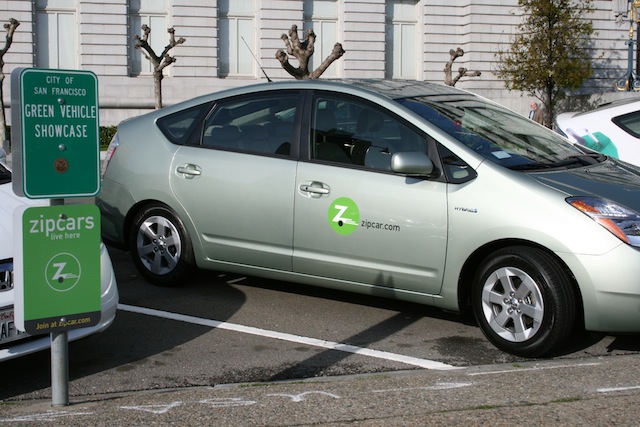
    With no bad press over New Year’s Eve it looks like hire car service Uber avoided the surge pricing traps of 2011 and the good news continues for the online booking industry with the news that Avis is buying car sharing service Zipcar.

    Assuming the acquisition isn’t another example of the greater fool investment model, Avis’ purchase of Zipcar makes good sense in expanding the hire car giant’s footprint into the share car business.

    Regrettably Avis use the 1980s term “synergies” four times in their media release but it does seem the businesses are a good fit both in fleet sharing and improving both company’s services.

    Zipcar’s technology is another asset which Avis can use,  with the car sharing service’s ability to track vehicle locations meaning better fleet management for the hire car business.

    Car sharing logistics

    The logistics angle of car share services is something that’s been highlighted by Uber’s CEO Travis Kalanick at various times, most recently at the service’s Sydney launch last November.

    Another aspect of the car sharing and hire car booking services is their Big Data advantages which the online startups bring.

    Historically, car hire companies have been reasonably good at gathering data on their customers with loyalty schemes, direct mailing and plugging into airline frequent flier programs. However they have been left behind by the Big Data boom in recent years.

    Companies like Zipcar, Uber and taxi hailing apps like GoCatch have big data in their DNA, having been founded in the era of cloud computing and social media they have access to more information and a better ability to use the knowledge they gather.

    Predicting the price surges

    At Uber’s Sydney launch Kalanick described how Uber’s traffic volumes increase in San Francisco when the Giants win a game, the interesting thing is that the surge happens three hours before the match starts.

    Insights like the traffic patterns around football games and holidays are gold to a high inventory business like hire car services. They are also important to the entire logistics industry.

    This latter point is probably the most overlooked part of all with the current rush into social and mobile based apps – the market intelligence that these services gather.

    While it’s tempting to dismiss that market intelligence as just monitoring who likes cats or cheeseburgers, the application of that data is transforming supermarkets, airlines and even concert venues.

    Avis seem to have understood that it will be fascinating to see how they will use Zipcar’s data and whether their competitors will figure out the importance of what these services offer.

    Similar posts:

  • Bubble economics

    Bubble economics

    You know you’re in an investment bubble when the pundits declare “we’re not in a bubble”.

    A good example of this is Andy Baio’s defence of Facebook’s billion dollar purchase of Instagram.

    Justifying the price, Andy compares the Facebook purchase with a number of notorious Silicon Valley buyouts using two metrics; cost per employee and cost per user.

    Which proves the old saw of “lies, damn lies and statistics”.

    The use of esoteric and barely relevant statistics is one of the characteristics of a bubble; all of a sudden the old metrics don’t apply and, because of the never ending blue sky ahead, valuations can only go up.

    Andy’s statistics are good example of this and ignore the three things that really matter when a business is bought.

    Current earnings

    The simplest test of a business’ viability is how much money is it making? For the vast majority of businesses bought and sold in the world economy, this is the measure.

    Whether you’re buying a local newsagency outright or shares in a multinational manufacturer, this is the simplest and most effective measure of a sensible investment.

    Future earnings

    More complex, but more important, are the prospects of future earnings. That local newsagency or multinational manufacturer might look like a good investment on today’s figures, but it may be in a declining market.

    Similarly a business incurring losses at the moment may be profitable under better management. This was the basis of the buyout boom of the 1980s and much of the 1990s.

    Most profitable of all is buying into a high growth business, if you can find the next Google or Apple you can retire to the coast. The hope of finding these is what drives much of the current venture capital gold rush.

    Strategic reasons

    For corporations, there may be good strategic reasons for buying out a business that on paper doesn’t appear to be a good investment.

    There’s a whole host of reasons why an organisation would do that, one variation of the Silicon Valley business model is to buy in talented developers who are running their own startups. Google and Facebook have made many acquisitions of small software development companies for that reason.

    Fear Of Missing Out

    In the Silicon Valley model, the biggest strategic reason for paying over the odds for a business is FOMO – Fear Of Missing Out.

    To be fair to the valley, this is true in any bubble – whether it’s for Dutch tulips in the 17th Century or Florida property in the 20th. If you don’t buy now, you’ll miss out on big profits.

    When we look at Andy Baio’s charts in Wired, this is what leaps out. Most of the purchases were driven by managements’ fear they were going to miss The Next Big Thing.

    The most notorious of all in Andy’s chart is News Corp’s 580 million dollar purchase of MySpace, although there were good strategic reasons for the transaction which Rupert Murdoch’s management team were unable to realise.

    eBay’s $2.6 billion acquisition of Skype is probably the best example of Fear Of Missing Out, particularly given they sold it back to the original founders who promptly flicked it to Microsoft. eBay redeems itself though with the strategic purchase of PayPal.

    Probably the worst track record goes to Yahoo! who have six of the thirty purchases listed on Andy’s list and not one of them has delivered for Yahoo!’s long suffering shareholders.

    The term “greater fools” probably doesn’t come close to describe Yahoo!’s management over the last decade or so.

    While Andy Baio’s article seeks to disprove the idea of a Silicon Valley bubble, what he shows is the bubble is alive, big and growing.

    One of the exciting things about bubbles is they have a habit of growing bigger than most rational outsiders expect before they burst spectacularly.

    We live in exciting times.

    Similar posts: