Tag: industry

  • Old king coal loses his merry men

    Old king coal loses his merry men

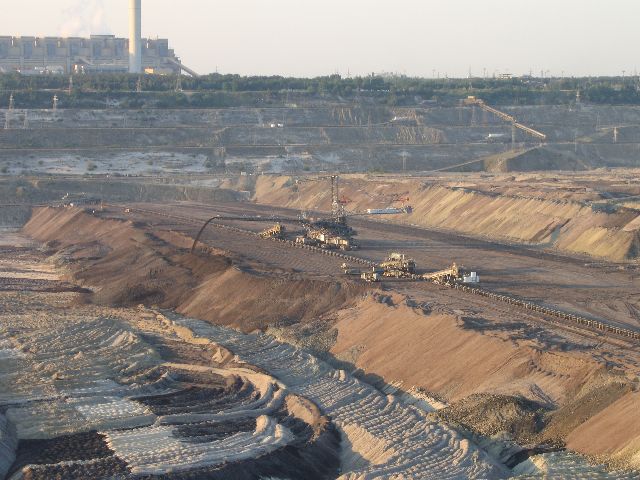
    The industrial revolution’s most important energy resource was coal, even today it generates most of the world’s electric power.

    However, the last half century hasn’t been good for those communities and workers whose incomes are dependent upon coal as the industry has moved away from labour intensive ways of digging the stuff up, alternative sources of energy have developed and the consequences of dumping billions of tons of carbon into the planet’s atmosphere come to be understood.

    The US Energy Information Administration’s annual report on the nation’s coal industry makes grim reading, with both production and employment levels falling.

    Coal industry jobs were one of the touchstone issues in the recent US Presidential elections. As The Guardian reported, former staunch Democrats in the mining regions – some of America’s poorest counties – supported Donald Trump on the strength of the promise to reinvigorate the sector.

    Sadly, as the EAI reports, those coal jobs are never coming back even if the world starts using more. Since World War II, the productivity of US coal mines has increased from .72 tons per worker to 5.22 in 2011.

    Despite a recent slight drop in US productivity at the end of last decade – apparently due to spoil recovery during a period of booming prices – the trend is not good. As Australian academics warn, increased mine automation means jobs in that industry are going to become increasingly scarce.

    Like Donald Trump and the distressed US mining regions, Australian politicians believe that coal mining will provide the jobs of the future. They are wrong.

    Those communities and politicians hoping for jobs in the 21st Century may well be better off looking to the future rather than the past. Nineteenth Century thinking is not going to provide answers.


    Similar posts:

  • Autodesk and the China manufacturing challenge

    Autodesk and the China manufacturing challenge

    At the recend Autodesk University event in Sydney I had the opportunity to talk with Pat Williams, the company’s senior vice president for Asia Pacific.

    Williams’ beat covers all of Asia and he’s based out of Shanghai where he’s been based for the last eight years and prior to that he spent a decade in Japan.

    Having spent so much time in North East Asia, and heading to the PRC the following week myself, it was interesting to hear Williams’ views on how industry is changing in China and ther country’s attitude to American software companies.

    “There’s a lot of noise that gets made in China about their local IP and the local vendors and what I say is ‘the Chinese companies are competing in a global market and they are under the same competitive pressures as everybody else in the world so when they find a better tool they use it. Despite all the noise, business is quite good there.”

    For the Chinese economy, the aging and increasingly expensive workforce presents a problem, something addressed by the China Manufacturing 2025 plan which sees the country increasingly competing in high tech sectors such as aerospace, telecommunications and biotech fields.

    “China’s kind of an anomaly,” says Williams of the country’s immense growth rates. “From a government perspective there’s a lot of horsepower behind the things that they do – China 2025, their manufacturing initiative, you’ve got what they’ve been doing with Building Information Modelling (BIM) and our architectural tools.”

    They’ve really kind of spearheaded what we’ve been talking about on things like 3D printing of houses. China on its own is just this mushroom that’s happening.”

    While the industrial shift in China and the rest of Asia is promising opportunities to companies like Autodesk, that change is affecting their workforce as well with the company announcing plans to lay off ten percent of their workforce earlier this year.

    Those cutbacks are part of the adjustment to a new market reality says Williams, “it was part of right sizing the business.” He observed “we realised our margins were going to be compressed as we move to a subscription model.”

    Autodesk’s shifts illustrate how the opportunities in the new economy don’t come without costs even for the companies that seem to be winners in a shifting marketplace.

    In China, American companies are finding they have to a unique proposition – companies like Apple and Autodesk are good examples – and as the country moves its economy further up the value chain all foreign businesses are going to have to show how they add value.

    Succeeding in a changing economy isn’t without uncertainty. And it certainly isn’t without risks.

    Similar posts:

    • No Related Posts
  • Industries of the future on display

    Industries of the future on display

    One of the challenges we face in looking at the economy’s future is going lies in identifying what tomorrow’s industries will be.

    I’ve spent the day at the 500Startups pitch day at the Computer History Museum in the heart of Silicon Valley listening to the startups on the program making their investment spiels and in many ways those businesses are a glimpse of the future economy.

    While not all of these businesses will survive, and many will pivot over time, they do indicate directions the economy is taking.

    The question though is what sectors will drive jobs growth over the next quarter century and whether those industries will pay enough for workers and their families to survive, let alone keep a consumerist economy ticking along.

    Similar posts:

  • The rise and fall of America’s truck drivers

    The rise and fall of America’s truck drivers

    1986 was Peak Secretary according to an NPR article examining America’s changing workforce.

    Published last February, The Most Common Job in Every State used US Census data to examine which were the most common jobs in each state. The change with each census starkly illustrates the changing workforce and, worryingly, a declining diversity.

    In 1978 US states boasted a mix of occupations ranging from farm hands and farmers through to machine operators and secretaries. By 1986 secretaries dominated.

    Most common US jobs 1986

    Then came the personal computer and the role of the secretary declined to be replaced by truck drivers, although the NPR article notes the definition of a truck driver by the US Census office is very broad.

    most common US job 2006

    Interestingly truck drivers themselves seem to have peaked in the 2006 Census with software developers and primary school teachers overtaking them.

    most common US job 2014

    For those truck drivers – and forklift operators, couriers and delivery staff who also seem to come under the definition – the future probably doesn’t bode well as automation is increasingly going to take their roles.

    The NPR article is an interesting series of snapshots of how an economy is a dynamic beast, assuming industries and the roles in them are static is misguided if not downright dangerous.

    Indeed we may well find in twenty years time we’re commenting on the rise and decline of software developers.

    What’s an interesting footnote, and worth considering, is what happened to all of the secretaries displaced by personal computers during the 1990s? That’s probably worth considering in another post.

    Similar posts:

  • Business in an age of data abundance

    Business in an age of data abundance

    I’m preparing a corporate talk for next week on the changing economy and one theme that sticks out is how the Twentieth Century was defined by cheap energy and physical mobility as mains electricity and the internal combustion engine became ubiquitous and affordable.

    The picture accompanying this post illustrates that shift, Sydney’s Circular Quay a hundred years ago was just at the beginning of the automobile era. The previous fifty years had bought trams, the telegraph and reliable shipping but the great strides of the Twentieth Century were still to happen.

    At that stage the steam engine and advances in electrical transmission had bought reliable power to the masses, although it was still expensive. What was to come over the next fifty years was that energy was about to become cheap and abundant. That drove the suburbanisation of western societies and the development of industries around the availability of cheap power and a mobile workforce.

    At the time though information was still expensive, the control of broadcast networks by a few license holders and print operations by those who could afford the massive costs of producing and distributing magazines or newspapers made data difficult to get and worth paying for.

    Today we’re at the start of a similar shift in information; it’s no longer expensive or difficult to obtain.

    What that means for the next thirty years is what industries will develop in an economy where information is basically free and ubiquitous. Just as cheap energy created the consumerist economy, we’re going to see a very different environment in an age of cheap data.

    Similar posts: