Tag: innovation

  • Steve Jobs’ golden path

    Steve Jobs’ golden path

    Today Apple reinvents the smartphone.” Steve Jobs announced at the 2007 Macworld Conference when he showed off the new Apple iPhone.

    As with most of Jobs’ speeches, the iPhone launch was an impressive display combining the man’s talents, vision and technology to rally Apple’s adoring masses.

    Last week the New York Times magazine had an excellent feature on the story behind the landmark launch of the iPhone. It’s worthwhile reading to understand the theatre that goes behind a major tech company’s launch event.

    In the case of the iPhone, a myriad of tricks had to be performed to make sure the still being developed device didn’t fail in Steve Jobs’ hands during the launch – one can be sure the Apple founder wouldn’t have been as relaxed as Bill Gates when a Windows 98 system crashed onstage a decade earlier.

    A key part of Jobs’ presentation was the ‘Golden Path’, a script that would showcase the iPhone’s features while avoiding known problems.

    Hours of trial and error had helped the iPhone team develop what engineers called “the golden path,” a specific set of tasks, performed in a specific way and order, that made the phone look as if it worked.

    Much to the relief of Jobs’ staff, the demonstration worked flawlessly and Jobs’ polished presentation showed why he was one of the most admired, if flawed, business leaders of his generation.

    While most tech CEOs could never dream of emulating Steve Jobs, almost every one has a ‘golden path’ to show off their product in a new light.

    Something we should remember when watching these demonstrations and the press coverage that follows is that most of them are carefully staged theatre and we should hang onto our wallets until well after these devices are on the shop shelves.

    As it turned out, the iPhone was a spectacular success and did re-invent the smartphone industry. Along with being able to deliver a killer presentation, Steve Jobs was also good at driving teams to deliver his vision.

    Steve Jobs image courtesy of Wikimedia.

    Similar posts:

    • No Related Posts
  • Building the post-agile workplace

    Building the post-agile workplace

    “I personally believe we haven’t seen a major change in how companies work since the industrial revolution,” says Yammer co-founder Adam Pisoni. “We’re, I think, on the brink of a change as large as that.

    Pisoni was speaking at Microsoft’s Australian TechEd conference on the Gold Coast and gave an insight into how Yammer’s development philosophy is being implemented at Microsoft since the smaller company was acquired last year.

    He believes all businesses can benefit from collaborative, cloud based tools like Yammer however software companies like Microsoft are the ones being affected the earliest from their adoption.

    “We sometimes joke that Yammer’s development methodology is post-Agile, post-Scrum” says Pisoni. “Because they were not fast enough and don’t respond to data quickly.”

    Understanding modern workplaces

    This will strike fear into the minds of managers who are only just coming to understand Agile and Scrum methodologies over the traditional ‘waterfall’ method of software development.

    “We focused primarily in the past on efficiency,” states Pisoni. “In many ways things like scrum attempt to make you more agile but still focus on efficiency. Everyone is tasked based and hours and burn down points and all that”

    “The name of the game now is not efficiency, it’s how quickly you can learn and respond to information.”

    “Yammer is less of a product than it is a set of experiments running at all times. We take bold guesses about the future but then we try to disprove our hypotheses to get there.”

    “So we came up with this ‘post-agile’ model of a small, autonomous, cross-functional teams – two to ten people for two to ten weeks who could prove or disprove an hypotheses based on the data.”

    “This lets us quickly move resources around to double down on that or do something else.”

    Flipping hamburgers the smart way

    Pisoni sees this model of management working in areas outside of software development such as retail and cites one of his clients, Red Robin burgers, where the hamburger chain put its frontline staff on Yammer and allowed them contribute to product development.

    The result was getting products faster to market – one burger that would have taken eighteen months to release took four weeks. The feedback loops from the customer and the reduced cost of failure made it easier to for the chain to experiment with new ranges.

    With companies as diverse as hamburger chains, telcos and software developers benefitting from faster development times, it’s a warning that all businesses need to be considering how their employees work together as the competition is getting faster and more flexible.

    It remains to be seen if this change is as great as the industrial revolution, but it’s now that can’t be ignored by managers and entrepreneurs.

    Paul attended Microsoft TechEd Australia as a guest of Microsoft who paid for flights, accommodation and food.

    Similar posts:

  • Coffee machines, the Big Blue W and the barriers to new technology

    Coffee machines, the Big Blue W and the barriers to new technology

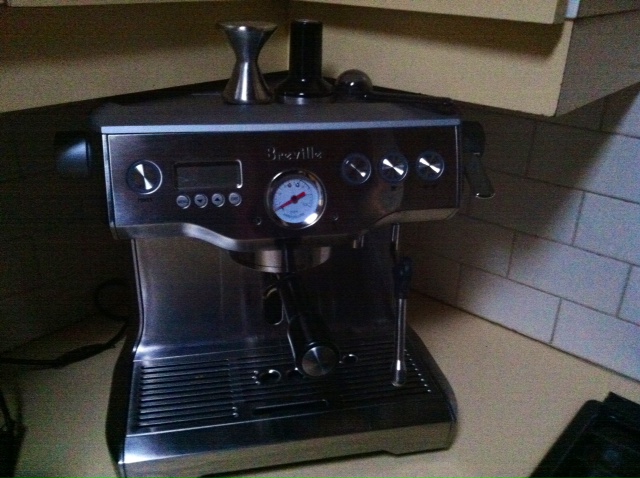
    Last week my wife bought a new coffee maker, an impressive, all singing and dancing device that’s a vast improvement on the decade old machine it replaces.

    Despite drinking three or four cups of coffee a day, for three days after the new machine arrived I didn’t make one long black or cappuccino. The reason was I didn’t have time to figure out how to use it or the high tech coffee grinder that it came it.

    Being time poor is one of the greatest barriers in adopting new technologies as business owners, managers and staff often don’t have the time to learn another way of doing things.

    The coffee machine reminded me of something I learned with a business I was involved in the early 2000s. We were trying to sell Linux systems into small and medium businesses.

    We had some success selling into small service businesses like real estate agents and event managers where the owners could see the benefits of open source software and, in many cases, had a deep suspicion or resentment towards Microsoft’s almost monopoly on small business software.

    Despite the success in selling the systems, the business though came undone because many of the clients’ staff members refused to use the Linux machines, as one lady put it to our frustrated tech “I want to click on the Big Blue W when I want to type a letter.”

    That Big Blue W was Microsoft Word and no amount of cajoling could convince the lady to use any of the open source alternatives — she knew what worked in Word and she had neither the time or inclination to learn any thing different.

    Eventually that customer gave up trying to convince their staff to use non-Microsoft systems and the computers were reformatted with Windows, Office and all the other standard small business applications installed.

    This happened at almost every customer’s office and eventually the business folded.

    For those of us involved in the business the lesson was clear, that time poor users who are content with their existing way of working need a compelling reason to switch to a new service.

    In many ways this is the problem for legacy businesses — the sunk costs of software are more than just the purchase price, there’s the time and effort in migrating away from existing products and training staff.

    When we’re selling new technologies, be it cloud computing services, linux desktops or fancy new coffee machines, we have to understand those costs and the fears of users or customers who’ve become accustomed to an established way of doing things.

    In the eyes of many workers new ways of doing business are scary, challenging and often turn out to be more complex and expensive than the salesperson promised. In an age where marketers tend to over promise, that’s an understandable view.

    For those selling the new products, the key is to make them as easy to use and migrate across to. The less friction when making a change means the easier it is to adopt a new technology.

    Similar posts:

  • Dealing with the corporate digital divide

    Dealing with the corporate digital divide

    It’s fashionable when talking about the ways different generations use computers to split users into two groups – the digital natives and digital immigrants.

    Born after 1990, digital natives are believed to have an intuitive understanding of digital technologies born from never having known a world without computers.

    Digital immigrants on the other hand are from an era where computers were not common outside big corporations and government departments, so most people born before 1990 had to learn to use computers.

    like many similar demographic divides, the line between digital immigrants and natives is contentious and probably more unhelpful than useful.

    A fascinating question though is whether corporations can be digital natives and immigrants.

    One of the challenges for older corporations, the corporate digital immigrants, are the legacy business systems that have their roots in the pre-digital era. A good example of this is United Airlines which struggles under inflexible management and old aircraft which can’t provide the levels of service and reliability expected by modern customers.

    A similar problem faces retailers who’ve haven’t invested in modern logistics, point of sale and online commerce systems – these businesses simply cannot compete with those who have up to date technology.

    Part of this problem comes from the difficulties in upgrading both technology and management systems in complex organisations, it’s not an easy task and the cost of failure is high so it’s understandable that many businesses don’t attempt it.

    In the meantime there’s the corporate digital immigrants, the more recently founded businesses that aren’t weighed down by legacy management and technology.

    The problem for the legacy businesses is the digitally native companies are able to take advantage of cheap and powerful tools that older organisations struggle to integrate into their operations.

    So the digital native-immigrant divide could be actually a business problem rather than one of how different generations discovered computers.

    Similar posts:

  • Five actions for disrupted marketers

    Five actions for disrupted marketers

    It’s necessary to tell compelling stories with the aid of big data and smart algorithms McKinsey’s Joshua Goff told a conference in Sydney two weeks ago.

    As part of the recent ADMA Global Forum, the head of McKinsey’s Asia Pacific Consumer Marketing Analytics Center spoke of importance of story telling, big data and personalisation for marketers meeting the challenges of today’s connected marketplace.

    Goff sees three disruptions to the current marketing industry – a proliferation of channels, a mountain of raw data to deal with and a hyper-informed consumer. These are challenges which businesses and marketers didn’t have to face in previous years.

    To counter these disruptions Goff proposes five actions; develop a four screen strategy, build a content supply chain, broaden personalisation, understand big data isn’t just about data and forget your current marketing mix.

    Forget your current marketing mix

    “Spending on digital media and non-traditional media is soaring,” says Goff. “We’re recommend to some of our clients to double or triple their spending on these channels.”

    Goff showed ASICS’ Support Your Marathoner campaign as an example of how innovative marketers can create digital campaigns that look beyond banner ads and popups. Campaigns like this are critical to building advocacy around a brand.

    Develop a four screen strategy

    The four screen strategy is essential as consumers are changing how consumers behave, something that is going to accelerate as more screens like Google Glass appear on the market.

    “If we have multiple screens is it not reasonable to think when you turn on your TV – and I count the TV as a screen – that they see the same information?” asks Goff. “But recognise that different screens offer different experiences.”

    Build a content supply chain

    One of the key problems for marketers is feeding content to these screens, which means world class editorial teams will be essential to getting customers’ attention.

    “Content is going to be king going forward,” says Goff. “Content is going to be a source of competitive advantage.”

    In this mix, user generated content is a key factor as well. One of the examples Goff gave was Disguised Lighting, surprisingly a business to business operation which proves that getting fans as advocates is not just restricted to consumer brands.

    Personalisation needs to be broadened

    “If you give the customer in return, they will give you the information you want,” Goff states. “Start solving your customer’s problem.”

    Personalisation is more than just email, it now means delivering personalised goods and configurable services. The physical experience, such as a Japanese vending machines that tailors the drinks available based on the demographic segment the system identifies the customer as being in.

    Big data isn’t just about data

    Data is worthless without the algorithms and the APIs required to understand and distribute the information. To do this well, Goff sees data scientists and software engineers as critical which means the global race for talent is going to be particularly acute in these areas.

    As an example of big data, and cloud computing, Goff showed Sberbank’s lie detecting ATM machine that issues personal loans based up the applicant’s voice patterns. The device brings together a number of technologies to deliver a personalised experience for customers.

    “We can’t afford to wait wait,” warns Goff. “There’s a lot of change and it’s complicated but there are successes and we need to start our own stories.”

    At the heart of Goff’s presentation is the fact we live in a noiser world and for brands wanting to cut through that noise they have to offer something more than what has worked in the past.

    Similar posts: