Tag: innovation

  • How to reinvigorate a stale economy

    How to reinvigorate a stale economy

    What has gone wrong with Australian innovation? For a nation so wealthy, it’s remarkable how poorly the country performs globally in terms of bringing new products or technologies to market.

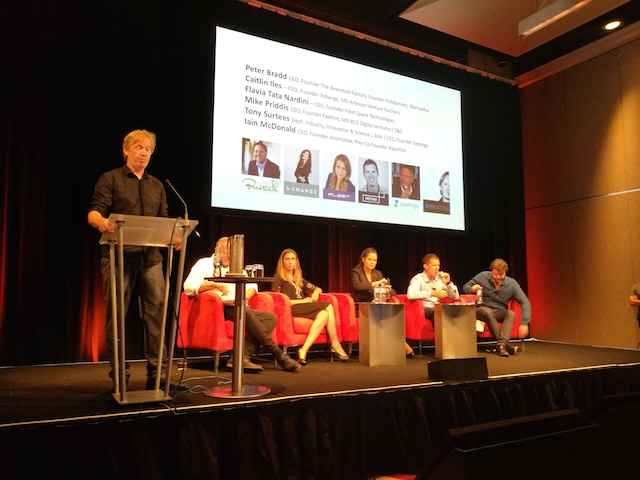
    At Ad:Tech Sydney yesterday, The Great Australian Innovation Fail panel discussed what has gone wrong and what can be done to get the nation back to a position more in line with its comparative affluence.

    Boasting a range of digital media veterans and startup founders, the panel was far from a group of muttering naysayers. Although all but Fleet Systems’ Flavia Tata Nardini were distressed at the failure of Australia’s innovation agenda and the country’s general disdain for new businesses and technologies.

    Michael Priddis, the CEO of research and development consultancy, Faethm,  pointed out that automation and artificial intelligence are not the future but the present and the job losses are happening now across industries.

    Caitlin Iles, founder of XChange, added that she believes the estimates of nearly fifty percent of Australian jobs being lost to automation are actually understating the effects and it’s more like 90% – “a doomsday statistic” – which is something that Priddis endorsed in observing how the mining industry has automated in the past decade.

    The employment shifts are being ignored by governments, says Beanstalk Factory’s Peter Bradd. “They have to get their heads out of the sand. We need to be supporting workers in threatened jobs to reskill. That’s just not happening at the moment.”

    Australia’s underperformance is stunning when you consider tech startup exits, says the Information Industry Association’s Tony Surtees. Unsurprisingly Silicon Valley dominates the global statistics with over 47% of the global value with London, Los Angeles and Tel Aviv following. Sydney was at the bottom of the table with only .01% of value.

    The value of exits is a problem, but that is more about the capitalisation of startups and may be changing. A bigger problem lies in how Australia’s corporate sector innovates and engages with new technologies.

    Corporate Australia’s failure to engage is shown in the OECD ranking the country at 81st globally in ‘innovation efficiency’, while the nation is tenth in inputs it fails dismally in applying those inputs into outputs.

    This is reflected in corporate Australia’s failure to compete globally outside the mining sector. Basically Australian executives have little desire in international markets and most have no interest in engaging with researchers, universities, innovators or entrepreneurs.

    “People don’t like to collaborate,” says Peter. “They want to keep everything to themselves.”

    “The CEOs of Australia’s top twenty companies need to get together with CSIRO and the universities and fix this problem. There’s money on the table.”

    Whether Australia’s business leaders are prepared to pick up that money, or they’re happy and comfortable with their lot is probably the question of whether Australia can start to pull its weight in the innovation stakes.

    “In ten or fifteen years we’ll be screwed if we don’t,” concludes Michael.

    Similar posts:

  • The age of the curious business

    The age of the curious business

    Last year the Committee for Economic Development, Australia (CEDA) warned over 40% of the nation’s jobs were at risk from automation over the next 15 years.

    While that focus was on the risks to workers, it’s equally threatening for small business. Many companies and sole traders are facing the same disruptions from technological change.

    This isn’t a new phenomenon, in the Twentieth century the motor car displaced thousands of small businesses that catered to the horse drawn economy and family run corner stores were displaced by the arrival of supermarkets in the 1950s.

    Beyond the personal computer era

    At the end of the last century the personal computer’s arrival revolutionised small businesses as suddenly tools that were previously only in the reach of big organisations were suddenly accessible to the most modest venture.

    One of the early beneficiaries of that shift to desktop computers in 1990s was the bookkeeping industry which took off as a legion of home based contractors catered for local small businesses.

    As the internet and smartphones came along, the bookkeeping market changed as features like bank feeds and receipt apps automated many previously manual tasks.

    Despite those challenges the bookkeeping industry has survived and continues to grow with IBIS World estimating the overall accounting industry, which includes bookkeepers, grew 2.6% per year over the past five years.

    Close to customers

    The success of bookkeepers and accountants in navigating change is probably due to industry being close to their clients along with being early adopters of new technology, two things that caught the taxi industry out when Uber arrived.

    Uber’s success in upturning the taxi industry illustrates just how important understanding emerging technologies is for smaller businesses. One industry currently facing massive disruption from robots is the construction sector.

    The trades were thought to be relatively immune from automation – after all, who’s going to build a robot plumber? But now robots are moving into trades like bricklaying, as Australian startup Fastbrick Robotics shows.

    Fastbrick are building a commercial bricklaying machine, Hadrian X, that automates the trade’s physical work and integrates with 3D printing technology.

    In one respect the robot bricklayers are bad for the trade’s employment prospects but for older brickies with bad backs having a machine to help you is a godsend while for employers it improves productivity and reduces workplace accidents. It won’t be the end of the trade but the contractors who survive will have adapted to a very different construction industry.

    Restructuring industries

    That Fastbrick integrates with design software shows how the dynamics of the construction are changing. In 2014 Chinese company Winsun demonstrated how they can build ten houses in a day with large scale 3D printers.

    While we may not see that particular technology in Australia, aspects of it will be used and they are going to change all the trades and professions related to the building industry.

    Architects are one building industry group that have long dealt with technological change. Like bookkeepers, the arrival of personal computers completely changed their profession and those who adapted thrived.

    Now with cloud computing services plugging into builders’ supply chains like Winsun and machines like Fastbrick’s, architects are closer than ever to the worksite and their customers. The ones who are adapting are the earlier adopters who are getting into these technologies further.

    Disrupting the professions

    Accountants and architects aren’t the only professions being affected, lawyers are facing a new wave of services using artificial intelligence to do many legal tasks ranging from a chatbot that appeals traffic fines to a program that predicts US Supreme Court decisions.

    Like other sectors, it’s the early adopters in the legal sector who are adapting to a very different industry with much of the manual, lower level work being automated out.

    The wave of technology we’re now seeing appear – including robots, autonomous vehicles, machine learning and artificial intelligence – are going to change our industries and workplaces dramatically in the next few years.

    What the accounting industry and the architecture profession teach us is the businesses closest to their customers and those adopting technology early will be the ones who thrive in a very different industries. Researching, experimenting and paying attention will be the keys to business survival.

    An open mindset

    Even for the trades, survival during this wave of technological change will be a matter of watching the marketplace closely while being open to new methods and technologies.

    Assuming it won’t happen to your industry is probably one of the riskiest things of all. Ten years ago the idea of smartphones revolutionising the taxi business or that robots could replace bricklayers was unthinkable. Now it’s almost expected.

    The forces that are changing the workplace are also changing industries and markets, so small businesses will also be affected. It’s going to pay to be smart and curious.

    Similar posts:

    • No Related Posts
  • Having a culture of yes

    Having a culture of yes

    One of the biggest impressions from the AWS Re:Invent conference is the company’s rapid innovation with the firm’s executives boasting how they have offered over a thousand features on their services this year.

    That sort of rapid change requires a fairly tolerant attitude towards new ideas and risk, which was something AWS CEO Andy Jassy explained at the media briefing.

    “In a lot of companies as they get bigger, the senior people walk into a room looking for ways to say ‘no’. Most large organisations are centrally organised as opposed to decentralised so it’s harder to do many things at once,” he observed.

    “The senior people at Amazon are looking at ways to say ‘yes’. We don’t say ‘yes’ to every idea, we rigorously assess each on its merits, but we are problem solving and collaborating with the people proposing the idea so we say ‘yes’ a lot more often than others.”

    “If you want to invent at a rapid rate and you want to push the envelope of innovation, you have to be unafraid to fail,” he continued. “We talk a lot inside the company that we’re working on several of our next big failures. Most of the things we do aren’t going to be failures but if you’re innovating enough there will be things that don’t work but that’s okay.”

    While Amazon’s management should be lauded for that attitude, they are in a position of having tolerant investors who for the last twenty years haven’t been too fussed about the company’s profits. Leaders of companies with less indulgent shareholders probably can’t afford the same attitude towards risk.

    There’s also the nature of the industry that AWS operates which is still in its early days, sectors that are far more mature or in declines – such as banking or media respectively – don’t have the luxury of saying ‘yes’ to as many ideas as possible.

    Jassy’s view about encouraging ideas in the business is worth considering for all organisations though. With the world changing rapidly, having a workforce empowered to think about new ideas is critical for a business’ survival.

    Similar posts:

  • The shine goes off the wearable tech market

    The shine goes off the wearable tech market

    Friday was a bad day for former startup darlings FitBit and GoPro with both companies disappointing investors.

    GoPro, whose cameras for a while defined a new wave of adventure videos, announced a loss of $104 million dollars on the back of production issues and further disillusioned stockholders with a forecast of further poor sales in the upcoming holiday season.

    Those shareholders have many reasons to be disillusioned with the camera maker’s shares reaching $98 two years ago after floating at $24. Today they are sitting at $11.

    FitBit shareholders have suffered similarly, with the fitness band’s shares falling to eight dollars after listing at $20 almost two years ago. Their announcement of further problems on Friday saw the stock price dropping thirty percent on the day.

    It may be easy to scorn investors in hindsight, but both companies were emblematic of a new generation of wearable technology and much of their problems today owes as much to them trying to stay ahead of the curve as it does from smartphones developing most of their products’ functionality.

    The travails of FitBit and GoPro are typical of a time when new technology is changing business. Some companies  shine brightly then fade while others have a rocky road to success. We’ll have to wait and see if FitBit and GoPro survive.

    Similar posts:

  • Regulation and technology

    Regulation and technology

    It’s often easy to underestimate the effects of regulation on the development of industries and innovation.

    Around the world jurisdictions are struggling with balancing regulation and innovation, last week in the UK Uber lost an employment tribunal case 0ver the employment status of its employees . While in Switzerland the country is struggling with rules over Blockchain as the nation tries to build a ‘Crypto Valley’.

    Striking the right balance in regulation isn’t trivial. As the development of Silicon Valley’s finance models shows, government rules were critical to how the venture capital sector has evolved.

    The US Small Business Investment Act of 1958 was the first step in the sector’s development with the creation of “Small Business Investment Companies” (SBICs) to fund and manage smaller enterprises in the United States. In 1978 the sector received a greater boost when pension funds were allowed to invest in the sector.

    We’re now seeing a similar thing happening in the US where the Digital Millennium Copyright Act – a law passed to protect the Twentieth Century business models of record companies and movie studios – is being softened to allow end users to examine and maintain the software on the devices they own.

    If the trial is allowed to become permanent, it will almost certainly see a far freer and innovative software environment which may even help overcome some of the security problems with the Internet of Things.

    Often though that balance isn’t correctly struck and recently we’ve seen many poor decisions that have concentrated power, particularly in the financial and airline industries where governments have allowed huge conglomerates to dominate their markets which stifles innovation and growth.

    Those innovation stifling regulations though don’t guarantee companies’ survival as the taxi industry discovered. Despite reams of laws and regulations protecting their licenses, Uber effectively blew up the business as they offered travellers a far better option to the often poor services provided by local cab companies.

    Regulation is always going to be a balancing act between protecting the community’s interest and allowing business and society to evolve. It’s one reason why as citizens and taxpayers we need to be demanding our governments are open and transparent in their dealings and law making.

    Similar posts: