Tag: innovation

  • Sunset on the laptop market

    Sunset on the laptop market

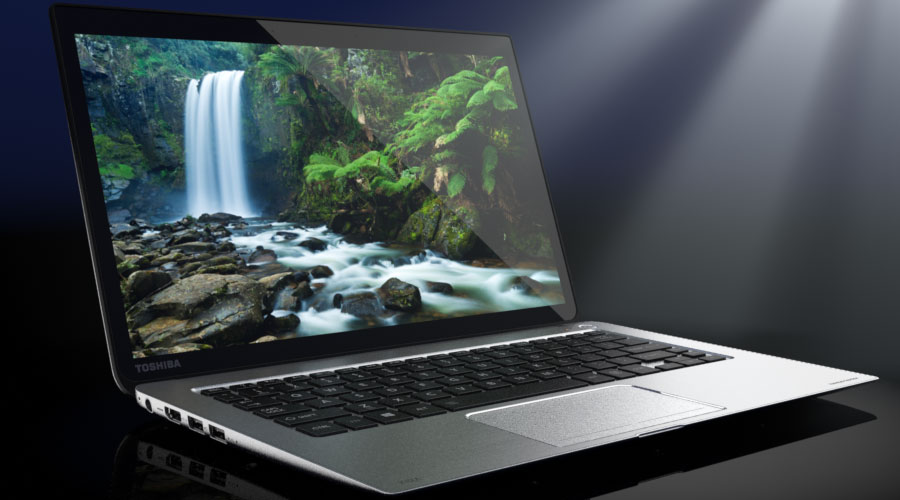
    Yesterday Toshiba released their Kira laptop computer – a premium device aimed at the ‘aspirational’ market.

    The Kira is a fine device with good specs, little weight and an ambitious $2,000 price point. It probably also marks the laptop computer’s decline.

    As tablet computers and smartphones become most people’s preferred computer devices, the laptop computer is becoming a niche device and increasingly less relevant to most technology users. The Kira is fighting for the share of a marketplace that has moved on.

    Losing the Aspirationals

    Unfortunately for Toshiba, those aspirational customers are locked into their Apple iPads and Sumsung smartphones. Laptops are seen as work devices more valued for their portability and cost.

    “We have to give our customers a reason to upgrade their computers,” said Mark Whittard, the Managing director of Toshiba Australia.

    The problem is computer users have little reason to upgrade, as nice as the Kira is the price point is just too high for customers who’ve been groomed to expect sub – thousand dollar systems and there are few compelling reasons to buy such a device.

    Caught in a pricing pincer

    Price points are probably the biggest problem for computer manufacturers – one of the reasons for the tablet computer’s success is they delivered an easy to use, portable computer for half the price of a portable computer.

    At the same time the rise of netbooks and the rush to dump unwanted Microsoft Vista and Windows 7 stock onto the market groomed customers to expect cheap computers – few computer buyers are interested in spending more than a thousand dollars on a device.

    These factors have squeezed the margins of the major manufacturers like Dell, HP and Asus.

    Those pressures are going to increase as volumes fall. For much of the 2000s, laptop computers were fast moving consumer goods – pricing and profits were based on moving large numbers of the devices.

    As manufacturing volumes fall, those devices are going to lose their economies of scale which will put further pressures on vendors’ margins.

    Laptops aren’t going away, they still have a role for power users ­– particularly for those, like this writer, who need a tactile keyboard and media editing capabilities.

    However those feature rich devices with their nice keyboards are going to cost more as parts become more expensive.

    For laptop vendors the challenge is to find the profitable market niches and exploit them. In some ways Toshiba probably has a better opportunity than most with its range of premium and gaming portable computers.

    Those in the market hoping the happy days of big volumes and good profits will return to the laptop PC market are in for a painful future. It’s something retailers, resellers and vendors need to understand.

    Similar posts:

  • Building tech cities

    Building tech cities

    With the apparent success of the Silicon Valley business model, every city seems to want to emulate it. One region that’s probably gone further than most is supporting their local tech sector is London with its Tech City program.

    But is it succeeding? The Guardian did an audit on the Tech City project and came away with some findings that aren’t particularly different from other cities.

    What I personally find interesting is how the Digital Sydney project which I was involved in setting up during 2009-10 shares the flaws The Guardian has identified in the London initiative.

    Identifying tech

    One key criticism The Guardian has is that too many businesses are identified as being in the technology sector;

    of the 1,340 companies, 137 are tech companies, 700 are PR or design agencies and 482 are “miscellaneous” – which includes charities, pubs, cafes and fashion boutiques. The remaining 21 companies were either entered more than once or entries with no information or link to an external site. So just 10% of companies in Tech City actually do technology, 53% are PR or design agencies, and 37% are “miscellaneous”.

    This was true of identifying Sydney’s ‘digital hub’ – the vast majority of business surveyed were not actually tech businesses but movie post production, graphic designers and publishers. The technology sector was only a small group and the bulk of employment and investment came from large multinational corporations like IBM and Google.

    Now it is possible to argue that businesses like post-production, publishing and broadcast media are ‘tech’, but then almost every industry could be thought of as ‘tech’ if you cast the net wide enough.

    The problem is counting those businesses as being tech just on the basis they are heavy users of IT skews the numbers and gives an inflated view of how big the sector really is.

    A capital city focus

    One of the biggest criticisms of the Tech City initiative is that it is too London centric and The Guardian makes a good case about this, looking at cities like Brighton, Cambridge, Newcastle and Manchester.

    A similar criticism could quite rightly be made about Sydney’s project, which focuses on the inner city enclaves of Surry Hills and Ultimo while ignoring most of the city or any of the state’s regional centres.

    When I started at the New South Wales government I was warned by one old hand that “to these jokers NSW stands for North Sydney to Woolloomooloo.”

    And so it proved to be.

    Focusing on London’s Silicon Roundabout or Sydney’s Surry Hills also smacks of a ‘people like us’ syndrome where the support goes to nice middle class white folk – just like the politicians, public servants and captains of industry who run these programs.

    Overemphasising tech

    Another problem, not mentioned in The Guardian story, is the over emphasis on technology startups.

    Projects like Tech City and Digital Sydney focus on last decade’s opportunities which Silicon Valley dominated. Governments look at California’s success and think we need to copy that when what we’re seeing is actually the fruits of the previous wave of opportunity.

    It may well be that we’re repeating the mistakes of the 1950s and 60s where countries around the world imitated Detroit hoping to replicate the US’ success with the motor industry.

    The costs of that error are still a millstone around taxpayers’ necks two generations later.

    To be fair to those setting up projects like Tech City or Digital Sydney, they are attempts to harness the energy in their own cities but it may just be that government programs aren’t the best ways to bring entrepreneurs and inventors together.

    Hopefully though their efforts will succeed although it’s more likely the next Silicon Valley will be just as much the result of a series of coincidences as today’s is.

    Similar posts:

  • 3D printing comes of age

    3D printing comes of age

    It may well be that a technology has reached mainstream acceptance when the media starts writing scare stories and politicians demand that something must be done.

    Should that be the case, then 3D printing has come of age with the story of the first gun being fabricated and demands that legislation be passed preventing people manufacturing their own firearms.

    The story does raise a range of issues about community safety that 3D printing is going to present. When anybody can design and manufacture a piece of equipment, how can we be sure it is safe – or legal – to use?

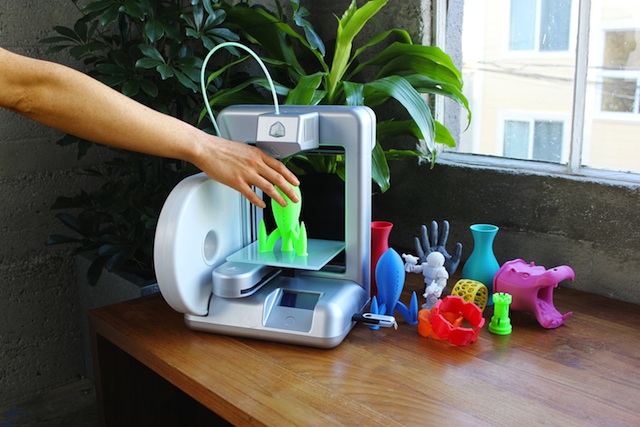
    We’re going to be facing these issues very soon as retail 3D printers have started appearing.

    At $1299, the Cube 3D printer isn’t quite affordable for most households or offices but we can expect prices to fall as more devices come onto the market.

    At the more advanced end of the 3D printing market, The University of Wollongong’s Centre for Electromaterials Science has opened a research unit at Melbourne’s St Vincent’s Hospital to create tissue material with biological 3D printers  with the scientists beginning animal trials to reproduce skin, cartilage, arteries and heart valves.

    So at one end of the spectrum we have hackers making plastic guns that freak politicians and scaremongering journalists out, while at the other there are scientists pushing the barriers of medical science.

    We live in interesting times – and 3D printing is making things even more exciting.

    Similar posts:

  • Starbucks Coffee as a digital innovator

    Starbucks Coffee as a digital innovator

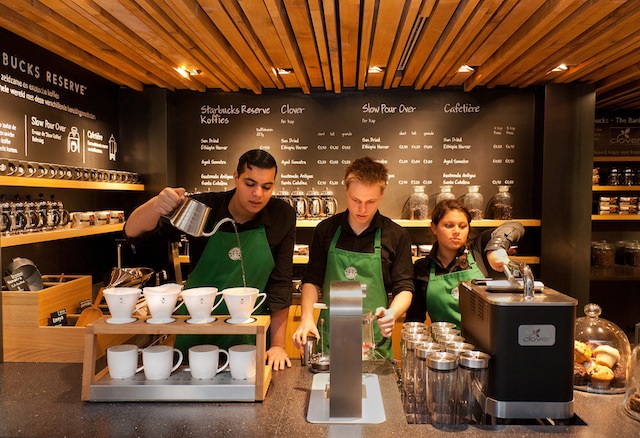
    USA Today has an interesting interview with Starbucks CEO and founder Howard Schultz.

    It’s worth watching as he maps out where the coffee chain is heading and the importance of innovation and relevancy to his business.

    Schultz’s view about the coffee store of the future is intriguing – he knows it will be different but he doesn’t know in what way and that’s why his business is experimenting with different ways of doing things.

    “Sure, we’re doing work now on the store of the future,” says Schultz. “It is not only linked to the physical but the digital experience.”

    It’s not only the use of digital tools, social media and mobile payments that Schultz is exploring, it’s how does such a huge chain remain relevant to its customers.

    “We have to answer the question in the affirmative about how to maintain relevancy. Relevancy can’t only be in the four walls of our stores, we have to be as relevant with our customers where they work, play and even on their phones.”

    Relevancy is something that can’t be taken for granted by any business – becoming irrelevant to customers is a death-knell for most enterprises. This is something that challenging the media industry as its struggles to find its role in changed society.

    On the same day that story was posted, IBM’s CEO Virginia Rometty made a pointed address to her 434,000 employees on where the company has fallen behind.

    “Where we haven’t transformed rapidly enough, we struggled,” The Wall Street Journal reports. “We have to step up with that and deal with that, and that is on all levels.”

    “Our performance reminds us that there are profound shifts under way in our industry.”

    That the world’s biggest coffee chain is dealing with those profound shifts better than one of the biggest technology companies is a notable point about the times we live in.

    Similar posts:

  • Moving to a subscription economy

    Moving to a subscription economy

    One of the biggest changes in business is the move to subscription based services rather than selling one-off, lump sum products. This is affecting industries ranging from the motor industry to software.

    Business Spectator has a good interview with Tien Zhou of Zuora on the subscription economy and how it’s changing the business world.

    We’re pretty passionate in our belief that every company will be a subscription business in the next five, 10, 20 years. That’s certainly what we’re seeing with digital companies, whether they are technology firms (software, hardware), media and publishing firms, or telecom companies. The ideas of content and access are starting to blend together and we are seeing more and more commerce companies dip their feet as well. So we’re really see this as an across the board phenomenon.

    Probably the industry most focused on the subscription model right now are newspapers – subscribers have always been an important revenue stream for the print media and the loss of their advertising rivers of gold means they are looking at ways to get more money from readers.

    As Tien Zhou points out, businesses moving to subscription services is an across the board phenomenon.

    Yesterday I mentioned the Google Maps connected treadmill, that is a subscription model where the treadmill seller gets money from the initial purchase, but also a revenue stream from the services attached to it.

    The same business model applies to connected motor cars or the social media enabled jet engine. The aim is to replace lump sum purchases with lifetime subscriptions.

    Getting customers onto lifetime subscriptions has been one of Microsoft’s aims for the past decade as the company realised that software users, particularly those using Microsoft Office, hung onto their CDs for years and increasingly decades.

    Perversely it took Google and Apple to show Microsoft how to wean customers onto subscription services.

    That Microsoft Office is a good example of the evolution of subscription software, or Software-as-a-Service (SaaS), isn’t an accident. The enterprise computing sector is currently the most profoundly affected as companies like Google and Salesforce threaten high cost incumbents.

    A good example of the changing economics of software is the supermarket chain Woolworths moving onto Google Docs.

    With 26,000 seats, the reseller can expect to make $260,000 a year in commissions based on Google’s standard terms of $10 per seat per year.

    That total sum is less than the commission a salesperson would have earned for a similar sized IBM, Oracle or Microsoft installation.

    A whole generation of IT salespeople who’ve grown fat and comfortable on their generous commissions now find their incomes being dramatically reduced.

    Similar things are happening in industries like call centres with Zendesk, point of sale systems and event ticketing with Eventbrite – incumbents are finding their incomes steadily being eroded away by online services.

    At the same time agricultural and mining equipment suppliers are introducing big data services for their customers where the information gathered by the sensors built into modern tractors and bulldozers are providing valuable intelligence about the crop and ore being gathered.

    The subscription business model is nothing new, King Camp Gillette perfected the strategy with the safety razor at the beginning of the Twentieth Century. The razors were cheap but the blades were where the money was.

    Microsoft and the rest of the software industry tried to introduce subscriptions in the late 1990s with Software as a Service, but failed because the internet wasn’t mature enough to support the model. Today it is.

    Like many things in today’s economy, the subscription model is going to change a lot of markets. It’s a great opportunity for disruptive businesses.

    Subscription envelope image courtesy of jaylopez through sxc.hu

    Similar posts: