Tag: innovation

  • Stranded markets

    Stranded markets

    “Stranded assets” are an accounting term for property that’s worth more on the books than it is in the marketplace.

    Often the valuation problem has come about because of market, legislative or physical changes – what was a valuable and useful asset becomes isolated from the rest of a business.

    Customers are biggest asset we have in our business – so what happens if our customer base becomes a “stranded asset”?

    This situation isn’t far-fetched in a time when technology changes a marketplace – a blacksmith providing services to stagecoach companies would have been in this situation a hundred years ago.

    In response to Are Businesses Fleeing the Online Space?, Xero’s Australian CEO Chris Ridd made some points about the problems MYOB have in the accounting software marketplace.

    We see that going online to the cloud is finally allowing many small businesses the opportunity to avoid the “walk into Harvey Norman and fork out hundreds of up-front dollars on on-premise software” experience and instead go straight to the simplicity and cost efficacy of the cloud.

    This is evidenced in our numbers and the fact that 40% of new customers signing up to Xero are coming from no software. (I mentioned last week at the NBN Forum that it was 30%, but we doubled checked and were staggered to find it was actually a lot higher). So we are creating a new market and cloud is therefore increasing the addressable market for accounting software. The cloud changes the economics of doing IT and makes automation of the business accessible and attractive to  a whole new category of SMEs.

    Chris’ point is interesting – the new generation of businesses aren’t going to the computer superstore and buying box software. Which is a problem for those who sell box software such as MYOB and Harvey Norman.

    What’s more, customers have moved away from those same superstores along with things like phone directories and classified ads, which is the problem companies like Sensis and Fairfax have to deal with.

    A decade or so ago, MYOB, Sensis and Fairfax were dominant in their markets with a loyal band of customers. Today the remaining customers – many of whom have not changed their business plans for decades – are”stranded markets” made up of holdouts who won’t move to new technologies.

    Those holdouts aren’t particularly profitable and they are slowly leaving their industries through retirement or, increasingly for these slow adopters, going broke.

    Being dominant in a market that’s declining in both profits and sales is not the place to be for any business.

    It’s difficult for the managers of these enterprises to move as their existing products are their core business, which is the classic innovators dilemma, but the alternative is to end up like Kodak or Sony.

    One thing missed in the eulogies for Steve Jobs is how he overcame the innovator’s dilemma problem within Apple. When it became apparent the old Mac OS was a barrier to innovation, he killed it along with the floppy disk and Apple Device Bus.

    Apple’s customers hated it as most of them had a substantial investment in the hardware which Jobs had made obsolete overnight. But almost all of them came back and became greater fans.

    News Corporation are trying a different tack to Steve Jobs in splitting the operation into an “old” business and a “new’ business. That way the old business can find a way to make money or quietly fade away without affecting the newer, more dynamic entertainment and electronic arms of the organisation.

    The challenge for MYOB – along with Harvey Norman, Fairfax and Sensis – is to move their customers to the new technologies, those who won’t go are the past and those stranded customers will isolate the business from the mainstream.


    Similar posts:

  • Beating the first mover advantage

    Beating the first mover advantage

    Twitter founders Biz Stone and Ev Williams can’t be accused of standing still, along with having founded the Blogger service that made creating websites easy which they sold to Google, their company Obvious Corporation has been working on various new projects.

    Branch and Medium are their two latest releases.

    At first glance Branch is similar to the Quora service where people ask questions and followers. While Quora is reasonably successful, it hasn’t gained traction outside of the tech community.

    Medium is a new blogging service, which superficially appears similar to Tumblr or even the Blogger service Ev and Biz founded in 1999.

    It’s tempting to dismiss both Branch and Medium as they aren’t doing things that are new. both are iterations of older services but that doesn’t mean they can’t succeed. When Facebook was launched there was plenty of competition in services like Friendster and MySpace, the upstart blew them both away.

    The same is true of the iPod, Windows and Google – all entered markets that were already crowded and well catered for. All of them succeeded because they were better than what was on the market.

    In the tech industry is that the first mover advantage is illusionary at best, unless you have a compelling position in the marketplace your product is vulnerable to a smarter, slicker upstart. This is particularly true if the existing services have serious flaws.

    Should Branch avoid falling into Quora’s trap of silly policies and overzealous administrators – the same trap that doomed the open source directory DMOZ and threatens Wikipedia – then it may well succeed.

    Medium could also disrupt the blogging industry, Blogger is being neglected by Google while WordPress is becoming increasingly complex and difficult to use. The success of services like Tumblr, Instagram and Posterous shows people want an easy way to publish their ideas or what they are doing onto the web.

    While it’s too early to say if Branch or Medium will be a success remains to be seen, but writing them off as being unoriginal would be a mistake.

    Similar posts:

  • Xero and cloud computing

    Xero and cloud computing

    I’m at the Xero Partner Conference in Melbourne this weekend to hear how the cloud accounting service is travelling.

    Talking to the other attendees it’s interesting just how many accountants and bookkeepers are moving clients over because of the cloud benefits.

    Encouraging for Xero, there’s a big turnout of developers as well, one of the reasons for the successes of Microsoft Windows and Apple iOS is the size and diversity of their partners, particularly those writing software.

    The opening session of the conference itself will be interesting as Xero CEO Rod Drury gives his overview of the industry. With competitor MYOB in trouble with its customer base, this should be an entertaining speech.

    While Xero aren’t the only game in town, they are one of the leaders in getting other businesses to adopt cloud services. The conference should be interesting in hearing how the sector is developing and how organisations can use cloud technologies.

    Similar posts:

  • How much did Vista really cost Microsoft?

    How much did Vista really cost Microsoft?

    Microsoft Vista was the company’s despised stepchild – released way past schedule, clunky, slow and disdained so much by the market that PC manufacturers started offering “downgrades” to Windows XP to attract customers.

    Despite the embarrassment, Microsoft retained its position as the world’s leading software company and does so today. But Vista certainly did hurt Microsoft and today’s marketplace shows the deep, long term effects of that damage.

    Research website Asymco earlier this week looked at the ratio of Windows PCs sold to the sales of Apple Macs over the last 30 years. The ratio peaked at 56 to 1 in 2004.

    Today that ratio is 18 and when phone and tablet sales are added in, the ratio is approaching 1:1. Apple has caught up.

    It’s no accident 2004 is the peak of the Windows-Apple ratio. In 2004 Windows XP had matured after three years on the market, the older computers running Windows 98 or ME (another hated operating system) were being retired and a new version of Windows – codenamed Longhorn – taking advantage of newer technologies and with improved security was due to be released.

    On August 27, 2004 things started to change with Microsoft’s announcement Longhorn would be delayed two years. This effectively broke the product roadmap that underpinned the business models of Microsoft and their partners.

    To make matters worse, Apple were back in the game with their OSX operating system well established and a steady stream of well designed new products coming onto the market.

    For consumers and businesses one of the advantages Windows systems had over Apple was the cost difference. The “Apple Tax” started to be eroded by the company’s move to Intel CPUs which delivered economies of scale coupled an aggressive program of tying up the supply chain with key manufacturers.

    Then Longhorn – now known as Microsoft Vista – was released.

    Despite the cheerleading of the Microsoft friendly parts of the technology media, consumers weren’t fooled. The product was slow and buggy with a new interface that confused users. Making matters worse was Microsoft’s ongoing obsession with multiple versions offering different features, something mocked by Steve Jobs,  which further confused the marketplace.

    Vista languished, customers decided to stick with Windows XP or to look at the faster and better designed Apple computers, and Microsoft’s market share started to slowly erode.

    By the time Windows 7 was released Apple had clawed back their market position, launched the iPhone and caught the shift from personal computers to smartphones.

    Probably the biggest embarrassment of all to Microsoft was the launch of the iPad, the market had been gagging for good tablet computer since the late 1990s and Microsoft’s partners had failed to deliver, partly because Windows XP, Vista and 7 didn’t perform as well as Apple’s iOS on the tablet form factor.

    Microsoft’s completely blowing a decade’s lead in the tablet market is almost certainly due to the misguided priorities and feature creep that dogged Vista’s development. This is now costing the company dearly.

    Asymco’s conclusion of Microsoft’s new market position is stunning and accurate.

    The consequences are dire for Microsoft. The wiping out of any platform advantage around Windows will render it vulnerable to direct competition. This is not something it had to worry about before. Windows will have to compete not only for users, but for developer talent, investment by enterprises and the implicit goodwill it has had for more than a decade.

    It will, most importantly, have a psychological effect. Realizing that Windows is not a hegemony will unleash market forces that nobody can predict.

    Vista’s cost to Microsoft was great, it meant the company missed the smartphone surge, the rise of tablets and – possibly most dangerous of all to Microsoft – the move to cloud computing.

    A lot hangs on Microsoft’s next operating system, Windows 8. Another Vista could kill the company.

    Similar posts:

  • Can Sydney become a smart city?

    Can Sydney become a smart city?

    How does a city become smart? That seems to be the question of the moment as countries and cities around the world try to figure out how to catch a little bit of Silicon Valley’s magic.

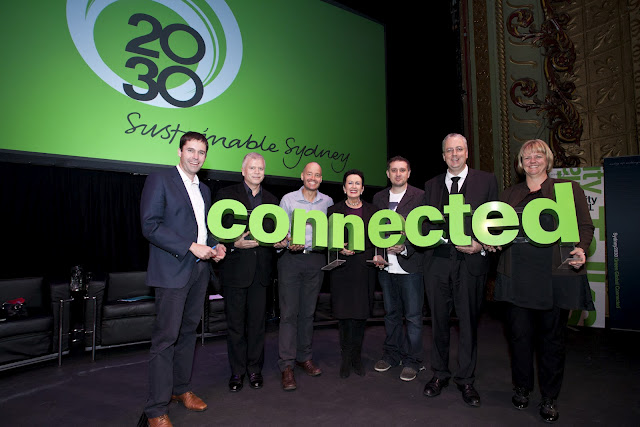
    As part of the 2012 City Talks series, the City of Sydney hosted a discussion on how the city can become a smart city;

    Sydney is bursting with talented, creative and forward-thinking people. How can we harness the energy of government, education, businesses, media, and creative thinkers to create space for innovation?

    While it’s questionable that a “creative space for innovation” is a worthy objective – albeit laden with buzzwords – it’s certainly true that Sydney, along with other Australian cities, has the components to be a entrepreneurial centre, the question is how does the city harness the various talents across the different sector.

    Working to advantages

    Rather than aping Silicon Valley, New York or Ireland all cities should be exploiting their natural advantages. Fast Company Magazine recently looked at how Oklahoma City has advantages over its bigger cousins in New York and California.

    For Sydney, and Melbourne, those strengths include an educated, multi-cultural workforce with first world legal systems in a similar time zone to the world’s major growth markets.

    One of the tragedies in Australia’s marketing over the last twenty five years has been the failure to mention the ethnic diversity of the nation. This is huge competitive advantage that is barely being discussed.

    What can governments do?

    At the Sydney City Talks event, Lord Mayor Clover Moore said that creating a smart city requires “the same incentive to be given to innovators and creatives as is given to property investors and mining companies.”

    That change requires state and Federal governments to change laws and businesses, particularly banks, to pick up on those price and policy signals.

    Education too needs reform although this needs real consultation or we’ll end falling for short term fads or copying the damaging anti-teacher jihad that has infected the US.

    A welcome change for many Australian innovators would be changes in government procurement policies as currently all levels of government prefer to deal with the local offices of large multinationals. As the Queensland Health Department debacle shows, these organisations are often less competent than local providers.

    Making those changes though will require major reforms to policies and laws, something that neither major Australian political party at any level has the courage or vision to do.

    That the NSW Digital Action Plan is now in its thirty-first draft speaks volumes about the inertia among the city’s, state’s and country’s political and business leaders.

    Ditch the Silicon

    Probably the first failure of imagination is the “silicon” tag – US entrepreneur Brad Feld skewers this nicely in his blog post on The Tragedy Of Calling Things Silicon.

    Sydney has already has a group called “Silicon Beach” which has spread out to Melbourne and the Gold Coast and it’s interesting that both Google Australia’s CEO and Engineering head want to co-opt the name.

    On of the suggestions was “Silicon Banana” a tag which brings to mind the phrase “kill me now please?” to anyone already uncomfortable with the ‘Silicon’ label.

    The “Silicon Banana” idea comes from the curved shape of Sydney’s ‘digital heartland’ which curves from Darling Island to the west of the city and curves around the edge of the city centre through Surry Hills across to the film and television facilities at Fox Studios.

    Describing Sydney’s centre of innovation as lying within the ‘banana’ illustrates the lack of thinking outside the current app and web mania. It also neglects the bulk of Sydney, particularly those parts of the Western Suburbs where languages such as Mandarin, Cantonese, Korean, Vietnamese, Arabic or Hindi are spoken.

    Once again we neglect those assets because they aren’t white, Anglo or living in the prettier parts of the city.

    Does it have to be Sydney?

    We should keep in mind that the Silicon Valleys of the past haven’t been the biggest cities – Silicon Valley itself is barely a city and San Francisco is not one of the US’ biggest cities.

    It’s quite possible that an Australian centre of innovation could be any one of dozens of smaller towns such as Geelong, Wagga or Cairns.

    The problem in Australia is, once again, property prices. Compared to the US or Europe, housing and office rents aren’t substantially cheaper outside the big cities unless you’re prepared to move to seriously blighted parts of the country.

    Spinning the wheels

    Probably the most disappointing thing of the ‘smart city’ discussion is just how bogged down we’ve become – there was little in the City Talk that wasn’t being spoken about five, or even ten, years ago. Things have not moved on.

    Creating a smart city isn’t about picking winners among industries, suburbs or groups. To really be smart we have to give the opportunities for clever people to succeed.

    Simply jumping onto today’s technology fad or mindlessly aping Silicon Valley is to squander our advantages and not learn from the mistakes of others.

    The real worry though is just how little progress is being made in seizing today’s opportunities. It doesn’t bode well for tomorrow’s.

    Similar posts: