Tag: innovation

  • Innovation lessons from the Concorde

    Innovation lessons from the Concorde

    Why did the Concorde fail? Website Vox has a nice mini-documentary on the iconic supersonic airliner of the 1970s which looks at why the aircraft never became popular.

    Fuel costs, opposition to supersonic flights and the aircraft’s limited passenger capacity are all factors cited in the story.

    Passenger capacity turned out to be the main reasons why the project wasn’t a commercial success as the economics of the airline industry changed over the decade it took to develop the aircraft.

    Wide bodied jets such as the DC-10, the L-1011 and, most importantly the Boeing 747, offered much better profits and reliability for airlines while the 1978 US airline industry deregulation act democratised air travel in the world’s biggest market. The 1973 oil shock which saw fuel prices was .

    As a high priced luxury, the Concorde couldn’t compete in that market. It was only the British and French governments absorbing development costs that allowed Air France and BA to fly it for as long as they did.

    Interestingly, we’re seeing a similar shift affecting the Airbus A380 which has been affected by the airline industry shifting from four engine long distance jets to cheaper two engine planes and consumers show their preference for ‘point to point’ networks rather than ‘hub and spoke’ operations – the biggest customer for the A380 is Emirates Airlines which routes almost all of its global operations through Dubai.

    The Concorde was one of several brave experiments of the 1960s but its demise shows that despite how impressive the technology was, it was no match for economic reality. That is something we need to keep in mind as we marvel at today’s advances.

    Concorde image from Airliners.net

    Similar posts:

  • Ditching the old tech – Lessons for the iPhone from the Apple iMac

    Ditching the old tech – Lessons for the iPhone from the Apple iMac

    “I’ve been betrayed, I’ll never buy another Apple product again!” was the cry in 1998 when the company announced their new range of iMacs and portables wouldn’t support the long standing Apple Development Bus (ADB) system and floppy disks.

    At the time Apple had been in decline, only the year before Microsoft had bailed the company out with a few conditions that had deeply irritated the company’s loyal customer base.

    Many of those customers – mainly in education and graphic design – had invested deeply in ADB compatible equipment and their irritation at abandoning that investment for USB based kit was understandable.

    Today we’re seeing similar protests about the rumoured dropping headphone jacks from the upcoming Apple 7 device, customers aren’t happy about the possibility being forced from a well established standard to a less reliable and likely more expensive system.

    Unlike the computer world of 1998 today’s marketplace is very different, Apple is no longer a quirky and niche product but the most profitable of the tech industry’s giants – as Microsoft was back when Steve Jobs swallowed his pride and accepted Bill Gates’ bailout.

    However most of Apple’s profits come from one product line, the iPhone. While the iPhone is probably the only truly consistently profitable smartphone, it competes in a fiercely fought for consumer market.

    Already in China, one of the company’s most profitable markets, the iPhone’s market share is falling in the face of good quality but slightly cheaper Chinese and Korean devices.

    Should Apple push those consumers too far by shifting the iPhone to a more expensive or proprietary system then the competing Android devices may well pick up market share and dent Apple’s fat profits.

    However history shows that these hardware shifts do happen and older technologies are supplanted by more expensive, but better, inventions regardless of how much users have spent on the status quo. A century ago the automobile started replacing a millenia of investment in horse drawn technologies.

    In the case of Apple abandoning the ADB back in 1998, it was the spur to adopt the USB standard which up until then had been buggy and unwanted as Bill Gates himself had found.

    As history shows, Apple thrived after ditching the old technology despite the complaints at the time and if the company resists the temptation to lock users into a proprietary system there is no reason to think the same can’t happen again.

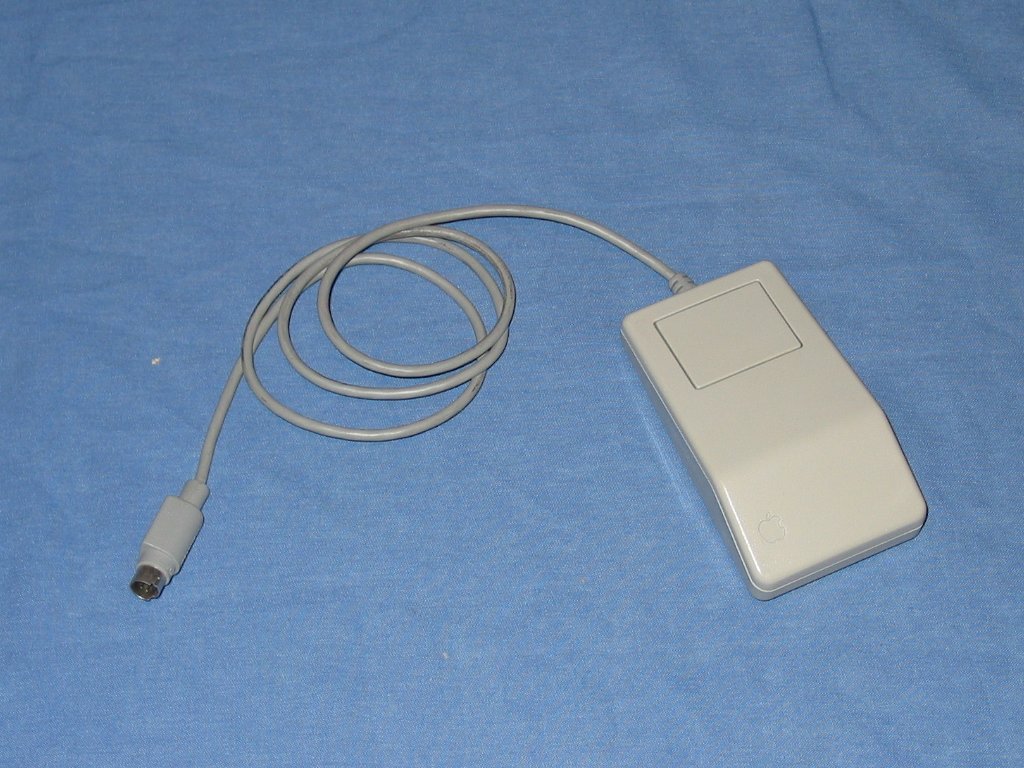
    Apple mouse (with ADB connector) courtesy of Wikipedia

    Similar posts:

    • No Related Posts
  • Hillary Clinton’s bid for the future

    Hillary Clinton’s bid for the future

    As the 2016 US Presidential election settles down into a competition between Republicans and Democrats, Hillary Clinton has released her vision for the American tech industry.

    Hillary Clinton’s Initiative on Technology & Innovation is a comprehensive document laying out the candidate’s plans to increase the American workforce’s skills and the nation’s infrastructure.

    What’s particularly notable about the Clinton plan is her aim of “building the tech economy on main street,” which is “focused on creating good jobs in communities across America.”

    Spreading the tech industry’s jobs, and wealth, beyond a few middle class enclaves is an important objective for all nations in the twenty-first century and Clinton’s objectives are an indication that the US political establishment is beginning to understand this.

    Other countries should be noting Clinton’s objectives to raise the skills of workers, build the tech infrastructure and get investment into smaller communities as something they too have towards.

    In an Australian context, Clinton’s initiatives highlight the missed opportunity of the Turnbull government’s Innovation Statement, a narrowly focused and weak document that has done little to encourage investment and even less to reform skills training.

    The Clinton move though shows technology, training and stimulating new businesses will be one of the imperatives of nations as they deal with a rapidly changing economy.

    Similar posts:

    • No Related Posts
  • Five technologies likely to change business

    Five technologies likely to change business

    What are the technologies that will change business over the coming years? During Gartner’s Business Transformation & Process Management Summit in Sydney on Tuesday, we had the opportunity to talk to Brian Blau, the company’s Vice President of Research, about what he sees as the five technologies that are most likely to change business.

    Brian himself brings a lot of experience with emerging technologies, while he’s currently Gartner’s leading Apple analyst and specialises in consumer and mobile & Wireless technologies he spent the previous twenty years working in the virtual reality field which gives him an informed perspective on the many of the current popular tech buzzwords.

    Talking to Blau in the busy analysts room at the Sydney Hilton, he kept reaching into his bad to show off his collection of the latest gizmos ranging from VR headsets through to smartwatches and fitness trackers, showing his enthusiasm for the field he covers.

    Augmented and Virtual Reality

    “It’s been a long time coming, I had twenty years in AR/VR and I’ve been an analyst for six and I’m glad I have that background,” says Blau.

    Blau sees augmented and virtual reality tools altering the workplace dramatically as they change the experience for workers. The industries he sees being affected in the near future are sectors like field service, training and design.

    Wearables

    “Wearables are interesting devices,” Blau says. “You can almost think about them as transitory technologies so today there may be lightweight analytics about what employees do at work or what consumers do in public is kind of a stepping stone. If that device has a screen or some sort of interface on it, it becomes interactive.”

    Blau cautions though that much of the data gathered from consumer wearable devices is far from reliable and while the quality of information improves there is still a way to go until we can depend upon these devices for life or mission critical tasks.

    Virtual Personal Assistants

    “These are combinations of hardware and software – Apple Siri, Microsoft Cortana or Amazon Alexa,” Blau states. “These Virtual Personal Assistants are having a big transformation, today they answer simple questions based on rules but in the future they are going to be hyper-smart.”

    “Facebook, Apple and the rest of them have opened up their platforms to developers, we think this has applicability to all sorts of consumers and in the business domain we’re going to see these devices used in workplaces.”

    Cameras and computer vision devices

    “There are two advances that are happening, there are multi lens camera devices and the algorithms behind them are starting to decode what’s behind the image,” says Blau. “I think this is exciting technology as it’s an input that’s never been digital before.”

    Blau sees the increasing sophistication of cameras and the software processing the images as finding important applications within the workplace, “there’s a lot of tasks around vision that are manually processed at the moment and computer vision is going to automate those.”

    Personal IoT devices

    “These are more about the workforce, the sensors that are in the work environment are those that people could bring to work, it overlaps with wearables.” Blau says, “the next generation of IoT devices are going to be much more personal.”

    “Almost every business I talk to is very interested in virtual reality and wearables,” states Blau. “There is a high amount of interest because there’s a firm belief these devices will change workplace and consumer behaviours.”

    For these devices to be adopted on a large scale, they will have to become more reliable Blau believes with the barriers currently being that most devices and their software are still at Minimum Viable Product stage.

    Tips for the future

    Blau advises businesses looking at these technologies should start with a basic belief that the specific technology will benefit their business, then they have to experiment and identify what the return on investment will be. “My main advice is to experiment with the technology, run a series of pilot programs, make sure you’re diverse in what you are looking and keep an open mind,” he says.

    “The goal with these devices is to change behaviour,” Blau states. “The real challenge will be to get it right over time. You’ll have to reiterate time upon time.”

    With these new technologies entering the business world, companies are going to face changes both within their workforces and in their markets. Being across the potential of these technologies is going to be essential for managers.

    Similar posts:

    • No Related Posts
  • Can innovation save Australia?

    Can innovation save Australia?

    This is the prepared version of my speech at the Cloud Crowd “Can Innovation Save Australia” debate. I was on the affirmative team, even though in truth I’m probably close to the negative side.

    Australia truly is the lucky country. We entered the Twentieth Century as one of the richest countries on earth and at the turn of millennium we remained so.

    The first fifteen years of this century have been equally kind, however that prosperity has been built on a mining boom and an ever growing property bubble.

    Now those foundations are slipping – the mining boom is over and Australians have became the most indebted people on the planet as housing loans put an increasing burden on Australian families, a situation that is not sustainable.

    The three Bs of Australian Business

    Making matters worse, the good years of the last three decades have seen Australia’s business community become inward looking and complacent, as one of my colleagues recently wrote Australian managers are obsessed with their “Three Bs” – Bonuses, BMWs and their Balmoral Beach Club memberships.

    Australia though has a fine history of invention and innovation, we’ve seen ideas ranging from the stump jump plough and Hills hoist through to the flight data recorder and Cochlear ear implants change the world.

    Cochlear itself forms the centre of an Australian hearing technology hub at Macquarie University which brings together university researchers, private sector R&D and some of the world’s best medical specialists to form a globally competitive centre of excellence. We can do great things.

    Starting from behind

    However we are starting a long way behind the rest of the world. Not only is Silicon Valley speeding ahead but so too are countries as diverse as the UK, Israel and Singapore. One of the understated stories in Australian media is just how heavily China is investing in its pivot into a knowledge and innovation based economy. Others in our region like Japan, South Korea, Taiwan and Malaysia are already well down the path of moving to economies based on 21st Century technologies.

    All of these countries – their governments, their business leaders and the communities – have recognised success in the Twenty-First Century will depend upon investment in education, research, development and businesses that harness the great powers being unleashed by today’s technologies.

    This is where Australia’s opportunity also lies. In the 19th and 20th Centuries the country was the beneficiary of technologies like the steam ship, the telegraph, refrigeration, electrification and, at the end of the Twentieth century, the great global financial deregulations. We truly were the lucky country.

    Staying lucky

    Remaining lucky in the 21st Century is going to take more than riding on the back of sheep, the end of coal train or surfing the wave of easy credit that crashed over our economy in the 25 years after 1990. We are going to have to be smart, canny and adventurous.

    Australians though have shown they can grasp opportunities and with government policies that favour innovation over speculation, investment over ticket clipping, a business community that pulls its weight in research and a community that values education at all levels we can do it.

    So yes, Innovation can save Australia but we as a nation have to be prepared to work at it and change many of our current ways of thinking.

    Similar posts: