Tag: Intel

  • Creating a Silicon Brain

    Creating a Silicon Brain

    Should we be rethinking how computers are designed? The co-founder and CEO of chip designer Nervana, Naveen Rao, believes so as artificial intelligence applications change the way systems work.

    “A brain only uses 20 watts of power to do far more than a laptop,” observes Naveen Rao at a breakfast following Intel’s Artificial Intelligence Day in San Francisco last week.

    “Presumably the brain is doing more computation than your laptop,” he continues. “What are we missing? Why is there such a big difference between what a computer can do and a brain can do. Let’s try to understand that and maybe what we learn can change how we design computers.”

    A lifetime passion

    Rao, whose company was acquired by Intel for over four hundred million dollars last August, was discussing the quest to make computers operate more like brains and less like adding machines.

    For Rao this has been a lifetime passion, having graduated as an electrical engineer and spending most of his career designing computer chips at Sun Microsystems and various startups he quit his job to do a PhD in neuroscience, “after ten years, I wanted to return to my passion of trying to use biology to better understand computers.”

    From that combination of study and experience Nervana was founded in 2014 and raised twenty million dollars from investors before being acquired by Intel.

    Replicating the bird, not the feathers

    The key part in creating a computer that acts more like a brain is to get the individual CPUs to be working together in a network similar to the mind’s neural paths, “look at a bird compared to a plane.” Rao says,” we don’t replicate the feathers, but we do the function.”

    Doing this meant rethinking how processors are designed, “there are tried are true methods of chip architecture that we basically questioned.”

    “We don’t need high levels of generality. We don’t need this to work on energy or weather simulations. We removed some of that baggage.”

    Paring back the processor

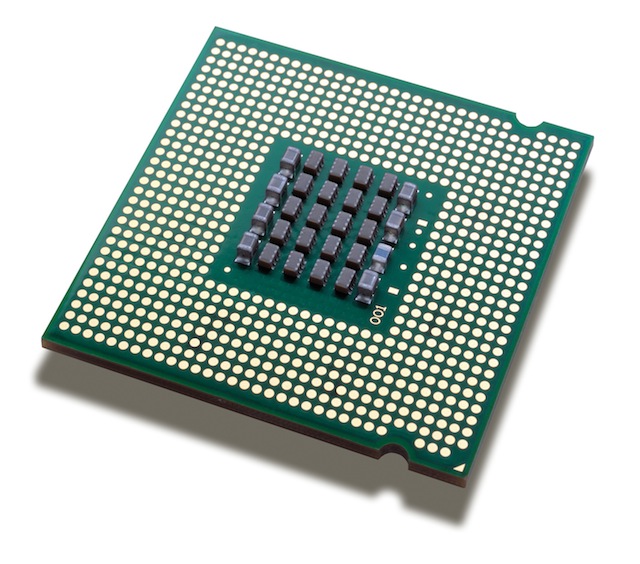
    So the Nervana team stripped down the individual processor and removed many functions, such as a cache, that are built into today’s advanced CPUs. Those lighter weight, and less power hungry, units can then be combined into neural networks more suited to artificial intelligence functions than today’s computers.

    “Nvidea, this sort of fell into their laps,” observes Rao of Intel’s key competitor in the AI, graphics and gaming space. “It just so happens the graphics functions on their chips are suited to Artificial Intelligence applications.”

    Without the more complex functions of modern CPUs, Rao and the Nervana team see the opportunity to build more flexible computers better suited to artificial intelligence applications.

    Intel focuses on AI

    That focus on AI has seen Intel branding its AI initiatives under the Nervana brand name as the iconic Silicon Valley company tries to move ahead with more nimble competitors like Qualcomm and NVidea.

    For the computer industry, artificial intelligence promises to be the next major advance, something necessary if we are ever going to make sense of the masses of data being collected by smart devices and the reason why Microsoft, Google, Amazon and Facebook are all making massive investments in the field.

    Regardless of whether Intel and Nervana are successful in the AI marketplace, Rao sees the entire field of neural computing as a great opportunity. “It’s exciting, there’s lots of chances to innovate.”

    Paul travelled to San Francisco as a guest of Intel
     

    Similar posts:

    • No Related Posts
  • How long can Intel continue to beat the street?

    How long can Intel continue to beat the street?

    Earlier today chip maker Intel beat analysts’ estimates with an earnings report showing  the company’s income hadn’t fallen as much as expected in the previous quarter.

    As Business Insider explained before the earnings call, Intel’s numbers aren’t look good ahead of the rollout of Windows 10.

    In the past, a new version of Windows has been the time many customers upgraded their PCs with Intel and other computer component makers being the beneficiaries.

    With this version of Windows Microsoft are giving it away free to users of Windows 7 and 8 which means the rush of upgrading customers is going to be subdued compared to previous occasions.

    For Intel, the Internet of Things should be the big opportunity in the post PC world but smart devices require low powered chips rather than the more power hungry chips the company excelled in supplying for desktop computers.

    At the moment Intel seems to be focusing on the data centre market that may well be a suitable market for power hungry CPUs but is still very much leaving the company isolated from the bulk of the industry which will increasingly demand ultra low powered chips.

    For Intel, like Microsoft, the struggle for now is to keep relevant in a dramatically shifted marketplace.

    Similar posts:

  • Connecting motor bikes to the IoT

    Connecting motor bikes to the IoT

    One of the obvious applications for smart devices is in motorbike helmets; an article in Intel’s Free Press website describes how they may work in a prototype setup on a BMW BMW R1200GS bike.

    The smart helmet, which uses an Intel Edison system, is different from current add on systems in that it directly communicates with the bike’s internal electronics giving a rider a deeper level of control.

    “If you need directions, say ‘take me home’ and it’ll queue up directions and give them over audio. But if there isn’t enough gas, then it will redirect you to a gas station first because it can read the bike’s remaining fuel range,” explains Moyerman. “It will also do smart navigation, so if a blind turn is approaching, it’ll give you warning to slow down.”

    Creating the prototype isn’t simple as each manufacturer has its own control language, a common problem in retrofitting Internet of Things functions onto devices not designed to connect to a network.

    “Putting together a system like that is much more complicated than plug and play. Every vehicle maker has its own data language, which means that there’s no universal standard to interpret the data. The team at Intel worked with BMW’s Bay Area group to translate a R1200GS adventure motorcycle’s own language from the CAN bus (controller area network) to Edison, which then sends it to the smartphone via Bluetooth.”

    The same challenge faces car manufacturers as well which increases the risks of vehicle owners being locked into a certain manufacturer’s ecosystem – for instance, buy a BMW and be locked into the Apple HomeKit system.

    Regardless of the compatibility problems, we’re increasingly going to see these technologies included with common household items. That many of them are voice activated should give those concerned about the privacy of Samsung smart TVs some pause for thought.

    Similar posts:

    • No Related Posts
  • Privacy by design

    Privacy by design

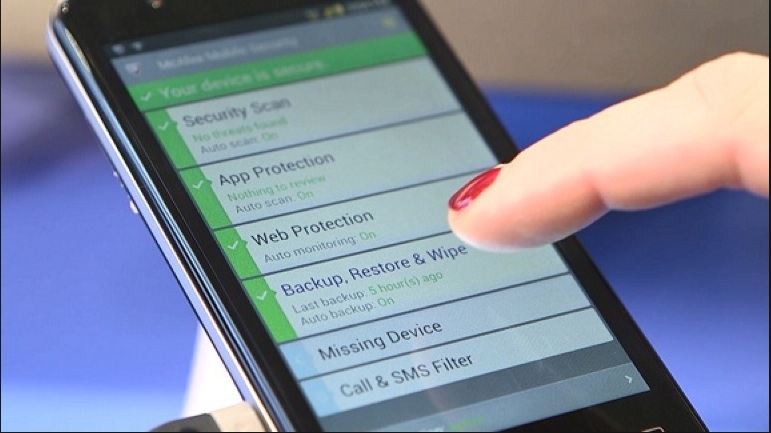
    “Know your data” is the key tip for businesses concerned about privacy says Michelle Dennedy, Chief Privacy Officer for Intel Security, formerly McAfee.

    “It’s really important to go back to basics,” says Michelle. “We’re trying to do bolt-on privacy, just like we did with security years ago. I think it’s time to take a good look at the policy side, which id called Privacy By Design, thinking about it at early states and being consumer-centric.”

    “We at McAfee call it ‘Privacy Engineering’; looking at the tools. methodologies and standards from the past, adding current legislative requirements and business rules then turning them into functional requirement.”

    Michelle, who is also co-author of the Privacy Engineering Manifesto, was speaking to Decoding The New Economy as part of Privacy Awareness Week.

    A key part of the interview is how Michelle sees privacy evolving in a global environment, “if you’d asked me in 2000 where we’d be today I’d have told you it would be like the 1500s when we were dealing with shipping lanes. We would have treaties, it would harmonised and we’d understand that global trade is a hundred percent based upon sharing.”

    “We have instead decided to become a set of Balkanized nations.”

    For individual businesses “know thy data,” is Michelle’s main advice. “Know what brings you risk, know what brings you opportunity.”

    In Michelle’s view, businesses need to balance the opportunities against the risks and treat customers data with respect as the monetisation policies of many online platforms don’t recognise users’ costs in time and data sold.

    As businesses find themselves being flooded with data, protecting it and respecting the privacy of customers, users and staff is going become an increasing important responsibility for managers.

    It’s worthwhile understanding the privacy laws as they apply to you and making sure your systems and staff comply with them.

    Similar posts:

    • No Related Posts
  • Intel’s challenge to find a new message and market

    Intel’s challenge to find a new message and market

    Twenty years ago people cared about the specifications of their computers and chip maker Intel led the industry with its marketing of 486, Pentiums, Pentium Duos and Pentium IIs.

    As we come to the end of the PC era, the consumerisation of technology and the rise of cloud computing mean customers no longer care about what’s inside their systems and Intel is struggling to find a new message.

    Over the last few months Intel have been showing off their latest range of Central Processing Units (CPUs) to enterprise and small to medium business (SMB) groups. Last week the company hosted an SMB event in Sydney that illustrated how Intel is struggling to cut through the market.

    Speaking at the event was Steph Hinds – an evangelist for cloud computing – who told the story of how her Growthwise accounting practice was flooding out during storms.

    Because her systems were on the cloud Steph and her staff were able to work from home and local cafes while the landlord fixed her offices. Had Growthwise been using a server based system the business would have been crippled while her IT people implemented a disaster recovery plan.

    Steph’s story in itself illustrated the Clean, Well Lighted Place argument for cloud computing and also showed how Intel is struggling to sell its PC and server upgrade cycle message in an era where that business model is dead.

    This didn’t stop some of the other speakers at the small business event trying to sell the idea that upgrading computer systems and retaining an IT support company were essential to small business success but it’s a message that was valid a decade ago.

    For Intel the challenge is to find a new message – it may well be that the company’s future lies in supplying the powerful CPUs that run data centres, or maybe the low energy and maintenance chips required to control the billions of intelligent devices that will run the internet of everything.

    The company’s launch of their Galileo board – a tiny computer designed to compete in the intelligent devices market with the likes of the Raspberry Pi – is a step in the latter direction and shows Intel is exploring the possibilities.

    Wherever Intel’s future lies, it doesn’t lie in trying to sell a business model that is quickly going the way of the Brontosaurus.

    During most of the PC era, it was the Wintel partnership that dominated the computer industry, now Microsoft have realised this fundamental market change and started their journey to become a devices and services company.

    The challenge now lies with Intel to decide where their journey will take them in a post PC world.

    Similar posts:

    • No Related Posts