Tag: internet

  • Disrupting the education ripoff

    Disrupting the education ripoff

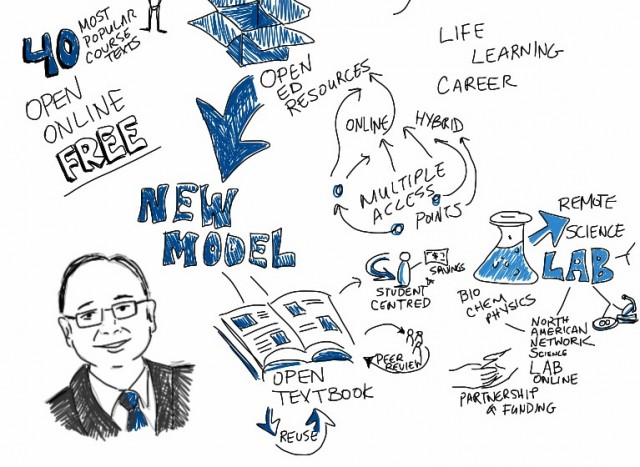
    British Columbia’s government has announced they are going to make most undergraduate textbooks free online or printed at low cost as part of their BC Campus program.

    One of the first lessons for university students is that they are going to be robbed at the campus bookshop – text books are one of the greatest rorts on the planet.

    This scam takes several forms with faculties stipulating the latest editions as course material through to individual professors having a nice little earner in demanding their, often poorly written and out-of-date, textbooks being essential reading for any unfortunate student taking their classes.

    Naturally all of these books are sold at eye wateringly high prices far in excess of what equivalent texts are selling for outside the university bookshop.

    Given all of this it’s no coincidence that the publishers who specialise in academic texts have been the least affected by the online models that have undermined the business models of the mainstream book sellers.

    Over the years there’s been a range of business ideas to setup exchanges to circumvent this legally sanctioned extortion racket and most have failed as the universities and faculty members have protected their cash cows with various tricks to prevent students from buying reasonably priced textbooks.

    That British Columbia’s government now sees that this is a barrier for cash strapped and debt ridden students is an encouraging sign and one that recognises the 1990s model of treating students – particularly international students – as easy money is over.

    For the Canadian and Australian education sectors which had come to depend upon an expensive “bums on seat” model of financing their faculties, the waves of change and competition is now threatening them.

    Probably the biggest threat to this model is from the top tier universities offering courses online. This is radically changing higher education as it’s making it easier for poorer people to access the best institutions.

    For the second rate institutions, this means they have to be providing real value for the fees they charge. A certificate purporting to be a degree is not going to be good enough.

    While it’s too early to call the end of the textbook ripoff – people don’t let juicy little rorts go easily – its days are numbered. Although we may find the old scams replaced by something DRM related.

    Image from Visual Notes of Honourable John Yap’s announcement at #opened12 / Giulia Forsythe / CC BY-NC-SA


    Similar posts:

  • Amazon and the Soviet customer service model

    Amazon and the Soviet customer service model

    We all value our collections of CDs, books and photos, but what happens when we completely lose the digital equivalents?

    The story of Linn, a Norwegian lady who had her account terminated by Amazon, demonstrates the dangers of being locked into one Internet company’s empire. Get cut off and you lose everything related to them.

    A little understood part of the cloud computing and app world is that you, the customer or user – which isn’t necessarily the same thing – don’t really own anything. The money you spend on ebooks, mobile apps or web storage are for licenses to use the services, not the products themselves.

    Should the supplier decide they no longer want to provide you with their service, then you lose your account and everything with it.

    This is what happened to Linn when Amazon’s algorithm decided her account was in some way breaching their terms and conditions.

    We have found your account is directly related to another which has been previously closed for abuse of our policies. As such, your Amazon.co.uk account has been closed and any open orders have been cancelled.

    Per our Conditions of Use which state in part: Amazon.co.uk and its affiliates reserve the right to refuse service, terminate accounts, remove or edit content, or cancel orders at their sole discretion.

    “At their sole discretion” is the key point here. This is a standard term in most online contracts and reflects the legal realities of the physical world where a shopping mall manager or bar owner can ask you to leave their property without having to tell you why.

    When you use a virtual service, which includes e-books and cloud computing software, you are on someone’s virtual property and they can ask you to leave any time they feel.

    Of course those rights are subject to any contract you might have with that e-book seller, cloud computing service or shopping centre but you have to be in a position to enforce them – not an easy task when you’re in Norway and their lawyers are in Connecticut.

    Even if you want to enforce the agreement you believe these services have entered into, the grossly biased contracts attempt to put all obligations on users or customers while freeing the vendor of the distraction of being responsible for anything.

    The real problem though is the lack of notice and fairness – this blog’s previously looked at how PayPal, Facebook and Google will shut down business sites without any warning or due process.

    It’s one thing to get thrown out of a shopping mall but it’s another matter when your car and week’s groceries are still in there.

    Even more worrying in Linn’s case is how ebooks and music purchased with Digital Rights Management (DRM) controls can be erased by companies like Amazon. Which is like walking home from the shopping mall you’ve been banned from to find the manager has called by to confiscate the toaster and TV you bought last week.

    What’s particularly notable in all of these stories though is the Soviet customer service model, the Amazon”Executive Customer Relations” representative Linn dealt with refused to tell her what she’d done wrong or what rules she broke.

    The only thing “Michael Murphy” would tell her was she was effectively banned for being linked to a blocked account and stated;

    “Please know that any attempt to open a new account will meet with the same action.”

    No notice, no appeal, no rights. The computer says no and the bureaucrat cannot help you further.

    Trust lies at the core of all business and this is even more true when buying services like e-books and cloud computing products. If you can’t trust a vendor to provide a service, or to act openly and honest with you when a problem occurs, then it’s unlikely you’ll use that service.

    A lack of trust is what web 2.0 companies like Amazon and eBay risk with hostile, Soviet style customer service. This is the weak point of the entire online business model.

    For individuals and businesses it’s important to understand that those e-book, cloud storage or social media services may appear to be a bargain, but there are risks lurking in the fine print.

    The new Soviets might be doing well at the moment, but their days are numbered just as the USSR’s were.

    Similar posts:

  • Unprotected computing practices

    Unprotected computing practices

    A US study finding malware is rampant on medical equipment shouldn’t come as a surprise to those running industrial computer systems in their businesses.

    It’s notoriously difficult to update medical equipment or other sensitive systems as a security patch could have unintended consequences. Unlike a home or business computer, these patches have to be thoroughly tested beyond the precautions vendors take.

    So it isn’t surprising that these systems aren’t kept up to date although some equipment suppliers are more tardy than they should be in updating the servers they supply.

    A few years ago I came across CCTV systems running on the original version of Windows 2000 which were hopelessly compromised. This is an unacceptable situation for the customer and was more the result of vendor carelessness than any concern that customers could be affected by these unsecured machines.

    Not having the latest software patches creates a weakness in any computer device as most common way viruses find their way onto networks is through systems not being updated – Australia’s Defense Signals Directorate rates unpatched systems as being the number one cause of corporate security breaches.

    This is what caught out the Iranian nuclear program with the Stuxnet worm as the Siemens SCADA devices used by the Iranians were running older, unpatched versions of Windows. The designers of Stuxnet took advantage of a number of known weaknesses in the software and were able to damage the equipment being controlled by the systems.

    Obviously systems should be patched wherever they can be and there’s no excuse for not patching most office and home computers. It’s also worthwhile carrying out a number of other security steps to ensure an infected computer can’t damage your network or catch a virus through your Internet connection.

    The survey looking at these medical systems is a good wake up call to all of us that we need to take computer security seriously in our businesses.

    Similar posts:

  • Free content’s shaky foundations

    Free content’s shaky foundations

    Musician’s rights advocate David Lowrie has a takedown on his Trichordist of Pandora’s campaign to change the US music royalty payment system through the Internet Radio Fairness Act.

    Pandora and other online streaming services claim the current arrangement is unfair and puts them at a disadvantage to terrestrial AM and FM radio stations. Artists and record labels claim this is just a way to cut rights payments.

    David suggests that Pandora’s founders either lied about the sustainability of their business at the time of their IPO last year or are just being plain greedy.

    Regardless of what is true, or whether David is overstating the case against the IRFA, a truth remains that many Internet business models are unsustainable and Pandora’s may be one of them.

    Most unsustainable of all are those who rely on free content.

    Eventually the market works to filter out those who won’t pay for content – the good writers and artists move onto something more profitable, like driving buses or serving hamburgers, or they figure out they may as well control their own works rather than let some Internet company profit from their talents and labor.

    The website or service offering nothing in return for the contributor’s hard work eventually ends up distributing garbage – Demand Media or Ask are examples of this.

    In a marketplace where crap is everywhere, just pumping out more crap is not a way to make money.

    Those looking at investing in businesses which rely on free content need to remember this, if no-one values the product then you have no business.

    Sadly too many internet entrepreneurs, and corporate managers, believe the road to their wealth is through not paying artists, musicians or writers. They are the modern robber barons.

    Similar posts:

  • Every business is a cloud business

    Every business is a cloud business

    Every business is a cloud business claims Zach Nelson, the CEO of cloud Enterprise Resource Planning service Netsuite.

    In Zach’s view every business should be using cloud computing services and at a lunch in Sydney he illustrated this with companies ranging from agribusiness Elders through to furniture and design store CoCo Republic.

    A buzzword used by Zach and Netsuite is ‘omni-channel’ and this is something we’ve heard from local retailers in the past.

    Interestingly Netsuite’s definition of omni-channel is more as a catch-all phrase than a definition. “There are so many channels, there are really no channels,” says Zach. “Omni-channel was the only word we could find.”

    This doesn’t bode well for older retailers struggling with the idea of a website as part of their “omni-channel’ strategy, let alone tablets, smartphones or 85” smart TVs.

    The problem also faces businesses adopting cloud computing platforms with the related trend of Bring Your Own Device being in itself is an “omni-channel” medium where an employee could be using anything from a smartphone with a 7″ touchscreen through to a fully equipped PC workstation with a 27″ cinema display.

    How Netsuite deals with the plethora of channels is through responsive design strategy where their sites adapt to the various screen sizes their customers use. This is the opposite to the philosophy of building specific apps for each platform.

    We’re seeing other cloud companies struggle with this problem as well, Mark Zuckerberg recently described focusing on the open HTML 5 standard over dedicated iOS and Android apps as one of Facebook’s biggest mistakes while Salesforce founder Marc Benioff used the recent Dreamforce conference to confirm his company’s commitment to the web despite releasing an iOS application.

    Zach Nelson’s notion that every business is a cloud business is interesting and true, whenever business owners or managers say “no” asked it they use cloud computing they are genuinely shocked when its pointed out to them that almost every external internet service they use runs on the cloud.

    Slowly we’re seeing this being accepted by the business community as show by diverse companies adopting services like Netsuite, Salesforce and Xero.

    The big challenge for managers is in taking advantage of the processing power businesses find that cloud computing gives them.

    Similar posts: