Tag: internet of things

  • The Internet of Racing Machines

    The Internet of Racing Machines

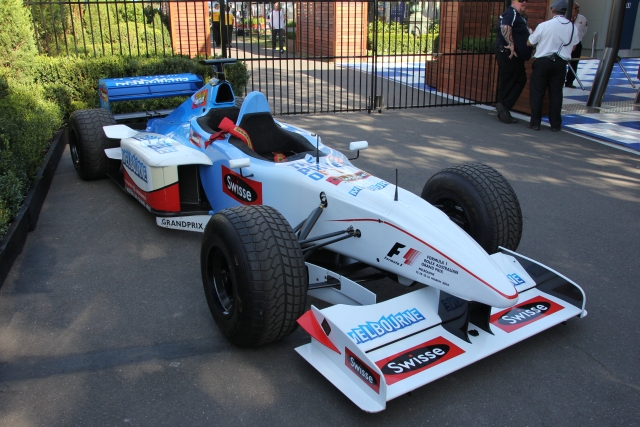
    For the Formula One racing circuit, the financial crisis of six years ago was an opportunity to reinvent the sport; today the teams use a combination of technologies to gain an advantage over their competitors.

    “A few years ago you wouldn’t have been here today,” Francois Puentes, Head Of Account Management at Team Lotus told a group of journalists ahead of this week’s Melbourne Grand Prix. “F1 was a completely different sport.”

    The 2009 financial crisis was the catalyst for the changes Puentes says; “we all sat down as teams at the same table to make the sport more sustainable, this obliged us to run the sport as a business.”

    “Before we didn’t know what the unit cost was for a part. We would very often produce two of the same parts without even knowing what was going on.”

    To tighten their management systems, Lotus bought in a range of cloud based business software such as Microsoft Dynamics and also accelerated its adoption of computerised manufacturing techniques.

    Speeding up development

    Lotus employs over 500 people to keep its two cars on the road and most of the vehicles parts are designed and manufactured at its headquarters in Oxford, England. During the season the team’s workshop may produce up to five hundred replacement or redesigned components each week.

    This brings together a number of technologies including Computer Aided Design, 3D Printing and cloud computing.

    The internet of racing machines

    Massive rule changes have also accelerated Formula One’s adoption of in car technology with information being gathered from sensors throughout the vehicles.

    During races data is transferred from the vehicles’ sensors by radio for the teams’ crews to analyse performance. This includes information like gear box temperature, tyre condition, and aerodynamic performance data.

    Following the race larger volumes of data are downloaded from the vehicle for engineers to tune the car for the next event.

    While Lotus has teamed with technology companies like Microsoft and EMC, rival team Caterham partnered with GE whose Global Research team worked to integrate the technologies demanded by the new F1 rules.

    Global technology

    Caterham’s cars use intercoolers developed in Germany, carbon fibre composites and fibre optic sensors from the United States, and big data analysis techniques developed in India.

    Key to gathering that data are sensors throughout the vehicle that capture a constant stream of data about forces acting on the car during the race, transmitting this information in a far more efficient way than traditional methods which relied on load sensors attached to the suspension.

    The result is massive volumes of raw data. On the track, Caterham cars generate 1,000 points of data a second from more than 2,000 data channels. Up to 500 different sensors constantly capture and relay data back to the team’s command centre for urgent analysis.

    Learning from Big Data

    By applying what the company has learned from its Industrial Internet projects, GE was able to help Caterham cut its data processing time in half, leaving the team in a stronger strategic and tactical position.

    Thanks to these analysis techniques, the Caterham team can look at slices of its data across an entire season, pinpoint setups that were particularly effective, and identify reliability issues earlier.

    Inside the vehicle, GE has also found a way to replace metal pipes with carbon fibre, reducing the overall weight of the vehicle.

    These technology developments will continue to find applications beyond the 2014 Grand Prix season.

    Carbon composites are being used extensively in the aviation industry and big data analysis is playing an important role in the renewable energy sector.

    Lewis Butler, Caterham’s chief designer, says working with GE is helping the team deepen its skills base.

    “GE are working with Caterham to help with the manufacturing process and knowledge transfer, and giving Caterham F1 Team the capability to manufacture its own parts,” he says.

    All the Formula One teams are using Internet of Things technologies to gather information on their vehicles, Big Data tools to manage that information along 3D printing to accelerate their research and manufacturing processes.

    The Formula One world is a glimpse into the future of business as various technologies come together to change the way industries operate.

    Paul travelled to the Melbourne Grand Prix as a guest of Microsoft and Team Lotus.

    Similar posts:

    • No Related Posts
  • David Cameron and the Internet of Things

    David Cameron and the Internet of Things

    Last year I interviewed the CEO of London and Partners, Gordon Innes, on how Britain’s capital is making a bid to become Europe’s Silicon Valley.

    At the opening of CeBIT last night, UK Prime Minister David Cameron increased the country’s bid with a plan on building Britain’s capability in the digital industries.

    Cameron portrayed the moves as being a partnership with Germany. This may be partly because he was being gracious towards his host and also because the Brits might not see Germany as being a competitor in these fields.

    The fields that Cameron highlighted are deploying 5G networks, more efficient use of spectrum and increasing research into the Internet of Things.

    A research boost is a notable as it may give the Brits a foothold in an area that’s evolving rapidly as the Internet of Things raises a whole range of security, privacy and governance issues.

    While there’s still a sniff of Harold Wilson’s 1963 White Heat of Technology speech in the Cameron government’s policies, at least the British government is articulating policies for the 21st Century.

    It may well be that Cameron’s digital revolution will be no more successful than Wilson’s technological revolution fifty years ago, but at least it will be a brave attempt.

    Similar posts:

    • No Related Posts
  • Customer service is no longer a department

    Customer service is no longer a department

    When it comes to customer service businesses, Alex Bard calls himself a ‘career entrepreneur’, having founded four startups in the field since the mid 1990s.

    In 2011 he sold his most recent business, Assist.ly, to Salesforce and became the company’s Vice President for Service Cloud and the Desk.com customer service offerings.

    Bard tolds Decoding the New Economy last week how social media and Big Data are radically changing how organisations respond to the needs of their clients.

    “I’ve been in the industry for twenty years and I’ve never been excited as I am now,” Bard says. “The real transformational things that’s happening now are these revolutions – the social revolution, the mobile revolution, the connected revolution.”

    The philosophy of customer service

    “What they’re really driving is this idea that customer service is no longer a department, it’s a philosophy.”

    “It’s a philosophy that has to permeate throughout the organisation. Everybody in the company has a role in support. It’s not just about a call centre or a contact centre or even an engagement center which is what these things are called today.”

    “I really don’t like the word ‘centre’ because I really fundamentally believe that everbody in that company has to interact with customers, has to engage and has to the information – no matter they are – about that customer to provide context.”

    Abolishing the service visit

    With the Internet of Things, Bard sees GE’s social media connected jet engine as illustrating the future of customer service where smart machines improve customer service.

    “They’re going to capture more data in one year than in their entire 96 year history prior,” says Bard. “With that data they’ll be able to analyse and do things on behalf of that product or service that’ll reduce the number of issues.”

    “Because the best service of all is one that doesn’t have to happen.”

    In this respect, Bard is endorsing the views of his college Peter Coffee who told Decoding the New Economy last year that the internet of machines may well abolish the service visit.

    “Connecting devices is an extraordinary thing,” says Coffee. “It takes things that we used to think we understood and turns them inside out.”

    “If you are working with connected products you can identify behaviours across the entire population of those products long before they become gross enough to bother the customer.”

    For Alex Bard, the customer service evolution has followed his own entrepreneurial career having evolved from being personal computer based in the 1990s to today’s industry that relies on cloud computing, big data and social media technologies.

    As these technologies roll out across industry, businesses who adopt the customer service philosophy Bard describes are much more likely to adapt to the disruptions we’re seeing across the economy. Changing corporate cultures is one of the great tasks ahead for modern executives.

    Similar posts:

    • No Related Posts
  • Kickstarting the smarthome revolution

    Kickstarting the smarthome revolution

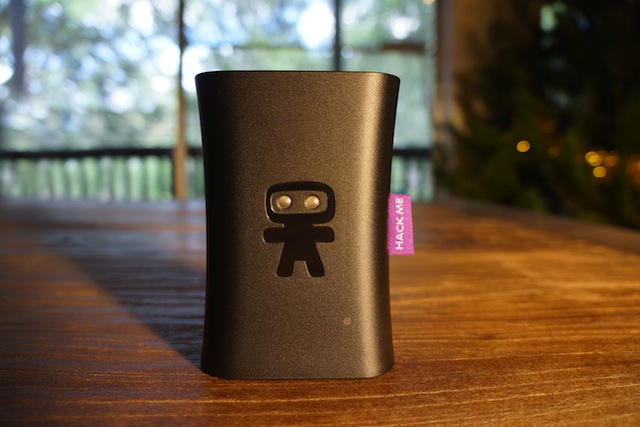
    The latest Decoding the New Economy clip is up with an interview with Daniel Friedman of Sydney startup Ninja Blocks.

    Ninja Blocks focuses on controlling smarthomes with basic “if, then” rules where house holders can set basic instructions like “if the garage door opens after 5pm then turn on the kettle.”

    It’s an interesting interview that covers Ninja Blocks’ vision along with the challenges of selling electronic devices globally and how to run a successful Kickstarter campaign for a hardware startup.

    Similar posts:

    • No Related Posts
  • Disrupting the smartphone market

    Disrupting the smartphone market

    It’s been a long time since we’ve had a three or four way war in the technology industry, with most sectors settling down into a two way fight between alternatives.

    Mozilla’s promised $25 smartphone project threatens to open the mobile industry into a three way battle just as it appeared the market had comfortably settled down into an Android and iOS duopoly.

    Now we see a three way race and possibly four if Samsung can get traction with its Tizen operating system that it’s bundling into the latest version of the Gear smartwatch.

    One positive aspect of the four way battle is that three of the participants – Firefox, Tizen and Android are relatively open so compatibility between them isn’t impossible.

    For Google and Apple though, this four way tussle presents a problem to their business plans.

    Apple’s iOS ambitions of putting the software in smarthomes, connected cars and, possibly most lucratively of all, into retailing with iBeacon are threatened by a fragmented market and a rapidly eroding market share.

    For Google, both Firefox and Tizen threaten the dominant position of their Android operating system that forms a plank in the company’s ambition to control the planet’s data and become an ‘identity service’.

    Worse still for Google’s information ambitions, Firefox is working with Deutsche Telekom on a security initiative that will lock away users’ data.

    So the stakes are high in the smartphone operating systems wars.

    It’s early days to forecast the demise of either Android or Apple iOS, which is unlikely in the short term, but if Firefox’s operating system does take hold it will mean the smartphone industry is about to become a lot more complex.

    Similar posts:

    • No Related Posts