Tag: internet of things

  • Microsoft struggles with in car technologies

    Microsoft struggles with in car technologies

    As Microsoft prepare for a major launch at this week’s Mobile World Congress, the news isn’t good for the company’s flagship Windows operating system.

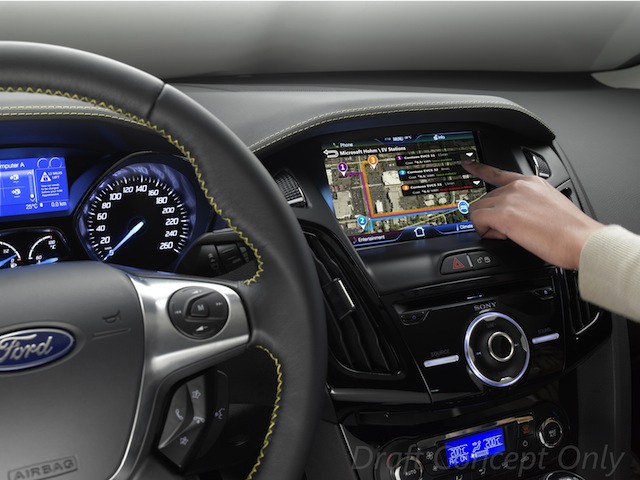
    Two Bloomberg reports illustrate the problems; the major story is the company is planning to drop licensing fees for Windows 8.1 while the other, still serious, news is that Ford will be dropping Windows as its in-car operating systems.

    Automotive systems are one of the key markets for Microsoft as the company tries to move into markets beyond the stagnating personal computer sector and should the reports be true that Ford is looking at moving to the rival Blackberry owned QNX system then Windows Embedded has taken an embarrassing blow in a key market.

    More serious though is Bloomberg’s report that Microsoft plans to cut its licensing fees for Windows installed on cheaper devices.

    While not unexpected, this will damage the company’s earnings given the Windows division made up 22% of Microsoft’s earnings last year.

    It’s clear that the free Android system is beginning to hurt Microsoft both in the smartphone and personal computer markets.

    For Microsoft’s new CEO Satya Nadella, dealing with Windows’ place in the new Microsoft is going to be one of his most pressing challenges and will almost certainly define his first year in the role.

    As the Internet of Things and Machine to Machine markets grow, Microsoft is going to have quickly decide if the company wants to compete in the market.

    Similar posts:

    • No Related Posts
  • Learning to ask the right questions

    Learning to ask the right questions

    How do we make sense of the masses of data entering our businesses? Tableau Software founder – and multiple Academy Award winner – Pat Hanrahan thinks he has the answer.

    A major challenge presented by the Internet of Things is in understanding the data that’s generated by devices, data visualisation companies like Tableau Software are making easier to interpret what machines are telling us.

    “The streaming data coming from sensors is a very interesting opportunity,” Tableau co-founder Pat Hanrahan told Network Globe when discussing machine to machine technologies, “there’s so much potential.”

    A Stanford Professor and winner of three academy awards for Computer Generated Imagery, Hanrahan founded Tableau with Christian Chabot and Chris Stolte in 2003 with a mission to help people to understand data. Today the company employs a hundred people after going public last year.

    The origins of Tableau came from Hanrahan tiring of the movie industry which he’d been part of since joining Pixar on graduating in 1987, “I was thinking could we use computer graphics for other things, I want to find something more work related so I got interested in data visualisation.”

    Hanrahan teamed with Stolte, who was one of his students, to set up a company called Polaris that became the basis of Tableau; “it was a classic Stanford start-up, Google was literally right next to us. I remember when the company started, Larry Page came to our office party.”

    Making data accessible

    “I’ve always been fascinated with taking the high end stuff and making it more accessible” says Hanrahan. “We’re in a transition phase, where we’re tying to figure out how to make it more accessible.”

    Helping those who are passionate about facts and reasons is one of Tableau’s missions,”we have fanatical customers,” says Hanrahan.

    “If you’re one of the rare people who use facts and reasons to solve the world’s problems then you are persecuted, you are on a mission, you’re going to convince those crazies that you’re right and you’re wrong and that’s why they’re so fanatical about our product.”

    “There’s a little bit of hype around big data right now, but it’s a very real trend;” states Hanrahan. “Just look at the increase in the amount of data that’s been going up exponentially and that’s just the natural result of technology; we have more sensors, we collect more data, we have faster computer and bigger disks.”

    A good example of the exponential growth in computing power is in how the smartphone has developed, citing how far computers have come since 1997 when IBM’s Deep Blue computer beat Kasparov, “at the time both Kasparov and the computer were rated 2700, the best chess programs now are rated 3800.”

    “The chess program running on my iPhone is rated above 3000,” observes Hanrahan.

    Despite the leaps in power, Hanrahan doesn’t see algorithms completely replacing the human touch, “you have the technology and resources to do this but you still need someone to figure out how to make it accessible.”

    One of the keys to understanding information is to be literate in using it, “every student should be efficient in using data,” Hanrahan says and he sees data analysis skills as being essential in the future workforce; “we have to know how to ask the right questions.”

    Making the data generated by connected machines accessible to the public, workers and managers is going to be one of the big challenges for organisations over the next decades; it’s an area where companies like Tableau are going to do well.

    Similar posts:
    • No Related Posts
  • Neglecting the small business sector

    Neglecting the small business sector

    I’ve previously flagged how the IT industry fixates on the consumer sector, the Kickstart forum on Australia’s Gold Coast emphasised this with vendors, particularly those in the Internet of Things market, focusing on home users.

    This is mindset is understandable given the huge numbers being cited for consumer applications, but the sneaking suspicion is that home users simply aren’t going to pay for these technologies and that the real money will be made in helping the retail sector deliver services to customers.

    On Networked Globe today we discuss that quandary, it’s something that both vendors, consumers and small businesses should be thinking about given the way it’s going to change supply chains and entire industries.

    Similar posts:

    • No Related Posts
  • The evolution of the Internet of Things

    The evolution of the Internet of Things

    One of the notable things about modern technology is that few of the developments are actually new, the Internet of Things is a good example of this.

    Most of the tech we talk about is a collection of existing technologies that have been cobbled together — cloud computing, 3D printing and the Internet of things are all good examples of this.

    Libelium’s Cooking Hacks community page has a good infographic on how the makers’ movement, crowd funding and miniaturization have driven the development of the Internet of Things, 3D printing and wearable technologies.

    The diagram, shown at the bottom of the post, is a good illustration of how technologies are evolving and the businesses that are being spawned from the developments.

    Cooking Hack’s infographic show why it’s an exciting time to be in business.

    maker_movement_cooking _hacks_infographic


    Similar posts:

    • No Related Posts
  • Reinventing Moore’s Law

    Reinventing Moore’s Law

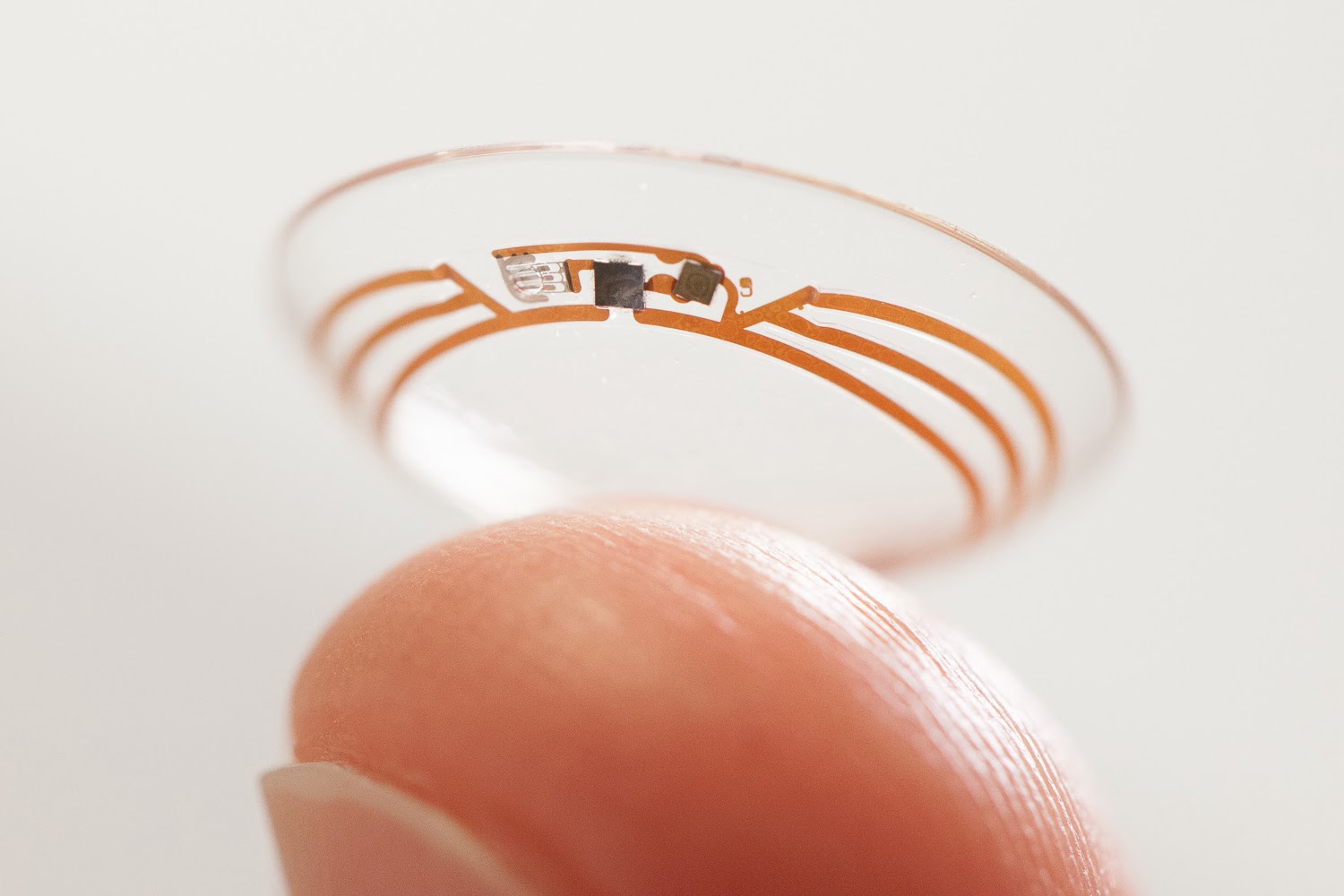
    Google attracted the headlines yesterday with their prototype smart contact lens that helps diabetes sufferers.

    The concept is an example of what’s possible with the next generation of tiny, low powered computers and illustrates how microchips can be slimmed down for a relatively dumb device.

    Liz Gannes at Re/Code received a briefing from Google on the details of the device and quotes project lead Brian Otis as saying that the lens is “the flip side of Moore’s Law.”

    Moore’s law

    For most of the microchip era the focus has been on increasing the number of transistors we could fit in a square inch of silicon, this was the basis of Moore’s law — that the number of transistors on integrated circuits will double every year.

    Co-founder of Intel, Gordon Moore, proposed this rule in 1965 and it has held fairly constant every since.

    Now we may be seeing the trend heading the other way as developers focus on what can be achieved with the bare minimum of computing power.

    Google’s smart contact lens shows how simplifying devices for specific tasks makes them more affordable and suitable for low power devices.

    While the internet of things won’t kill Moore’s Law, it does change the basis of how we think about advances in microchip technology.

    Similar posts:

    • No Related Posts