Tag: investment

  • David Cameron and the Internet of Things

    David Cameron and the Internet of Things

    Last year I interviewed the CEO of London and Partners, Gordon Innes, on how Britain’s capital is making a bid to become Europe’s Silicon Valley.

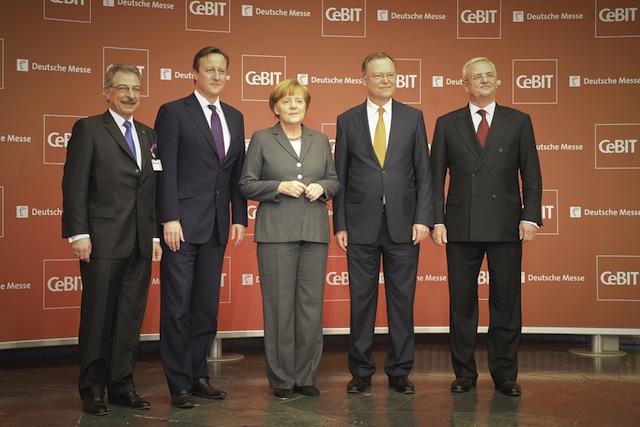
    At the opening of CeBIT last night, UK Prime Minister David Cameron increased the country’s bid with a plan on building Britain’s capability in the digital industries.

    Cameron portrayed the moves as being a partnership with Germany. This may be partly because he was being gracious towards his host and also because the Brits might not see Germany as being a competitor in these fields.

    The fields that Cameron highlighted are deploying 5G networks, more efficient use of spectrum and increasing research into the Internet of Things.

    A research boost is a notable as it may give the Brits a foothold in an area that’s evolving rapidly as the Internet of Things raises a whole range of security, privacy and governance issues.

    While there’s still a sniff of Harold Wilson’s 1963 White Heat of Technology speech in the Cameron government’s policies, at least the British government is articulating policies for the 21st Century.

    It may well be that Cameron’s digital revolution will be no more successful than Wilson’s technological revolution fifty years ago, but at least it will be a brave attempt.

    Similar posts:

    • No Related Posts
  • On looking foolish

    On looking foolish

    Looking foolish is one of the biggest risks when taking chances in business. It’s something every innovator and entrepreneur has to consider.

    Venture Capital investor Mark Suster explains why he doesn’t mind looking foolish with his choice of investors on his blog today.

    One of the toughest things in life is taking the risk of looking foolish in front of your peers yet that’s what the real high risk inventors, innovators and entrepreneurs do with their ventures.

    Light bulbs and the telephone looked ridiculous to many at the time they were invented and no doubt the inventor of the wheel or the Neanderthal who came up with the idea of cooking meat in a fire both probably received a far bit of scorn when they told the others in their tribe about their idea.

    While Suster is talking about ‘moonshot investments’, even the most modest venture is going to attract scorn.

    There would be few people who decided to buy a doughnut franchise, establish a cafe or set up a lawn mowing service who weren’t told by some of their relatives, friends or colleagues that they are doing the wrong thing and they should stick to their safe job in their cosy cubicle.

    Should someone want to change the way doughnuts are made or lawns mowed, then they can expect even more naysayers laughing at them.

    In this current craze about ‘entrepreneurship’ it’s easy to overlook the real costs and risks of running any sort of business. Looking foolish is another of those risks.

    Having a thick hide is another useful attribute when you’re investing, running a business or changing an industry.

    Similar posts:

  • Startup economics

    Startup economics

    Business advisor Ivan Plenty’s in-depth study of the viability of failed photo sharing startup Everpix with some useful lessons for business owners in any industry.

    Everpix shut down last November having run out of money despite getting favourable reviews from the tech press and in an unusual move, the founders put the company’s financials up on GitHub.

    As Plenty points out in his analysis of Everpix’s finances, the company was unlikely to ever break even and it’s a lesson to every business owner on the importance of keeping an eye on cashflow and understanding where the venture’s break eve points are.

    One of the key take-aways from Plenty’s analysis was that the base costs of the business were too high and even in the best circumstances it was unlikely that venture would have succeeded.

    A good business plan would have helped the founders understand this problem and it illustrates why rigorously developed cashflow forecast is a great tool for a manager or proprietor.

    The Silicon Valley investment model

    The ultimate objectives of a company’s management are always important when considering the success or failure of a business; what objective is the business working towards?

    In Everpix’s case, it may well have been the Silicon Valley Greater Fool model was a likely end, with good software and a growing customer base the company could have been attractive to a buyer.

    Were that the objective of Everpix’s founders, the company was under-capitalised as management couldn’t afford either the burn out or the PR and marketing team essential for raising the venture’s profile with key investors.

    Under-capitalisation is one of the greatest problems for any new business and its clear that Everpix didn’t have the equity to scale the way it needed.

    Capital on its own though isn’t a panacea, from Ivan Plenty’s analysis the indications are that Everpix’s fate would have been the same, but more drawn out.

    Everpix’s failure and the numbers behind it are a good lesson for anybody thinking about starting a business — numbers matter and businesses live and die by them.

    Similar posts:

  • What do startup founders really earn?

    What do startup founders really earn?

    One of the myths of the current cult of the entrepreneur is that everyone will be a winner as their startup gets bought out by Google for a billion dollars. The reality is life for a startup founder is a grind.

    Startup Compass looked at 11,000 startups across the world to discover what founders really earn and the results show the reality of life when you’re starting up a business is that the wages are pretty poor.

    In San Francisco, London and New York, the wages are piddling compared to the cost of living in those cities.

    Low pay and business success

    This is good news for investors though, as there’s a clear correlation between the success of a startup business and the salaries its key staff members draw – successful businesses are built on the back of founders ploughing everything into the venture.

    It’s also high risk as a failed business can leave the founder with nothing to show for several years of hard work, something that’s overlooked by the ‘liberate yourself from your cubicle’ gurus advocating everyone starts up their own venture.

    Australia’s high cost economy

    Notable in the stats is the high rates demanded by Australian founders, more than 25% higher than their Silicon Valley counterparts and a gob-smacking 60% more than London or Canadian equivalents.

    Australia’s high cost of doing business was emphasised last year where a comparison by Staff.com found Sydney was the second to Zurich as a place to base a tech startup. Worryingly, that survey didn’t consider owners’ drawings.

    Part of Australia’s high wage requirements are no doubt due to the country’s lousy tax treatment of options and share plans but a bigger problem is property ownership – an Australian who hasn’t bought a home by 35 is destined to be one of the nation’s underclass.

    So an Aussie entrepreneur has to earn enough to qualify for or service a mortgage, it also discourages Australians from starting even moderate risk ventures.

    The consequence of the need to draw a high salary is that the proportion of investor funds that goes into founders’ wages is almost three times higher in Australia than it is in Silicon Valley. That’s a big disincentive for foreign investors to put money into Aussie startups.

    If you wanted an example of how uncompetitive the Australian economy has become, this is a good start.

    Regardless of where a startup is based though, the message remains that the road to a billion dollar buyout from Google or Facebook is not paved with gold.

    Similar posts:

  • Dangerous liaisons – the risks in government support

    Dangerous liaisons – the risks in government support

    “I coulda bin a contender” is the first thing that comes to mind when reading The Register’s story on how the iPhone could have been a British invention.

    However the tale of British engineer Andrew Fentem and his struggles with the UK investment bureaucracy is a warning to all of those who think that government support programs are an easily solution for getting ideas to market.

    Fentem’s story is a common one around the world – an inventor approaches a government agency which agrees to support the project and then bogs the entire venture down in paperwork and bureaucracy.

    In some respects this is understandable as bureaucrats and politicians are deeply risk averse, which is fair when taxpayers money is involved, with the result that justifying an investment is going to be more about ticking boxes and meeting criteria rather than genuinely helping projects succeed.

    During my short stint in working for a government agency every week would see at least three people contacting me about taxpayer support for their businesses.

    Most of the time there was no godly reason for the government to give these folk a penny and it took the few diplomatic skills I have to politely break the news they had little prospect of getting a grant or subsidy.

    Some approaches though were very good projects but usually I’d warn the inventor or entrepreneur that any support the state government would give them would come at the cost of spending hours completing irritating paper work.

    My advice was that driving a cab and living on noodles for six months to raise the capital would be a better investment of their time than dealing with grey suited bureaucrats like me.

    This advice didn’t always go down well, but it was better for both the taxpayer and the entrepreneur in the long run.

    Well thought out government programs can do a lot of good for businesses or inventions that might not otherwise come to fruition, although many of the success stories probably have as much to do with the calibre of the public servants running the scheme as they do with the programs themselves.

    In the case of Andrew Fentem and his touchscreen technology it’s almost certain that the folk at NESTA were out of their depth and far more comfortable with subsidising trips to Las Vegas for circus clowns, which in itself is a valuable lesson for governments on defining programs and supervising agencies.

    Raising funds for any business or invention is a tough game anywhere in the world and assuming governments are an easy way to find money is as flawed as any other misconception about building a startup.

    The moral is government money in neither free nor easy if you’re an inventor or an entrepreneur.

    Similar posts: