Tag: investment

  • Regional pains – what happens to communities when industries close?

    Regional pains – what happens to communities when industries close?

    Yesterday’s post on Chobani Yoghurt rescuing a town in Upper New York state raises some questions about what happens when a major industry leaves.

    For South Edemston, the question went unanswered as Hamdi Ulukaya and Chobani saved the day, but other towns haven’t been so lucky.

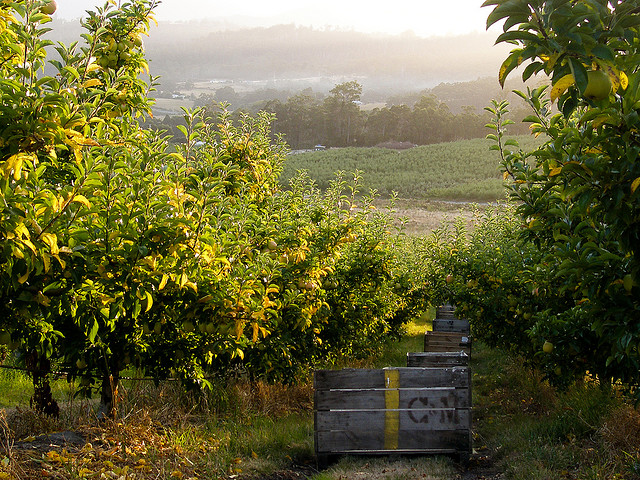
    Australia’s Goulburn Valley, about a hundred miles north east of Melbourne, may be about to find out as the main local fruit cannery will close down unless the state and Federal governments each contribute $25 million to an investment plan.

    Closing the region’s major cannery will have dire consequences for the local economy as the industry has been a major customer for the local fruit industry. Without the cannery, many of those peach, pear and apple growers have nowhere to sell their produce.

    Already farmers are bulldozing their trees and grubbing up the roots as the market works against them.

    So what happens to the Goulburn Valley if the canning industry leaves? Do the orchards get turned over to goats?

    There is a precedent in Australia for this, in Tasmania the ‘Apple Isle’ has seen its orchard industry steadily decline from the days of peak production in 1964.

    A touching story in The Griffith Review by Moya Fyfe, the daughter a former Tasmanian apple farmer, describes when her father’s orchards were ripped up.

    So in the winter of 1974, his life’s work, and that of his father, was bulldozed into windrows of gnarled stumps and roots. Acre after acre of once productive apple trees, captured in a photograph hanging on my parents’ dining room wall as picture-book hills awash with blossoms above North West Bay, were twisted and torn from the ground and left in undignified heaps to rot.

    Moya’s father was given an exit package – a cash payment to find something else to do – by the state government. Something that many agricultural communities around the world have become familiar with.

    The problem for Tasmanians was that there wasn’t really much else to do. At the time Moya’s farm was ripped up there was a belief the state would become an industrial powerhouse on the back of cheap hydroelectricity, but that never happened.

    Tasmania’s economy continues to struggle and Moya’s article was part of a Griffith Review edition focusing on the state’s struggles.

    The most pubilicised essay was a scathing analysis of the state’s culture by Professor Johnathan West, who identified the real problem for Tasmania as being a dependency mindset.

    These numbers suggest that as little as a quarter to a third of Tasmanian households derive their livelihood from the genuine private sector. Of them perhaps a third gain their income from wholesale and retail trade and associated logistics, another third from residential and commercial construction and maintenance. The clients of both these groups depend largely on public-sector incomes, leaving only about 10 per cent of all households making a living from the traded private sector.

    Interestingly both Johnathan West and Moya Fyfe are employed by the University of Tasmania, which probably proves the Professor’s point.

    Overall Tasmania relies upon Federal government funds to survive, receiving over $1.50 in payments for ever dollar remitted in taxes; in that it joins half of Australia’s states and territories in being economically dependent on the Federal taxpayer.

    That’s not a good sign for the Goulburn Valley or for the state of Victoria which increasingly is appearing to be to Australia what Spain was to the European Union circa 2007 or Miami to the US in 1927. When the Melbourne property market pops, the region could be in deep trouble.

    For much of regional Australia – like disadvantaged parts of the European Union or the United States – communities have become dependent on transfers from the central government, the sustainability of that is being tested now.

    It may well be that South Edmenson’s experience with Chobani illustrates the most sustainable way governments can support these regions, attracting entrepreneurs and new industries into communities that are being left behind is far better than leaving them on welfare.

    Image courtesy of elcapitain through Flickr

    Similar posts:

  • Chinese earthmovers move up the value chain

    Chinese earthmovers move up the value chain

    After yesterday’s post on the motor industry’s relevance in the 21st Century, a related article about Chinese construction equipment appeared in The Economist.

    According to CLSA – formerly Credit Lyonnais Securities Asia and itself now fully owned by Chinese investment house CITIC – the quality of Chinese construction plant is rapidly approaching that of the Japanese and US industry leaders.

    The Chinese have achieved this in a short period through a combination of joint ventures and strategic takeovers and that should worry its more established competitors.

    How the Chinese have moved up the value chain in construction plant is a small, but important example, of how the country is positioning itself as a higher level producer as its economy and workforce matures.

    For trading partners and competitors it’s worthwhile thinking how a more affluent and higher tech China is going to affect their businesses, thinking of China as just a cheap source of low quality labour isn’t going to cut it for much longer.

    Similar posts:

  • Finding the mythical pot of gold at the end of the crowdfunding rainbow

    Finding the mythical pot of gold at the end of the crowdfunding rainbow

    Raising capital is tough, while the Silicon Valley legend of a smart group of geeks finding wealth through fairy godfathers – aka VCs – throwing money at them may be true for a small number of outliers it isn’t the reality for most businesses.

    For most businesses, even if they are lucky to find a VC or angel investor, raising that money is usually the start of the next phase of building a venture which can be even tougher.

    With the recent rise of crowdfunding sites like Kickstarter, Indiegogo and Pozible which are a lot easier to raise capital through than finding VC or angel investors, there’s been a lot more commentary on how these services are a pot of gold for artists and entrepreneurs.

    Mark Pesce discussed some the challenges of Kickstarter campaigns in an interview on the Decoding the New Economy YouTube channel about funding Moore’s Cloud.

    Backing Mark’s views is a post on Fast Company’s design blog discussing what happens after  a successful campaign.

    In Life after Kickstarter, Jon Fawcett describes what happened after raising over $200,000 for his project Une Bobine.

    Having more than met his targets, Fawcett found raising the money was only the start of the business challenges with logistics, taxes and fulfilment being hurdles his team had to overcome.

    Fawcett actually had an advantage in had tied manufacturers up before launching the funding campaign; for those who haven’t, the process would be even more fraught.

    As the Fast Company story concludes, the successful fund raising was only a small, albeit critical, part of getting the products to market.

    Fawcett’s story is a reminder that a product’s journey doesn’t end with funding. While Kickstarter has democratized and decentralized the process of raising capital, concerns of manufacturing, shipping, and storage still retain the unglamorous grit of the real world. There’s no flashy website for setting up your supply chain. Perhaps that’s the next part of this grand process prime for disruption.

    While raising capital is tough, it’s only part of the story of a successful business. Jon Fawcett story is a reminder of that.

    Similar posts:

  • How did San Francisco become the darling of the tech scene?

    How did San Francisco become the darling of the tech scene?

    Regular visitors to San Francisco would notice how the city has changed in the last few years.

    Companies that were setting up in Silicon Valley are now basing themselves downtown, the business community is energised and the seedier parts of the town are looking substantially spruced up.

    To understand the change I interviewed Laurel Barsotti from the City and County of San Francisco as part of the Decoding the New Economy series of video clips.

    Laurel is the council’s Director of Business Development and we discussed how the local government has worked with the community and business leaders to drive San Francisco’s economic growth.

    The shift from Silicon Valley

    A striking change in the tech industry is how the startup focus has shifted from Silicon Valley fifty miles away to downtown San Francisco. Laurel puts it down to a shift in the priorities of the sector.

    “I think we benefited from a shift in the tech industry, being much more focused on design and user experience,” says Laurel.

    “The people who are investing in that are people who want in San Francisco and people who want to live and work in the same city.”

    “A lot of the entrepreneurs creating those companies are concerned their employees see people using their products, they want them riding the bus to and from work and see people interacting with their products.”

    Changing the tax code

    Like Barcelona, the Global Financial Crisis shook the city up, “with the economic downturn our whole city made jobs a top priority.”

    Part of that review focused on the disadvantages of basing a business in San Francisco.

    “It was bought to our attention that we were the only city in California that taxed stock options.” Laura says, “companies that wanted to go public were having to leave San Francisco to afford it.”

    “We did an entire revision to our tax code which showed to investors they could count on San Francisco to be business friendly.”

    Regenerating communities

    Along with the problem of city taxes, the city was facing the problem of regenerating blighted neighbourhoods and the administration decided to address both problems together by offering incentives for businesses to setup in the mid-market district – I’d been warned not to call it ‘The Tenderloin.’

    “We had a neighbourhood that was facing a lot of blight and we had not been able to successfully increase business and we had companies like Twitter telling us that our payroll tax was causing them problems and making it hard for them to grow in San Francisco,” Laura tells.

    “So we combined those two problems and made it so a San Francisco company was able to move into a neighbourhood that needed more investment and business and it would be able to save some money while helping us improve the neighbourhood.”

    The future for San Francisco

    A common point when talking to city leaders and economic development agencies around the world is the focus on building a diverse economy and Laura sees that as part of the future for San Francisco.

    In that vision includes manufacturing, biotechnology and tourism along with the internet based industries that are today’s investment and media darlings.

    The focus though is on the city’s residents and how life can be improved for everyone, not just the business community and high tech investors.

    “We are really focused on creating an economy for all,” says Laura. “We want to remain as diverse as possible.”

    “Every San Franciscan, from no matter what socio-economic background, has a place that they can be.”

    Similar posts:

  • Thorstein Heins’ brave parachute jump

    Thorstein Heins’ brave parachute jump

    Six months ago I wondered if Blackberry CEO Thorsten Heins was the world’s bravest executive?

    It turns out his bravery wasn’t rewarded as Blackberry’s brave attempt to reclaim their smartphone market share failed and now their hopes of a private equity takeover has failed with Heins announcing his resignation.

    Heins is still a risk taker though with Business Insider reporting that he may have forgone up to fifty million dollars in termination payments.

    Still he walks away with several million dollars, so life isn’t too hard for Thorsten.

    For Blackberry though the struggle continues with the company hoping to raise a billion dollars through a convertible note issue. It would be an investor braver than Thorsten Heins who takes that offer.

    Similar posts:

    • No Related Posts