Tag: investment

  • Scamming the Jobs Act

    Scamming the Jobs Act

    When the Obama administration approved the US JOBS Act in 2012 it was almost certain the crowdfunding aspects would attract charatans looking to separate gullible investors from their money.

    And so it has turned out, with the New York Times reporting how some crowdfunding sites are worried by the poor quality of startups touting for funds on some platforms.

    The Times piece follows the story of Ryan Feit, the founder of New York’s Seedinvest who tells how he has rejected substandard proposals only to have seen them embraced by other crowdfunding platforms with often terrible results for investors.

    One of the early companies he rejected was shut down by regulators — who labeled it a fraud — after it raised $5 million from investors. And Mr. Feit expects it won’t be the last.

    That fraudsters would be attracted to crowdfunding sites is unsurprising and with regulators still working out how to manage investor protection the field is still very much ‘buyer beware.’

    High valuations are also an investor warning sign.

    Mr. Feit has been particularly worried about companies that have assigned themselves sky-high valuations that will make it hard for investors to ever make their money back. In several cases, companies that he rejected because of their high valuations have shown up on other sites with the same valuations

    The unicorn mania of recent years is the cause of this focus on high valuations and is strange for investors as those richly priced stakes are not in their interests or those of employees taking equity in the business. If anything, a ridiculous market valuation should be the biggest warning of all to potential stakeholders.

    Ultimately though it may be that crowdfunding equity isn’t about taking a stake in a business but more showing one’s support for a venture suggests, Nick Tommarello, the co-founder of Wefunder.

    Mr. Tommarello also noted that many small-time investors so far were viewing their investments more as donations to businesses they like, rather than as investments that will make money.

    As JOBS Act equity crowdfunding campaigns are limited to a million dollars each, being the modern equivalent of the ‘friends, families and fools’ may be the future of these capital channels. Hopefully there won’t be too many fools.

    Similar posts:

  • The shine goes off the wearable tech market

    The shine goes off the wearable tech market

    Friday was a bad day for former startup darlings FitBit and GoPro with both companies disappointing investors.

    GoPro, whose cameras for a while defined a new wave of adventure videos, announced a loss of $104 million dollars on the back of production issues and further disillusioned stockholders with a forecast of further poor sales in the upcoming holiday season.

    Those shareholders have many reasons to be disillusioned with the camera maker’s shares reaching $98 two years ago after floating at $24. Today they are sitting at $11.

    FitBit shareholders have suffered similarly, with the fitness band’s shares falling to eight dollars after listing at $20 almost two years ago. Their announcement of further problems on Friday saw the stock price dropping thirty percent on the day.

    It may be easy to scorn investors in hindsight, but both companies were emblematic of a new generation of wearable technology and much of their problems today owes as much to them trying to stay ahead of the curve as it does from smartphones developing most of their products’ functionality.

    The travails of FitBit and GoPro are typical of a time when new technology is changing business. Some companies  shine brightly then fade while others have a rocky road to success. We’ll have to wait and see if FitBit and GoPro survive.

    Similar posts:

  • An entrepreneur’s journey – a conversation with Muru-D’s Ben Sand

    An entrepreneur’s journey – a conversation with Muru-D’s Ben Sand

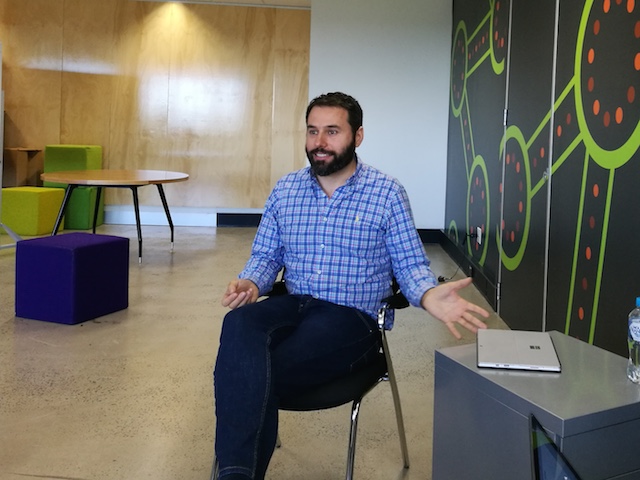
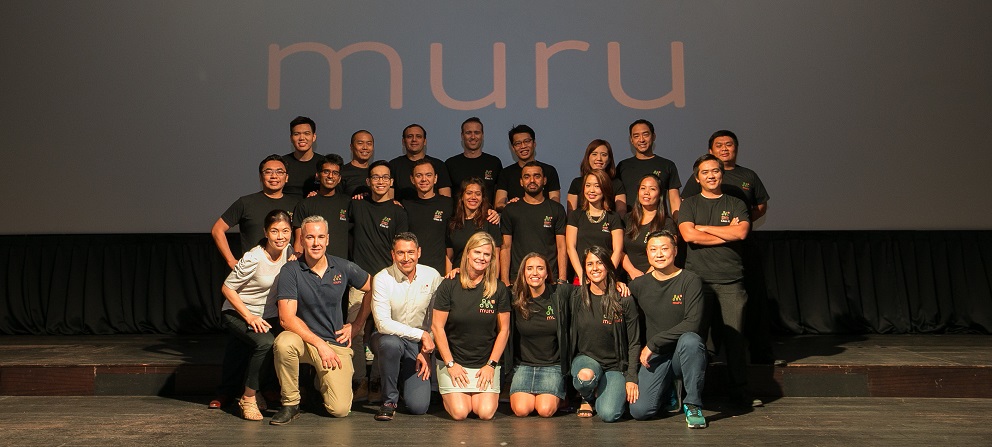
    As part of Telstra’s Muru-D business accelerator opening its latest startup intake this week, Annie Parker and Ben Sand, the organisation’s co-founder and Entrepreneur in Chief respectively, spoke to a small group of journalists on Tuesday about what they were looking for in the next batch of applicants and how the tech startup sector is changing.

    Ben’s entrepreneurial journey from a scrappy, underfunded Aussie startup to a hot Silicon Valley property and back to a corporate incubator is an interesting tale in itself.

    His first venture, an edu-tech startup called Brainworth founded in 2010, operated out of a dilapidated inner city Sydney terrace. The business acheived traction and Ben’s team won a ScreenNSW interactive media grant two years later.

    Failing the Kickstarter test

    Ultimately Brainworth petered out after missing a Kickstarter round. As Ben says, “I focused on getting out the maximum viable model rather than the Minimum Viable Model and the money ran out.”

    As Brainworth withered away, Ben joined former university friend, Meron Gribetz at his Augmented Reality startup Meta which went onto join the Y Combinator program. The company went on to attract $23 million dollars in investment, primarily from Hong Kong and Chinese investors, and now has 150 employees.

    Earlier this year, Ben returned to Australia after seeing Mick Liubinskas’ blog post about moving to the United States. In that article, his predecessor put out a call out for those interested in replacing him at the Sydney office which Ben answered.

    Australian advantages

    Now firmly settled into his Sydney role, Ben sees computer vision as one of the biggest opportunities in the tech sector. Bringing together disparate technologies like virtual and augmented reality, artificial intelligence and smart sensors, computer vision allows machines such as autonomous vehicles, drones and medical diagnostic equipment to pull together sources of data that lets machines see what is going on in the world around them.

    Computer vision is a field where Australia has an advantage, Ben believes. “Adelaide is the second most funded city in the world in computer vision,” he points out with investments like Cisco’s into South Australia’s Kohda Wireless driving the local industry.

    Ben and Annie don’t see the next group of Muru-D applicants being restricted to any one field despite Ben’s background in AR and interest in machine vision. “It’s more the psychology of the founders,” he says.

    Mentoring the next wave

    Three years of experience is also delivering dividends, observes Annie. “I’m starting to see the early cohorts starting to mentor and support the newer ones. That’s part of what Muru-D is part of, creating the ecosystem.”

    Over the three years, there’s also been quite a few adjustments to the Muru-D process, Annie observes. “We change the model each year by about thirty percent.” she says.

    Another thing that has changed is that later stage startups can apply for the program which will be open until November 4.

    “I’m excited and I’m very confident we’re going to get great outcomes for these people,” says Ben of the next Muru-D cohort. “We’ll be working on getting the most confident founders on board and hopefully helping them to aim high.”

    Similar posts:

  • A goldmine in your back yard

    A goldmine in your back yard

    This is the first of four stories I did for The Australian on why entrepreneurs are making their way to the United States’ Bay Area. 

    A combination of accessible capital, a huge market and a collaborative culture are why startup founders are making their way across the Pacific to Silicon Valley and San Francisco.

    Despite their government’s ideas boom and an easier funding climate, Australia’s startups still see San Francisco and Silicon Valley as being the promised land. In this four part series we spoke to Aussie entrepreneurs about why they’ve made the move across the Pacific Ocean.

    In a noisy coffee shop just off San Francisco’s Market Street, PixC founder Holly Cardew explains why she moved to the city. “It’s a place you fall in love with straight away – it’s the people and the attitude,” says Cardew. “You can do anything, people don’t look at you as if you’re crazy if you want to do something big.”

    Wider horizons

    Cardew made the relocation to San Francisco to find funding for Pixc, a photo editing service that in 2014 was one of the first group of startups accepted into Telstra’s Muru-D accelerator program. In moving to the US she found American investors have far wider horizons than Sydney’s business community.

    “Investors ask ‘what’s next?’” Cardew enthused, “in Australia, you don’t even think about that. Americans tend to think a lot bigger. Australians aren’t trained to think about it.” Another aspect Cardew highlights about the Bay Area business culture is how individuals are always happy to help out, “people always ask ‘how can I help’ she says.

    One of those credited by Cardew and by many of the people interviewed for this is Temando founder Carl Hartmann. In an archetypal open plan shared office in San Francisco’s Financial District Harmann explains why he’s quick to help, “I’m here today because people who were kind enough to pay it forward.”

    Being there

    Temando, a logistics service founded in Brisbane, was started to address the difficulties retailers had in fulfilling customers orders across Australia. Hartmann moved to the United States at the beginning of 2015 to access North American customers and to tap local capital markets. “When you talk to the SV funds it’s very hard to raise money if you aren’t here,” he says. “In Silicon Valley it’s where the action is. If you’re not here you are out of sight and out of mind.”

    “It’s difficult to build those sort of relationships from the other side of the world. When you’re here, things can move along quickly because it’s easy to collaborate on things. It’s easier to work face to face. For us it makes sense to be here,” Hartmann says. “There’s a unique energy where everyone has come from all over the world.”

    Jack Gonzales of location mapping service MapJam is an example of how fast things can move for companies in the Bay Area. “Last year we were approached by some of the big players who asked if we had our own map tiles,” he recalls. “We realised we had an opportunity.”

    Gonzales was speaking at the somewhat chaotic San Francisco campus of 500 Startups across from the city’s Moscone Convention Center. Mapjam was accepted onto the prestigious startup investment and acceleration program last year.

    A goldmine in your backyard

    “You have a goldmine in your local backyard and you have to capitalise on that. Sometimes it’s really spontaneous, ‘hey can you guys come in on Friday?’ You can’t do that when you’re overseas,” Gonzales says. “Our main customers are here and I really want to conquer the backyard before I conquer the globe, just within walking distance from here there are thirty major players.”

    Australia does have some advantages for startups, particularly in labor costs for skilled developers. “It’s three times more expensive to employ staff in the Bay Area,” says Affinity Live’s Geoff McQueen in explaining why he’s kept the company’s technical team in the firm’s home town of Wollongong

    McQueen, who moved to San Francisco in 2011 to seek funding for his venture believes “Australia is a good place to do a minimum viable product or proof of concept” and warns budding entrepreneurs to have more “than just just a PowerPoint pitch” when they decide to make a permanent move.

    In McQueen’s view it’s important to at least visit the Bay Area early in the process of developing a business. “Come over as soon as you can – even if you only have a light idea,” he says. “Anchor your visit around a conference, whatever is relevant to your target industry.”

    Achieving your aims

    Despite not finding gold on San Francisco’s grubby streets, most of the entrepreneurs The Australian interviewed were all happy they’d achieved their aims in moving to the US which vary from easier funding availability, access to bigger markets and a more vibrant ecosystem than those in Sydney, Melbourne or the smaller centres.

    Ultimately though everyone mentions the supportive nature of the Bay Area’s startup culture, “people ask what can I help you with,” says Pixc’s Cardew. “You can do anything, people don’t look at you as if you’re crazy if you want to do something big.”

    Similar posts:

  • Breaking the small business drought

    Breaking the small business drought

    In most developed countries the small business community is shrinking. What can governments and communities do to grow what should be the most vibrant sectors of their economies?

    What happens when a whole industry shuts down overnight? Australia is about to find when its motor industry effectively comes to an end this week.

    The fallout for the workers is expected to be dramatic with researchers reporting the soon to be laid off staff being totally unprepared for their predicament.

    So worrying is the predicament of those auto workers that Sydney tech incubator Pollenizer is offering small business workshops for laid off workers.

    Those workshops will be needed. One of the striking things about the research is just how few of the workers are interested in launching their own ventures despite their poor employment prospects in other industries.

    australian_ford_workers_employment_intentions

    While the auto workers are a group with relatively low levels of education and work experience, their reluctance to starting a business is shared by most Australians with the nation’s Productivity Commission 2015 enquiry on business innovation reporting the number of new enterprises is steadily falling.

    australian-business-exits-and-entries

    Despite Australia’s population increasing twenty percent since 2004, the number of new business is falling. The country is becoming a nation of risk averse employees, something not unsurprising given the nation’s crippling high property prices which puts entrepreneurs at a disadvantage.

    Australia’s reluctance to set up new ventures isn’t unique, it’s a worldwide trend with most countries not having recovered since the great financial crisis.

    The tragic thing with this small business drought is that it’s never been cheaper or easier to set up a venture as  Tech UK and payment service Stripe show in their list the software tools being used by ventures.

    Accessibility of tools or even government taxes and regulation isn’t the barrier in Australia. As the World Bank reports, the country is the eleventh easiest place in the world to start a new venture.

    In United States experience shows there’s a range of other factors at work dissuading prospective small business founders – interestingly the United States comes in at a mediocre 47th as a place to start a venture in the World Bank rankings.

    A healthy and vibrant small business sector is important to drive growth and diversity in the broader economy. The challenge for governments and communities around the world is to find a way that will spark the small business communities, in a world awash with cheap capital that shouldn’t be impossible but we may have to think differently to the ways we are today.

    Similar posts: