Tag: investment

  • Now Facebook’s challenges really begin

    Now Facebook’s challenges really begin

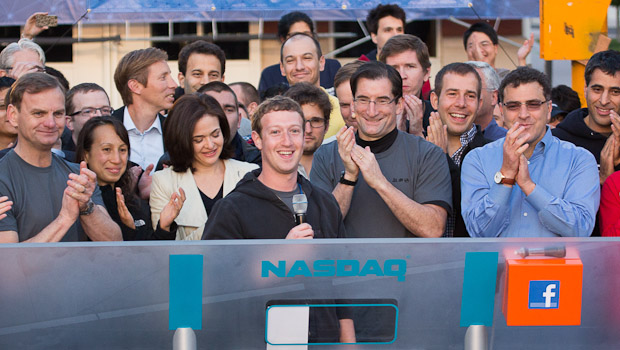
    The long awaited float yesterday of social media service Facebook was a triumph for the business’ founder Mark Zuckerberg, his management team and advisors.

    A market valuation of 100 billion dollars for a business started less than ten years ago is an impressive achievement and that sum now presents massive challenges for management who have to deliver on what investors believe the service is capable of.

    At US$38 a share, Facebook is valued at 76 times its projected 2012 earnings of 50 cents a share, and nearly twenty times its expected revenues of US$5 billion. This compares to Google which trades at less than 15 times its 2012 profit estimate and six times revenue.

    For Facebook to match Google’s value, the social media service is going to have to start making serious money beyond they can from charging egoists and corporations $2 a time for featured posts.

    Google’s success was in moving out of their walled garden, had Google focused on advertising just on their own search pages the company would be earning a fraction of the billions they now make every quarter.

    It’s difficult to see how Facebook can move off their platform into other sites and with users moving to mobile, the company will find itself even more constrained by Google and Apple who want to control access to their devices.

    A more obvious course for Facebook is to maximise income from the massive data base of likes, preferences, relationships and opinions they have amassed from their users. How they do this will probably be the biggest challenge to Facebook’s management.

    In monetizing their database, Facebook will push the limits of the law, tolerance of privacy advocates and possibly the patience of their user base. This is going to test a company that has in the past been slow to respond to public concerns.

    Another challenge is perception – with such a massive valuation, Facebook is going to attract critics regardless of what they do.

    A good example of this is the number of people criticising the float for not ‘popping’ on the stock market debut. At the end of the first day’s trading the stock had only gone up 0.6% and some in the media claimed this showed the IPO wasn’t the successful.

    The idea a successful IPO is one that soars on the first day of trading is a naive view from a 1980s mindset. The idea was born out of the privatisation of British and Australian utilities in the 1980s and 90s where taxpayers were seduced by the idea of “free money” in exchange for selling community assets cheaply.

    A ‘stag profit’ from a share that soars on its public float is theft from the existing shareholders and a transfer of wealth to insiders and their advisors.

    Silicon Valley venture capitalists and startup founders aren’t dumb and have never fallen for that trick – investors pay dearly for stock in their ventures.

    While no-one would call Mark Zuckerberg and his management team dumb they have a big job ahead of them finding revenue sources to justify the $100 billion market valuation. It’s going to be an interesting ride.

    Similar posts:

  • No exit

    No exit

    The men’s hairdresser down the road from me has hung up his scissors after twenty-four years.

    The sign on his shop window apologizes and the shop itself is up for lease. Shortly there won’t be any evidence a long standing local business was once there.

    Roy had no exit from his business and he sell the operation as a going concern.

    For Roy his retirement will be funded solely out of his savings. If he’s lucky he’ll have saved enough of his income from the business for a comfortable retirement – unfortunately many small business owners they’ll eke out the rest of their lives on the pension.

    Even for those who have planned for an exit, many of their plans have fallen over in the aftermath of the 2008 financial crisis.

    It’s always been questionable whether Gen X and Y entrepreneurs could afford to pay the sums for the affluent retirement of Baby Boomer business owners but now the post 2008 contraction in lending means it’s even less likely retiring business owners like Roy will find someone to buy their businesses.

    While the focus is on twenty something app developers selling their businesses for a billion dollars, the truth is that wealth for most business owners lies in the local newsagent, hairdresser or coffee shop owner being able to sell their operation for a reasonable return.

    For many baby boomer business owners it’s going to mean working more years than they intended and sharply reduced retirement expectations.

    Property values too are difficult. Many boomer businesses had the sensible model of buying the property their business occupies as a retirement nest egg.

    Again those properties are too expensive for the new generation and the deleveraging economy means the outlook for property values isn’t good.

    On every level, things are going to be tough for those wanting to sell businesses over the next decade.

    Those who do get good prices for their businesses are going to be those doing something exceptional to gain attention with income and profits that make them stand out from the cloud.

    Just being the best hairdresser in the neighbourhood or having a popular cafe isn’t going to be enough.

    Hopefully Roy The Barber managed to stash away enough for a well deserved comfortable retirement.

    Similar posts:

  • Duly diligent

    Duly diligent

    “Who would have thought our CEO didn’t have the qualifications we thought he had?” wonders the Yahoo! board.

    “It seems we forgot to count the number of beds!” whines the cleaning contractor when challenged about a filthy hospital.

    “We had no idea these people were corrupt,” growls the politician and former trade union official when confronted with proof its factional friends were misusing expenses.

    An interesting phenomenon in the rise of the managerial classes over the last thirty years has been the group’s refusal to take responsibility for their failures.

    Instead we see boards, investors, managers and politicians duck responsibilities that a reasonable observer would have thought is the reason for their healthy salaries, bonuses and perks.

    One of the many conceits of 1980s thinking is the ideology of “personal responsibility” – to low paid workers and those at the bottom of society this mantra is applied ruthlessly.

    The call centre worker who makes a mistake gets counselled or fired while the aboriginal kid who steals a can of coke is denied bail and goes to jail.

    Let’s not mention the fines and sanctions that befall a small business owner who is too slow in submitting paperwork or forgets to pay one of the countless fees that make up today’s hidden taxation.

    In boardrooms and Parliaments those doing the wrong thing rarely face any accountability; politicians caught misclaiming expenses are allowed to pay it back at their convenience while senior executives and captains of industry with a track record of mistakes continue to be employed in positions way beyond their abilities.

    One exception to the that rule is former Tyco Chief Executive Dennis Kozlowski and his cohorts who looted their company through the 1990s. Eventually their excesses became so great that the CEO and his cronies ended up being jailed.

    Not that this has rattled some of his cronies sense of entitlement. Former CFO Mark Swartz is suing the company for $60 million in retirement benefits and other monies.

    I have a personal connection with Messrs Swartz and Kozlowski – I worked for their company in the mid 1990s and lasted nine months in a culture of cronyism and rorts where middle management enthusiastically aped the excesses of their senior executives.

    One can argue I didn’t carry out my due diligence – a little bit of digging and more detailed asking around would have revealed Tyco’s institutionalised corruption and cronyism at the time.

    I paid for this oversight by having my contract terminated in a public and humiliating way which drove me to set up my own business.

    While working for companies like Tyco I saw them drive smaller businesses into the ground through slow, or non payment, of invoices. Strangely they always seemed to pay the corporate hospitality bills on time.

    The weakness in today’s corporatist economy is that boards like that at Yahoo!, executives like Tyco’s in the 1990s and many of our business and political leaders have a sense of entitlement way beyond the value they add to their business, community or society.

    Worse, the main lesson of 2008’s financial crisis is that massive government spending will protect these peoples’ bonuses and privileges regardless of their actions.

    As investors, employees, suppliers and voters we have to do our due diligence on these people and organisations. We have the tools today to check the track record of those who want our vote, skills or products.

    In today’s economy, we can’t afford to squander money or time on those who demand fat fees and salaries without delivering value.

    At the cash register and ballot box, it’s time to do our due diligence.

    Similar posts:

  • Depreciating the future

    Depreciating the future

    When I wrote my first book back in 1998, one of the things my editor and I did was look at the cost of buying and maintaining technology.

    Regardless of how we chopped the costs up, it came up consistently that the purchase cost of a personal computer was around a third of the Total Cost of Ownership (TCO).

    The TCO concept is something forgotten by people – be it a minister announcing a billion dollar purchase of jet fighters, a CEO boasting how he’s opened a hundred new outlets this year, or a family buying an investment property.

    It was bought sharply into focus for me when one of my kids claimed he couldn’t use his government provided school laptop because the IT guy didn’t have the repair software to fix a problem.

    Despite millions being spent on providing these computers, little has been allocated to maintaining them.

    This is typical of the public education sector, early in the adventure of building a computer support business I learned that services to schools and universities were fraught with difficulties as many would infrequently receive a fixed amount for capital expenditure but nothing for ongoing maintenance. You see this in the conditions of buildings on many campuses.

    Forgetting operating and support costs is something we all fall for.

    Strangely motor vehicles are the only area we consistently factor in maintenance and running costs, probably because we get the fuel price shoved in our face every time we take the car for a drive.

    While computers are becoming disposable items just like fridges and TVs were maintenance isn’t so much an issue given most last five to ten years before needing expensive repairs, its still true for many capital items.

    There’s another aspect to forgetting costs – depreciation.

    Depreciation allows us to factor in the declining value of our business assets yet I keep meeting people who treat depreciation as income or even an asset in itself. This is particularly true among real estate investors who prefer to buy newly built apartments for the higher depreciation deductions they can claim against tax.

    Bizarre stuff and true bubble thinking where people think operating losses will be offset in the medium term by capital gains.

    One of the aspects of 1980s thinking is that business costs like training and maintenance can be palmed off elsewhere or infinitely deferred. That isn’t the case.

    In society and business, we’re seeing the effects of pretending these costs don’t exist. Somewhere in there lies opportunity.

    Similar posts:

  • The Free Myth

    The Free Myth

    One of the biggest dangers to businesses is the belief that something is “free”.

    As we all know, there is no such thing as a free lunch. When another business gives you something for free it’s safe to say there is a cost somewhere.

    One of the speakers at the City of Sydney’s Let’s Talk Business social media event stated this when talking about social media saying “I can’t believe all businesses aren’t on Facebook – it’s free.”

    Social media isn’t free. We all know the value services like Facebook are mining are the tastes, habits and opinions of their users.

    For businesses, engaging heavily in Facebook or any other social media service hands over far more information about their customers to a third party than they themselves would be able to collect.

    All of that information handed over to a service like Google or Facebook can come back to bite the business, particularly if a well cashed up competitor decides to advertise at the demographic the business caters to.

    The core fallacy though is that these service are “free”. They aren’t.

    Every single service comes with a time cost. Every social media expert advises the same thing, businesses have to post to their preferred service of choice at least three times a week and those posts should be strategically thought out.

    That advice is right, but it costs time.

    For a business owner, freelancer or entrepreneur time is their scarcest asset. You can always rebuild your bank account but you can never recover time.

    Big businesses face the same problem, but they overcome this with money by hiring people for their time. In smaller businesses, this time comes out of the proprietor’s twenty-four crowded hours each day.

    The computer and internet industries are good at giving away stuff for free, in doing so they burn investors’ money and the time of their users. The social media business model hopes to pay a return to investors by trading the data users contribute in their time.

    While businesses can benefit from using social media services, they have to be careful they aren’t wasting too much of their valuable time while giving away their customers to a third party.

    Often when somebody looks back on their life they say “I wish I had more time.” They’ve learned too late that asset has been wasted.

    Wasting that unreplaceable asset on building someone else’s database would be a tragedy.

    Similar posts: