Tag: iot

  • Daily links: The IoT goes to sea, building the innovation state and Boko Haram

    Daily links: The IoT goes to sea, building the innovation state and Boko Haram

    The scale of the carnage Boko Haram has inflicted on remote parts of Nigeria is becoming more apparent every day and satellite imagery shows just how much damage the insurgent group is doing to communities in its territories.

    Closer to home, Google’s Project ARA gets another outing, we look at how economies can deal with the jobless future, what a terrible aunt Ayn Rand was and how the IoT is going to sea.

    The IoT goes to sea

    At the CES show two weeks ago Ericsson launched their new maritime cloud service that promises to connect ocean going ships to the same services available on land

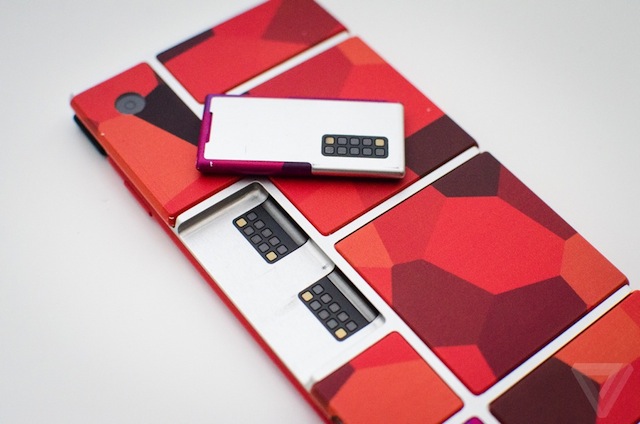
    Google unveils more about Project Ara

    Project Ara is Google’s attempt to reinvent the smartphone, the project came a little closer to completion with the company showing off some of its progress

    Creating the innovation state

    What do we do in a world where most people’s jobs have gone? Create an innovation state rather than a welfare state could be an answer suggests one economist.

    The extent of Boko Haram’s massacres

    Words fail to describe the horrors being visited on the people of Nigeria.

    Ayn Rand was a terrible Aunty

    What happened when one of Ayn Rand’s nieces asked aunty for a $25 loan?
    Similar posts:

  • Customer service and the internet of things

    Customer service and the internet of things

    Improved customer service is the main reason for companies investing in the internet of things reports the Harvard Business Review.

    Having surveyed 269 businesses for their Internet of Things: Science Fiction or Business Fact?  report commissioned by US telco Verizon, the Harvard Business Review team found 51% of companies expected improved customer service as being the main result from their IoT deployment.

    Of those who have deployed IoT technologies, 62% reported they had seen improved customer responsiveness with authors citing jet engine manufacturers, share car services and stock feed companies having benefiting from their investments.

    Tying together technologies that until recently have been stand alone is the key part of the returns realised by companies, allowing older monitoring systems to work better together and increase the value of the data they gather.

    IoT can enable “an incredible unlocking of information about processes that companies never had before,” said Vernon Turner, senior vice president of research and IoT executive lead at International Data Corp. (IDC). Companies that take the time to review and analyze these workflows will quickly find that there are significant opportunities to be found, such as increased efficiency. But the biggest change IoT brings to consumer companies is the increased contact with customers, Turner said.

    Of the IoT investments, the main area nominated for companies in the next year is asset tracking with 36% of respondents saying that will be their main focus. Combined with the 19% looking at fleet management, it shows that sector will probably the most lucrative for businesses servicing the IoT market.

    Risks in the IoT

    While tying together these technologies brings a lot of opportunities there’s no shortage of risks as devices that were never intended to be connected to the net are suddenly part of the global network. The survey shows some managers are aware of the risks that the IoT presents to their businesses with 46 percent citing privacy and regulatory compliance as being risks.

    Another challenge facing IoT deployments is a lack of skills with two out of five respondents flagging they can’t find workers with the skillsets needed to leverage IoT data. The task of managing the volumes of data also worries a third of the managers surveyed.

    The Verizon and HBR survey shows that managers and businesses are still in the early days of understanding the tasks and challenges presented by the internet of things — one suspects that were managers fully across the privacy and security implications the number of respondents flagging concerns would be close to one hundred percent.

    For companies like Verizon who are catering to the M2M and IoT marketplaces this survey is a handy roadmap that lays out the market opportunities for the next two years.

    Similar posts:

    • No Related Posts
  • Rigging the Internet of Things

    Rigging the Internet of Things

    Hackers are infiltrating public companies to gain an edge on Wall Street warns a story on financial website Finextra.

    This is not news, companies’ networks have been the target of insider traders since the early days of corporate computing. What is different today though are the nature of the risks as Chinese and even North Korean hackers are probing networks containing vast amounts of information to find weaknesses and confidential information.

    For insider traders, it may be the internet of things turns out to be a boon. By hijacking delivery or supply data, traders may have an advantage over the market.

    Things could get very nasty if those hackers subtly alter the data, say over reporting production yields, so a company gives the wrong income guidance based on faulty information.

    Security is one of the big issues facing the internet of things sector and the consequences of poorly protected sensors or systems could be immense when governments, businesses and communities come to rely on a stream of data they can trust.

    The bad guys are only just starting to explore the possibilities of the connected world.

    Similar posts:

    • No Related Posts
  • Democratising the internet of things

    Democratising the internet of things

    Last year Alicia Asin of Spanish sensor vendor Libelium spoke to this site about her vision of the internet of things improving transparency in society and government.

    A good example of this democratisation of data was at the New South Wales Pearcey Awards last week where the state’s winners of the Young ICT Explorers competition were profiled.

    Coming in equal first were a group of students from Neutral Bay’s state primary school with their Bin I.T project that monitors garbage levels in rubbish bins.

    The kids built their project on an Arduino microcontroller that connects to a Google spreadsheet which displays the status of the bin in the school’s classrooms. For $80 they’ve created a small version of what the City of Barcelona is spending millions of Euro on.

    With the accessibility of cheap sensors and cloud computing its possible for students, community groups and activists to take the monitoring of their environment into their own hands; no longer do people have to rely on government agencies or private companies to release information when they can collect it themselves.

    Probably the best example of activists taking action themselves is the Safecast project which was born out of community suspicion of official radiation data following the Fukushima.

    We can expect to see more communities following the Safecast model as concerns about the effects of mining, industrial and fracking operations on neighbourhoods grow.

    The Bin I.T project and the kids of Neutral Bay Public School could be showing us where communities will be taking data into their own hands in the near future.

    Similar posts:

  • Where next for the telco industry?

    Where next for the telco industry?

    The last thirty years have been good for the telecommunications industry; a wave of privatisations, regulatory reforms and technological change drove the sector and company profits.

    As populations around the world adopted mobile phones users started enthusiastically calling and texting, Telco profits exploded.

    Twenty years later the massive growth to the industry has peaked as customers have moved to using their cellphones for  less lucrative data services.

    So where do the telecommunications companies go next for growth and profit? Today and tomorrow I’m attending the Ovum 2020 Telecoms Summit where they’re looking at the future for the industry.

    Salvation from the internet of things

    The great white hope for the telco industry is the internet of things and the machine to machine (M2M) technologies; the hope being that putting SIM cards into every car, kettle and shipping container that this will be another lucrative revenue stream.

    Martin Creighan, Managing Director for Australia and New Zealand at AT&T, points out that by the end of the decade there will be seven times as many connected devices as live mobile phones. This is where the opportunity lies.

    The problem with the M2M vision is annual revenues per user (ARPU) for connected devices are a fraction of those from voice and messaging over the last twenty years and telcos will need more than that to maintain their revenues, let alone grow.

    Moving into the cloud

    One of the other revenue streams is adding cloud services, again this is a low margin business and involves competing with global giants like Amazon and Google along with the myriad of specialist companies.

    Another possibility is in providing professional services as Jennifer Douglas, Director of Fixed voice and platinum for Telstra, described in the company’s home support product.

    The problem with both the cloud and professional services model this requires a change in culture for the telcos, the traditional contempt telecommunications executives have for the end user doesn’t cut it in the professional services and cloud computing industries.

    For the telcos, this major change is something that’s been experienced by many other industries. That a comparatively protected industry like telecommunications companies are subject to these disruptions illustrates just how no sector is safe from being uprnded.

    Similar posts:

    • No Related Posts